The Real Decision Behind Buying a Growth Service
A lot of creators and small businesses don't regret trying a growth service because it “didn't work.” They regret the week after they gave access to a cheap provider and watched the account get louder, then colder. Follower count went up. Comments thinned out. Story views looked off. The service had delivered a number, not an audience.
That's the pattern to watch for. Instagram is still huge, with roughly 2.7 to 3.0 billion monthly active users in 2026 estimates, and it's still expanding by about 3.55% to 4% annually according to the data provided in the brief, which means the platform isn't a closed club where growth is impossible, it's a live market where quality still matters. India, the United States, and Brazil are the three biggest markets in those estimates, so providers that talk about “global growth” without showing audience targeting should make you suspicious. The scale is real, but so is the noise. Instagram follower statistics
Why the wrong service hurts more than no service
Bad growth doesn't just waste money. It pollutes your account history, distorts your metrics, and makes future content decisions harder. If a provider fills your follower list with low-quality accounts, your engagement rate drops, your post performance looks weaker than it is, and you start making decisions from broken data.
Practical rule: if a service can't explain how it finds real people, it's not a growth partner, it's a risk.
The better question isn't “How many followers can they add?” It's “How do they acquire attention, what kind of accounts do they attract, and how will I know the followers are real enough to matter?” That's the lens to keep in mind for the rest of the decision.
What Instagram Follower Growth Services Actually Are
An Instagram follower growth service usually falls into one of two buckets. The first is organic, targeting-driven growth, where the provider studies your audience, reaches relevant users, and creates visibility through real engagement. The second is bot-driven or fake-follower delivery, where the service pushes raw numbers through automation, low-quality accounts, or both.

The clean way to tell the difference
Organic services usually talk about audience profiling, competitor accounts, niche hashtags, and geography. That's because they're trying to surface your profile to people who are already adjacent to your topic. Bot-driven vendors usually avoid that language and talk about speed, volume, or instant results.
A hybrid provider is more dangerous than it looks. It may present clean branding, mention targeting, and still rely on weak tactics behind the scenes. If the sales page is heavy on promises and light on method, treat it as suspicious until proven otherwise.
The right mental model is simple. Organic growth tries to create a notification moment that can turn into a follow-back. Inorganic growth tries to manufacture the number itself. One aims for relevance. The other aims for appearance.
How Organic Growth Services Work Step by Step
Organic Instagram growth works through a targeting loop, not a magic switch. The provider profiles your audience, uses that profile to create visibility, then watches how real users react. When the targeting is sharp, a small slice of those people follow back because the account looks relevant.
If you want a cleaner breakdown of the model, the process outlined in Gainsty's guide to an organic Instagram growth service follows the same logic from audience fit to follower conversion.

What the targeting loop looks like in practice
The process usually starts with demographics, job title, competitor accounts, niche hashtags, and geography. From there, the service uses likes, follows, or comments as engagement triggers. That creates a visible interaction, which can bring the target user back to your profile if the fit is real.
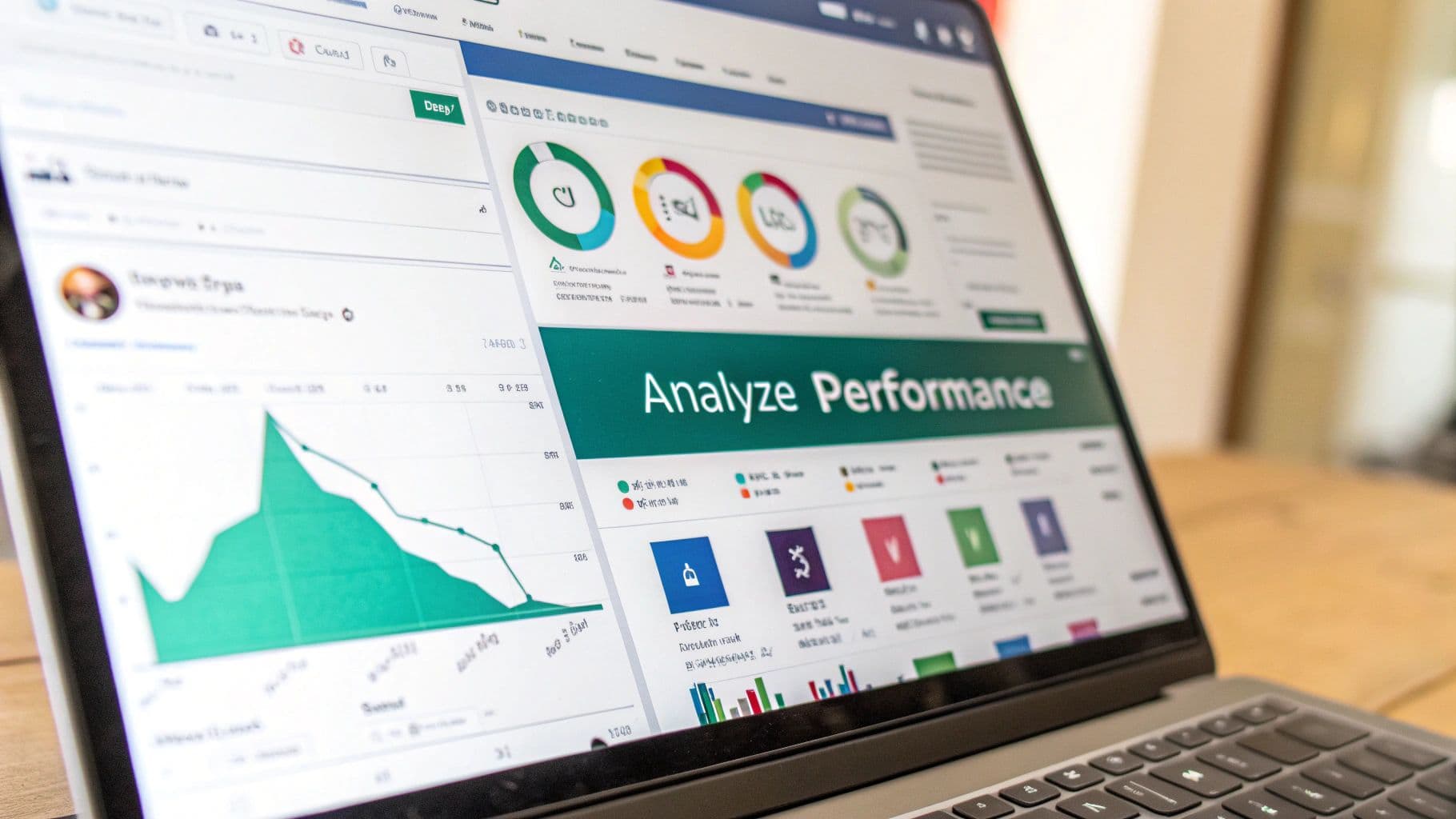
The provider should then track what happens next. Are the new followers staying, visiting the profile, clicking links, or engaging with content? The useful checks here are follower engagement rate, profile visits-to-link-clicks, reach growth rate, and the split between gross adds, unfollows, and net adds. A B2B account is generally considered healthy above a 2% engagement rate in the cited guidance, and another practical diagnostic in the brief flags low-quality acquisition when accounts with 10K+ followers fall below 1% engagement rate. Those figures are not vanity numbers. They show whether the service is bringing in useful attention or dead weight. Instagram growth services actually work
If a provider cannot explain how it moves from targeting to follow-back to retention, it probably does not have a real system.
A service worth considering should be able to explain the feedback loop, not just the acquisition step. That is how you separate a real growth process from a numbers treadmill.
Red Flags That Should Send You Looking Elsewhere
Cheap services are cheap because something is missing. Usually it's manual targeting, account safety, or both. If the provider's pitch sounds like a shortcut, assume it will behave like one.

The warning signs I would not ignore
Suspiciously cheap pricing. If the cost looks too low to support real targeting labor, it usually is.
Unrealistic guarantees. Promises of thousands of followers in days are a sales tactic, not a growth plan.
No transparency. If the provider won't explain where followers come from or how they're targeted, walk away.
Bot-like results. If new followers have no profile photos, no bios, few posts, or barely any followers of their own, the quality is poor.
That last point matters because fake acquisition doesn't just look bad, it degrades performance. The source in the brief recommends sampling 100 followers and flagging the batch as low-quality if more than 30% lack basic profile signals like a profile photo, bio text, 10+ posts, or 50+ followers. It also recommends stopping follow/unfollow automation and auditing recent followers daily when quality drops. How to spot fake Instagram followers
One more thing most buyers miss
A lot of people think unsafe growth looks obvious. It doesn't. It often arrives wrapped in polished branding, dashboard screenshots, and vague talk about “AI.” If the provider asks for your password through unofficial channels, or pushes engagement pods, treat that as a hard stop. That isn't a service problem. It's an account-risk problem.
A Due Diligence Checklist for Evaluating Providers
A useful shortlist doesn't start with the cheapest option. It starts with the provider that can answer hard questions without getting slippery. You want proof of method, signs of retention, and a clean story about how they protect your account.
Targeting transparency: A good service clearly explains how it selects niches, geographic areas, competitors, and target audiences. A bad service simply calls its process “proprietary” without explaining what it actually does.
Retention reporting: A good service reports net follower growth, unfollows, and indicators of follower quality rather than focusing only on gross follower numbers. A bad service highlights follower count while ignoring retention and audience quality.
Account security: A good service uses legitimate, secure account-connection methods and does not require unnecessary password sharing. A bad service asks for unofficial access, credentials, or risky account handoffs.
Niche customization: A good service adjusts its approach based on the industry, target audience, and content type. A bad service applies the same growth strategy to every account regardless of its niche.
Support responsiveness: A good service answers questions about its methods clearly and promptly. A bad service responds with generic sales language instead of addressing specific concerns.
Questions that expose weak providers fast
Ask what targeting inputs they use, and listen for specifics. Demographics, competitors, hashtags, keywords, and geography are concrete. “We optimize your growth” is not.
Ask how they measure whether growth is real. A legitimate provider should care about retention-adjusted follower growth, not just raw adds. If they can't explain how they watch unfollows, engagement by follower bracket, or audience relevance, they're asking you to trust a number that may not last.
Ask how they handle account access. Safe providers should be explicit about security practices. If the process feels like a workaround, stop there.
The review angle matters too. A provider review should tell you whether a service behaves consistently across accounts, not whether the landing page looks polished. If you want a practical benchmark for that kind of vetting, the Instagram growth service reviews resource is useful as a comparison point, but only if you use it to pressure-test method, not chase a logo.
A good provider makes it easy to ask uncomfortable questions. A bad one tries to make you feel rude for asking them.
Plugging a Service Into Your Organic Content Strategy
A growth service should amplify your content, not replace it. If your posts are weak, a service can widen the audience for weak posts, which is just a faster way to learn the wrong lessons. The account still needs a clear message, recognizable content pillars, and a reason for people to stay after they discover you.
Start by aligning the service with your actual content themes. If you're a creator, keep your Reels, carousels, and Stories active while the service targets relevant users around those topics. If you're a business, make sure the service's audience profile lines up with the customers your posts are already trying to reach.
Use the service as a feedback layer
The best use of a service is diagnostic. If one content type drives more profile visits or follow-backs, that's a clue about what the service is exposing to the right people. If another type attracts followers who never engage, that's a sign the audience fit is weak.
Don't let the service dictate your whole calendar. Use it to support the content you already know how to make consistently. If you need a practical next step for turning that traffic into contactable demand, the guide to capturing Instagram leads is a useful companion resource because it shifts the conversation from followers to business outcomes.
Pause the service when your account gets noisy. A launch week, a campaign spike, or a sudden quality drop in new followers are all reasons to slow down and inspect the traffic. That isn't overreacting. That's how you keep the service from steering your strategy.
Realistic Timelines and What Success Actually Looks Like
A niche account with a few thousand followers doesn't need fantasy numbers. It needs steady, qualified movement. If you buy a service expecting a dramatic jump overnight, you're setting yourself up to misread normal growth as failure.
Here's a practical comparison for a representative creator account in a moderately competitive niche.
Organic service-led growth: In the first 30 days, expect a modest net gain driven mainly by relevant followers. By 60 days, growth should become clearer if targeting remains sharp and content stays consistent. By 90 days, stronger retention is possible when audience fit remains good. Engagement should gradually move toward a healthy range as the audience becomes more relevant.
Fully DIY: During the first 30 days, progress is often slower and less consistent. By 60 days, results depend heavily on posting discipline, content quality, and regular interaction. By 90 days, DIY growth can catch up if the content strategy is improving quickly. Engagement can be more volatile during the early stages.
Bot or low-quality service: In the first 30 days, the account may show a fast-looking follower spike, but follower quality is usually poor. By 60 days, unfollows and low interaction can become more noticeable. By 90 days, the inflated growth may stall while poor audience quality becomes clearer. Engagement rates are typically depressed because the added followers are not genuinely interested in the content.
The point of the table isn't to promise a slope. It's to make you honest about signal quality. A good service should not only add followers, but it should also preserve the usefulness of your audience data.
If your account is still in a discovery phase, a service can shorten the path to useful feedback. If you already know your content converts, then the service should help you scale the right attention, not invent it. That distinction matters far more than any sales claim.
When a Service Helps, When to DIY, and When to Walk Away
A new creator trying to break a cold start can justify an organic service if the provider is transparent and the target audience is specific. A small business with some traction can use one to scale a known niche without burning time on manual outreach. An established brand should be more cautious and may be better off staying mostly DIY to protect authenticity and control.

Simple decision rule
Use a service when the provider can show real targeting and safe methods. DIY when your content already converts and your time is better spent making better posts. Walk away when net growth stalls for too long, unfollows rise, or engagement falls while follower count climbs.
That last part is the clearest warning. A service that adds followers but weakens your account isn't solving a growth problem. It's creating a measurement problem.
If you want a safer way to grow without bot risk, Gainsty offers an AI-powered Instagram growth service built around organic targeting, audience customization, and account-safe methods. If you're comparing options for a grow Instagram followers service, visit Gainsty and pressure-test whether its approach matches the due-diligence checklist you'd use on any provider.