Rethinking the 100k Goal
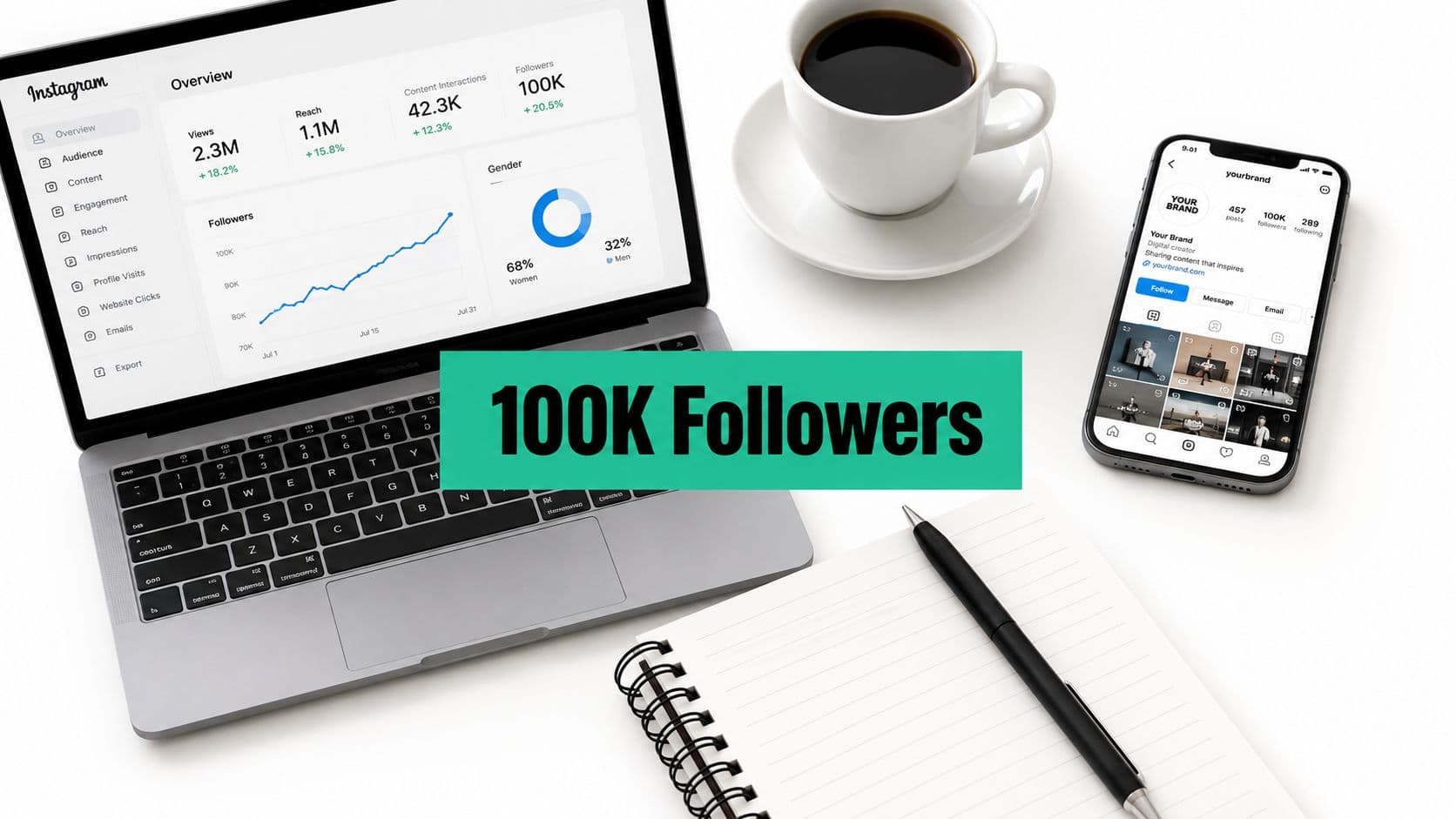
A profile with 100,000 followers looks authoritative at a glance. That number can attract attention from potential clients, collaborators, and brands, but it can also hide weak fundamentals. If most followers never watch, save, share, reply, click, or buy, the account has achieved a visual milestone without building much influence.
Audience quality matters because Instagram ranks content through predictions about actions such as time spent, comments, likes, reshares, profile taps, saves, and shares. For Reels, the likelihood that someone will watch through to the end is among the important predictions described by Instagram in its explanation of how ranking works. A follower who joined for a random viral clip but ignores every later post may contribute less value than a smaller follower who consistently responds to your subject.

The number doesn't equal influence
Buying followers, automating engagement, or attracting people with irrelevant giveaways can inflate the profile while weakening the signals that matter. Inauthentic accounts don't become customers, and low-intent followers can dilute your engagement calculations. Instagram growth should therefore be evaluated through qualified followers, recurring reach, and meaningful actions, not the headline total.
A useful mental model is to treat your account as a media asset. Its value comes from the quality of the audience and the reliability of distribution, not from the size of the label on your profile. A niche account with a responsive community may create stronger commercial outcomes than a much larger account whose posts produce little interaction.
Practical rule: Treat every growth tactic as a filter. If it attracts people who won't care about your next ten posts, it may increase the count while damaging the asset.
Set a better definition of success
Before you chase the milestone, decide what success needs to produce. A creator might want qualified sponsorship inquiries. A consultant might want discovery calls. A retailer might want product-page visits. A photographer may care about inquiries from a particular location, while a software company may need saves and shares from people with a specific professional problem.
That definition changes the content you publish and the followers you pursue. Broad entertainment can produce discovery, but specialist education, proof, and conversation often create stronger retention. The best growth strategy combines both without confusing the audience about why it should follow you.
Do not reject 100k as an ambition. Use it as a checkpoint. At that point, ask whether your audience remains relevant, whether your distribution is repeatable, and whether your profile can turn attention into an outcome you can measure.
Defining Your Target Audience and Niche
Generic content creates a weak follow decision. A viewer may enjoy one post, but if the profile doesn't make its subject clear, there's little reason to stay. A defined niche gives every part of the account a job, from the bio and pinned posts to the examples you choose and the language in your captions.
Start with the person, not the content format.
Build a usable audience profile
Write down the audience you want in enough detail that you can recognize its problems in a comment or direct message. Include:
Current situation: What does this person do, sell, make, or struggle with today?
Desired result: What would make following your account worthwhile?
Recurring obstacles: Which questions, fears, or time-consuming tasks keep appearing?
Buying context: Do they purchase education, services, products, software, or recommendations?
Relevance signals: Which location, profession, experience level, interest, or language makes your content useful?
Avoid profiles such as “women interested in wellness” or “people who like travel.” Those descriptions are too broad to guide a Reel. “Independent nutrition coaches who need practical content ideas for client education” gives you a stronger editorial direction.
Instagram Insights can help you compare the audience you want with the audience you're attracting. Review follower location, age range, gender distribution, active periods, and the sources of reach. Pair that information with questions from comments, DMs, customer conversations, Reddit threads, and search suggestions. For a structured approach to audience research, use this guide on how to identify your target audience.
Find the gap you can own
Study accounts that already attract your intended audience. Don't copy their visual style or scripts. Instead, map the promises they make, the questions they answer, the formats they repeat, and the questions their comment sections leave unresolved.
Look for a specific gap:
A complex subject explained for beginners.
A professional topic shown through real processes.
A familiar category with a sharper point of view.
A local service discussed with local proof.
A common problem addressed for a neglected audience.
A niche isn't a prison. It's a clear entry point. Once followers understand your core promise, you can expand into adjacent topics without making the account feel random.
A niche finder for sellers can help organize possible markets and product angles when you're still comparing directions. Use any research tool as a starting point, then validate ideas against actual audience questions and your ability to create useful material consistently.
Make the profile convert
Your bio should tell the right viewer three things quickly: who the account serves, what it helps with, and what action to take next. Pin posts that demonstrate your strongest recurring themes, answer a common beginner question, and show proof of your expertise or process.
The profile conversion path matters because discovery is only the first step. A viewer who lands on your page should see a coherent body of work, not a collection of unrelated experiments. Consistency in subject matter creates recognition, and recognition makes the follow feel safer.
Building a Content Strategy That Drives Growth
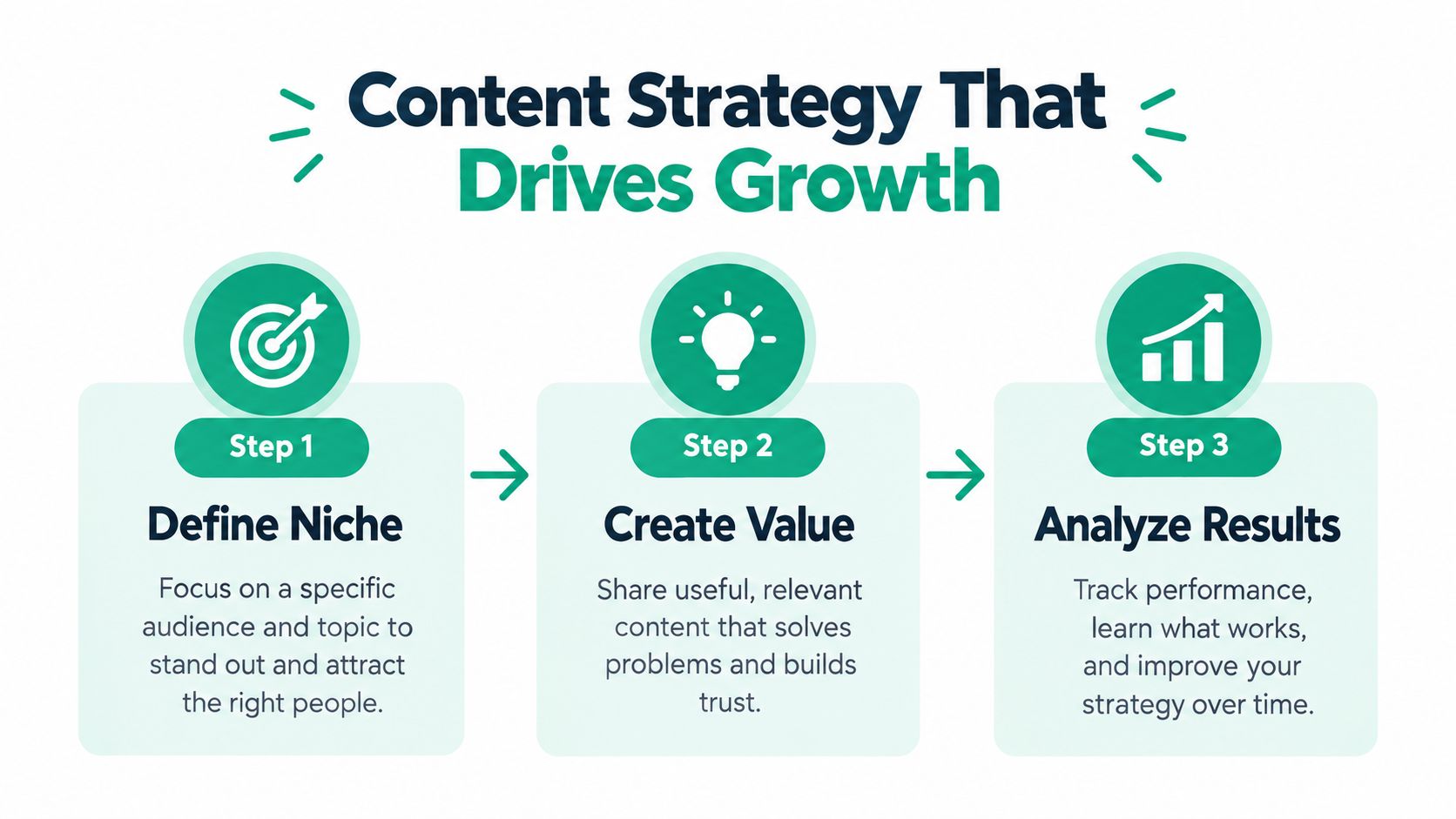
Content growth depends on matching the format to the job. Reels usually give you the strongest discovery opportunity because they can reach people who don't follow you. Carousels can explain a process in a way that encourages saves, while Stories create repeated contact with people who already know the account.
Instagram says its systems make predictions about time spent, comments, likes, reshares, profile taps, saves, and shares. That means a content plan should ask what action each post is designed to earn, rather than treating every like as an equal sign of success.
Separate discovery from retention
Discovery content earns the first visit. Retention content gives people a reason to return.
Reels need a clear promise immediately. Put the problem, result, or surprising observation in the opening seconds. Remove introductions that delay the value. Use a visual change, spoken question, demonstration, or specific claim to create forward motion, then deliver the answer without padding.
Carousels work well for frameworks, comparisons, checklists, and step-by-step explanations. The first slide should name the problem. The middle slides should solve it. The last slide should direct the reader toward a useful action, such as saving the post, sharing it with a colleague, or reviewing another relevant resource.
Stories support familiarity. Use them for behind-the-scenes context, polls, question stickers, quick opinions, customer responses, and reminders about new content. Their role isn't to imitate a Reel. Their role is to make the account feel present and responsive.
A photographer who wants a more specialized approach can study this resource on social media growth for photographers, particularly when balancing visual discovery with proof of craft and client relevance.
Build repeatable series
Random posting makes it hard to learn. Create a small set of recurring series that can generate many variations without becoming identical. A design account might publish software shortcuts, before-and-after breakdowns, and critiques of common mistakes. A local restaurant might combine ingredient education, staff stories, and customer-use occasions.
Test one meaningful variable at a time. Change the hook, length, cover, caption, or call to action while keeping the underlying topic comparable. Instagram recommends focusing on predicted actions, so measure completion, shares, saves, profile visits, and follows from content, not only views.
Review a rolling sample of 10 to 20 posts per content hypothesis before deciding that a format works, as recommended in the provided Instagram ranking guidance. A single viral upload can reveal a promising topic, but it can't prove that the account has a repeatable system.
Plan for clarity and recognition
Visual consistency isn't about making every post look identical. It means the audience can recognize the account's tone, subject, and point of view. Use a stable set of colors, type treatments, framing choices, or editing conventions, but protect the content from becoming a template with no substance.
Create a production system that fits your capacity. Batch filming, keep a running list of audience questions, prepare reusable caption structures, and leave room for timely responses. A practical Instagram content calendar template can help you connect topics, formats, calls to action, and performance notes without relying on memory.
Engagement and Community Building Tactics
Posting creates opportunities for conversation, but it doesn't create a community by itself. People become invested when the account responds to them, remembers their interests, and gives them reasons to participate beyond tapping a heart.
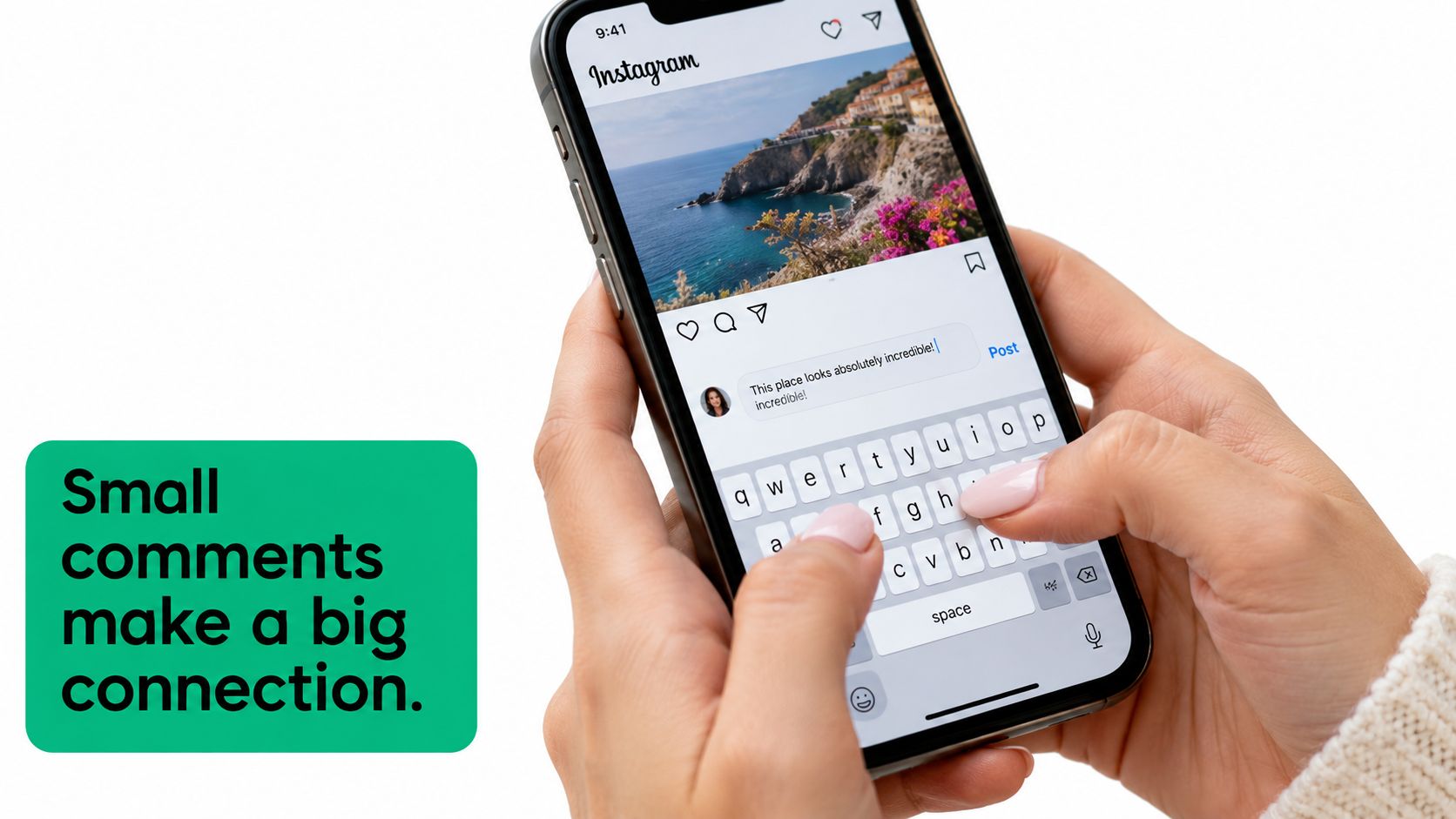
The strongest engagement systems begin before publication. Write captions that invite a useful answer instead of a generic reaction. Ask followers to choose between two approaches, describe their obstacle, share an example, or challenge a recommendation. Then respond with substance. A thoughtful reply can turn a one-time commenter into a returning participant.
Use Stories as a listening channel
Stories offer a direct way to discover what the audience cares about now. Polls can test preferences, question stickers can surface language for future posts, and replies can reveal objections that a polished feed post might miss.
Keep the interaction connected to your niche. A fitness creator can ask which part of a routine causes the most difficulty. A software educator can ask which feature confuses users. A service business can collect questions before publishing an explanation. The response becomes both community activity and editorial research.
Don't treat every reply as a sales lead. People notice when a brand uses every conversation to push an offer. Answer first, teach where appropriate, and move commercial discussions into a clear next step only when the context supports it.
Choose partnerships for audience fit
Collaborations work when two audiences share a genuine reason to care. Select partners whose content complements yours, not merely accounts with large follower totals. A joint tutorial, live discussion, comparison, interview, or shared challenge gives each creator a reason to introduce the other.
Before agreeing, inspect the partner's comments and recent posts. Look for recurring participation, relevant questions, and a clear relationship between the account and its audience. A polished profile with little discussion may not deliver the trust you expect.
Giveaway mechanics require the same caution. A prize that has nothing to do with your offer may attract people who disappear once the promotion ends. If you use a contest, make the entry action relevant to the community and ensure the reward appeals primarily to people who would value your regular content.
Community growth is slower than passive reach, but it produces better information. Every real reply tells you what to publish, clarify, or stop assuming.
Respond to mentions, acknowledge user-created content, and feature useful contributions with permission. These actions show followers that participation changes the account. Over time, your audience becomes a source of distribution because people share content that reflects their needs or helps someone in their network.
Use the following resource as a visual prompt for creating stronger audience interactions:
Leveraging Analytics for Optimization
Analytics should help you make decisions, not decorate a monthly report. Start with the denominator. If you calculate engagement using followers, don't compare it with a benchmark calculated using reach. The rates answer different questions.
For a 100,000-follower account, Rival IQ's 2025 all-industry median is 0.36%, while approximately 1.02% or higher represents a strong, top-quartile performance level for brands, according to its Instagram engagement-rate benchmark. Applied to that follower base, those thresholds correspond to roughly 360 and 1,020 engagements per post, respectively. These are comparison points, not guarantees, and they shouldn't replace post-level analysis.
Audit a meaningful sample
Review at least 10 recent posts before drawing a conclusion, as the benchmark guidance recommends. Record likes, comments, saves, shares, reach, profile visits, follows, and link actions. Then separate Reels, carousels, single images, and Stories so one format doesn't conceal another's performance.
Use a simple diagnostic approach instead of a table. If a post gets high reach but low follows, it usually means the content created discovery without a clear profile promise, so improve the hook, bio, and pinned posts. If a post earns strong saves, it often signals practical value or future-use content, so develop related explainers and checklists. If shares are strong, that usually points to social relevance or identity value, so create more audience-specific observations. If profile visits are high but follows stay low, the account may have weak conversion after discovery, so clarify the niche and next step. If views are strong but completion is weak, the opening is working but the delivery is losing attention, so tighten the structure and remove delay.
This interpretation is more useful than labeling a post a success because it received a large view count. The same number can represent different outcomes depending on whether viewers watched, shared, followed, or left without exploring the profile.
Watch for quality problems
Track where followers come from and whether they remain active. A sudden follower spike may look positive, but inspect the content that caused it, the countries represented, subsequent reach, and activity from new followers. A broad viral post can attract people who have no connection to your core topic.
Don't purchase followers or engagement. The ranking guidance describes bought followers, likes, and comments as deceptive influencer practices, while inactive or inauthentic accounts can weaken engagement-rate calculations and future audience signals. Your dashboard should prioritize non-follower reach, saves and shares per reach, profile-to-follow conversion, Story completion, audience-country fit, and retention.
For business accounts, a complete Instagram analytics guide for businesses can help turn platform reporting into a recurring review process. The useful routine is simple: keep what repeatedly creates qualified action, improve what has a promising signal, and stop formats that consume resources without supporting the account's purpose.
Final Steps to Sustainable 100k Growth
Reaching 100k becomes more manageable when you treat it as an operating system rather than a lucky event. Define the audience, build repeatable content, create genuine interaction, and review evidence before changing direction. The account should become clearer as it grows, not broader and more confusing.
Use a focused review cycle
At the start of each cycle, choose a small number of content hypotheses. For each one, define the intended action, the format, the audience problem, and the evidence that would justify repeating it. Keep a record of hooks, topics, covers, captions, and calls to action so your decisions aren't based on vague impressions.
Check these areas regularly:
Audience fit: Are new followers aligned with the niche and location you can serve?
Retention: Do people who follow continue watching and responding to later posts?
Distribution: Are posts reaching people beyond the existing audience?
Value signals: Are saves, shares, replies, and profile visits supporting the account's purpose?
Commercial readiness: Can you explain your reach, audience quality, offer, and outcomes to a potential partner?
Monetization deserves a separate reality check. 100,000 followers isn't a reliable payment threshold. Benchmarks vary because they mix engagement, format, niche, geography, and campaign scope. One 2026 benchmark places a 100K account at roughly $1,500 to $3,500 for a static post, while another reports $2,000 to $10,000, as summarized in this creator pricing analysis. Those figures are estimates, not entitlements, and they don't replace your own media kit.
Build revenue around qualified impressions and conversions. Separate sponsored posts, Reels, affiliate sales, products, and services, then show median reach, audience quality, cost per engaged user, clicks, saves, shares, and conversion evidence. A smaller, highly responsive niche account may be more valuable to a brand than a larger account with weak engagement efficiency.
Start today by auditing your latest content, rewriting your profile promise, and choosing one repeatable series to test. Keep the milestone, but make audience relevance and commercial usefulness the conditions for calling the growth successful.
Gainsty offers organic Instagram audience targeting, analytics, and account-growth management for creators and businesses working toward milestones such as 100k followers without using bots or fake followers. Visit Gainsty to review how its targeting and monitoring features could fit your quality-first growth plan.