1. Organic Social Media Growth and User-Generated Content
A pet groomer doesn't need a national audience. They need local pet owners who trust their handling, recognize their work, and know how to book.
Everyday customer experiences give businesses useful material to share.

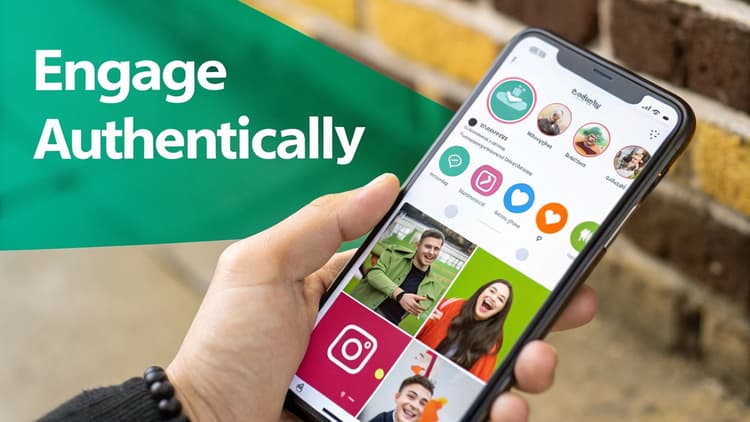
Show the process, answer customer questions, and share customer photos with permission. On Instagram, pair each useful post with a clear next step, such as viewing services or sending a booking inquiry. Credit creators, and ask separately before using customer content in advertising.
Time to first results: Existing followers may respond quickly, but plan for sustained work before expecting dependable acquisition. Upfront cost: Media spending can be minimal; photography, editing, replies, and outreach still consume staff time.
Your first week
Clarify the profile: State who you serve, where you operate, and how to buy.
Capture useful material: Record a service demonstration, answer a common question, and request permission to share a customer result.
Measure intent: Track profile visits, qualified messages, and bookings alongside saves and shares.
2. Content Marketing and Search Engine Optimization (SEO)
Publish answers to buying questions, not articles chosen because a keyword tool shows a large search volume. A plumbing company needs pages explaining service areas, repair options, and when a leaking fixture requires professional help. An unrelated viral article won't necessarily produce plumbing jobs.
Use website reporting to connect discovery with action.

Time to first results: Treat organic search as a longer-horizon investment, not an emergency booking channel. Upfront cost: Budget for subject-matter input, writing, editing, website work, and maintenance, even if you handle production internally.
Start with the sales conversation
During your first week, collect questions from calls, quotes, and customer emails. Choose a specific buying question, inspect the existing search results, and publish an answer with original detail, relevant images, and a direct route to your service page. Answer the question immediately rather than burying it beneath an introduction.
Use these content marketing tips for small businesses to organize production and repurposing. Review backlink-building sites selectively for relevant outreach opportunities, not as permission to buy bulk placements.
Practical rule: A page should help a prospective customer make a decision, even if it never becomes your highest-traffic page.
Failure mode: Publishing generic material without distribution, internal links, or a conversion path. Useful pages can compound over months, but rankings aren't permanent. Measure qualified organic inquiries, and update pages when services, customer questions, or search results change.
3. Referral and Word-of-Mouth Programs
Ask for an introduction when a customer has a concrete reason to recommend you. For an accountant, that might follow a clear explanation that resolves a confusing tax issue. For a café, it might follow a customer's enthusiastic feedback about catering.
Make the recommendation easy to act on.

Time to first results: Potentially near-term if you already have satisfied customers. Upfront cost: Setup is light, but rewards, staff administration, and discounts must fit your margin. Don't offer a reward before calculating what you retain after delivering the referred purchase.
Your first week should produce a usable process:
Choose the trigger: Ask after positive feedback or a successfully completed service.
Write the invitation: Explain who you help and provide a message customers can forward.
Define the reward: State what qualifies and when the reward becomes available.
Record attribution: Add a referral field to your booking form or customer relationship management system.
Say a house cleaner offers service credit after a referred household completes a paid booking. That's easier to control than rewarding unqualified contact details. Keep referral incentives separate from public review requests, and don't condition review requests on praise.
Failure mode: Vague terms, awkward sharing, or incentives that attract discount seekers rather than suitable customers. Track completed referred purchases, not invitations sent. Relationships can compound, although an incentive-led program may weaken when rewards disappear. Thank customers personally even when no reward is involved.
4. Influencer and Micro-Influencer Partnerships
A creator's audience matters more than their follower total. For a local coffee shop, a neighborhood food creator may be a better fit than a prominent lifestyle account whose followers live elsewhere.
Time to first results: Attention can arrive when content goes live, but allow time for outreach, negotiation, production, and approval. Upfront cost: Include creator fees, supplied products, shipping, staff time, and content-usage rights. Free products still have a cost.
Buy audience fit, not a flattering screenshot
In your first week, shortlist creators who already discuss your category and whose comments reflect genuine interest. Ask for relevant audience information and review previous sponsored posts. Use this guide on how to find micro-influencers to structure your search.
For a coffee-shop collaboration, give the creator the essential facts about your location, menu, and offer. Let them choose an expression that fits their usual work. Agree on deliverables, disclosure, timing, revisions, and reuse permissions before production starts.
Track attributable action: Use a dedicated booking page or creator-specific code.
Check customer quality: Record whether referred buyers return without another incentive.
Protect reuse rights: Don't assume a sponsored post gives you permission to run the footage as an ad.
Failure mode: Paying for exposure without checking geography, audience relevance, or conversion. A sponsored placement is usually a campaign burst, not a durable acquisition system. It can create longer-lived value when you secure useful content rights and turn interested visitors into email subscribers or repeat customers.
5. Email Marketing and List Building
Social platforms give you access to followers. An opted-in email list gives you a more direct way to contact interested people, provided you maintain permission, deliverability, and useful messages.
A fitness studio could offer a beginner's preparation guide, then explain class options and invite subscribers to book. The guide should attract prospective members, not people collecting unrelated freebies.
Time to first results: An existing permission-based list may respond to a relevant offer promptly. Building a suitable list from scratch takes longer. Upfront cost: Expect email-platform fees, setup, writing, and ongoing list management rather than media spending alone.
Build the follow-up before collecting addresses
During your first week, create a focused signup form and explain what subscribers will receive. Connect it to a welcome message that delivers the promised resource, answers a likely objection, and presents a sensible next step. Test signup, delivery, links, and booking on mobile.
AI can help organize drafts, but it shouldn't replace your offer or expertise. In the NFIB's 2025 technology survey, 30% of AI users reported improved productivity, while 5% reported increased revenue.
Automation saves work only when you've decided what useful work it should perform.
Failure mode: Sending the same promotion to every subscriber, buying addresses, or collecting leads with no follow-up. Segment by expressed interest and purchase history. Track email-attributed purchases or bookings, not opens alone. Your permission-based list and welcome workflow can compound over months, though subscribers still need a reason to stay.
6. Local Search Optimization and Google Business Profile
When someone needs a nearby service, your opening hours, location, reviews, and booking route should be easy to verify. A complete Google Business Profile helps present that information without forcing customers to investigate conflicting listings.
Check the experience from a customer's phone.

Time to first results: Correcting broken contact details can remove friction immediately; improving visibility is a longer process. Upfront cost: Mainly setup and maintenance time, plus photography or website support where needed.
Make the listing usable
Your first week should focus on claiming or verifying the profile, selecting accurate categories, and checking services, hours, phone details, and the appointment link. Use your real business name rather than stuffing it with search terms. Make sure the website explains the same services and service area.
For a dental practice, add clear access information and authentic photographs. After appointments, invite customers to leave honest feedback through a direct review link. Don't offer rewards for favorable reviews, and avoid exposing private customer information in replies.
Test the journey: Search for the business, call from the listing, and complete a test booking.
Record outcomes: Distinguish connected calls and booked appointments from profile views.
Maintain accuracy: Assign responsibility for holiday hours and service changes.
Failure mode: Completing the profile once, then leaving incorrect details or unanswered feedback. Local visibility and a credible review history can compound, but neither guarantees placement. Measure qualified calls or bookings, and fix the customer journey before chasing more impressions.
7. Strategic Partnerships and Cross-Promotion
A wedding photographer and a florist serve overlapping customers without selling the same service. That makes a partnership plausible. It doesn't automatically make it profitable.
The fit depends on customer expectations, pricing, capacity, and each partner's willingness to follow through. A recommendation can damage trust if the receiving business delivers poorly.
Time to first results: A warm introduction can produce an inquiry quickly; a dependable partnership takes coordination and repeated delivery. Upfront cost: Often modest in cash, but meetings, joint materials, events, and referral administration consume time.
Test a handoff before building a package
In your first week, identify a complementary business and propose a limited promotion with a specific customer benefit. Agree on who introduces the offer, how inquiries are routed, and who answers questions. Put responsibilities, costs, customer-data permissions, and cancellation arrangements in writing.
A gym and a physiotherapist might co-host an educational session while keeping their services and professional responsibilities separate. That's easier to evaluate than immediately creating a complicated joint membership.
Define the handoff: Introduce interested customers with permission rather than exchanging contact lists.
Assign ownership: Give each business a named contact for follow-up.
Track completed sales: Use a referral field, dedicated page, or promotion code.
Failure mode: A partnership where both owners approve the idea but nobody promotes it or follows up. Another is unequal effort disguised as mutual exposure. Track partner-referred customers who complete a purchase. Reliable partnerships can compound through repeated introductions, but stop expanding an arrangement if service quality or economics don't hold up.
8. Customer Retention, Loyalty Programs, and Upselling
Before buying more attention, find out why existing customers don't return. A loyalty card can't repair missed appointments, inconsistent work, or an unresolved complaint.
The stakes extend beyond marketing. Among U.S. employer establishments founded from 1994 through 2022, an average of 49.2% survived five years, according to the U.S. Small Business Administration. That isn't evidence for a particular loyalty scheme, but it supports treating resilience as seriously as expansion.
Time to first results: Follow-up can influence the next purchase opportunity; assessing retention requires observing a relevant buying cycle. Upfront cost: Customer-service time, system setup, and any reward or discount you introduce.
Fix the return journey
During your first week, review customers whose expected return window has passed. Separate those who no longer need the service from those who experienced friction. Contact suitable customers with a helpful reminder or feedback request, not an automatic discount.
For a car wash, a membership might suit frequent users. For a consultant, a scheduled review may be more appropriate than points. Offer upgrades only when the additional service solves a real problem.
Margin check: A customer who returns only for a heavily discounted purchase may add revenue without adding worthwhile profit.
Failure mode: Rewarding purchases that would have happened anyway, or upselling before delivering the original promise. Measure repeat-purchase rate by customer group and buying cycle. Better service, useful follow-up, and well-designed loyalty benefits can compound, while discount dependence can erode the return.
9. Targeted Paid Advertising and Retargeting
Paid advertising is useful for testing and distributing an offer that customers already understand. It's a costly place to discover that your booking process is broken.
Time to first results: Traffic can arrive after approval and launch, but profitable acquisition needs testing and enough completed sales to judge. Upfront cost: Media spend, creative production, landing-page work, tracking, and management. Include all of them when calculating acquisition cost.
Set the stop rule before launch
During your first week, choose a primary conversion, verify tracking, and build a landing page that matches the advertisement. For a restaurant, that might be a clearly described catering inquiry rather than a general homepage visit.
Use this Instagram ads strategy to organize campaign planning. If you retarget website visitors across multiple platforms, apply appropriate consent controls and exclude audiences who shouldn't receive the offer.
Calculate the ceiling: Compare acquisition cost with contribution margin after variable delivery costs.
Protect cash: Decide how much you can risk before the test begins.
Inspect lead quality: Review booked and completed work, not just form submissions.
Federal Reserve survey findings summarized by Fed Communities indicate that roughly one-third of small employer firms had a funding gap despite applying for financing. Don't assume financing will cover an advertising experiment that hasn't paid back.
Failure mode: Scaling cheap leads that don't become profitable customers. Track cost per acquired customer and cash-payback period. Paid distribution largely stops when spending stops, although customers acquired profitably can continue buying.
How the nine growth strategies compare on time, cost, and fit
Organic social media and user-generated content can build trust, community, and reach over several months. Media costs may be low or nonexistent, but the work requires ongoing staff time. Content marketing and SEO also take time, often 3 to 12 months, and require investment in content creation and search optimization. They are best suited to building search traffic and niche authority that can grow over time.
Referrals can bring in trusted customers through recommendations. The first completed referral may take roughly 2 to 8 weeks, and costs include program setup and any rewards. Micro-influencer partnerships can draw attention relatively quickly from a relevant audience, though fees, products, or commissions make costs variable. Strategic partnerships may produce their first introduced sales in about 1 to 3 months. Cash costs can be low, but coordination and shared promotion take work.
Email marketing develops gradually as the list grows. Platform fees and content production can be modest compared with paid media, making email useful for ongoing communication with interested customers. Local search may take about 3 to 6 months to improve visibility, with setup and upkeep requiring more staff time than cash. It helps nearby customers find and contact the business.
Retention, loyalty programs, and relevant upselling build results over successive purchase cycles. Reward and tracking costs vary, but the aim is more repeat purchases and greater customer lifetime value. Paid advertising can deliver traffic quickly and help scale a validated offer, provided the business can support the variable ad spend.
Use these timelines and costs as a sequencing tool. Referrals, partnerships, influencers, and paid ads can produce early signals, but each depends on a clean offer and a specific first week: ask for the referral after completed work, pitch one partner with a shared audience, send a tight creator brief, or verify tracking before spend. SEO, content, email, local search, and retention are slower because the asset has to accumulate.
The trade-off is durability. Organic, content, email, local, and retention can keep paying after the initial work, while influencer spikes and paid distribution fade when the campaign or budget ends. The common failure mode is starting five channels at once and giving none a measurable job; pick the few that match your constraint, then judge them on first results, cash at risk, and whether the return compounds or stops with spending.
Choosing Your First Three Moves This Quarter
Choose strategies around your bottleneck, not around what competitors appear to be doing. An empty calendar, weak repeat purchasing, and low website conversion are different problems. They shouldn't produce the same marketing plan.
For a local service business that needs near-term calls and visits, start with referrals and local search. Add retention work if past customers have a genuine reason to return. That combination uses existing relationships and demand before asking the owner to fund a larger acquisition program.
If delivery is reliable but discovery is inconsistent, use content and email to build compounding assets. Organic social can provide customer questions, useful demonstrations, and proof that feeds both channels. Paid ads belong later, after a message has converted and you understand the margin available to acquire a customer.
Give each strategy a measurable job
Set a 90-day measurement window as your operating plan, not a promise that every channel will mature within it. Record the starting position, assign an owner, and define a primary outcome for each chosen strategy.
Referrals: Completed purchases from referred customers.
Local search: Qualified calls or booked appointments.
Content: Qualified inquiries from organic search.
Email: Attributed purchases or bookings.
Paid advertising: Cost per acquired customer.
Review results monthly before adding anything new. Check both outcomes and execution: an unanswered referral inquiry isn't evidence that referrals don't work. Equally, a rising follower count isn't sufficient evidence that social activity deserves more budget.
Keep a simple record of cash spent, staff time, customers acquired, and contribution after delivery costs. Where attribution overlaps, choose a consistent rule and ask customers how they found you. Don't pretend every sale has a perfectly traceable source.
Scale the process you can sustain
Use Stamina's approach to small business growth as an additional planning perspective, while keeping your own economics as the decision rule. Continue a strategy when customer quality and payback justify the work. Revise it when execution is incomplete, and stop it when a fair test shows poor economics.
Check capacity before expanding demand. More bookings don't progress if customers wait too long, staff rushes delivery, or you run short of working capital. Choose your first moves, reserve the time to execute them, and earn the right to scale.
We offer done-for-you Instagram growth with manual organic outreach and a profile review that examines your content, engagement, competitors, and niche. If Instagram belongs in your growth plan, visit Gainsty to explore support for reaching a more relevant audience while you focus on content and customer conversion.