The Reality of Viewing Instagram Likes in 2026
You've probably seen articles or sketchy apps claiming they have a workaround. Let me be clear: these are almost always a scam. Any tool promising to show you another user’s private likes is likely designed to steal your data, infect your device, or get your own account banned for violating Instagram's terms of service. It’s a dead end.
Instead of trying to find a feature that no longer exists, the real strategy is to get smarter about understanding what people are into. It's less about spying on one person's private activity and more about analyzing the public signals that show what content is actually resonating.
From Spying to Strategizing
This is a fundamental shift in thinking. Instead of asking, "What did Jane Doe like today?" you should be asking, "What kind of posts are getting massive engagement in my niche?" or "What are my own followers telling me they love?"
This flowchart breaks it down beautifully. The path to seeing likes is a one-way street: you can only review what you've liked. For everything else, it's about analysis, not access.

The message is simple: focus your energy on the data you can access, which is far more valuable anyway.
To understand the options available, it helps to separate the direct methods (what you can see with your own eyes) from the indirect ones (what you can infer from data).
Direct vs Indirect Methods for Checking Likes
Viewing Another User’s Likes – This is not possible in 2026. The feature was removed for privacy reasons, and no safe or legitimate third-party app can access this information.
Viewing Your Own Liked Posts – This is still possible. It’s useful because it allows you to revisit posts you’ve liked, making it easier to find content you want to reference again.
Analyzing Your Audience’s Likes – This is possible indirectly. While you can’t see exactly what your audience likes elsewhere, you can use your own analytics to understand which of your posts get the most engagement, helping you tailor your content.
Analyzing a Competitor’s Likes – This is also possible indirectly. You can’t see who liked their posts, but you can analyze which of their content performs best based on likes and comments, giving insight into what works in your niche.
Ultimately, the indirect methods are where the real strategic insights come from. They tell you what an entire audience or community finds engaging, which is far more useful than knowing what one individual person liked.
The most powerful tool for understanding what people like isn't some secret spy app—it's the one Instagram gives you for free.
If you have a business or creator account, you're sitting on a goldmine of data called Instagram Insights. This is the ethical and effective way to "see what people like." You can access it right from your profile menu or by tapping "View Insights" under any of your posts.
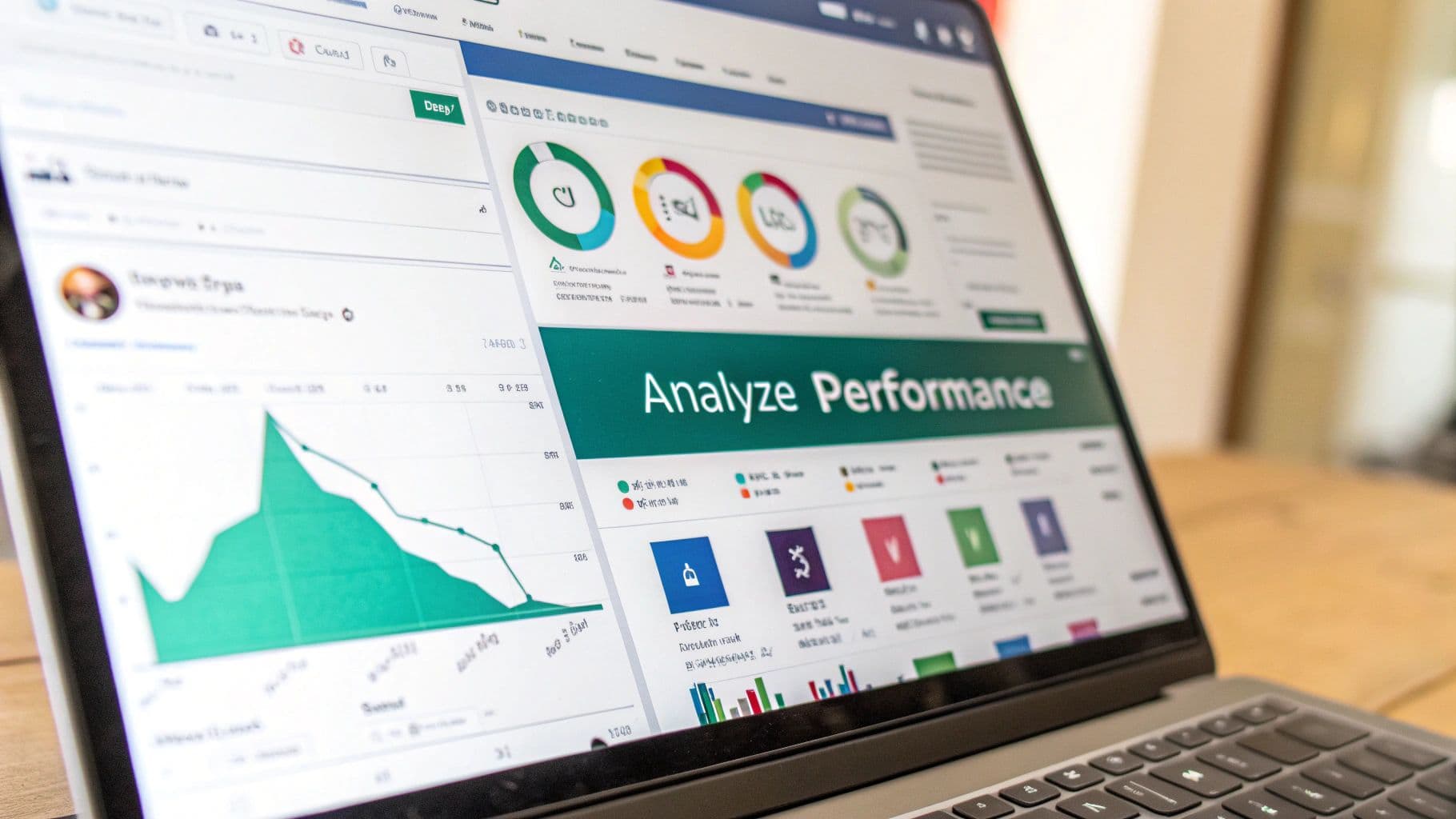
This dashboard shows you exactly what content is working. You can see which posts get the most likes, comments, and shares, giving you a direct line into your audience's preferences. To learn more about navigating this tool, check out the official guide on Instagram's help page.
Your Secret Weapon: Digging into Your Own Instagram Insights
Okay, so you can't peek directly at what one specific person is liking anymore. But if you have an Instagram Business or Creator account, you actually have something much more valuable: your own analytics. This is your personal roadmap, showing you exactly what your audience as a whole loves. Forget guessing—this is how you find out what's really working.

We're not just counting likes here. We're playing detective to figure out the behavior behind the numbers. This is how you build a content plan that actually gets results.
Look Past the Likes to Find What People Truly Value
Likes are nice for the ego, but they're surface-level. To get a real sense of what people enjoy on Instagram, you need to pay attention to the metrics that signal a deeper connection. The two most telling indicators are Saves and Shares.
Think about it. A Save means someone found your post so useful that they want to refer back to it later. It's a digital bookmark. A Share means they thought your content was so good, they had to pass it along to a friend or feature it on their own Story. That’s a powerful endorsement.
When a post racks up a lot of Saves and Shares, you've struck gold. This is your high-value, evergreen content. In the eyes of the Instagram algorithm, these actions often speak louder than a simple double-tap.
Let's say you're a fitness coach. You might see that your Reels demonstrating "at-home workout variations" get twice as many Saves as your motivational quote graphics. That’s a massive clue. It tells you your audience is looking for practical, actionable advice they can use, not just fleeting inspiration. That single insight is way more powerful than knowing which post got a few more likes.
Find the Winning Patterns in Your Top Posts
Your Insights dashboard is a goldmine. It lets you filter your content to see which posts and Reels performed best based on metrics like reach, comments, and, of course, saves. You can sort this by the last 7 days, 30 days, or even the last year. This is where your analysis really begins.
Don't just glance at the winners. Dig in and ask why they performed so well. Look for the common threads that connect your most successful content.
What was the format? Are Reels consistently getting more eyeballs than your static images? Do carousels that break down a process step-by-step get the most interaction?
What was the topic? Is there a content pillar that always hits home? Maybe it’s tutorials, behind-the-scenes glimpses, or a vulnerable personal story.
What about the style? Do captions with a direct question at the end spark more conversation? Is there a specific editing style or color scheme that appears in all your top-performing videos?
According to the analytics platform Popsters, consistently tracking these engagement metrics helps you identify your most successful content themes and formats. This lets you make data-driven decisions instead of just throwing content at the wall and hoping it sticks.
By connecting these dots, you slowly build a crystal-clear picture of what your audience wants from you. It takes the guesswork out of creating content they'll love. For a full walkthrough of every metric on your dashboard, our Instagram Insights explained guide will help you make sense of all the numbers.
Using Third-Party Tools for Deeper Insights
While Instagram's own analytics are a great starting point, third-party platforms are where you gain a real competitive advantage. These tools give you a much wider view of your niche, helping you spot content trends without ever crossing privacy lines.

Think of it as switching from a microscope to a telescope. You stop looking only at your own account and start analyzing the entire galaxy of content in your industry. It’s not about spying; it’s about smart, strategic analysis of public data.
Tracking Public Instagram Activity
If your question is how to see someones likes on Instagram, it helps to distinguish between private activity and publicly available signals. Since the following activity tab was removed in 2019, Instagram does not provide access to a history of everything another user has liked. However, trustworthy third-party tools can organise activity that is still publicly available.
Snoopreport, for example, tracks Instagram accounts and generates weekly reports on their activity. You can review liked posts and Reels, new follows and unfollows, activity patterns, hashtags and interests. Being totally anonymous without logging in or having someone else's password.
This can be useful for personal or business purposes, such as tracking an ex, friends, or favourite celebrities, or researching competitors or influencers. This approach is much more efficient than manually checking every profile's likes or follows. Rather than considering each like as meaningful, you can identify recurring topics, creators and content categories that emerge over a longer period.
Going Beyond Native Analytics
The biggest plus here is the ability to look outside your own bubble. You can finally benchmark your performance against competitors, see how content performed historically, and find out what’s going viral in your specific field. This is how you uncover hidden opportunities.
Imagine you run a small boutique. Using a third-party tool, you could analyze a direct competitor's top posts over the past six months. You might notice their Reels about sustainable fabrics get way more engagement than anything else. That’s a clear signal from the market that there's an interest you can tap into.
The goal isn't to copy your competitors. It's to understand the 'why' behind their success—the topics, formats, and emotional triggers that resonate with the audience you both share.
Key Capabilities of Third-Party Tools
These platforms are packed with features that Instagram’s native tools simply don't offer. While they all vary slightly, most give you the power to see what people like from a much higher, more strategic level. Here’s what you can typically do:
Competitor Benchmarking: See exactly how your engagement rate, follower growth, and posting frequency stack up against others in your space.
Hashtag Performance Tracking: Find out which hashtags are actually driving reach and engagement across your entire niche—not just on your own posts.
Historical Data Analysis: Go back months or even years to pinpoint long-term trends, seasonal patterns, and past breakout hits.
Best Time to Post Suggestions: Get solid, data-backed advice on when your audience (and your competitors' audiences) are most likely to be online and scrolling.
While Instagram's native analytics offer valuable data, leveraging the most effective third-party applications can provide an even deeper understanding of audience preferences and engagement patterns. Explore the capabilities of the best Instagram analytics tools available to refine your analysis.
Ultimately, this is all about making smarter decisions. If you see that your top three competitors all had success with short, punchy tutorial videos last month, that's a powerful clue. It tells you to start experimenting with that format yourself. You move from just reacting to trends to proactively building a content plan around what you know your audience loves.
For more options, check out our guide on the https://www.gainsty.com/blog/best-instagram-analytics-tools to find the perfect fit for your needs.
Ethical Ways to Research Audience Interests Manually
Beyond all the dashboards and analytics, some of the best insights I've ever found came from good old-fashioned observation. It's about learning what people like on Instagram by becoming an ethical "social listener"—tuning into the real conversations happening right in your niche.
This manual approach gives you the rich, qualitative context that raw numbers just can't provide. You get to understand the why behind the likes and follows, which is a massive advantage for creating content that actually connects with people.
Dive Deep into Comment Sections
I’m not kidding when I say the comments on popular posts are a goldmine. This is where your potential audience voices their real opinions, asks their most urgent questions, and vents their frustrations. It’s all free intel for your content strategy.
Don't just scan for heart emojis. Look for the patterns. For example, if you're a graphic designer and you see a top agency's post, you might notice dozens of comments like, "How do I even start building a portfolio?" or "What software is best for beginners?" That’s not just engagement; that’s a direct request for your next content series.
Think of a competitor's comment section as a free focus group. The audience is literally telling you exactly what they want to learn, what confuses them, and what content they're desperate to see.
Analyze Your Target Audience's Following List
Here's another surprisingly effective technique: checking out the public "Following" lists of your ideal customers or the micro-influencers in your space. This isn't about being creepy; it's about spotting trends in the accounts that a specific group of people already trusts.
Imagine you're running a sustainable fashion brand. You find a few micro-influencers who perfectly represent your target customer. A quick look at who they follow might reveal a pattern:
They all follow three specific zero-waste living bloggers. This tells you their interest goes beyond just clothes; it’s about the entire lifestyle.
They’re fans of two brands known for supply chain transparency. This is a huge hint that content about sourcing and production could really resonate.
One creator they all love posts about mending and repairing clothes. This suggests your audience values longevity and practical skills, not just buying new things.
This little bit of research helps you understand the "content diet" of your target audience. You can see who and what already has their attention, giving you a much clearer map of how to earn it for yourself. If you want to get even better at this, you can learn more by mastering the Instagram comment search function.
When you combine these observational methods with your own analytics, you stop just making content and start solving problems. You start creating posts that feel like a direct answer to your audience's unspoken questions, building incredible trust and authority along the way.
Using Interactive Features to Discover Preferences

Analytics can tell you what your audience did, but they can't always tell you what they want. If you really want to know what people like on Instagram, sometimes the best strategy is the simplest one: just ask them.
Instagram's built-in interactive features are perfect for this. They turn content creation from a one-way broadcast into a conversation, giving you clear-cut ideas directly from the people you’re trying to reach. This isn't just about gathering data; it's about making your followers feel like part of the process.
Let Your Audience Guide Your Content with Stories
Instagram Stories are a goldmine for instant feedback. Because they're casual and disappear after 24 hours, people are far more willing to tap a sticker or fire off a quick reply. You can use this to your advantage to stop guessing and start knowing.
Think about a travel creator planning their next series. Instead of just picking a destination, they could post a "This or That" poll in their Stories: "What's next for the channel?" with "Budget Travel Tips" on one side and "Luxury Stays" on the other. The results are your content mandate, served up on a silver platter.
Here are a few ways I’ve seen this work beautifully:
Poll Stickers: The go-to for quick A/B decisions. Use them for anything from "Which photo edit do you like more?" to "Prefer video tutorials or carousels?"
Quiz Stickers: A fun way to test your audience’s knowledge and subtly show off your expertise. A skincare brand might ask, "True or False: You need sunscreen on cloudy days?" to reinforce an important point.
Question Stickers: Hosting an "Ask Me Anything" (AMA) is one of the best ways to find out what your audience is struggling with. Their questions are your future content topics.
The real magic happens when you close the loop. If your audience votes for budget travel tips, and your very next post is a guide to backpacking through Europe, you’ve just shown them you’re listening. That’s how you build a community that not only follows you but trusts you.
Turn Comments and DMs into a Focus Group
The conversation doesn't have to be confined to Stories. Your comments section and Direct Messages are just as valuable for taking the pulse of your audience.
Don't just post your content and walk away. End your captions with a genuine, open-ended question that invites discussion. Instead of a generic "Here's our new candle scent," try something like, "Our new 'Ocean Breeze' candle is here! What scent should we dream up for our fall collection?"
This shifts your comments section from a wall of fire emojis into a brainstorming session.
The same goes for your DMs. When someone takes the time to message you with a question or a compliment, see it as an opening. If one person is asking, you can bet others are wondering the same thing. Answer them directly, of course, but then consider turning that question into a Reel or a carousel post. It shows you’re paying attention and makes you the go-to resource in your niche.
So, you’ve done the detective work and have a much better handle on what your audience actually likes. Now comes the fun part: turning all that data into a content strategy that actually moves the needle. This is where the real magic happens, bridging the gap between raw analytics and creating posts people can't wait to engage with.
Think of your content calendar less as a rigid schedule and more as a living, breathing plan. It's a balance. You'll want to lean into the content formats and topics you know work, but you also need to leave room to try new things. This approach is what creates sustainable, long-term growth.
The goal is to build a powerful feedback loop for yourself: Create, Analyze, Learn, Improve. Every post you publish becomes a new data point, sharpening your understanding and making your next piece of content even more effective.
Once you know what resonates, you can confidently use different strategies to increase Instagram likes and boost your overall engagement. This isn’t about chasing vanity metrics. It’s about getting clear confirmation that your content is hitting the mark with the people you want to reach.
Building Your Content Framework
Let's get practical. The first step is to distill your insights into a handful of content pillars. These are the 3-5 core themes that your audience consistently loves. For example, if you're a fitness coach, your research might show that your pillars are "At-Home Workouts," "Healthy Recipes," and "Mindset Motivation."
From there, you can plan a mix of formats for each pillar to keep things fresh.
High-Impact Reels: Look at your most saved and shared posts. Can you turn that popular topic into a quick tutorial or a list of tips? That’s a guaranteed winner.
Detailed Carousels: Did a specific question keep popping up in your comments? Break down the answer into an easy-to-digest carousel.
Community-Focused Stories: Stories are the perfect low-stakes place to test out new ideas. Use polls and quiz stickers to gauge interest before you invest time in creating a full-blown feed post.
This framework gives you structure and ensures you're consistently serving your audience what they want, without getting stuck in a creative rut.
A/B Testing to Refine Your Approach
Finally, you need to adopt a mindset of constant refinement. The best way to do that is with A/B testing. It sounds technical, but it’s incredibly simple on Instagram. All you're doing is posting two similar things, but changing just one element to see which one performs better.
Here are a few easy tests you can run:
Caption Length: Try a super short, punchy caption against a longer, more personal story.
Reel Audio: Post one Reel with a trending audio track and a similar one with just your voiceover.
Call-to-Action (CTA): On one post, ask people to "Save this for later." On the next prompt them to "Share your thoughts below."
By methodically testing these small variables, you start replacing guesswork with real-world proof. It’s how you turn your Instagram account from a game of chance into a predictable engine for genuine, organic growth.
Common Questions, Answered
Let's tackle some of the most common questions I get about figuring out what people are actually liking on Instagram. There's a lot of misinformation out there, so I want to clear things up and show you what really works.
Is There an App That Can Show Me What Someone Liked?
Straight up, no. If you find an app that promises to show you a secret list of someone else's liked posts, you should run the other way.
These are almost always scams that violate Instagram's policies and, worse, could get your own account hacked. Instagram got rid of the public "Following" activity tab way back in 2019, specifically to protect user privacy, so there's no legitimate backdoor to that information.
What's the Best Free Way to See What People Like?
Your best friend here is Instagram's own "Insights" tool. If you have a Business or Creator account (which is free to switch to), you have access to a goldmine of data.
It won't show you what a specific person liked, but it does something far more valuable: it shows you what your audience as a whole is responding to. It gives you reliable, detailed analytics on your posts and stories, highlighting the content that earns the most meaningful engagement, like saves and shares.
When it comes to research, looking at a competitor's most popular public posts is just a smart, ethical strategy. It’s how you get a feel for what a shared audience enjoys. The line you don't want to cross is trying to access private data or snoop on an individual's activity.
How Often Should I Be Checking My Instagram Analytics?
I've found that a good rhythm is a quick weekly check-in combined with a deeper monthly review.
Your weekly glance is for spotting immediate trends—did that Reel take off? Did that carousel get a ton of saves? The monthly review is where you zoom out to see the bigger picture, find broader patterns in your top-performing content, and make smarter decisions for the month ahead.
Ready to turn all these insights into some serious growth? Gainsty combines smart AI with real-world expert strategy to help you attract more organic followers and boost your engagement, all done safely and effectively. Start growing your Instagram with Gainsty today.