1. Meta Business Suite (Facebook + Instagram)
When considering the top social media platforms for business, it's impossible to overlook the combined power of Facebook and Instagram. Meta Business Suite serves as the central command center for managing your professional presence across both platforms. It’s an indispensable tool for brands needing a unified dashboard to publish content, engage with audiences, and, most importantly, execute sophisticated advertising campaigns.
The platform consolidates critical business functions, moving beyond simple page management into a comprehensive marketing hub. Instead of juggling separate apps and logins, you get a single interface for scheduling posts, viewing notifications, and responding to messages and comments from both Facebook and Instagram. This unified inbox is a significant time-saver, ensuring no customer interaction is missed.
Key Features & Strengths
Meta Business Suite’s true power lies in its advertising and analytics capabilities, primarily accessed through the integrated Ads Manager. This is where the platform distinguishes itself, offering some of the most granular audience targeting options available today.
Advanced Audience Targeting: Go beyond basic demographics. Target users based on interests (e.g., "interested in organic skincare"), behaviors (e.g., "recent online shoppers"), and life events. You can also create Custom Audiences by uploading your customer lists or tracking website visitors with the Meta Pixel, and then generate Lookalike Audiences to find new users who mirror your best customers.
Unified Campaign Management: Create, manage, and optimize ad campaigns that run simultaneously on Facebook, Instagram, Messenger, and the Audience Network. This ensures your message reaches people wherever they are most active within the Meta ecosystem.
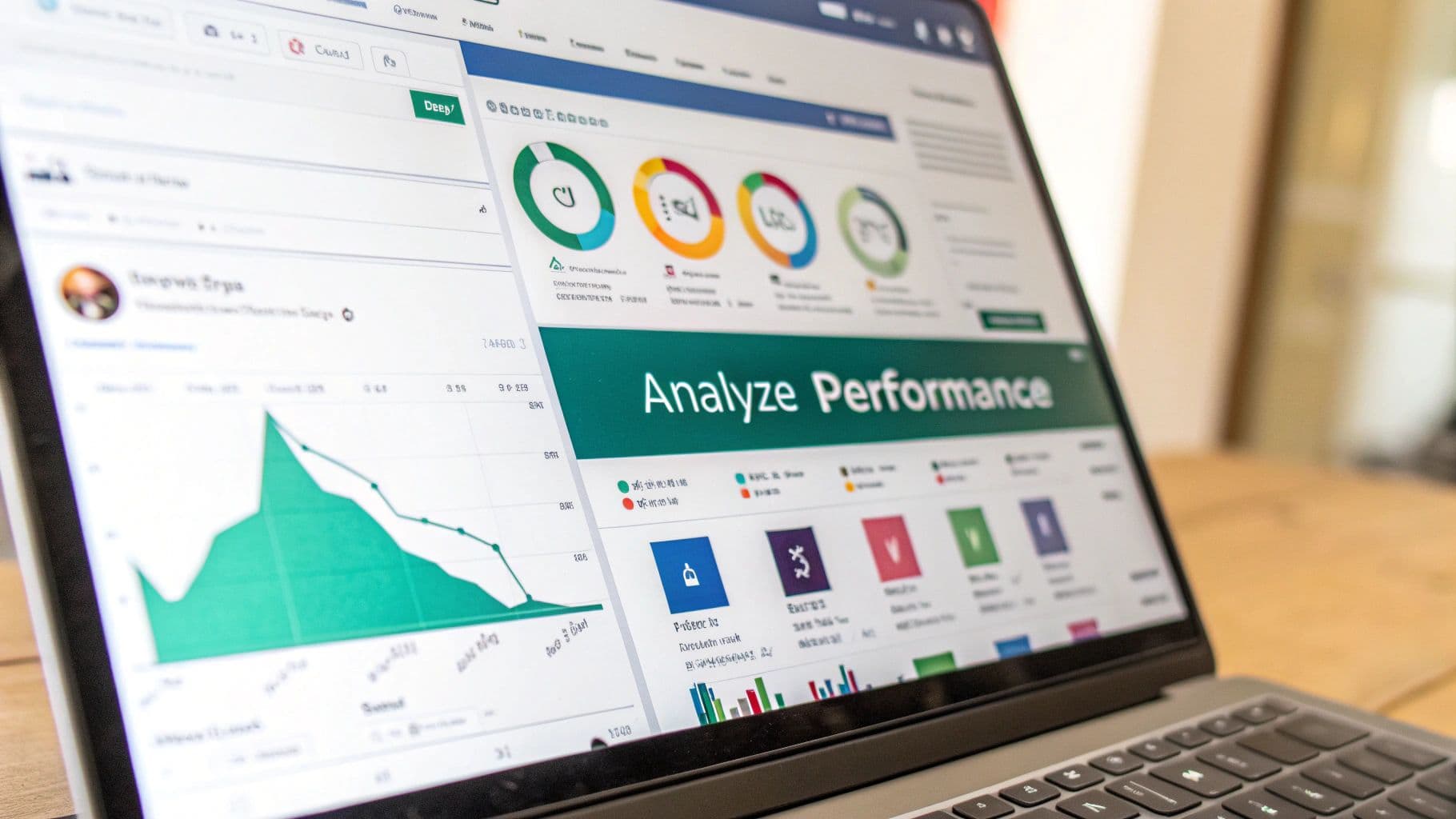
Comprehensive Analytics: The suite provides detailed insights into post performance, audience growth, and ad campaign results. You can track key metrics like reach, engagement rate, link clicks, and cost per conversion to understand what resonates and calculate your ROI.
Who It's Best For
Meta Business Suite is especially powerful for B2C companies, local businesses, e-commerce stores, and any brand targeting a broad consumer base. Its massive user demographic spans nearly every age group, making it versatile for a wide range of marketing objectives, from building brand awareness to driving direct sales.
Getting Started Effectively
Connect Your Accounts: The first step is to link your Facebook Business Page and Instagram professional account within the suite.
Install the Meta Pixel: Place this snippet of code on your website immediately. It’s crucial for tracking conversions, remarketing to website visitors, and optimizing your ad spend.
Explore the Content Calendar: Use the planner to schedule posts for both platforms in advance, ensuring a consistent content flow.
Define Your Ad Objective: Before launching a campaign in Ads Manager, be clear about your goal. Are you seeking brand awareness, lead generation, or online sales? Choosing the right objective is the foundation of a successful campaign.
While some users report occasional login issues or inconsistent customer support, the platform's enormous reach and sophisticated tools make it a foundational element of a modern marketing plan. Developing a clear plan is essential for success; for a deeper dive, you can learn how to create a social media strategy that aligns with your business goals.
Platform Link: Meta Business Suite
2. TikTok Business Center
Once dismissed as a platform for Gen Z dance challenges, TikTok has rapidly evolved into a formidable player among the top social media platforms for business. The TikTok Business Center is its dedicated hub for brands, offering a unified environment to manage advertising, creator collaborations, and integrated social commerce. It is the essential toolkit for businesses aiming to capitalize on the explosive growth and cultural relevance of short-form video.
The platform centralizes all business activities, allowing you to manage ad campaigns, find influencers in the Creator Marketplace, and oversee your TikTok Shop all from one dashboard. This integration is TikTok's key advantage; it creates a seamless journey from content discovery to purchase, often facilitated by authentic creator partnerships, all within a single ecosystem.

Key Features & Strengths
TikTok Business Center is designed for a new era of marketing that blends entertainment with commerce. Its strength lies in its ability to connect brands with creators and consumers in a native, engaging format, turning viral trends into tangible sales.
Integrated Commerce & Creator Funnel: TikTok’s major differentiator is the tight integration between its Creator Marketplace and TikTok Shop. Brands can discover and partner with creators, have them promote products, and drive sales directly through shoppable videos and live streams without users ever leaving the app.
Performance-Based Ad Formats: The Ads Manager offers unique, video-first ad formats like TopView (appears when users first open the app) and In-Feed Ads (native video ads in the "For You" feed). Targeting is based on user interests, video interactions, and creator-follower relationships, which is highly effective for discovery.
Centralized Asset & Team Management: Designed for collaboration, the platform allows you to share assets (like audience lists and creative) across different ad accounts and grant role-based permissions to team members or agencies, streamlining campaign workflows.
Who It's Best For
TikTok is a powerhouse for B2C brands, especially in fashion, beauty, food and beverage, and consumer electronics. It excels for companies targeting Millennial and Gen Z audiences and any business that can create authentic, entertaining, and trend-responsive video content. E-commerce brands with visually appealing products will find its integrated shop features particularly valuable.
Getting Started Effectively
Create a Business Account: Convert your profile to a Business Account to access analytics, the commercial music library, and other business tools.
Define Your Content Style: Don't just repurpose ads. Embrace TikTok's native style: use trending sounds, participate in challenges, and create content that feels authentic and entertaining, not overly polished.
Explore the Creator Marketplace: Before spending on ads, browse the marketplace to find creators who align with your brand. A strong creator partnership can be more effective than a traditional ad campaign.
Balance Paid and Organic: Success on TikTok requires both. Use organic content to build community and understand trends, then amplify your best-performing content with paid ads. Understanding the differences is key, so you can learn more about organic vs paid social media to build a balanced strategy.
While the platform demands a constant stream of fresh creative and has a learning curve for those new to short-form video, its unparalleled ability to drive cultural trends and convert engagement directly into sales makes it an essential marketing channel.
Platform Link: TikTok Business Center
3. LinkedIn Ads (LinkedIn Marketing Solutions)
For businesses operating in the B2B space, LinkedIn is not just another social network; it’s a critical marketplace of ideas, talent, and high-value connections. LinkedIn Ads, managed through its Marketing Solutions platform, is an essential tool among the top social media platforms for business when the goal is to reach a professional audience with precision. It offers a suite of advertising products designed for lead generation, brand building, and talent acquisition in a professional context.
Unlike consumer-focused platforms, LinkedIn provides a direct line to decision-makers and industry influencers while they are in a business-oriented mindset. This context is key. The platform allows companies to move beyond general brand messaging and engage prospects with industry-specific insights, career opportunities, and high-value content that addresses their professional challenges directly.
Key Features & Strengths
LinkedIn’s primary strength is its unparalleled professional targeting capabilities, which are built on user-provided data about their careers and skills. This allows for incredibly specific and effective ad campaigns that are nearly impossible to replicate elsewhere.
Professional Audience Targeting: Target users with extreme precision based on job title, industry, company size, seniority, specific skills, and even company name. This ensures your ad budget is spent reaching the most relevant professionals, from C-suite executives at Fortune 500s to software engineers at tech startups.
Integrated Lead Generation: LinkedIn’s Lead Gen Forms are a standout feature. These forms pre-populate with a user's profile data, dramatically reducing friction and increasing conversion rates for ebook downloads, webinar sign-ups, and demo requests.
Diverse Ad Formats: Move beyond simple text ads. Use Sponsored Content (native ads in the feed), Sponsored Messaging (direct messages to user inboxes), and Dynamic Ads that personalize creative with a user's profile data for a more engaging experience.
Who It's Best For
LinkedIn Ads is the go-to platform for B2B companies, high-value service providers (e.g., consulting, enterprise software), recruiters, and higher education institutions. It excels at objectives like generating qualified leads, driving webinar registrations, and promoting thought leadership to an influential audience. While ad costs (CPC/CPM) are typically higher than on platforms like Meta, the lead quality and potential ROI often justify the investment.
Getting Started Effectively
Set Up Your Campaign Manager: This is your central hub for creating and managing all ad campaigns. Ensure your company page is complete and professional before you begin.
Define Your Target Audience: Be specific. Use a combination of targeting filters like job function, seniority, and industry to build a highly relevant audience for your offer.
Choose the Right Objective: Select an objective that matches your goal, such as Lead Generation, Website Visits, or Brand Awareness. LinkedIn will optimize ad delivery based on your choice.
Monitor Your Campaign Demographics: After launching, use the platform's analytics to see exactly which professionals are engaging with your ads. You can use these insights to refine your targeting and improve performance. For a more granular view, consider pairing it with one of the best social media analytics software options available.
While the creative needs to be professional to resonate with the audience, LinkedIn's ability to deliver high-quality B2B leads makes it an indispensable component of any serious B2B marketing strategy.
Platform Link: LinkedIn Ads
4. YouTube Ads via Google Ads
When evaluating the top social media platforms for business, leveraging video through YouTube is a non-negotiable strategy for modern brands. Managed through the powerful Google Ads interface, YouTube Ads allows businesses to tap into a massive, engaged audience that uses the platform for everything from entertainment and education to product reviews. It’s the premier destination for brands needing to build awareness, consideration, and drive action using compelling video content.
The integration with Google Ads means your YouTube campaigns are not isolated. They are part of a broader marketing ecosystem that includes Search, Display, and Performance Max, allowing for a truly holistic approach. This setup provides access to Google’s sophisticated AI tools for targeting, optimization, and measurement, turning video advertising into a precise, data-driven discipline.

Key Features & Strengths
YouTube’s strength is its unparalleled reach and its integration with Google's advertising technology. This combination allows for diverse campaign types and precise audience segmentation that few other video platforms can match.
Diverse Ad Formats: Choose from a variety of formats to meet your goals, including in-stream skippable ads (the most common), non-skippable ads for critical messages, in-feed video ads that appear in discovery feeds, and vertical Shorts Ads to capture the attention of a rapidly growing audience.
Google AI-Powered Targeting: Move beyond simple demographics. Target users based on their search history on Google (custom intent audiences), topics they are interested in on YouTube, or audiences who have previously interacted with your website or YouTube channel (remarketing lists).
Robust Measurement & Planning: Use tools like Reach Planner to forecast campaign performance based on your budget and targeting. The platform provides detailed analytics on metrics like view-through rate (VTR), cost-per-view (CPV), and conversions, allowing you to measure direct business impact. When evaluating performance, grasping the nuances of understanding YouTube CPM for creators is crucial for contextualizing your ad spend.
Who It's Best For
YouTube Ads is ideal for B2C and B2B brands focused on top-to-mid-funnel marketing objectives like building brand awareness, demonstrating product value, and driving consideration. It’s particularly effective for companies in tech, education, automotive, retail, and entertainment where visual storytelling is key to connecting with customers.
Getting Started Effectively
Link Your Accounts: Connect your YouTube channel to your Google Ads account to unlock full features, including remarketing and engagement metrics.
Define Your Video Creative: Your video is your most important asset. Ensure the first 5 seconds are captivating to hook viewers before they have the option to skip. Tailor creative for different formats, especially vertical video for Shorts.
Choose the Right Campaign Goal: In Google Ads, select a goal like "Brand awareness and reach," "Product and brand consideration," or "Sales" to let Google’s AI optimize for your desired outcome.
Start with In-Market Audiences: For a quick win, target users who Google has identified as actively researching or planning to buy products or services like yours.
While the requirement for high-quality video creative can be a hurdle, and mastering the Google Ads interface requires some learning, the platform's enormous scale and advanced targeting capabilities make it an essential component for any business serious about video marketing.
Platform Link: YouTube Ads
5. Pinterest Business
Often described as a visual discovery engine rather than a traditional social network, Pinterest has carved out a unique space among the top social media platforms for business. It’s a platform where users actively search for inspiration, discover ideas, and plan future purchases, creating a high-intent environment for brands. The Pinterest Business account is the gateway for companies to tap into this planning mindset, turning inspiration into sales.
Pinterest functions as a digital mood board where users save ("Pin") ideas for everything from home decor and recipes to fashion and travel. For businesses, this means your content isn't just a fleeting post in a feed; it's a saved idea that users can revisit when they're ready to act. This longer content lifespan gives it a distinct advantage over more ephemeral platforms.

Key Features & Strengths
Pinterest Business offers a robust suite of tools designed to connect brands with an audience that is actively looking to make a purchase. The platform's strength is its ability to seamlessly integrate commerce into the user's discovery journey, making ads feel less like interruptions and more like helpful suggestions.
Shopping and Commerce Features: Go beyond simple image posts. Businesses can upload their product catalogs to create Product Pins, which display real-time pricing and availability. Features like "Shop the Look" and shoppable Pins allow users to purchase items directly from an image, shortening the path from discovery to conversion.
Visual-First Ad Formats: Pinterest ads are designed to be visually appealing and blend in with organic content. Formats range from standard static Pins and Video Pins to more immersive Idea Ads (multi-page video Pins) and the high-impact Premiere Spotlight for maximum visibility on the search page.
Powerful Trend Insights: The platform provides unique predictive analytics through its annual Pinterest Predicts report. This tool gives businesses a forecast of rising trends before they go mainstream, allowing for proactive content and product planning that aligns with future consumer demand.
Who It's Best For
Pinterest is a powerhouse for B2C brands in visually driven niches like retail, home decor, beauty, food, DIY, and wedding planning. It excels for e-commerce stores whose products align with users' planning moments and aspirations. Any business with a strong visual identity and a target audience interested in lifestyle content can find significant value here.
Getting Started Effectively
Create a Business Account: Convert your personal profile or create a new free business account to access analytics, ads, and other commercial tools.
Claim Your Website: Claiming your website is crucial. It adds your profile picture to any Pins saved from your site and gives you access to analytics on what people are Pinning from your domain.
Focus on "Pin-Worthy" Creative: Success on Pinterest hinges on high-quality, vertical-format visuals. Create inspiring, helpful, and aesthetically pleasing Pins that provide value, not just a hard sell.
Leverage Keywords: Since Pinterest is a search engine, SEO is vital. Use relevant keywords in your Pin titles, descriptions, and on your Boards to ensure your content is discoverable when users search for ideas.
While its advertising system may not be as mature as Meta's, Pinterest's high-intent audience and commerce-focused environment make it an essential platform for brands that want to be discovered by consumers who are not just browsing, but actively planning to buy.
Platform Link: Pinterest Business
6. Snapchat for Business
Often underestimated in conversations about the top social media platforms for business, Snapchat offers an unparalleled direct line to Gen Z and younger Millennial audiences. Its business platform is designed around immersive, full-screen vertical video and pioneering Augmented Reality (AR) experiences. For brands whose target demographic is highly active on mobile and values authentic, creative, and ephemeral content, Snapchat provides a unique and powerful marketing channel.
The platform moves beyond fleeting messages, offering a robust Ads Manager and Public Profiles for businesses to build a lasting brand. It champions a "camera-first" communication style, making it a playground for innovative brands ready to engage users with interactive Lenses, Filters, and compelling short-form video ads that feel native to the user experience.

Key Features & Strengths
Snapchat’s primary advantage lies in its ability to generate high-impact engagement through creative, camera-centric advertising formats. The platform’s self-serve Ads Manager makes these advanced tools accessible to businesses of all sizes, often with promotional offers for first-time advertisers.
Immersive Ad Formats: Snapchat specializes in full-screen, sound-on vertical video ads. Beyond standard video, brands can create AR Lenses that users can interact with, and Filters that can be overlaid on Snaps, turning users into brand ambassadors. These formats are highly memorable and drive exceptional engagement.
Targeted Audience Reach: While known for its younger audience, Snapchat's Ads Manager allows for precise targeting. Businesses can target based on demographics, interests (e.g., "Beauty Mavens," "Gamers"), behaviors (e.g., "Coffee Drinkers"), and location. You can also build Custom Audiences from your own data and create Lookalikes.
Public Profiles for Business: This feature allows brands to establish a permanent home on the platform. A Public Profile can showcase your best AR Lenses, highlights from your Stories, and a shoppable product catalog, giving users a destination to discover more about your brand.
Who It's Best For
Snapchat is ideal for B2C brands, especially in e-commerce, fashion, beauty, entertainment, and food and beverage industries that want to connect with an audience under 35. It excels for campaigns focused on brand awareness, engagement, and driving traffic to mobile-first experiences. Companies willing to invest in creative that is distinct and platform-specific will see the best results.
Getting Started Effectively
Create a Business Account: Start by setting up your free Snapchat Business Account, which gives you access to the Ads Manager and other tools.
Establish a Public Profile: Claim your Public Profile to start building an organic brand. Curate content and save your best Stories as Highlights for new followers to discover.
Experiment with AR: Use Snapchat’s free Lens Web Builder to create your own simple AR experiences without needing advanced design skills. This is a low-cost way to test the platform’s most engaging feature.
Launch a Test Campaign: Begin with a small budget in Ads Manager. Focus on a clear objective like "Website Visits" or "App Installs" and test different video creatives to see what resonates with the Snapchat audience.
While the younger-skewing audience may not suit every business, and creating platform-specific content requires a different approach than other networks, its competitive reach and innovative ad formats make it an essential consideration for modern marketing.
Platform Link: Snapchat for Business
7. X for Business (Advertising on X)
For businesses that thrive on real-time engagement and public conversation, X (formerly Twitter) remains a uniquely powerful tool among the top social media platforms for business. X for Business is the platform's advertising hub, designed to help brands inject their message directly into the fast-paced, trending discussions that define the user experience. It’s the ideal environment for product launches, event promotions, and campaigns tied to timely cultural moments.
X’s strength lies in its conversational nature. Unlike other platforms focused on curated visual feeds, X is about what's happening right now. The advertising suite allows businesses to capitalize on this immediacy by targeting users based on the topics they are actively discussing, the accounts they follow, and the keywords they use in their posts.

Key Features & Strengths
The X Ads Manager provides a direct pathway to reach a highly engaged and vocal audience. Its core advantage is the ability to align your marketing efforts with current events and conversations, making your brand part of the cultural zeitgeist.
Real-Time Conversation Targeting: This is X's standout feature. You can target users who have recently engaged with or searched for specific keywords and hashtags. This allows for hyper-relevant ad placement during major events like sporting championships, industry conferences, or viral trends.
Flexible Campaign Objectives: The platform supports a variety of goals, including increasing website traffic, generating leads, driving app installs, or simply boosting the reach of your posts. Budgets are flexible, allowing for both small-scale tests and major campaign spends.
Follower Lookalike Targeting: Similar to other platforms, you can target users who share characteristics with your existing followers. This helps you find new, relevant audiences who are likely to be interested in your brand based on their similarities to your current community.
Multi-User Access & Roles: The Ads Manager is built for teams, allowing you to grant different levels of access (e.g., Account Administrator, Ad Manager) to colleagues or agency partners for collaborative campaign management.
Who It's Best For
X is particularly effective for B2B tech companies, news and media outlets, SaaS providers, and direct-to-consumer (D2C) brands with a strong voice and personality. It excels for businesses that need to engage in public dialogue, provide real-time customer service, or build authority within a specific industry niche.
Getting Started Effectively
Set Up Your X Ads Account: If you have an X profile, you can easily create an ads account by visiting the X for Business site.
Define Your Campaign Goal: Your first step inside Ads Manager is to choose an objective. Be specific: are you aiming for clicks, video views, or follower growth? This choice will dictate the ad formats and bidding options available to you.
Hone in on Your Audience: Spend time exploring the targeting options. Start by targeting followers of key industry influencers, competitors, or complementary brands. Layer this with relevant keyword and conversation targeting.
Craft Compelling Creative: X is a text-forward platform, but strong visuals (short videos, GIFs, or striking images) are crucial for stopping the scroll. Ensure your copy is concise, direct, and includes a clear call to action.
While users have reported inconsistencies in the advertiser experience and customer support, and brand safety requires ongoing evaluation due to shifting policies, X's ability to tap into live conversations is unmatched. For brands that can move quickly and speak authentically, it offers a direct line to what the world is talking about.
Platform Link: X for Business
Top 7 Social Media Platforms for Business — Comparison
Meta Business Suite (Facebook & Instagram):
This platform is easy to manage for running ads on both Facebook and Instagram in one place. It gives you a large audience, flexible budgets, and strong performance tracking, making it ideal for consumer brands and local businesses.
TikTok Business Center:
Best for brands that can create frequent short videos. It offers high engagement and viral potential, especially through creator collaborations and in-app shopping features.
LinkedIn Ads:
Designed for B2B marketing. Although it is more expensive, it delivers high-quality leads because you can target people by job title, industry, and company.
YouTube Ads (via Google Ads):
Requires strong video content and more setup, but it provides massive reach and excellent brand awareness. It is ideal for storytelling and top-of-funnel campaigns.
Pinterest Business:
Works well for visually appealing products like fashion, home, beauty, and food. Users are often in a planning and buying mindset, so it drives purchase intent.
Snapchat for Business:
Very effective for reaching younger audiences with vertical video and AR ads. It creates immersive and highly engaging campaigns.
X (Twitter) Ads:
Best for real-time marketing such as events, launches, and trending conversations. It is quick to set up and works well for timely promotions.
Beyond the Platform: Building a Cohesive Social Strategy
Navigating the landscape of the top social media platforms for business can feel overwhelming, but as we've explored, the key isn't to be everywhere at once. True success lies in strategic selection and masterful integration. We’ve dissected the powerhouses-from the visual storytelling hubs of Meta (Facebook and Instagram) and Pinterest to the professional networking giant of LinkedIn and the short-form video phenomenon of TikTok. Each platform offers a unique gateway to a specific audience, with its own language, etiquette, and content expectations.
Your first step is to move beyond the features and focus on your core objectives. Don't choose a platform simply because it's popular; choose it because it's where your target audience congregates and because its format aligns with your brand's voice and goals. A B2B tech firm will find its home in the data-rich, professional environment of LinkedIn, while a visually-driven e-commerce brand can build a dedicated community on Instagram and Pinterest.
From Platform Selection to Strategic Execution
Once you've identified your primary channels, the real work begins. A winning social media profile is not a collection of disconnected profiles but a unified ecosystem. Your brand's core message, values, and visual identity must remain consistent, even as you adapt your content to each platform's native style. What works as a polished, in-depth article on LinkedIn won't resonate as a 15-second TikTok clip, but both can communicate the same underlying brand principle.
Consider these final action points as you build your cohesive strategy:
Audit Your Audience: Revisit your ideal customer profile. Where do they truly spend their time online? Use the demographic insights from this article to cross-reference and confirm your platform choices.
Define Platform-Specific Goals: Assign a primary role to each channel. Is Instagram for brand awareness and community building? Is LinkedIn for lead generation and B2B networking? Is YouTube for educational content and establishing authority? Setting clear KPIs for each platform prevents wasted effort.
Master the Content Nuances: Acknowledge that a one-size-fits-all content strategy is ineffective. A successful brand might share a behind-the-scenes video on an Instagram Story, a polished case study on LinkedIn, and an engaging user-generated content challenge on TikTok, all reinforcing the same campaign theme.
Integrate and Automate: Managing multiple platforms manually is a recipe for burnout. To efficiently manage your brand across these diverse platforms and execute a cohesive strategy, consider leveraging some of the best social media marketing tools for small business. These solutions help with scheduling, analytics, and community management, freeing you up to focus on creating high-impact content.
Your Path Forward: Authentic Growth and Connection
Ultimately, the most effective social media strategies are built on a foundation of authenticity and value. Your goal is not just to broadcast a message but to build a community. Engage in conversations, listen to feedback, and provide content that educates, entertains, or inspires. As you do, you'll transform passive followers into loyal brand advocates.
This journey from platform selection to strategic implementation is what separates fleeting social media activity from sustainable business growth. By carefully choosing your channels, adapting your message, and leveraging the right tools, you can create a powerful, integrated social media presence that drives tangible results and forges lasting connections with your audience. The digital stage is set; it's time to tell your story.
Ready to amplify your Instagram presence with real, engaged followers? Gainsty uses advanced AI and expert-led strategies to connect your brand with a genuinely interested audience, driving authentic organic growth without bots or shortcuts. Start growing with Gainsty today and turn your followers into loyal customers.