.jpg&w=1920&q=75&dpl=dpl_2si4hWs7xtpQVmrY6d8xhJ1wLJZL)
What Is Influencer Outreach Really About?
At its heart, influencer outreach is the engine that drives any successful influencer marketing strategy. You can think of it less like buying a billboard and more like a casting director searching for the perfect actor for a career-defining role. Instead of shouting a generic message into the void, you're partnering with people who have already built trust and captured the attention of a niche community.
This entire approach is built on a simple truth: people trust recommendations from those they follow and admire far more than they trust traditional ads. When a creator they genuinely like recommends a product, it feels less like a sales pitch and more like getting advice from a friend.
And the goal here isn't just a one-and-done campaign. It's about building lasting partnerships that create sustained brand growth and credibility over time. To really get a handle on just how powerful this is, it’s worth exploring the core benefits of Influencer Marketing and how it cuts through the noise of a crowded market.
The bottom line: Great influencer outreach is relational, not transactional. The best collaborations always stem from personalized, thoughtful communication that shows you actually respect the creator, their work, and their audience.
This simple infographic neatly breaks down the core stages.
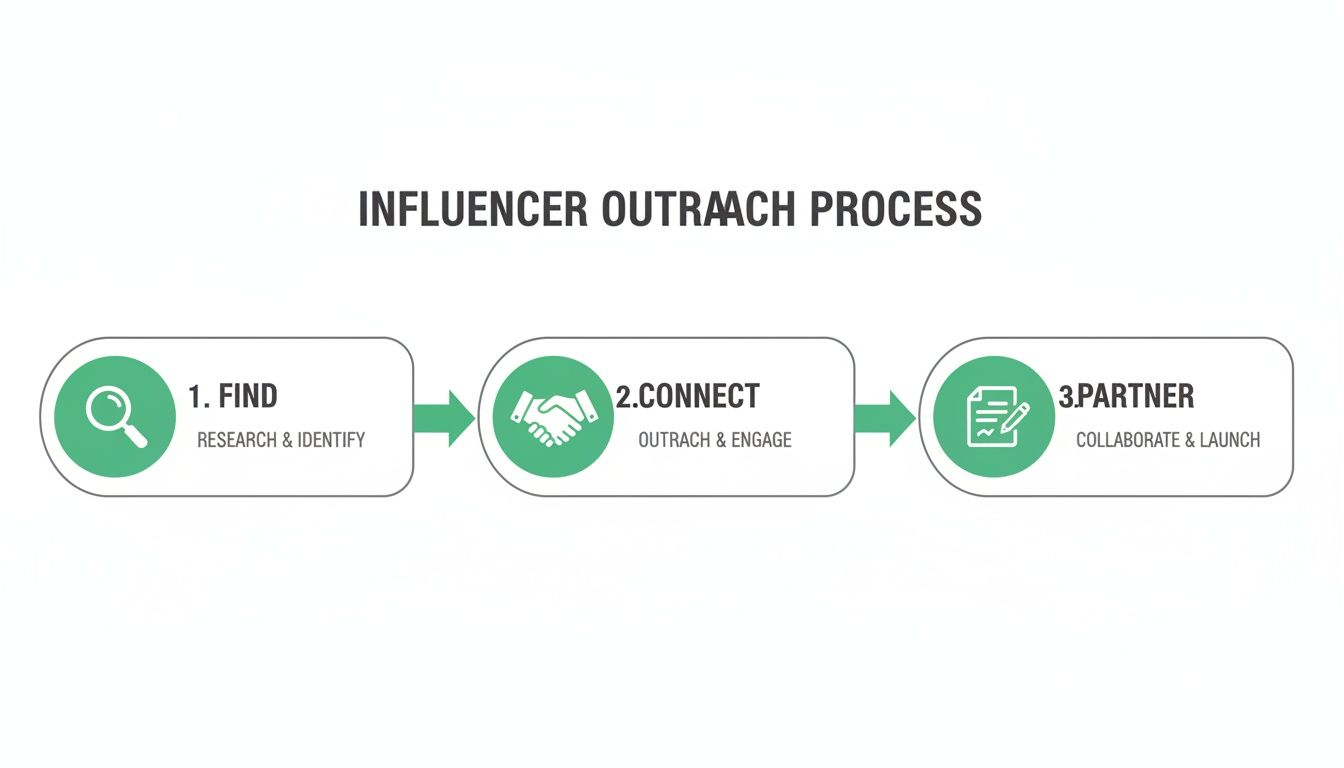
As you can see, every solid partnership follows a clear path from discovery to a signed-and-sealed collaboration.
The sheer growth in this field tells the whole story. The global influencer marketing industry is on track to hit a massive $32.55 billion market size by 2025—a wild jump from just $1.7 billion back in 2016. That kind of explosive growth is a clear signal that more and more brands are banking on authentic partnerships to get real, tangible results. You can dig deeper into the numbers by checking out the latest influencer marketing report on InfluencerMarketingHub.com.
Finding Influencers Who Align With Your Brand
The entire success of your outreach campaign rests on finding the right partners. This isn't a numbers game about chasing creators with massive follower counts; it's about finding people whose audience, values, and content style genuinely click with your brand. A bad partnership won't just waste your budget—it can actively harm your reputation.
Think of it like casting for a movie. You wouldn't hire a famous comedian to star in a serious, gut-wrenching drama. The same logic applies here. You're looking for creators who feel like a natural extension of your brand's story, so the collaboration feels authentic and believable to their audience.
Moving Beyond Follower Counts
A huge follower count looks great on paper, but it’s often just a vanity metric. What’s more valuable: a creator with one million followers who passively scroll by, or one with 10,000 die-hard fans who hang on their every word? The real magic is in the details.
To find that magic, you need to dig into a few key areas:
Audience Demographics: Does their audience look like your ideal customer? Check their age, location, interests, and other data points.
Engagement Rate: Don't just glance at likes. Are people actually commenting, sharing, and saving the content? High engagement signals a loyal, active community.
Content Quality and Style: Does their aesthetic and tone of voice fit your brand? The collaboration should feel like something you’d be proud to create yourselves.
Brand Values: Do their core beliefs line up with yours? A partnership with someone whose personal brand clashes with your company's values is a recipe for disaster.
This chart from Influencer Marketing Hub shows a fascinating trend: as follower counts go up, engagement rates often go down. This is precisely why smaller influencers can pack such a punch.

The data makes it clear that nano and micro-influencers often drive much higher engagement, making them incredibly potent partners. If you want to learn more, check out our guide on how to find micro-influencers who can deliver real results.
Vetting Potential Partners Effectively
Once you’ve got a shortlist, the real work begins. It’s time to manually review each creator to separate the authentic voices from those with doctored numbers. Keep an eye out for red flags, like a massive follower count with barely any comments, or generic "Nice pic!" comments that scream "bot."
There's a reason influencer marketing is taking off. Back in 2023, 86% of marketers reported using it, and a solid 59% planned to increase their influencer budget. This shows that brands are seeing incredible value in these partnerships, which makes getting the vetting process right more important than ever.
Pro Tip: A genuine influencer’s comment section is a conversation, not a ghost town. Look for real questions from followers and thoughtful replies from the creator. That back-and-forth is the sign of a healthy, engaged community.
To help manage all the moving parts—from finding creators to tracking results—exploring some of the best influencer marketing tools can be a huge help.
Crafting Outreach Messages That Get Opened
Your pitch is your first—and maybe only—shot to make an impression. Influencers are swimming in DMs and emails, most of which are lazy, copy-pasted templates that scream "I don't actually know who you are." They hit the delete button without a second thought.
To cut through that noise, your message can't feel like a mass email. It needs to land like a personal, thoughtful invitation.
Think of it like this: you wouldn't ask someone out by handing them a generic form letter. You'd bring up something specific you noticed about them to show you're actually interested. It's the same principle here. Personalization isn't just a nice-to-have; it's what gets you a reply. In fact, personalizing your outreach can boost open rates by as much as 30%.
The Anatomy of a Winning Pitch
A great outreach message isn't just one thing; it's a combination of four key ingredients. Each part has a job to do, moving the influencer from "who is this?" to "okay, I'm listening."
A Subject Line That Doesn't Suck: This is your first test. Make it personal and interesting. Ditch "Collaboration Inquiry" and try something like, "Loved your recent post on [Topic]! Idea for you..."
The Personalized Hook: Show them you've done your homework. Right away, mention a specific video, a project they just launched, or even something funny from their bio that you connected with. This instantly proves you see them as a creator, not just a number.
The "What's In It For You" Part: Get straight to the point. Why should they care? Be clear about what you're offering. Is it a paid project? A free product you genuinely think they'll love? An opportunity to co-create something cool? Honesty works wonders.
A Simple, No-Fuss Call-to-Action (CTA): End with an easy next step. Don't ask them to jump through hoops like filling out a long form or reading a 10-page brief. A simple, "Mind if I send over a few more details?" is perfect.
Key Takeaway: Your goal is to start a conversation, not to close a deal in the first email. Frame the entire message around them, their content, and why a partnership would be a natural fit for their audience.
Following Up Without Being Annoying
So, you sent the perfect email... and all you hear are crickets. Don't panic. Silence isn't always a "no." More often than not, it just means your message got buried. A polite follow-up is often the gentle nudge that gets you noticed.
The trick is to be persistent without being a pest.
Give it about a week, then send a quick, friendly reminder. The easiest way is to just reply to your original email with a short note like, "Hey! Just wanted to bump this to the top of your inbox. Let me know if you had a chance to think about it!"
If you still don't get a response after one or two nudges, it's probably best to let it go and move on. This approach shows respect for their time, protects your brand's reputation, and keeps the door open for a potential collaboration down the road.
Building Your Influencer Collaboration Framework
Getting an influencer to say "yes" is a fantastic moment, but it's the starting line, not the finish. The real work is just beginning. Now, you need to turn that initial agreement into a structured, professional partnership that actually gets results. This is where you build your collaboration framework—a clear roadmap that manages expectations, protects both you and the creator, and sets the stage for incredible content.
Think of it like building a house. You wouldn't just start hammering nails without a blueprint, right? Your collaboration framework is that blueprint, outlining every detail from payment terms to content deadlines. It stops misunderstandings before they start and keeps the entire process running smoothly.

From Handshake to Contract
First things first: move the conversation from an informal chat to a formal agreement. A contract is absolutely non-negotiable. It's the safety net for both you and the influencer, clearly defining what everyone is responsible for. This document becomes the single source of truth for the entire campaign.
To avoid any "I thought you meant..." moments down the line, make sure your contract explicitly covers these key areas:
Deliverables: Be specific. How many posts, stories, or videos are expected? On which platforms? Don't leave it open to interpretation.
Compensation: Clearly state the payment amount, how it will be sent, and when. Whether it's a flat fee, gifted product, or an affiliate code, get it in writing.
Timelines: Set firm but realistic deadlines for content drafts, your feedback, and the final go-live date.
Usage Rights: This is a big one. Define how and where you can repurpose the influencer’s content. Can you use it on your website, in paid ads, or on your brand’s social media? For how long?
Exclusivity: Does this partnership prevent the influencer from working with your direct competitors for a certain period? If so, define that timeframe clearly.
A strong contract isn't about mistrust; it’s about clarity. It ensures everyone is on the same page, which is the foundation of any successful and respectful professional relationship.
Inspiring Creativity with a Clear Brief
While the contract handles the legal side of things, the creative brief is all about guiding the content itself. The trick is to provide clear direction without crushing the creator's unique style—the very thing that made you want to work with them in the first place. A great brief inspires, it doesn't dictate.
Think of the brief as a guide, not a script. Include the essentials: your campaign goals, key messages, and any must-haves like specific hashtags or @mentions. But always leave plenty of room for their personality to come through. Our guide on how to collaborate with influencers goes much deeper into crafting these partnerships effectively.
Finally, set up a simple content approval process. When you give feedback, make it constructive and specific, but remember to trust their expertise. They know their audience best. Open communication is the glue that holds this all together. By building a solid framework based on clear agreements and inspiring briefs, you set your influencer partnerships up to be organized, professional, and ready for success.
7. Measuring the True Impact of Your Outreach Efforts
Getting an influencer to say "yes" is a great first step, but it’s far from the finish line. If you’re not measuring what happens after their content goes live, you’re basically flying blind. You can't prove what's working, what's not, or why your boss should give you more budget next quarter.
The real success of an influencer campaign isn’t measured in positive replies. It's measured by the tangible impact those collaborations have on your business goals.
That means we need to look past the flashy, feel-good numbers—the "vanity metrics" like follower counts and likes. Sure, they might give you a quick ego boost, but they don't tell the whole story. To really understand performance, you have to focus on the key performance indicators (KPIs) that connect directly to your bottom line.
Moving Past Vanity Metrics to Actionable KPIs
Let's be honest: vanity metrics are tempting because they're easy to see and often look impressive. An influencer with 2 million followers seems like a home run, right? But if those followers don't actually do anything, that big number is meaningless.
Actionable KPIs, on the other hand, tell you how people are interacting with your brand because of an influencer's content. Are they clicking, buying, or signing up? That’s what truly matters.
Here’s a breakdown of the metrics you should be focusing on:
Audience interest: Instead of over-relying on follower count or likes, focus on your engagement rate—calculated as (comments + shares + saves) ÷ followers × 100. This shows whether people genuinely care about and interact with your content.
Driving traffic: Rather than just tracking reach or impressions, prioritize click-through rate (CTR). CTR tells you how many people actually took action by clicking your link in a post, Story, or bio.
Lead generation: Video views alone don’t show real results. A stronger KPI is newsletter sign-ups or lead magnet downloads, which measure how many users were willing to exchange their email for value.
Sales performance: General brand mentions can be misleading. Focus instead on conversion rate, which shows the percentage of clicks that turned into real purchases and directly ties performance to revenue.
Focusing on the right-hand column is what separates a campaign that looks good from one that actually is good for business.
The Bottom Line: A successful campaign isn’t just seen—it inspires action. Focusing on conversions, CTR, and genuine engagement is how you prove the true ROI of your influencer outreach.
Tools for Nailing Down Attribution
Guesswork has no place in performance tracking. You need to be able to draw a straight line from an influencer's post to a customer's purchase. Fortunately, there are a few straightforward tools to help you do just that.
Here are the most effective ways to track performance:
UTM Parameters: Think of these as little tracking codes you add to the end of a URL. By giving each influencer a unique UTM link, you can jump into Google Analytics and see exactly how much traffic and revenue they generated. No more guessing.
Unique Discount Codes: This is one of the simplest and most effective methods. Give each influencer a custom code, like "SARA15" or "MIKE20." It gives their audience an incentive to buy and gives you clean, undeniable data on who drove which sale.
Affiliate Links: These are special, trackable links that function much like UTMs but are often tied to a commission structure. Platforms like ShareASale or Rakuten make it easy to set these up, and they're a powerful way to motivate influencers to drive sales.
Implementing these methods will give you a crystal-clear picture of who your top performers are and where your budget is best spent. To go even deeper, our guide on measuring social media ROI offers a complete framework for tracking your results.
Common Outreach Mistakes You Need to Avoid
Even the most carefully planned influencer outreach can fall flat because of a few common—and easily fixable—mistakes. Honestly, learning from these pitfalls is the quickest way to sharpen your approach and build a program that creators actually want to be a part of. Too many brands stumble right out of the gate, turning off potential partners before a real conversation can even begin.
Think of your outreach as a professional introduction. A generic, copy-pasted email is the equivalent of showing up to a meeting and calling someone by the wrong name. It immediately shows you haven't put in the effort. Likewise, approaching a creator with a vague or confusing offer just creates uncertainty, making it incredibly easy for them to hit delete and move on.

Sending Impersonal Mass Emails
The number one mistake, hands down, is treating outreach like a generic email blast. Influencers get dozens of "Dear Influencer" messages every single day, and they can spot a template from a mile away. These pitches feel lazy and show zero genuine interest in their work.
The fix is simple: always personalize your opening lines. Mention a specific post, video, or story of theirs that you genuinely liked. This small step instantly proves you’ve done your homework and see them as an individual, not just another name on a spreadsheet. A little effort here goes a long, long way.
Key Takeaway: An impersonal email screams, "I only care about your follower count." A personalized message shows respect and opens the door for an actual partnership.
Offering Insulting Compensation
Another major misstep is massively undervaluing a creator's work. Offering only "exposure" or a cheap product to an influencer with a thriving, engaged community is often taken as an insult. This is their job, after all—it takes time, skill, and real resources to create quality content.
Instead of trying to get a bargain, research the standard industry rates for their niche and audience size. Come prepared to offer fair payment or a high-value product exchange that truly reflects the effort they'll be putting in. Treating creators like professional partners from the start builds the trust needed for great, long-term collaborations.
Common Questions About Influencer Outreach
When you're first diving into influencer partnerships, a few questions always pop up. Let's tackle some of the most common ones so you can build your outreach plan with a bit more confidence.
How Much Should I Actually Pay an Influencer?
This is the million-dollar question, and honestly, there's no single answer. The right compensation really boils down to the creator's audience size, their engagement rates, and exactly what you're asking them to do.
Here’s a rough breakdown of what you can expect:
Product Gifting: This is a great starting point for nano-influencers (those with 1k-10k followers). They're often eager to build their portfolio and will happily promote a product they genuinely love in exchange for the product itself.
Flat Fees: Once you get into the micro-influencer tier (10k-100k followers) and above, expect to pay a flat fee. This could be a fixed rate per post, story, or video, and can range from a few hundred dollars to tens of thousands for top-tier talent.
Commission/Affiliate: Performance-based pay is another solid option, especially for building long-term relationships. In this model, the influencer earns a cut of every sale they drive, which keeps them motivated to create content that converts.
What’s the Difference Between Outreach and Marketing?
It’s easy to mix these two up, but they play very different roles.
Think of influencer marketing as the entire strategy—it’s your big-picture blueprint. This includes your goals, your budget, and the overall campaign concept.
Influencer outreach, on the other hand, is the action. It’s the hands-on work of finding the right creators, sending those first emails, and building the one-on-one relationships that make the marketing plan a reality. Outreach is how you execute the blueprint.
How Many Times Should I Follow Up?
There's a fine line between being persistent and becoming a pest. My rule of thumb is to send one or two follow-ups, spaced about a week apart.
If you don't get a response after that second friendly nudge, it’s usually best to let it go. Your time is better spent finding another creator who is a more enthusiastic fit for your brand.
Ready to grow your Instagram audience without the guesswork? Gainsty uses advanced AI and expert strategies to connect you with real, engaged followers organically. Start growing with Gainsty today.