Introduction to Organic Instagram Growth Today
A local bakery posts beautiful cake photos every week. A fitness coach uploads motivational captions and client wins. A lifestyle creator films polished content and shows up on Stories daily. All three are working. All three may still feel stuck.
That frustration makes sense. Recent benchmark data shows Instagram has tightened. Socialinsider reported that average engagement on Instagram fell from 0.50% to 0.48% in 2025 to 2026, while follower growth slowed across brand sizes, which points to a harder reality. Organic growth now leans more on content quality, consistency, and format choice than on sheer posting volume, based on Socialinsider's Instagram benchmark data.
Why growth feels harder now
A few years ago, many accounts could post a decent image, add a caption, and get predictable reach from followers. That's less reliable now. Instagram increasingly acts like a recommendation engine. It tests whether your content deserves wider distribution.
So if your account isn't growing, the problem may not be effort. It may be that your content mix doesn't match how discovery works today.
Practical rule: If most of your content only reaches people who already follow you, you're maintaining an audience, not expanding one.
What people usually misunderstand
Many creators define growth too narrowly. They look only at followers. But follower count is a lagging outcome. Before someone follows, they usually discover you, watch you, save something, share something, or return for more.
That's why understanding what organic Instagram growth is matters so much. Once you see how it works, your posting decisions get simpler. You stop chasing random tactics and start designing content for a purpose.
By the end, you'll know what organic growth really means, how Instagram distributes content, which formats do the heavy lifting in 2026, and how to build a repeatable strategy that doesn't rely on ads or shortcuts.
What Organic Instagram Growth Really Means
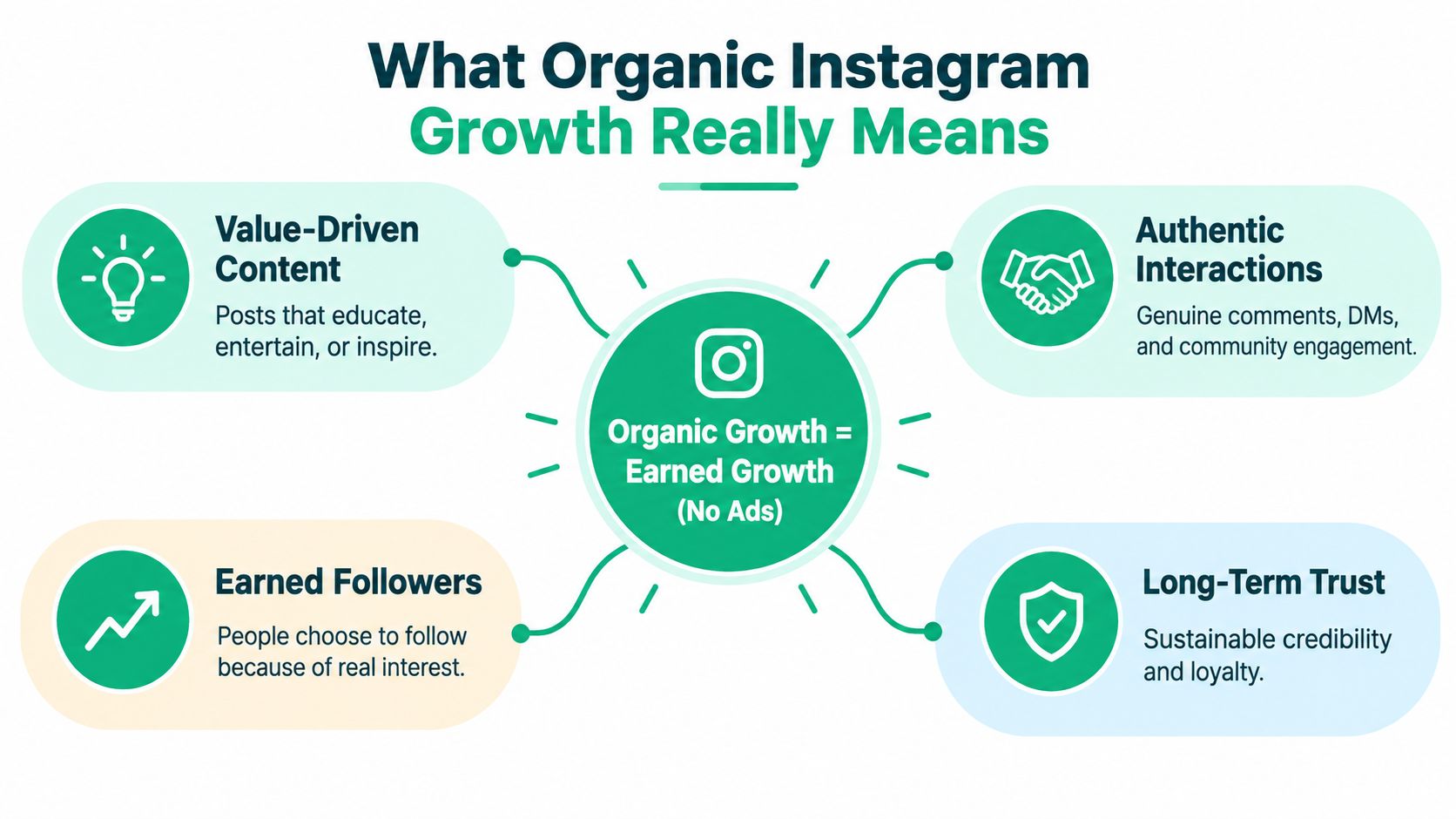
Organic Instagram growth means earning attention on Instagram without paying for ads. That includes gaining followers, reach, saves, comments, shares, replies, and trust through the content you publish and the way you interact with people.
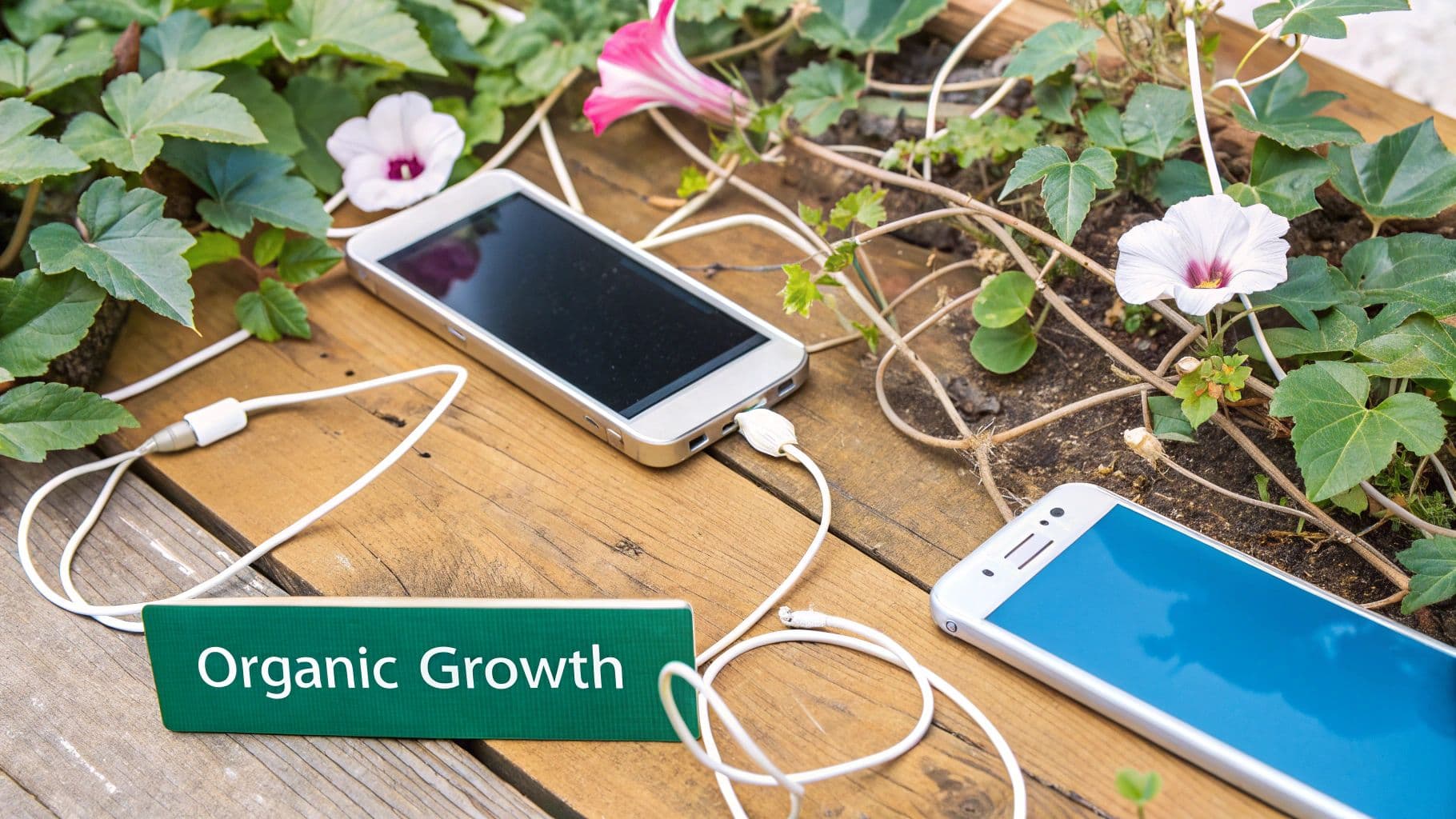
A simple way to think about it is gardening.
Paid growth is like buying full-grown plants and placing them in your yard. They look impressive fast. Organic growth is planting, watering, pruning, and staying consistent until people want to come back to your garden on purpose.
What counts as organic
Organic doesn't mean random, and it doesn't mean passive. You're still being strategic. You're just not paying for distribution.
Organic activity includes things like:
Publishing useful content: Tutorials, behind-the-scenes clips, product education, opinions, or entertainment that gives people a reason to stop.
Starting real conversations: Replying to comments, answering DMs, and participating in your niche in a human way.
Improving your profile: Clear bio, strong post topics, recognizable visuals, and a reason for someone to follow.
Collaborating naturally: Working with adjacent creators, customers, or brand partners in ways that introduce you to relevant audiences.
What organic does not mean
It doesn't mean “never promote anything.” Businesses can absolutely sell organically. Creators can pitch offers organically. The difference is that people discover and trust you through unpaid content first.
It also doesn't mean chasing viral luck. A single spike in views can happen organically, but sustainable growth is more deliberate. It comes from publishing content that repeatedly earns attention.
Organic growth works best when every post has a job. Some posts attract strangers. Others convince those strangers to stay.
Why earned followers matter more
A paid click can bring someone to your page. A fake follower can inflate a number. But an organic follower chooses you because your content fits their interests.
That choice matters. It usually creates better trust, stronger engagement, and a clearer understanding of what your audience wants. For B2B teams learning this same lesson on another platform, this guide to YouTube growth for B2B brands is useful because it shows how audience building depends on relevance, not just reach.
When people ask, “What is organic Instagram growth?” the best answer is this: it's earned growth. You earn visibility, attention, and loyalty by publishing content people value enough to engage with and return to.
How the Instagram Algorithm Powers Organic Growth
Instagram doesn't distribute every post equally. It makes predictions. It asks, in effect, “Will people care enough about this to keep watching, saving, sharing, or responding?” Your content gets more reach when user behavior answers yes.
That's why organic growth feels mysterious until you zoom in on signals.
The signals Instagram pays attention to
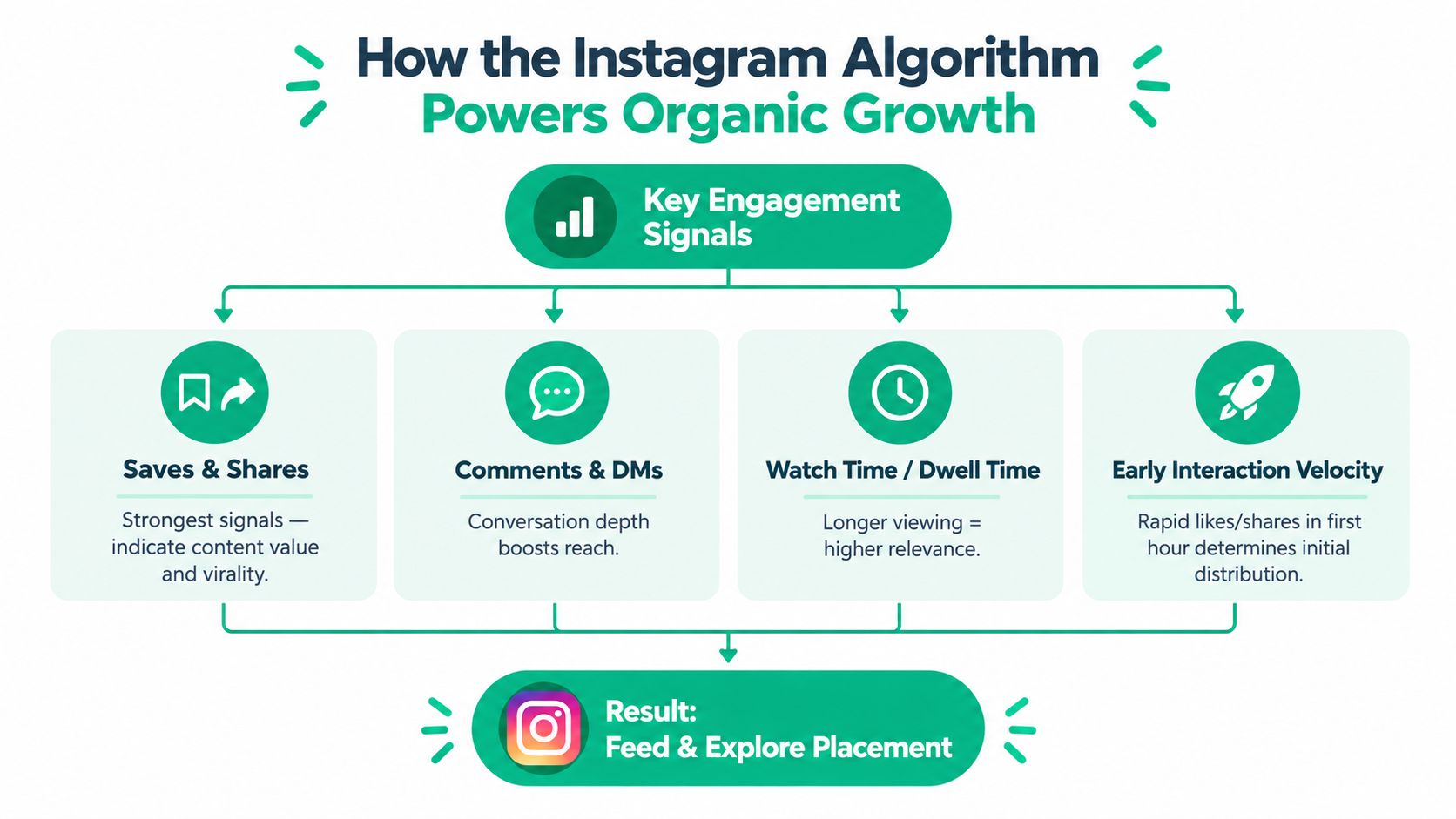
Not all engagement means the same thing. A like is easy. A save usually means the content had lasting value. A share means someone thought it was worth passing along.
These signals tend to matter because they show depth of interest:
Saves and shares: Strong clues that your content is useful or worth revisiting.
Comments and DMs: Signs that your post sparked a response or conversation.
Watch time or dwell time: If people stay with the content, Instagram has a reason to keep testing it.
Early interaction velocity: When people respond quickly after posting, Instagram often has more confidence distributing the content further.
If you want a plain-English breakdown of distribution logic, this explainer on how Instagram's algorithm works is a helpful companion.
Why format choice matters more than most posting tips
Here's the big shift. Organic growth in 2026 is strongly shaped by format.
Recent benchmark data shows that carousels and Reels outperform static images. Carousels are around 0.50% to 0.52% engagement, Reels are around 0.48% to 0.50%, and images lag near 0.33% to 0.37%, based on DataSlayer's Instagram algorithm guide. That gap matters because discovery among non-followers drives a large share of organic growth.
So the question is no longer just, “How often should I post?” It's also, “Which format helps this idea travel?”
Discovery formats and retention formats
A useful model is to split your content into two jobs.
Discovery content usually works best as Reels because it helps you reach non-followers.
Retention content often works best as carousels because it creates deeper engagement, earns saves, and helps people understand your message.
Connection content is usually strongest in Stories because it keeps you present with existing followers.
Reference content fits select feed posts because it supports brand positioning and adds depth to your profile.
Reels are your storefront sign. Carousels are your sales conversation. Stories are the follow-up text.
A creator who posts only Stories may stay warm with current followers but struggle to grow. A business that posts only polished images may look professional but miss discovery. The accounts that grow tend to use formats with different jobs on purpose.
If growth has stalled, audit the format, not just the frequency.
Once you understand this, the algorithm becomes less intimidating. It's not a black box in every case. It's a distribution system reacting to audience behavior, and some formats give your content more chances to earn that behavior than others.
Organic Growth Compared With Paid and Artificial Methods
Not every growth path is the same, and not every shortcut deserves the word growth. Some methods buy attention. Some methods borrow it. Some methods fake it.
The fastest way to understand your options is to compare them side by side.
Organic vs paid vs artificial Instagram growth compared
Organic growth usually has a lower direct media cost, but it often takes longer to build. Its engagement quality is often stronger because people choose to engage, and the long term risk is lower when your tactics stay authentic and platform-safe.
Paid growth gives you faster distribution if you have budget. It can work well, but engagement quality depends on your targeting and offer. The main tradeoff is budget dependence, along with weaker trust if ads replace relationship-building.
Artificial growth often looks fast at first, but the engagement quality is usually poor because the numbers do not reflect real interest. It also carries high risk for credibility, account health, and future performance.
When paid makes sense
Paid promotion isn't bad. It's a tool. If you have a launch, a lead magnet, a new offer, or a strong product page, ads can create speed.
But paid reach doesn't automatically create a loyal audience. If the content itself is weak, you're renting attention, not building an asset. That's why many brands pair paid campaigns with a stronger organic content engine.
If you're weighing that balance, organic vs paid social media gives a useful framework for deciding where each approach fits.
Why artificial methods are in a different category
Buying followers, using bots, or joining spammy engagement schemes can make an account look bigger than it is. But that appearance comes with a cost. The account may attract the wrong audience, send weak signals to the algorithm, and make real people skeptical.
A brand manager considering a partnership won't care much about a big follower number if the comments look empty, repetitive, or irrelevant. A creator's inflated metrics can also make future performance harder to interpret, because the account is full of people who were never interested in the content.
The compounding advantage of organic
Organic growth builds a library. Every Reel, carousel, caption, and comment thread becomes part of your reputation. Over time, people recognize your ideas, your style, and your usefulness.
That's what makes organic growth different. It compounds in trust, not just in exposure.
For creators and business owners, the practical decision usually looks like this:
Use organic when you want a durable audience and clearer feedback from real people.
Use paid when you need speed, testing, or extra reach for a strong offer.
Avoid artificial methods because they distort the account and create problems later.
Risks of Non-Organic Shortcuts You Should Avoid
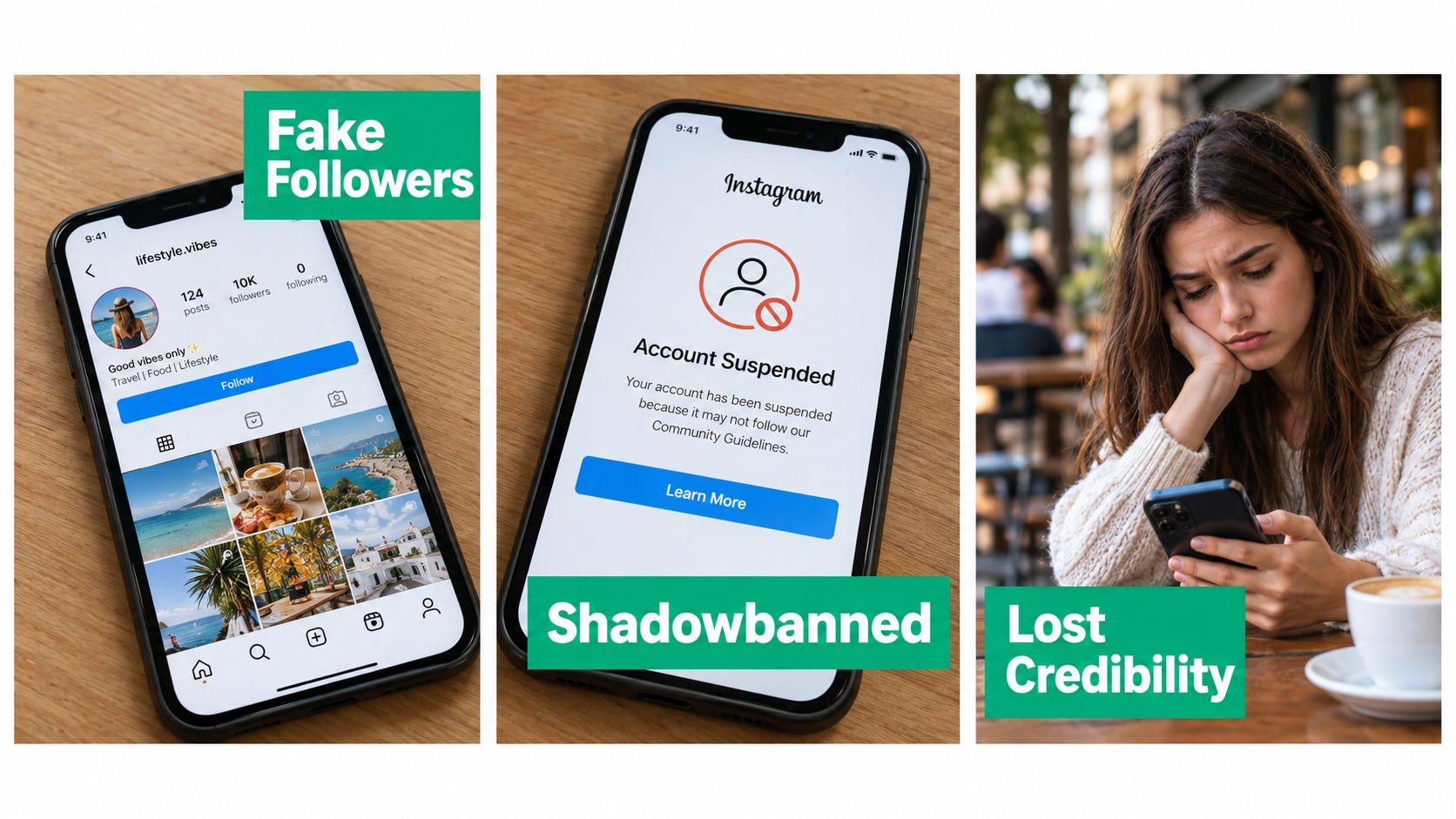
Shortcuts are tempting because they offer visible numbers fast. A larger follower count looks reassuring. Automated likes and comments can make a page seem active. Engagement pods can create the illusion of momentum.
But Instagram growth built on fake activity usually breaks in public.
Why fake growth hurts real performance
Instagram's systems are built to detect patterns that don't look natural. Repetitive comments, suspicious follow activity, and low-quality engagement can all work against you.
Even when an account avoids an obvious penalty, fake growth still creates quieter damage:
Your audience data gets muddy: You can't tell what real people respond to if the account is filled with low-quality activity.
Your engagement rate weakens: A bloated follower count often makes actual interaction look smaller by comparison.
Your content gets worse: When numbers are fake, feedback becomes useless. You stop learning what works.
A follower who never cared about your content isn't an asset. They're noise in your analytics.
The credibility problem
Influencers, founders, coaches, and local businesses all run into the same issue. Real people can tell when engagement looks off. So can agencies, partnership managers, and potential customers.
A skincare creator with a large following but generic comments may lose brand trust. A restaurant with many followers but little meaningful interaction may look less popular than a smaller competitor with active local fans. The problem isn't only ethics. It's conversion.
Common shortcuts to avoid
Some tactics look harmless because lots of people use them. That doesn't make them wise.
Bought followers: They inflate vanity metrics without building demand.
Bots: They automate activity in ways that can look unnatural and annoy users.
Engagement pods: They produce coordinated interaction that often has little relation to real interest.
Spammy automation: Mass comments, mass DMs, and careless follow-unfollow behavior can damage trust quickly.
The safest path is simple. If a tactic creates numbers without creating genuine interest, it's probably hurting more than helping.
Proven Best Practices to Grow Organically as a Creator or Business
Most Instagram advice arrives as a pile of disconnected tips. Post more. Use hashtags. Be authentic. Try trends. That's not enough. Organic growth works better when you treat it like a system.
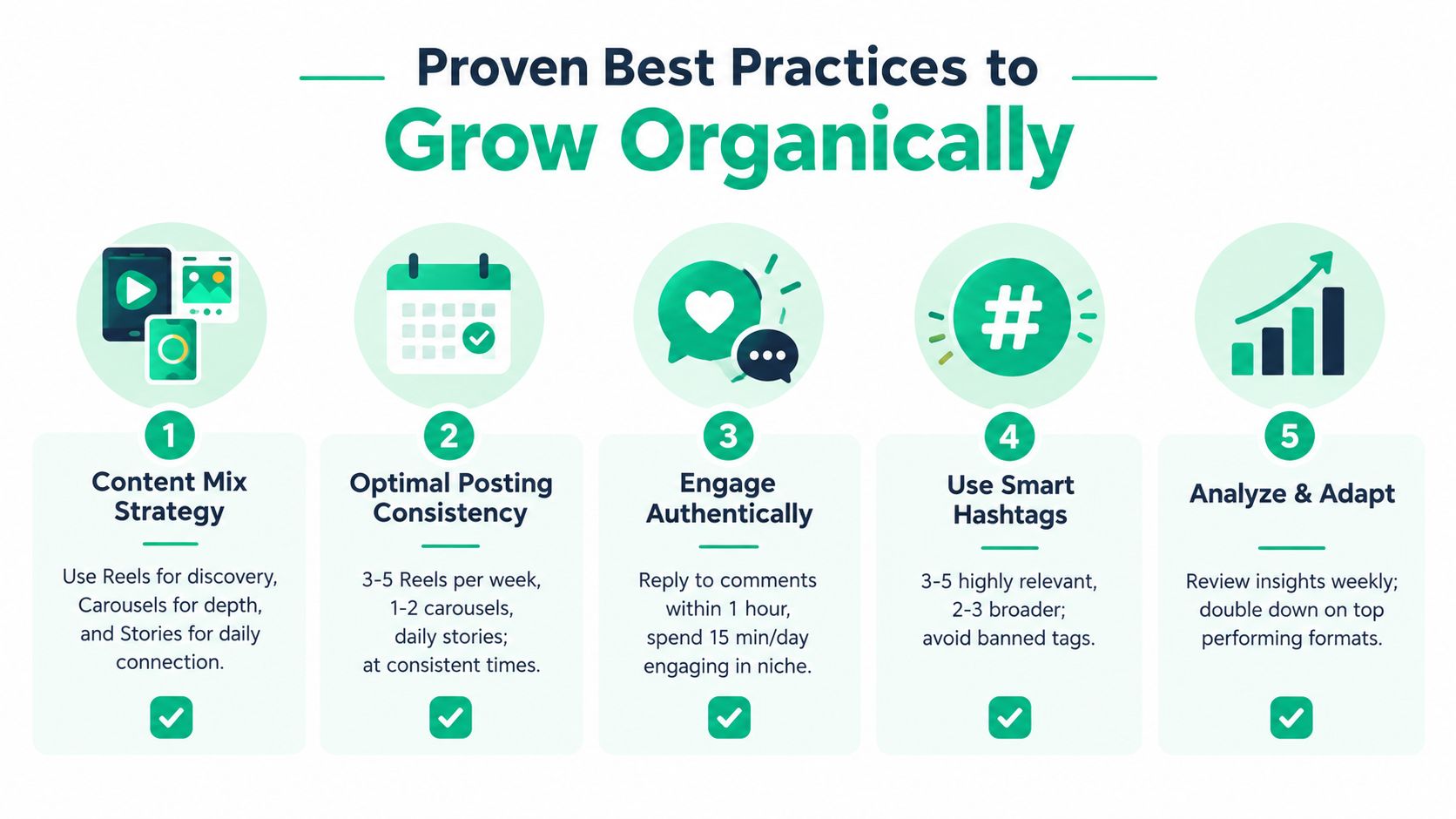
The system starts with one idea: use different formats for different jobs.
Build your content mix on purpose
Reels are usually your discovery engine. Carousels are your teaching and trust engine. Stories keep your current audience warm.
That means a healthy account often uses a mix like this:
Reels for reach: Short educational clips, before-and-after transformations, product demos, process videos, opinions, or quick entertainment.
Carousels for depth: Step-by-step teaching, checklists, myths vs facts, customer education, or mini case breakdowns.
Stories for relationship: Daily updates, polls, FAQs, behind-the-scenes moments, and low-pressure offers.
A business selling candles might use Reels to show scent-making or packaging, carousels to explain care tips, and Stories to answer shipping questions. A creator in fitness might use Reels for quick form fixes, carousels for workout plans, and Stories for day-to-day accountability.
Make each post easier to consume
Good content loses reach when the packaging is weak. The first second of a Reel matters. The first slide of a carousel matters. So does the clarity of your topic.
A few practical habits help:
Start with a specific hook: Name the problem fast.
Keep one idea per post: Don't cram five lessons into one Reel.
Design for saves: Tutorials, checklists, and swipeable frameworks often earn stronger repeat value.
Write clearer carousels: If you need help with visual structure, this guide to sizing and order for carousel posts is useful.
Separate tactics for creators and businesses
Creators often grow faster when they build around a recognizable point of view. Businesses often grow faster when they solve recurring customer questions in public.
Try this split:
If you're a creator: Pick a few repeatable content themes people can associate with you. Think styling tips, budget meals, creator humor, or mindset clips.
If you're a small business: Turn your FAQ inbox into content. Show the process, explain objections, and make your expertise visible.
If you sell locally: Feature customer stories, neighborhood context, and location-relevant topics.
If you're niche: Use language your audience already uses so your content feels instantly relevant.
Measure what actually signals growth
Don't judge everything by follower count. A better weekly review looks at whether people are discovering and valuing your content.
Check things like:
Reach rate: Are more people outside your audience seeing your posts?
Saves and shares: Which topics get kept or passed along?
Comments and replies: What starts conversation?
Format performance: Which ideas work best as Reels, and which work better as carousels?
Some teams use native Instagram Insights. Others use scheduling tools and dashboards to review patterns over time. Gainsty is one example of a platform that offers Instagram growth support and analytics for audience targeting and tracking, which can help when you want a more structured process around organic strategy. For additional tactical ideas, this guide on how to grow Instagram organically complements the workflow above.
The goal isn't to post everywhere in every format. The goal is to match the right idea to the right surface.
Building Sustainable Growth That Lasts Beyond Trends
The strongest Instagram accounts don't only chase attention. They build habits that earn it repeatedly.
That's the answer to what organic Instagram growth is. It's not just unpaid posting. It's a long-term practice of making content people choose, using formats that fit how Instagram distributes attention, and learning from audience response instead of vanity metrics.
Recent benchmark reporting shows how format-dependent this has become. Reels remain the strongest discovery surface, while feed posts and Stories have weaker organic reach. One 2026 benchmark reported Reels organic reach up 12% year over year, feed posts down 8%, Stories down 3%, and carousels up 5%. The same source noted that the average brand post now reaches only about 3.5% of followers organically, which reinforces the need to escape follower-only distribution through smarter format use, according to Digital Applied's 2026 Instagram benchmark roundup.
A simple next step
Audit your last month of posts and sort them into three buckets:
Discovery content: Posts meant to reach new people.
Retention content: Posts that deepen interest and build trust.
Connection content: Posts that keep your audience warm.
If one bucket is missing, your growth will probably feel uneven.
The accounts that last don't just post more. They design a better mix, watch what earns saves and shares, and keep refining. That's a safer path to momentum than chasing hacks, and it's a lot more useful than waiting for one lucky viral moment.
If you want help turning these ideas into a more structured Instagram growth process, Gainsty offers an AI-powered social assistant focused on organic follower growth, audience targeting, and analytics. It's a practical option for creators and businesses that want support without leaning on fake engagement or bot-driven shortcuts.