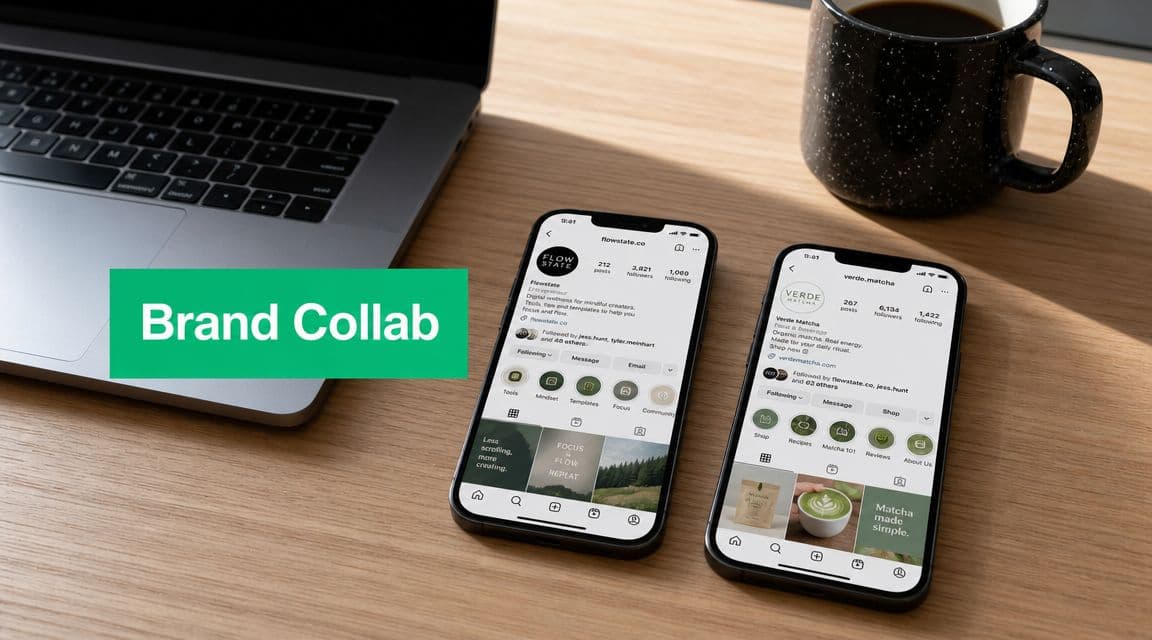
Why Instagram Collaborations Are a Non-Negotiable Skill
A creator posts strong content for six months, gets decent engagement, and still loses the deal to someone with a smaller audience. A brand approves budget, sends product, and ends up with content that looks fine but does nothing for reach, trust, or sales. I see both failures for the same reason. One side is posting. The other is buying. Neither side is set up to collaborate well on Instagram.
Instagram collaboration is now a core operating skill for both creators and brands. Instagram built branded content tools into the platform in 2021, shifting partnership work from informal DMs and loose sponsorships into a system that supports disclosure, permissions, and paid partnership workflows. That changed how serious deals get done.

The opportunity is large enough that both sides need to treat this as a repeatable capability, not occasional experimentation. Statista has reported that Instagram reached about 2 billion monthly active users worldwide in early 2024, and that a large share of marketers use Instagram as an advertising channel. The practical takeaway is simpler than the headline numbers. Attention is already here, budgets are already here, and competition for effective partnerships is getting tighter.
That creates a real shift in standards. Creators are no longer judged only on aesthetics or follower count. Brands are no longer judged only on budget or product quality. A creator has to look easy to brief, safe to approve, and capable of delivering content that fits a campaign goal. A brand has to look organized, clear on usage rights, realistic about revisions, and worth the creator's time.
Practical rule: If you rely on attention, trust, or conversion, you need a repeatable collaboration process. Improvisation breaks under deadlines, approvals, and paid usage.
The strongest Instagram collaborations work because both sides reduce uncertainty. Creators reduce buying risk. Brands reduce execution risk. That is the part many one-sided guides miss, and it is why so many deals stall before content is even produced.
If you want a better read on what good partnership execution looks like across objectives, formats, and creator tiers, study a few successful influencer marketing campaigns and pay attention to the structure behind the post, not just the post itself.
Building Your Collaboration-Ready Foundation
A brand sends a brief on Monday. By Wednesday, the creator is still asking basic questions about deliverables, usage, and timing. On the creator side, the media kit is outdated, the profile is too broad, and there is no clear proof that they can make branded content that converts. The deal does not fail because outreach was weak. It fails because neither side was ready to be bought or to buy.
That is the part that creators and brands often miss.
Creators usually treat preparation as a visibility problem. Brands usually treat it as a sourcing problem. In practice, collaboration readiness sits in the middle. A creator has to make the buying decision easy. A brand has to make the execution process clear. If either side leaves gaps, the other side starts guessing, and guessing slows approvals, weakens content, and creates pricing friction.

What creators need before pitching
A creator profile should answer four questions fast. What do you talk about? Who pays attention? What branded formats can you produce? How does a brand reach you?
Use this checklist:
Define your lane: Specific positioning gets shortlisted faster. “Lifestyle” makes a buyer work too hard. “Affordable meal prep for new moms” gives a brand an audience, a use case, and a content angle.
Show purchasable content: Keep recent examples of the formats brands commission, such as product demos, tutorials, testimonials, founder integrations, story sequences, and short-form reviews.
Build a usable media kit: Include audience snapshot, engagement trends, top-performing content examples, past partnership categories, deliverable options, and contact details. If you want a practical benchmark for smaller creator positioning, study how brands find and evaluate micro-influencers.
Make contact easy: Put your business email in your bio or link hub. If the only path is a DM, expect serious inquiries to drop.
Prepare simple production support: If you pitch concept-heavy reels or need to mock up visual directions quickly, a Text-to-video platform can help you present ideas in a format a brand team can react to faster.
A good creator foundation reduces buyer risk. That matters more than looking polished.
What brands need before outreach
A common mistake for brands is starting creator search before defining the campaign objective. That creates a messy shortlist because the team is trying to evaluate people without knowing what success looks like.
Start with internal alignment:
Set the objective first: Awareness, content production, product education, conversions, app installs, and retail support each require different creator strengths.
Write the creator profile: Go beyond age and gender. Define tone, subject familiarity, production style, audience trust, on-camera ability, and whether the creator needs heavy scripting or works better with loose talking points.
Prepare the operating brief: Include claims the creator can and cannot make, must-show product details, shipping plan, approval steps, revision limits, timeline, and ownership of feedback.
Set payment boundaries early: Know whether the offer is flat fee, affiliate, gifted, whitelisted paid usage, or a hybrid. Creators can usually tell when a brand is deciding compensation in real time, and it weakens trust fast.
The strongest brand teams look easy to work with before the first call. That shows up in the brief, the approval chain, and the clarity of the ask.
The best collaborations start when both sides can describe the campaign the same way, in one sentence, before any content is produced.
A simple readiness check
Creator side
Not ready looks like: Broad niche, outdated media kit, unclear contact path
Ready looks like: Clear positioning, recent branded examples, audience snapshot, and a defined process for responding to opportunities
Brand side
Not ready looks like: Vague goals, no campaign owner, unclear content usage terms
Ready looks like: Defined objectives, a clear internal owner, creator selection criteria, payment range, and an approval process
This distinction matters because weak preparation on either side usually creates delays, mismatched expectations, and unclear results. Clear structure tends to improve collaboration quality before any content is even created.
Strong foundations save time later. They also change the tone of the relationship. Creators stop sounding like applicants. Brands stop sounding disorganized. Both sides can focus on fit, terms, and performance instead of chasing missing basics.
Discovering and Vetting the Right Partners
A skincare brand can shortlist ten beauty creators who all look strong on paper and still pick the wrong partner for the job. One creator drives saves and thoughtful product questions. Another gets passive likes. A third makes polished reels but has trained its audience to ignore anything sponsored. The difference is rarely obvious if the review starts and ends with reach.
Good partner discovery has to work for both sides. Brands need creators who can influence a real business outcome, not just produce attractive content. Creators need brand partners whose product, approval style, and campaign format will not damage audience trust or trap them in a bad deal. The right match sits at the intersection of audience fit, content behavior, campaign structure, and operational reliability.
Where to look first
Instagram's creator marketplace is a practical starting point for platform-native discovery. It gives brands a cleaner way to review profiles and contact creators, and it gives creators another path to inbound opportunities that are tied to branded content. It is still incomplete. In niche categories, some of the best fits are found through manual research, not inside a database.
A stronger discovery stack usually includes:
Instagram native search: Bios, niche hashtags, tagged posts, suggested accounts, and competitor mentions.
Customer-adjacent research: Look at who your audience already trusts. In many categories, that person is a practitioner, educator, or enthusiast with authority, not the largest account in the niche.
Third-party discovery tools: Useful when a team needs filtering, list management, and outreach workflow support across a bigger pool.
Production support tools: If a campaign depends on strong short-form creative, a Text-to-video platform can help teams test visual directions before they lock in a concept with a creator.
For smaller campaigns, manual discovery still wins more often than teams expect because it reveals context. You can see how a creator speaks to their audience, how often they take sponsorships, and whether the comments show real trust. If you are building a niche list, this guide on how to find micro influencers is a useful companion to platform search.
How to vet beyond surface metrics
The useful question is specific. Can this partner drive the outcome that this campaign is built to produce?
That changes the review process.
Check comment quality first. Real audience trust looks like questions, objections, follow-ups, and people referencing past recommendations. Generic praise and repetitive one-line comments tell you much less.
Then review partnership history. Sponsored posts should still sound like the creator. If every ad reads the same, or if the creator promotes conflicting products every few days, conversion usually suffers because the audience has learned to tune it out.
Format fit matters just as much. As highlighted in Iqfluence's collaboration examples, different campaign goals call for different collaboration formats. Affiliate discount codes are better suited to direct response. Giveaways are better suited to attention and list growth. Tutorial content is better suited to trust-building and product education. If a creator is consistently strong at one of those jobs, keep them in that lane instead of forcing a format that looks efficient in a planning doc but does not match how they actually perform.
Audience intent is the last filter, and it gets missed constantly. A creator can have strong engagement and still be wrong for your category because their audience is there for entertainment, not action. Creators should make the same assessment in reverse. A brand may look attractive, but if the product has weak category relevance or the offer is hard to explain accurately, the content will feel strained.
Bad partner selection usually produces content the team likes and results the business cannot defend.
Red flags brands and creators both miss
Some warning signs show up before any contract discussion starts.
Watch for these:
Misaligned sponsorship history: Frequent promotions across unrelated categories make new partnerships harder to believe.
Erratic creative quality: One strong reel is not enough. Look for consistency across recent posts.
Slow or messy communication: Delayed replies, unclear answers, and shifting details during vetting usually get worse during production.
Weak format logic: If neither side can explain why the campaign should be a giveaway, affiliate push, tutorial, or co-branded post, the partnership is not ready.
One-sided upside: A brand asking for broad usage rights on a small fee, or a creator pushing a high rate without a clear fit case, signals a mismatch before the work even starts.
The best vetting test is blunt. Remove follower count from the profile and ask whether the collaboration still makes business sense for both sides. If the answer is shaky, the shortlist is still too loose.
Crafting the Pitch and Negotiating the Deal
Most pitches fail because they ask for too much trust too early.
Creators often lead with a rate and no business case. Brands often send outreach that feels copied, vague, or transactional. Neither approach respects how the other side evaluates risk. A good pitch reduces uncertainty. A good negotiation protects upside without poisoning the relationship.
What creators should send?
A creator pitch doesn't need to be long. It needs to be legible.
A solid outreach note includes:
Why this brand specifically: Mention the product, campaign style, or audience overlap.
What you make: Reels, tutorials, storytelling content, product demos, founder-led features, or UGC-style assets.
Why your audience fits: Use qualitative positioning if you don't need exact numbers in the pitch.
A clear next step: Offer a media kit, concept ideas, or a short call.
Keep the tone commercial, not performative. Don't oversell your passion for a product you've never used. Buyers can tell.
What brands should send?
Brands get better responses when they write like a partner, not a procurement bot.
Your first message should answer the unstated questions creators have:
Is this a real opportunity?
Is the product relevant to my audience?
Is the team organized?
Is there a budget, product seeding, affiliate potential, or another clear structure?
Will this brand suffocate the creative?
One of the better lightweight references for creators learning how brands read outreach is taap.bio's brand deal guide. It's useful because it reinforces the basics that make negotiations easier later: positioning, clarity, and offer fit.
If your outreach could be sent to a fitness coach, a skincare creator, and a SaaS educator without changing a word, it's not ready.
Price the work by value and rights
A collaboration rate isn't just payment for posting. It's payment for creation, access to audience trust, revision time, licensing, coordination, and commercial risk.
The biggest mistake on both sides is bundling everything into one vague fee. Break the deal into components instead:
Creation fee: Covers ideation, filming, editing, captioning, and revision rounds.
Publishing fee: Covers distribution on the creator's profile.
Usage rights: Covers whether the brand can reuse the asset on paid ads, landing pages, email, or retail channels.
Exclusivity: Covers the opportunity cost of not working with competitors.
Performance layer: Optional affiliate, code-based, or bonus structure.
Here's a simple pricing framework. These are example model labels only, not market averages.
Nano creator
Example post rate: Custom quote
Example Story rate: Custom quote
Common model: Product exchange, affiliate arrangement, or a hybrid structure combining products and payment
Micro creator
Example post rate: Custom quote
Example Story rate: Custom quote
Common model: Flat fee with optional commission or performance-based incentives
Mid-tier creator
Example post rate: Custom quote
Example Story rate: Custom quote
Common model: Flat fee with additional usage-rights options
Macro creator
Example post rate: Custom quote
Example Story rate: Custom quote
Common model: Flat fee combined with licensing terms and exclusivity agreements
Celebrity or premium niche expert
Example post rate: Custom quote
Example Story rate: Custom quote
Common model: Custom campaign package tailored to the scope and goals of the partnership
Because we don't have verified market ranges here, keep the actual numbers off your public template unless you've done the math for your own business.
Terms worth negotiating early
Here, many “friendly” deals go bad.
Set these before production:
Deliverables: Exact number of reels, posts, stories, hooks, stills, or cutdowns.
Revision policy: How many rounds are included, and what counts as a revision versus a reshoot.
Usage rights: Organic reposting only, or paid usage too. If paid, define where and for how long.
Whitelisting and boosting: Separate this from basic usage if it applies.
Payment schedule: Deposit, delivery milestone, and final payment date.
Exclusivity scope: Category-wide or direct competitors only.
Good negotiators don't chase the highest number in the first email. They protect the economics of the whole agreement.
Executing a Flawless Collaboration Campaign
Execution is where smart strategy gets exposed. If the brief is vague, the review chain is fuzzy, or the publishing workflow isn't agreed in advance, even a well-negotiated collaboration can collapse into delays and compromised creativity.
Start with the operating document. A high-reliability collaboration workflow defines the campaign goal, deliverables, timelines, and usage rights in a formal brief before production. That structure prevents revision loops and makes it easier to publish with the correct disclosures and tags, based on the workflow guidance in Everyday Connor's steps of a brand collaboration.

Build a brief that removes ambiguity
The creative brief should tell the creator what matters without writing the content for them.
Include these elements:
Campaign objective: Awareness, conversion, trust-building, or content production.
Mandatory talking points: Product details, prohibited claims, required tags, links, and codes.
Creative boundaries: Visual do's and don'ts, tone guardrails, competitor restrictions.
Timeline: Draft due date, revision window, final approval deadline, post date.
Rights and reuse: Where the content can live after posting.
If your team struggles with approvals, a structured process for efficient social media content approval can reduce bottlenecks before launch week.
Tight briefs don't kill creativity. They protect it from late-stage confusion.
Use Instagram's collab mechanics correctly
A collaboration post is not just a tagged post. It's a permissioned co-publication.
According to Bazaarvoice's guide to collaborating on Instagram, the reliable workflow is to create the post or reel, open the tagging screen, choose Invite Collaborators, select the partner account, and then wait for acceptance before the post appears on both profiles. The collaborator has to explicitly accept the invite. Tagging them isn't enough. The same guidance notes that some tools allow up to five additional collaborators, and that public visibility matters if you want non-mutual followers to see the shared post.
Run launch day like a campaign, not a post
The first few hours after publishing matter because that's when confusion, missed tags, and delayed responses do the most damage.
Use a launch checklist:
Confirm approvals are final: No one should still be rewriting captions after the asset is scheduled.
Check disclosures and partner tags: Do this before publishing, not after someone notices.
Coordinate comment coverage: Decide who handles product questions, shipping questions, and technical questions.
Capture assets and links: Save live URLs, screenshots, and story frames for reporting and archiving.
A clean campaign feels almost boring behind the scenes. That's usually a sign that the operations were done right.
Measuring Success and Proving ROI
A collaboration report should explain what happened, why it happened, and what to do next. If all you can show is likes, everyone leaves the campaign with opinions instead of evidence.
That's a problem for both sides. Creators need proof of value to earn repeat work. Brands need a clear link between content performance and business outcomes to defend budget internally.

Track the metrics that match the campaign
Different collaboration formats produce different signals. A tutorial reel may build trust and save the rate. An affiliate story sequence may produce link clicks and code redemptions. A giveaway may spike reach and comments but tell you less about purchase intent.
For practical measurement, track at least these categories:
Distribution metrics: Reach, impressions, story exits, profile visits.
Engagement quality: Saves, shares, comments that indicate interest, direct messages, sticker taps.
Traffic signals: Link clicks, landing page visits, tracked UTM sessions.
Commercial outcomes: Code use, affiliate sales, lead form submissions, and add-to-cart behavior if you can connect it.
If you need a structured framework for linking content metrics to business outcomes, this guide to social media ROI measurement is a useful reference.
Build a report that earns the next deal
A creator report should be simple enough to skim and strong enough to forward.
Campaign summary
Include the deliverables completed, publishing dates, and formats used (such as Reels, Stories, carousels, or posts). This gives a quick overview of what was executed.Performance snapshot
Include key metrics from Instagram Insights and any tracked links, such as reach, impressions, engagement, profile visits, clicks, saves, or conversions.Audience response
Include recurring comment themes, frequently asked questions, and overall sentiment patterns. This helps identify what resonated with the audience.Conversion evidence
Include measurable outcomes such as discount code usage, affiliate tracking data, lead quality indicators, inquiries, or sales data if available.Recommendations
Include what should be repeated, improved, or tested next based on the results. Focus on actionable next steps rather than only reporting past performance.
A strong report doesn't hide weak spots. It explains them and proposes the next move.
Don't confuse activity with return
A lot of collaborations generate motion without generating value. High reach with weak click behavior may mean the creative entertained but didn't persuade. Strong comments with low saves may mean the hook worked, but the body didn't. Good story taps with poor landing page performance may indicate a page problem, not a creator problem.
That's why ROI conversations need context. The post is only one part of the funnel. To judge performance fairly, measure the asset, the audience fit, the offer, and the destination together. When teams do that, brand collaboration on Instagram becomes easier to scale because decisions stop relying on gut feel alone.
Navigating Contracts and Future-Proofing Partnerships
A collaboration can look healthy right up until approval rounds stall, payment slips, or a brand repurposes a creator's Reel for ads without clear permission. The post may have performed well. The relationship is still breaks on process.
Strong partnerships protect both sides before anything goes live. Brands need clarity on delivery, rights, and compliance. Creators need clarity on payment, edit limits, and how far the content can travel after posting. If either side treats the agreement like admin work, small assumptions turn into expensive arguments.
Contract terms that should never stay vague
A usable collaboration agreement should spell out the operating details, not just the headline fee.
Cover these points in plain language:
Scope of work: Exact deliverables, format, placement, and whether stories, feed posts, reels, or whitelisted assets are included.
Timeline: Draft deadlines, feedback windows, approval turnaround, live dates, and what happens if either side misses them.
Compensation: Fee, reimbursements, invoice terms, payment due date, and late-payment consequences.
Usage rights: Whether the brand can repost, edit, crop, run paid media, whitelist through the creator account, or use the asset on email, site, or retail channels.
Exclusivity: Which competitor categories are restricted, in which markets, and for how long.
Termination terms: What happens if the product is delayed, compliance concerns surface, or either side cannot complete the campaign.
Usage rights create more disputes than almost any other clause. I have seen brands assume a creator fee included paid amplification for months, while the creator expected organic reposting only. Both parties felt reasonable. Both were wrong because the contract left room for interpretation.
The fix is simple. Define the asset, the channels, the duration, the edit permissions, and whether paid usage costs extra.
Handle disclosure as part of production
Disclosure needs to be built into the workflow, not patched into the caption five minutes before publish.
Policy Review's analysis of undisclosed brand partnerships and platform policies found that Instagram is the only major platform that automatically activates a disclosure label when a creator uses the paid partnership feature and also provides keyword-triggered prompts. That matters for both brands and creators because disclosure is not just a legal line item. It affects setup, approvals, tagging, and final publishing steps inside Instagram itself.
In practice, teams should confirm four things before content goes live:
Use the paid partnership tools when the campaign requires them
Tag the correct brand account before publishing
Check whether age restrictions or country restrictions apply
Match contract language to the on-platform disclosure setup
A missed disclosure step can create more than compliance risk. It can also force reposts, break reporting continuity, and damage trust with the audience.
Turn one project into a repeatable relationship
The best Instagram partnerships are easier in the second round because both sides documented what made the first one work.
After the campaign ends, review the operational details as closely as the performance results. Which feedback process kept the creative strong without dragging out approvals? Which posting window worked? Did the creator need more freedom in the hook, or did the brand need tighter claims review because of legal or category rules? Those details decide whether a partnership scales.
Keep a simple post-campaign record that includes:
What worked: Formats, talking points, offers, and audience reactions worth repeating
What caused friction: Slow approvals, unclear revision limits, delayed product shipping, missing access, or reporting gaps
What to test next: New content angle, different funnel stage, seasonal timing, or a broader rights package
What to save: Captions, live links, creative files, approvals, invoices, and reporting
This is the part both sides often skip, and it is the part that makes renewals faster.
If you are building a longer-term pipeline, audience research and partner discovery systems help narrow who should be on the shortlist before outreach starts. Gainsty is one option used for Instagram audience and targeting workflows, especially when brands or creators want a clearer view of who they are trying to reach before proposing a partnership.
The strongest collaboration programs do not depend on memory, goodwill, or scattered DMs. They run on clear terms, documented preferences, and a process both sides would be willing to repeat.
.png&w=1920&q=75&dpl=dpl_34ZXCf12K5qjjdZjPn9snwDRADrB)



.png&w=750&q=75&dpl=dpl_34ZXCf12K5qjjdZjPn9snwDRADrB)