The Hidden Power of Instagram Story Replies

Think about the difference. A feed comment is public, often feeling a bit performative. But when you reply to a story, it lands directly in that person's DMs as a private, one-on-one conversation. This distinction is everything. It shifts your interaction from a public broadcast to a personal note, which is instantly more memorable and meaningful.
Here's another way to look at it: a public comment is like shouting across a crowded room. A story reply is like pulling someone aside for a quiet, focused chat. That intimacy is precisely what the Instagram algorithm is designed to reward—authentic interactions that keep people connected on the platform.
Why Story Replies Beat Public Comments Every Time
The strategic edge of commenting on Instagram Stories comes down to two things: directness and privacy. Your reply doesn't have to fight for attention in a sea of other comments. It goes straight to their inbox, a much less crowded and more personal space.
This simple act sends a strong signal to Instagram that a real connection is forming between you and that user. The payoff? The algorithm is more likely to prioritize your content in their feed and at the front of their Story queue.
Here's a breakdown of why this is so effective:
It Builds Real Connections: A thoughtful reply shows you're actually paying attention to someone's day-to-day moments, not just their polished feed. It’s a fantastic way to build genuine rapport.
It Cuts Through the Noise: Your message won’t get buried. By creating a direct line of communication, you dramatically increase the chances of getting a response.
It Feels Personal, Not Promotional: Because they're private, story replies feel less like a marketing play and more like a real conversation. This is how you build trust and loyalty.
The big idea here is to stop just commenting and start connecting. Every single reply is an opportunity to start a dialogue, make your profile memorable, and build a relationship that could turn into a loyal follower, a new customer, or even a valuable collaborator.
A New Way to Think About Engagement
So, let's dive into the playbook. This guide will show you how to turn simple replies into a powerful engine for networking, finding leads, and building a community. You're about to learn how to write comments that actually spark conversations and make your account stand out. This isn't about spamming DMs; it's about making every single interaction count.
By focusing on these meaningful one-on-one chats, you're aligning your strategy with what Instagram wants to see: real engagement. Stronger individual relationships create a ripple effect, leading to higher engagement rates, better visibility, and ultimately, sustainable organic growth. Consider this your roadmap to getting noticed in a very crowded room.
The Nuts and Bolts of Replying to Instagram Stories
Before you can start crafting the perfect reply, you've got to know your way around the toolkit Instagram gives you. Replying to a Story isn't just a single action; there are a few different ways to do it, and each one is suited for a different goal. Getting the hang of these basics is the first real step to turning a simple tap into a meaningful connection.
The whole interface is built for speed, letting you react instantly. At the bottom of just about every Story, you'll find a “Send message” field. That little box is your main entry point for starting a private chat, but it's not the only way to play.
Let's break down the three main ways you can jump into the conversation.
The Quick Reaction: A Simple Tap Goes a Long Way
The absolute fastest way to give someone a nod is with a quick reaction. Think of it as a low-effort, high-impact way to let someone know you're tuned in, all without typing a single character.
While you're watching a Story, just tap the “Send message” bar (or occasionally a quick swipe up works too). You'll see a row of eight popular emojis pop up. Tapping one—like the fire (🔥), clapping hands (👏), or heart-eyes (😍)—zips it over to their inbox as an instant reply.
This is perfect for those times when you want to show some love but don't really have anything specific to add. A friend posts a killer photo of a sunset? A quick 😍 emoji says it all. It’s a simple way to stay on their radar without much fuss.
Sending a Custom DM: The Conversation Starter
When you want to get a bit more personal, sending a custom message is the way to go. This takes you beyond a simple emoji reaction and opens the door to an actual conversation. Instead of just tapping an icon, you'll type your thoughts into that “Send message” field and hit “Send.”
This is your best bet for asking a question, giving a specific compliment, or sharing a thought that the story sparked. For example, say a creator you follow is polling their audience about a new product idea. A thoughtful reply like, “This is a great concept! Have you thought about how it might work for people in colder climates?” is way more powerful than just a thumbs-up.
Your reply goes straight into their Direct Message inbox, totally separate from public comments. That privacy is gold—it creates a one-on-one channel, away from all the noise of a public feed.
The @Mention Reply: A Savvy Networking Move
Here's a slightly more advanced tactic that can be incredibly effective: using an @mention in your story reply. This little trick lets you tag another Instagram account in your message, which can be a fantastic way to network. When you mention someone, they get a notification, too, pulling them into the conversation.
This is especially handy for connecting people or giving a shout-out to a collaboration. Let's say a local coffee shop posts a Story featuring art from someone you follow.
You could reply with something like, “I love that you're showcasing @artistname! Their work is fantastic and fits your cafe's vibe perfectly.”
A simple message like this accomplishes three things at once:
You compliment the cafe on its great taste.
The artist gets a notification that you're singing their praises.
You position yourself as someone in-the-know and connected within your community.
By mastering these three core mechanics—quick reactions, custom DMs, and @mentions—you can pick the right approach for any scenario. Each one has a different strategic purpose, whether you're just maintaining a light connection or starting a conversation that could lead to bigger things.
A Strategic Approach to Story Comments
Knowing how to reply to a story is one thing. Knowing why and when is what turns a simple tap into a powerful growth tool. This is where we stop just watching stories and start using them to build real connections.
Think about it: a “like” on a feed post is a quiet nod from the crowd. A story reply? That's you walking up and starting a one-on-one conversation. It's a direct line to someone's inbox, and that personal touch makes all the difference to them—and to the Instagram algorithm.
Beyond Likes: The Real Weight of a DM Reply
Instagram’s algorithm is smart. It knows the difference between a lazy double-tap and a thoughtful comment. For years, the platform has increasingly rewarded interactions that signal a genuine bond between users. Why? Real conversations keep people on the platform longer.
A story reply is the ultimate signal of that connection. Because it lands in the DMs, it’s private, personal, and requires more effort than a simple emoji reaction. Every time you send a thoughtful reply, you're telling Instagram that your relationship with that user is important. The payoff is often better visibility—you’ll start showing up more frequently in their feed and at the front of their Stories tray.
The three main ways to reply to a story each serve a different purpose, from a quick acknowledgment to a strategic networking move.
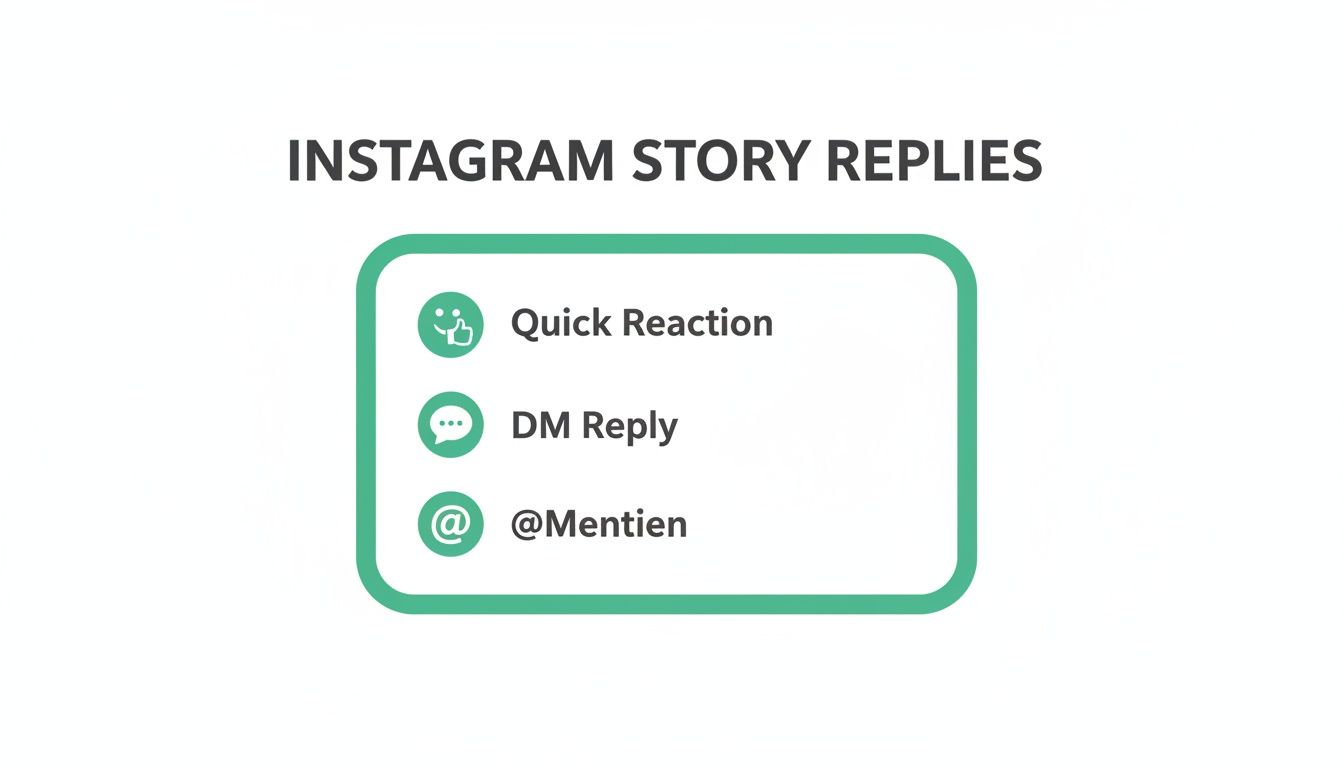
As you can see, you can easily scale your engagement from a simple emoji tap to a much more meaningful interaction.
A Framework for Comments That Spark Conversation
The best story replies are the ones that make someone want to write back. Generic comments like “Awesome!” or “So cool!” are fine, but they’re also instantly forgettable. To stand out, you need a simple framework.
I call it the “Compliment, Question, Value” (CQV) model. You don't have to hit all three every single time, but keeping them in mind will help you craft replies that actually work.
Compliment: Start with something specific and genuine. Instead of “Nice photo,” try, “The lighting in that shot is incredible!” You have a great eye for composition.”
Question: Ask an open-ended question that can't be answered with a simple “yes” or “no.” Following the photo example, you could ask, “What kind of camera did you use to get that effect?”
Value: If it feels right, offer a bit of helpful information. “If you ever shoot around downtown, the old warehouse district has some amazing textures at golden hour.”
This simple formula transforms your reply from a forgettable comment into a real conversation starter that makes the other person feel seen.
A great Story reply does more than just acknowledge the content; it opens the door for a real conversation. The goal is to be memorable, helpful, and genuinely interested.
The right approach will depend on your specific goals. Here’s a quick breakdown of how to tailor your strategy.
Story Comment Strategies for Different Goals
Networking
This approach focuses on building genuine professional relationships by reacting to peers’ wins or challenges shared on Stories. The key is to lead with a sincere compliment and then ask a thoughtful, open-ended question that invites conversation.
Best for: Freelancers, B2B businesses, and industry influencers who want long-term connections rather than quick wins.
Lead Generation
This strategy works by spotting Stories where someone mentions a problem your product or service can solve. Instead of pitching immediately, you relate to their pain point and softly offer help or insight.
Best for: Agencies, consultants, and SaaS companies looking to start warm, non-pushy sales conversations.
Community Building
The goal here is engagement without selling. By responding to followers’ Stories with authentic interest, you make people feel seen and valued, which strengthens loyalty and trust over time.
Best for: Brands, creators, and local businesses focused on audience connection and retention.
Influencer Outreach
This method emphasizes respect and low pressure. You acknowledge the influencer’s work, show you actually paid attention, and then gently introduce the idea of collaboration without expectations.
Best for: E-commerce brands and PR agencies looking to build positive creator relationships.
Choosing the right strategy ensures your comments are not just friendly but are actively working to help you achieve your goals on the platform.
Real-World Scenarios and Examples
Let’s see how this CQV framework looks in a couple of real-life situations. The key is to adapt your message to the context of the story and your relationship with the user.
Scenario 1: A Freelance Designer Engaging a Potential Client. A marketing agency CEO posts a story about their team brainstorming a new brand launch.
Weak Reply: “Looks fun! 🔥”
Strategic Reply (CQV): “That whiteboard is full of amazing ideas! It’s so inspiring to see the creative process in action. Out of curiosity, what's your team's greatest challenge when translating brand concepts into visual identity?”
This reply complements their work, shows you understand their world, and asks a smart, professional question. It immediately positions you as a thoughtful expert, not just another follower.
Scenario 2: A Local Business Connecting with an Influencer. A food blogger posts a story asking for the best brunch spots in town.
Weak Reply: “You should try us!”
Strategic Reply (CQV): “We're huge fans of your food reviews! Your post about The Corner Bistro was spot on. We'd be honored if you'd consider trying our new seasonal menu—we have a French toast that people are raving about. No strings attached, we'd just love your honest feedback!”
This message feels like a personal invitation, not a desperate sales pitch. You've shown you follow their work and are making a respectful, no-pressure offer. Building this kind of rapport is a core part of a strong Instagram Story strategy.
Remember, consistency matters just as much as quality. Firing off a few good replies here and there won't make a big impact. To truly build relationships and stay top-of-mind, you need to make this a regular, authentic habit.
Turning Replies into Real Relationships
A single comment on an Instagram Story is just the opening line. The real magic—the kind that builds a loyal community and forges genuine connections—happens in the conversation that follows. This is where you shift from just dropping a comment to actively building relationships, one DM at a time.
Think of your initial reply as knocking on a door. When they write back, they've just opened it. Now it’s your chance to step inside and have a real chat. The goal isn't just to get a response; it's to keep the dialogue flowing naturally.
From a Simple Reply to an Ongoing Conversation
Your DM inbox is where these potential connections either blossom or completely fizzle out. To make sure it's the former, you need a thoughtful approach that goes way beyond just firing off another generic message.
The key is showing you're actually paying attention. A great follow-up often references something specific from their content—not just the story you replied to, but maybe a recent feed post or something you remember from a previous interaction. This bit of effort shows genuine interest and makes the exchange feel personal, not transactional.
Here are a few ways to keep the conversation going:
Ask a follow-up question. If they answer your first question, ask another that builds on their response. Keep it light and inquisitive, not like an interview.
Share a relatable experience. Briefly sharing a similar story or thought creates common ground and makes the chat feel more like a two-way street.
Reference their feed. A brief comment like, “By the way, I loved your post about X the other day—it really made me think,” shows you're an engaged follower, not just a random person in their DMs.
Remember, the goal is a natural back-and-forth, not an interrogation. Let the conversation breathe. A positive, short exchange is far better than a long, forced one.
Identifying High-Potential Connections
Let's be real: not every conversation needs to become a deep, meaningful relationship. You have to be smart about where you invest your time. The trick is spotting the interactions that have the most potential.
Look for cues that signal a user is highly engaged or aligns with your brand. These people could be future collaborators, brand advocates, or your next ideal customer.
They ask questions back. When someone shows curiosity about you or what you do, it’s a massive sign they're interested in a real connection.
Their profile aligns with yours. Does their content, bio, or business resonate with your niche? This is a great indicator of a good fit for a future partnership.
They engage with you consistently. If you start noticing the same person popping up in your Story replies or post comments, they're a warm lead worth nurturing.
Building relationships this way is the very essence of conversational marketing, where genuine, one-on-one interactions build trust over time. This approach is a cornerstone of any solid Instagram DM marketing strategy. To dig deeper into using your inbox for growth, check out our full guide on Instagram DM marketing.
Making the Transition for Business Goals
For businesses, influencers, and agencies, there often comes a point where you want to steer a friendly chat toward a professional outcome. This could be anything from a sales inquiry to a collaboration proposal.
The key is making this transition feel smooth, not jarring. A sudden, hard sales pitch will instantly kill the rapport you've worked to build. Instead, you need to wait for a natural opening or create one gently.
Scenario: A B2B Consultant Connecting with a Potential Client. After a few friendly DMs back and forth about industry news, you could say:
“It's been great chatting about this! I noticed from your recent stories that your team is really focused on [specific goal] right now. We actually specialize in helping companies do that. Would you be open to a quick call next week to see if we could help?”
This approach works so well because it's
Contextual: It ties directly back to something they've shared.
Respectful: It asks for permission (“Would you be open…”) instead of being demanding.
Low-Pressure: It frames the offer as a helpful conversation, not a high-stakes sales call.
Ultimately, turning replies into relationships is a long game. It takes patience, authenticity, and a real interest in the people behind the profiles. When you focus on creating genuine value in every conversation, you’ll build a network that leads to sustainable, organic growth.
How to Measure and Scale Your Commenting Strategy
Strategic commenting on Instagram Stories isn't just about sending a few friendly messages; it’s a repeatable system for growth. But like any good system, you have to track what you’re doing to know if it’s actually working. Without measuring, you're just guessing. With a simple framework, however, you can turn your outreach into a predictable engine for new followers and deeper connections.
You don’t need any fancy software to get this going. Honestly, a basic spreadsheet is one of the most powerful tools you can use. Just create a simple log to track your daily interactions and what happens after you send them.
This simple act of recording your efforts is what separates random activity from a deliberate strategy. It gives you clear data on whom you’ve connected with and what the results were, showing you patterns you’d otherwise completely miss.
Setting Up a Simple Tracking System
Your tracking sheet doesn’t need to be complicated. The whole point is to capture the essential bits of information that will help you fine-tune your approach over time.
Start with these basic columns:
Date: The day you sent the message.
Username: The account you reached out to.
Story Content: A quick note on what their story was about (e.g., “new product launch,” “Q&A session”).
Message Type: What kind of opener did you use? Was it a question, a compliment, or did you offer some value?
Outcome: What happened? Did they reply? Follow you back? Visit your profile?
After just a few weeks, this log will give you a powerful overview of your efforts. You'll quickly start to see which types of messages get the most replies and which accounts are most open to your outreach. For a more comprehensive look at your performance, mastering Instagram Insights is a non-negotiable next step.
Using A/B Testing to Find Your Winning Formula
Once you have your tracking system in place, you can start A/B testing your messages. This is just a simple way of trying out different comment styles to see what your target audience actually responds to.
For instance, you could test a question-based opener against a compliment-based one for a week.
Group A (Question): “That's a wonderful setup! What's the one tool you couldn't live without?”
Group B (Compliment): “Just wanted to say your content on [topic] has been so helpful. Really appreciate the detail you share.”
Log the results for each group in your spreadsheet. In a week or two, you’ll have hard data showing which approach gets more positive responses from the people you want to connect with. This is how you stop guessing and start making decisions backed by real data.
Setting Realistic Goals to Avoid Spam Filters
Consistency is your best friend here, but it’s critical to scale your efforts safely. Firing off too many DMs too quickly can get your account flagged by Instagram's spam filters, and that can lead to restrictions you definitely don't want. The key is to grow your activity gradually and keep it human.
Instagram's API limitations are notoriously strict for a reason—to prevent spam. This is why you won’t find legitimate automation tools that can send comments or DMs on your behalf. Every interaction has to be manual, which just reinforces the need for a daily plan you can actually stick to.
Your commenting should feel like a natural part of your daily Instagram routine, not some robotic task you have to check off a list. Focus on quality over quantity. Ten thoughtful, personalized comments will always beat 50 generic, copy-pasted ones.
Here are some safe benchmarks to get you started:
Beginners: Aim for 10-15 personalized story replies per day.
Intermediate: Scale up to 20-30 replies, making sure to spread them throughout the day.
Advanced: You might send 40-50 replies, but they need to be highly personalized and spaced out.
This steady, measured approach keeps your account in good standing while you build a process that can scale. And it’s worth the effort. Data shows that one in five Stories receives a direct message from viewers, confirming just how powerful they are for driving real conversations.
Ultimately, scaling your strategy isn’t just about sending more messages—it's about sending smarter ones. Use your tracking data to refine your approach, understand what your audience responds to, and focus your energy on the high-potential conversations that will truly move the needle for your account. You can get a much more profound understanding of your account’s performance when you know how to read your analytics, which we cover in our guide where Instagram Insights are explained.
As you start using Instagram Story comments to build connections, you're bound to have some questions. It's totally normal. Let's clear up some of the most common ones so you can reply with confidence.
Can Other People See My Comment on an Instagram Story?
This is the big one, and the answer is a simple no. When you reply to someone's Story, your comment goes straight into their Direct Messages (DMs). It’s a private conversation between you and them.
Your reply won't show up publicly on their Story for everyone to see, nor will it appear on your profile.
That privacy is precisely what makes this such a powerful tool for building real, one-on-one relationships. The only people who see what you wrote are you and the person who posted the Story.
Now, there is one tiny exception. The creator could take a screenshot of your message and share it on their Story. But in my experience, this is rare. When it does happen, they usually blur out your username to protect your privacy or ask for your permission first. It’s typically only done to highlight a great question, a funny joke, or some really kind feedback.
Why Can't I Comment on Some Instagram Stories?
Have you ever gone to reply to a Story, only to find the “Send Message” bar is missing? That's not a bug—it’s a choice made by the account owner.
Instagram gives creators full control over who can reply to their Stories. They have a few options:
Everyone: This is the default setting for most public accounts.
People you follow: A common choice to filter out messages from strangers and cut down on spam.
Off: Some big brands or public figures might turn off replies entirely to manage an overwhelming inbox, especially during a launch or contest.
So, if you can't comment, it just means you're not in the group they've allowed to reply. The best thing to do is respect their choice. You can always engage with their other content, like leaving a thoughtful comment on a feed post instead.
How Do I Write a Story Comment That Actually Gets a Reply?
The secret to getting a response is to avoid being generic. Simple replies like “Cool!” or a fire emoji are easy to see and even easier to ignore, especially for accounts that get a lot of them.
To get a real conversation started, your message needs to feel personal and ask a question. Show them you actually watched their Story.
Reference a specific detail and then pose an open-ended question. This simple tweak makes a world of difference.
What's an open-ended question? It's any question that can't be answered with a simple "yes" or "no." It invites the other person to share more, which is the whole point of starting a conversation.
Let's look at a couple of real-world examples.
Scenario 1: Someone posts a photo of a meal they're eating.
Weak Comment: “Looks delicious!”
Strong Comment: “That pasta looks incredible! I've been trying to perfect my sauce. Is that a family recipe?”
Scenario 2: An influencer posts from a marketing conference.
Weak Comment: “Looks like a great event.”
Strong Comment: “That speaker lineup is amazing! What was the most valuable insight you took away from the keynote?”
See the difference? The second option in both examples shows you're genuinely interested and put a little thought into it. It turns a forgettable notification into the start of a real interaction, making a reply almost irresistible.
Ready to stop guessing and start growing? Gainsty uses a powerful mix of expert strategy and AI to attract real, engaged followers to your Instagram account. Forget bots and fake engagement—we focus on building an authentic community that loves your content. Start growing with Gainsty today.

.png&w=1920&q=75&dpl=dpl_D59Qa4oJ5cFQ7dZDLQ1JPQVnqHSs)







.png&w=750&q=75&dpl=dpl_D59Qa4oJ5cFQ7dZDLQ1JPQVnqHSs)