Building Your Authentic Brand Foundation
Before you even think about hashtags or content calendars, you have to lay the groundwork. An authentic personal brand isn't about inventing a character; it’s about strategically amplifying the most compelling parts of who you already are.
This foundational work is everything. Get this right, and every other decision—from what you post to where you post it—becomes almost second nature. Skip this part, and you'll end up feeling scattered and inauthentic, a combination that just doesn't connect. Think of this less as a marketing task and more as a deep-dive into what makes you, you.
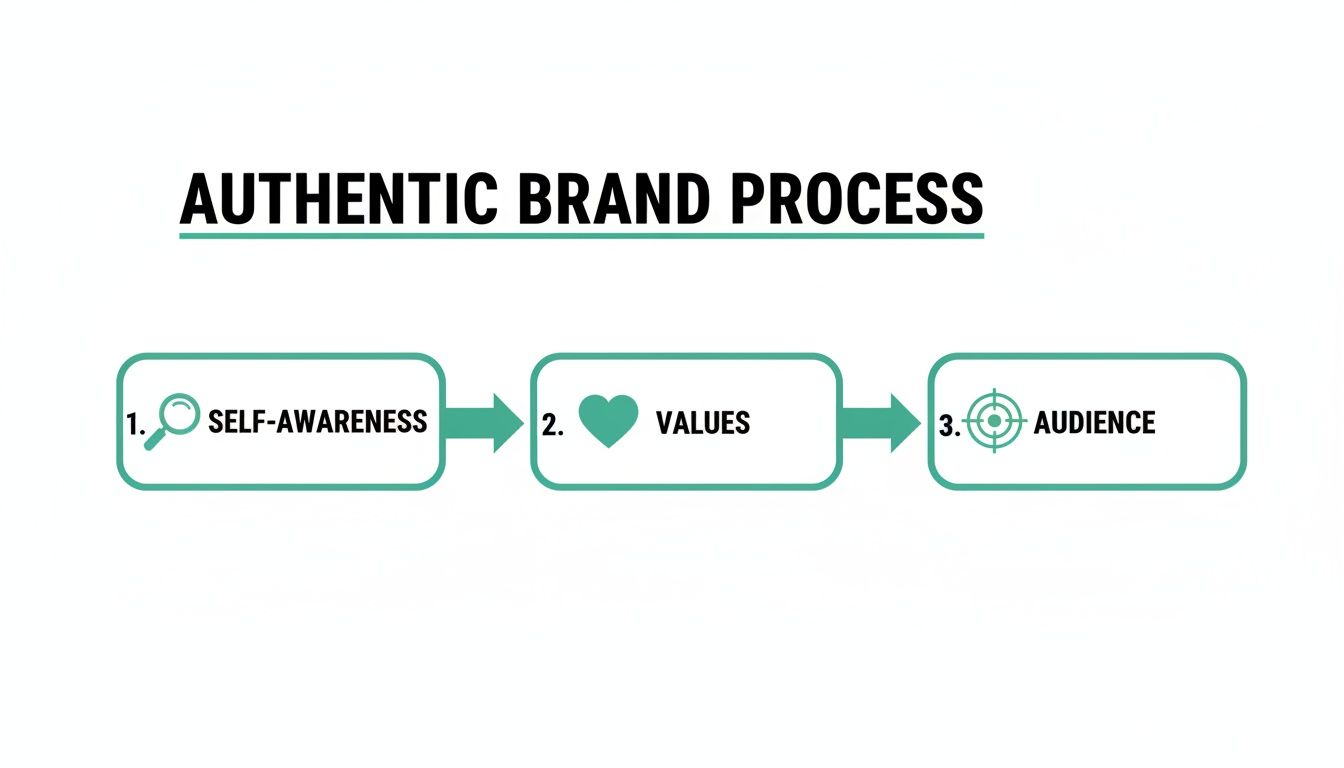
As you can see, a powerful brand is built from the inside out. It all starts with self-discovery.
Uncover Your Unique Value Proposition
Your Unique Value Proposition (UVP) is the heart of your brand. It’s your answer to the most important question: "Why should someone follow me and not one of the other thousand people doing something similar?" To find it, you have to get honest about what you bring to the table.
A personal SWOT analysis is a surprisingly powerful tool here. It’s not just for big companies.
Strengths: What are you genuinely good at? Maybe it’s breaking down complex topics, telling great stories, or making people feel instantly comfortable. What do friends and colleagues always compliment you on?
Weaknesses: Where do you fall short? Perhaps you hate being on camera or struggle to stay consistent with posting. Knowing this isn't about feeling bad; it's about focusing your energy where it'll have the most impact.
Opportunities: What's missing in your niche? Is there a conversation nobody is having or an underrepresented perspective? This is where you can find your opening.
Threats: Who are the established players in your space? Sizing up the competition helps you find a unique angle instead of just becoming another echo.
This simple exercise helps you go from a vague statement like "I'm a marketing expert" to something specific and magnetic, like "I help first-time SaaS founders land their first 100 waitlist signups using organic TikTok content." Now that is a brand you can build.
Define Your Brand Voice And Core Values
If your UVP is what you do, your voice is how you say it. It’s what makes you sound like a trusted friend instead of a textbook. Your personality needs to come through in your words, and it's worth exploring how mastering different tones of voice for your brand can help you find the right style.
Your brand voice should just be an amplified version of your real voice. If you’re naturally witty and sarcastic, let it show. If you're more thoughtful and analytical, own that. Faking a personality is exhausting and people can spot it a mile away.
Finally, your core values are your brand’s north star. They're the non-negotiable beliefs that guide every piece of content you create and every collaboration you accept. Whether it's a commitment to transparency, a passion for community, or a dedication to sustainability, these values keep you centered and ensure your brand stays true to its mission.
Developing Your Content Strategy and Visual Signature
Once you’ve nailed down your brand's foundation, it's time to build the engine that actually drives it forward: your content. A solid content strategy isn't about throwing things at the wall to see what sticks. It's about being intentional. This is how you translate who you are into something genuinely valuable for your audience, sparking the connection that turns followers into a community.
A lot of people freeze up right here, staring at a blank content calendar. The trick is to stop thinking about creating random "posts" and start thinking about the core topics you can truly own.

Establish Your Content Pillars
Think of content pillars as the 3-5 main themes you'll consistently talk about. These are the big-picture subjects that flow directly from your niche and that make you unique. Imagine them as the main aisles in your personal brand's library—everything you create should fit neatly into one of them.
Let’s say you're a financial coach who helps freelancers. Your pillars might look like this:
Freelance Budgeting: Real-world tips for handling an unpredictable income.
Tax Strategy: Making quarterly taxes and deductions less terrifying for solopreneurs.
Investing for Beginners: Simple, no-jargon advice on how to get started.
Mindful Spending: Digging into the psychology behind money habits.
These pillars become your guide. Before you hit "publish," just ask yourself, "Does this fit under one of my pillars?" This simple gut-check keeps your content focused, builds your authority in specific areas, and trains your audience on what to expect from you. It’s the best way to avoid a feed that feels scattered and off-brand.
Mix Formats to Keep Your Audience Engaged
If all you post are static images, people will get bored. Fast. A smart social media strategy uses a dynamic mix of formats that work with each platform's strengths and cater to different ways people like to learn and engage.
The goal isn't just to be seen; it's to be remembered. Varying your content formats makes your feed more interesting and gives people multiple ways to connect with your message. Someone might skip a long video but dive into a quick carousel summary of the same topic.
A healthy content diet could include:
Short-Form Video (Reels/TikToks): Perfect for quick tips, busting common myths, or showing a peek behind the scenes. These are your best bets for getting discovered by new people.
Carousels/Slideshows: Fantastic for breaking down complex ideas into easy-to-follow, step-by-step guides. They get a ton of shares and saves, which the algorithms love.
Static Image Posts: Use these for powerful quotes, important announcements, or data-rich infographics that pop.
Long-Form Written Content (LinkedIn/Blogs): This is where you establish deep expertise and share your big ideas. You can then slice and dice these longer pieces into dozens of smaller posts for other platforms.
By mixing it up, you provide both quick hits of value and deeper resources, making sure there's something for everyone in your audience.
Platform Content Format Guide
To help you get started, here’s a quick breakdown of which formats tend to perform best on the major platforms for personal branding.
Instagram: The primary content format is short-form video (Reels), supported by carousels and high-quality images. The main objective is visual storytelling and building a strong community through consistent, aesthetic, and engaging content.
TikTok: The platform is centered around short-form video, often using trending audio, with livestreams and image slideshows as secondary formats. The key objective is discovery and entertainment, helping content reach new audiences quickly.
LinkedIn: Text posts and long-form articles perform best, supported by document carousels (PDFs) and short videos. The main goal is establishing professional authority and growing a network through insights, expertise, and thought leadership.
X (Twitter): Short text posts and threads are the primary format, with images, GIFs, and short videos as secondary content. The objective is real-time conversation, news sharing, and fast audience interaction.
Facebook: Video content (both short and long) and community posts lead performance, supported by image albums and links. The key objective is community building and achieving a broad reach across diverse age groups.
YouTube: Long-form video is the core content type, with YouTube Shorts acting as a secondary format. The main objective is in-depth education, storytelling, and positioning yourself as an expert in your niche.
This list is a starting point. The best mix for you will emerge from experimentation and observing what your specific audience responds to.
Create a Cohesive Visual Signature
In a feed that moves at lightning speed, your visual signature is what makes your content instantly recognizable. Consistency here isn't about being boring; it's about building brand recall and looking professional. The good news is you don't need a design degree to pull this off—you need a simple system.
Your visual brand kit should cover these basics:
A Consistent Color Palette: Pick 2-3 primary colors and 1-2 accent colors that match your brand’s vibe. If you're stuck, a tool like Coolors can help you generate a great-looking palette in seconds.
Select Fonts: Choose one clean font for headings and another that’s easy to read for body text. Keep it simple and make sure they look good on a small phone screen.
Simple Templates: Use a tool like Canva to create a few basic templates for your go-to post types (like quote graphics or carousel covers). This will save you a massive amount of time and keep everything looking consistent.
These elements work together to tell a story before anyone reads a single word. It's a key part of the visual storytelling techniques that make brands feel compelling and memorable. With over 5.17 billion social media users globally, personal brands that nail their visual identity are the ones that stand out and earn real loyalty.
Making Your Profile a Follower Magnet
Think of your social media profile as your brand's front door. It’s the very first thing people see, and you have literally seconds to make them want to come inside. An unoptimized profile is like a locked door—it turns people away before they even get a chance to see the amazing content you’re creating.
This goes way beyond just picking a nice photo. It’s about making sure every single element, from your username to the link in your bio, works together. A great profile clearly communicates who you are, what you do, and why someone should care enough to click "Follow."
Write a Bio That Actually Converts
Your bio is prime real estate. You get a tiny amount of space to hook someone, so every character counts. The goal here is crystal clarity, not confusion.
Start by nailing your value proposition. Don't just say "Entrepreneur." Get specific: "I help first-time SaaS founders land their first 100 customers." See the difference? Your ideal follower immediately knows they're in the right place.
Then, add a human touch. A quick mention of a hobby or a personal mission makes you more relatable. And always, always end with a call-to-action (CTA). Tell people exactly what you want them to do next, whether it's grabbing your free checklist or listening to your latest podcast episode.
Tailoring Your Bio for Each Platform
While your core message stays the same, how you present it should adapt to the platform. What works on LinkedIn will fall flat on TikTok.
Instagram: Make it scannable. Use emojis and line breaks to break up the text. Your bio should be packed with keywords related to your niche, because this helps you show up in Instagram's search results. Visuals are everything, so your whole grid needs to look cohesive, which is a key trait of standout Instagram profiles.
LinkedIn: Your headline is everything. Think of it as your personal tagline—it needs to be a powerful, keyword-rich statement about what you do. Use the summary section to tell your story in the first person, sharing your professional journey and highlighting key wins.
TikTok: Attention spans are microscopic here. Your bio needs to be short, punchy, and straight to the point. Tell people exactly what kind of content they're going to get. A bit of humor or a quirky personality trait goes a long way on TikTok.
Your Visual First Impression
Long before anyone reads a word of your bio, they see your profile picture. This is not the place for that blurry vacation photo from five years ago or a cute picture of your dog. You need a high-quality headshot where your face is clear, well-lit, and you look both professional and approachable.
Consistency is a non-negotiable. Using the same (or very similar) headshot across all your social channels builds instant brand recognition. When someone who follows you on LinkedIn stumbles upon you on X, they should know it's you immediately. It’s a small detail that makes a huge difference.
Your social media profile isn't a resume; it's an advertisement for your personal brand. Every word and every image should be chosen to attract the right people and repel the wrong ones. It’s about being a magnet for your ideal audience.
Never underestimate the power of a polished profile. A whopping 71% of Gen Z and Millennials find new brands on social media. This gives individuals with an authentic personal brand a massive edge in an influencer market expected to hit $32.55 billion by 2026. You build that trust from the very first click on your profile.
Driving Growth Through Authentic Community Building
Great content and a sharp profile are your ticket to the game, but community is how you win it. A personal brand isn't just about broadcasting your message out into the void. It’s about creating a real space where people feel seen, heard, and connected—not just to you, but to each other. This is the critical shift from simply having an audience to building a loyal community that practically champions your brand for you.
The most successful personal brands I've seen all get this. They don't just collect followers; they cultivate relationships. It means getting out of the one-way communication habit and sparking genuine, two-way conversations that build the kind of trust and authority that lasts.
Go Beyond Generic Engagement
What's the difference between a passive follower and a true community member? Usually, it's the quality of your interactions. Dropping a quick "like" on a comment is fine, but it doesn't build anything. The real goal is to make every touchpoint meaningful, proving there's a real person behind the account who actually cares.
This kind of engagement is a skill you can develop. It’s about being present, consistently adding value, and just being human.
Write Comments That Matter: Instead of a generic "Great post!", try adding a specific insight or a thoughtful follow-up question. Say a peer posts about a tough challenge they overcame. A better comment would be, "This is such an honest take. That third point about reframing failure really hits home. How did you first come to that realization?" See the difference?
Show Up in Your Niche: Block out just 15-20 minutes a day to engage with other accounts in your space. Comment on their posts, share their work when it's genuinely good, and jump into relevant conversations. This does more than just build goodwill; it puts your brand in front of their audience in a natural, non-salesy way.
Use DMs for Real Connections: Direct messages are incredibly powerful for building deeper relationships. If someone leaves a particularly insightful comment, shoot them a quick DM to thank them and continue the conversation. Think of this space as a coffee chat, not a sales pitch.
These small, consistent actions compound over time, slowly but surely transforming your account from a simple content feed into a vibrant community hub. For a deeper look at this, check out these proven community engagement strategies that can help you build a much more interactive and loyal following.
The Power of Strategic Collaborations
Partnering up with others in your niche is one of the fastest ways to grow your brand organically. Think of it as a powerful endorsement—it introduces you to a new, relevant audience that already trusts the person you're working with. But remember, the best collaborations are built on mutual value, not just a desperate grab for followers.
Start by identifying potential partners whose audience and values actually align with yours. Don't just chase accounts with huge follower counts. Look for creators with high engagement and a strong community connection, no matter their size.
A collaboration should feel like a natural conversation between two trusted experts, not a forced advertisement. The best partnerships leave both audiences feeling like they discovered something incredibly valuable.
Once you have a shortlist of people you'd love to work with, approach them with a clear idea that benefits both of you from the get-go.
Here's a quick look at how different organic strategies stack up against each other. Each has its place, depending on your goals and resources.
Organic Growth Strategy Comparison
Story shoutouts require low effort and deliver moderate impact. They are best for quick cross-promotion and building goodwill with peers by exposing each account to a new but relevant audience.
Joint live streams involve a medium level of effort but have high impact potential. They work best for showcasing combined expertise and engaging both audiences in real time, which strengthens trust and visibility.
Content swaps also require medium effort and offer high impact. This strategy is ideal for guest posting on each other’s platforms, giving audiences fresh perspectives while sharing reach.
Giveaways or contests demand high effort but come with very high impact potential. They are best for rapidly growing followers and engagement by incentivizing participation around a shared prize.
Ultimately, the goal is to create something together that neither of you could have made alone. This approach ensures your collaboration genuinely serves both audiences and strengthens your authority in the process.
The impact of this kind of authentic advocacy is huge. For instance, when employees or partners share messages, they can see 24 times more reshares and a 7-fold improvement in lead conversion compared to official brand channels. Why? It's all thanks to the trust built into their personal networks. This just goes to show that building a true community of advocates is one of the most powerful organic growth moves you can make.
How to Use AI for Smart, Organic Growth
Let's be real: trying to grow a personal brand on social media can feel like a full-time job. Coming up with endless ideas, crafting the perfect post, and figuring out what your audience wants can burn you out fast. This is where AI tools can be a game-changer—not as a replacement for your voice, but as a seriously smart assistant.
Think of AI as your own personal data analyst. It can dig through a mountain of information to spot trends and opportunities you’d never see on your own. This frees you up to do what you do best: create incredible content and actually connect with people.

It’s all about working smarter, not harder, to speed up your organic growth in a responsible way.
Uncover Content Ideas People Actually Want
Staring at a blank content calendar is the worst. Instead of guessing what to post, you can use AI to discover what topics, questions, and keywords are already buzzing in your niche.
Tools like ChatGPT or Perplexity are great for this. You can get super specific. Try prompting them with something like, "What are the top five questions beginner photographers are asking on Reddit right now?" You’ll get a ready-made list of topics your audience is already looking for. This data-first approach means you’re creating content that has a built-in audience from day one.
Fine-Tune Your Content for Maximum Reach
Awesome content deserves to be seen. AI can help you tweak every post—from the words you choose to the exact minute you publish—to get the best possible results.
Here’s how AI gives you an edge:
Keyword Analysis: Platforms like SEMrush have tools that find trending keywords for platforms like TikTok (which is basically a search engine now). Sprinkling these into your captions and on-screen text can make a huge difference in getting discovered.
Predictive Timing: Many social media schedulers now use AI to analyze your past engagement and tell you the exact best times to post for your specific audience. No more guessing.
A/B Testing Headlines: Instead of just one headline for a LinkedIn article or YouTube video, an AI tool can whip up several compelling options for you to test and see what clicks.
The goal here is augmentation, not automation. AI should be used to sharpen your strategic thinking by giving you insights that lead to smarter, more informed decisions about your content.
This level of optimization used to be something only big marketing agencies could afford. Now, it's available to anyone building their brand.
Personalize How You Engage With Your Audience
A strong personal brand is great for business—that’s not just a feeling, it’s a fact. An eye-opening 77% of consumers say they’re more likely to buy from a brand whose CEO is active on social media. What's more, 74% trust personal brands over faceless companies. This study on branding statistics digs into the details.
AI tools can help you build that trust at scale. They can analyze audience sentiment, flag comments that need a reply, and even identify your most loyal followers so you know who to connect with directly. This helps you nurture those core relationships, turning casual followers into true brand advocates. It’s a much more efficient way to manage your interactions and build a real community.
6. Measure What Matters and Refine Your Strategy
Building a personal brand isn't a "set it and forget it" activity. Your initial strategy is just a starting point—a well-educated guess. The real magic happens when you start paying attention to what the data is telling you and adjust accordingly.
Think of it less like a rigid blueprint and more like a living, breathing roadmap. You have to look past the flashy numbers, like follower counts, to see what's really working.
So, what should you be looking at? It's easy to get lost in analytics, but focusing on the right metrics will tell you the true story of your brand's health.
Key Metrics That Actually Signal Growth
Forget drowning in a sea of data. Zero in on a few key performance indicators (KPIs) that show you're building a genuine community, not just a following.
Engagement Rate: This is your holy grail. It’s the percentage of your audience that actually interacts with what you post. To figure it out, just add up your likes, comments, shares, and saves for a post, divide by your follower count, and multiply by 100. Honestly, a high engagement rate on a smaller, dedicated account is way more valuable than a low one on a huge account.
Website Clicks: If one of your main goals is to get people to your website, portfolio, or blog, then this is non-negotiable. It's the most direct way to see if your social media efforts are turning followers into potential clients or customers.
Audience Demographics: Who are you really talking to? Your platform's analytics will break down your audience by age, location, and gender. This is your reality check—are you connecting with the people you set out to reach?
Don’t just collect data—use it to ask smarter questions. If your audience is consistently saving your "how-to" carousels, that's a massive clue. They're telling you exactly what they want more of.
This constant cycle of measuring, learning, and adjusting is what separates a brand that lasts from one that fades out. It's the core of measuring social media success in a meaningful way.
Remember, social media is always changing. Today, 53% of consumers are interacting more with brands on social media than they were just six months ago, and another 53% stay loyal to the brands they follow. These numbers, highlighted in this deep dive into branding statistics, prove that building a real connection through organic growth is more important than ever.
Make it a habit to sit down once a month, review your KPIs, and make small, smart tweaks to your plan. That's how you stay relevant and keep the momentum going.
Common Questions (and Real Answers) About Personal Branding
Even with the best roadmap, hitting the ground running with a personal brand always brings up new questions. Let's tackle some of the most common ones I hear, so you can move forward with a bit more clarity.
"How Long Is This Really Going to Take?"
Look, building a personal brand that actually means something is a marathon, not a sprint. Anyone who tells you otherwise is selling something. While you might see some encouraging signs in the first few months, plan for at least 6-12 months of consistent work to build a real foundation.
It’s all about showing up, delivering value, and talking to your people day in and day out. That's what builds trust and sustainable growth—not one-off viral hits.
"Do I Have to Be on Every Single Platform?"
Please don't. That's a classic recipe for burnout and creating a lot of forgettable content. It's a trap so many people fall into.
The smartest move you can make is to dominate one or two platforms where you know your ideal audience hangs out. Go deep, not wide. Build a real community there before you even think about planting your flag somewhere else.
"What if I Don't Feel Like an Expert Yet?"
You don't have to be the world's foremost authority to build a compelling brand. In fact, some of the most magnetic personal brands are built by people who are simply documenting their journey.
Share what you're learning as you go. Talk about the mistakes you're making and the hurdles you're clearing. This "learn out loud" approach is incredibly powerful because it’s authentic and relatable. People will feel like they’re growing right alongside you, and that's how you build a fiercely loyal following. Your progress is your expertise.
Ready to stop guessing and start growing? Gainsty uses advanced AI and real Instagram experts to help you get more followers and engagement organically.

.png&w=1920&q=75&dpl=dpl_D59Qa4oJ5cFQ7dZDLQ1JPQVnqHSs)





.png&w=750&q=75&dpl=dpl_D59Qa4oJ5cFQ7dZDLQ1JPQVnqHSs)