Moving Beyond Follower Counts to Find Real Advocates
For a long time, the game was simple: find the account with the biggest follower count. That old playbook is gathering dust for a reason. Today, the most effective brand advocates aren't just broadcasting to a huge audience; they're genuine fans who build trust and spark real conversations. The real magic happens when you shift your focus from sheer numbers to authentic connection.
This isn't just a hunch—the industry data backs it up. The global influencer marketing market hit a staggering 21.1 billion U.S. dollars in 2023 and is still climbing. Why? Because people trust people. A recent study showed that 66% of Millennials are more likely to trust a creator they follow than a traditional ad.
Redefining the Ideal Ambassador
So, if follower count isn't the main event, what is? It's time to start asking better questions.
Do they already use and love our products? This is non-negotiable. The best promotion comes from a place of genuine enthusiasm. An existing customer is already halfway to being the perfect ambassador.
Is their content style a match for our brand? Could you take a good look at their feed? You're searching for a visual and tonal vibe that feels like a natural extension of your own brand's voice.
How strong is their community engagement? A million followers mean nothing if the audience is silent. I always look for active comment sections, real back-and-forth conversations, and a community that genuinely listens. That's a far better indicator of influence.
The most powerful ambassadors don’t just broadcast messages; they foster communities. Their value lies in the trust they've built, not the size of their following.
Where to Start Your Search
Your search for the perfect partners should begin with the people who are already in your corner. These individuals bring an unmatched level of authenticity because their support isn't just a transaction—it's a reflection of their real-world experience with your brand.
Before you start cold-messaging strangers, explore these core groups:
Loyal Customers: The people who buy from you again and again are your biggest fans. Period.
Engaged Followers: Pinpoint the users who consistently like, comment on, and share your posts. They're already doing the work!
Passionate Employees: Your own team members know your brand inside and out. They can be some of your most powerful advocates.
Focusing on these groups first ensures you're partnering with people who have a real, established connection to your brand. This translates into more credible promotions and helps you steer clear of accounts propped up by fake users. If you're worried about that, it's worth learning about ghost followers and how to spot them.
Types of Brand Ambassadors and Their Key Strengths
To help you narrow down your search, it's useful to think about the different types of ambassadors you can work with. Not all advocates are created equal, and the right choice depends entirely on your specific goals.
Nano-Influencers are great for high engagement and niche authority. They are best used to build trust within very specific communities.
Micro-Influencers have strong, targeted communities and are ideal for driving conversions and creating authentic engagement with your audience.
Macro-Influencers offer broad reach and high visibility, making them perfect for large-scale brand awareness campaigns.
Loyal Customers provide genuine product love and authenticity, which is excellent for generating user-generated content (UGC) that resonates with real people.
Passionate Employees have deep product knowledge and brand trust, making them ideal for showcasing company culture and expertise.
Industry Experts bring credibility and authority, which helps in building thought leadership and trust for your brand.
Choosing the right mix of these ambassador types can give you a well-rounded program that achieves multiple objectives, from building grassroots community buzz to launching major awareness campaigns. It’s all about aligning the ambassador's strengths with what you need to accomplish.
Defining Your Ideal Ambassador Profile
Before you even think about outreach, you need a crystal-clear picture of who you're looking for. Just jumping into the search without this is a recipe for disaster. You might find someone, but they almost certainly won't be the right one. The real first step is to build a detailed ambassador persona that goes way beyond basic demographics.
This persona serves as your compass throughout the entire recruitment journey. It’s built by looking at two places you already have data: your most engaged followers and your best-performing content. Who are the people already commenting, sharing, and shouting you out? What is it about your top posts that resonates so deeply? The answers give you a profile based on what's already working, not just a hunch.
Key Criteria for Your Ambassador Persona
When you start sketching out this profile, focus on the qualitative traits just as much as the numbers. A potential ambassador’s personal values, their content style, and the way they connect with their audience are far better predictors of success than follower count alone.
Here are a few non-negotiables to add to your checklist:
Authentic Engagement: Dig into their comments. Are they having real conversations, or is it just a wall of generic "great post!" spam? You want the former.
Content Aesthetic: Does their look and feel genuinely match your brand's identity? A good partnership should feel like a natural fit, not a jarring ad.
Past Collaborations: Take a look at their previous brand deals. Do they partner with brands that share your values, or will they promote just about anything for a paycheck?
An ideal ambassador doesn't just represent your brand; they embody its values. Their advocacy feels natural because it’s an extension of who they already are.
Mapping Your Search Strategy
Once you have your persona locked in, you can start figuring out where to find these people. I always recommend starting with the people closest to your brand and then working your way out.
This simple flow chart breaks down the three main pools you'll be fishing in.
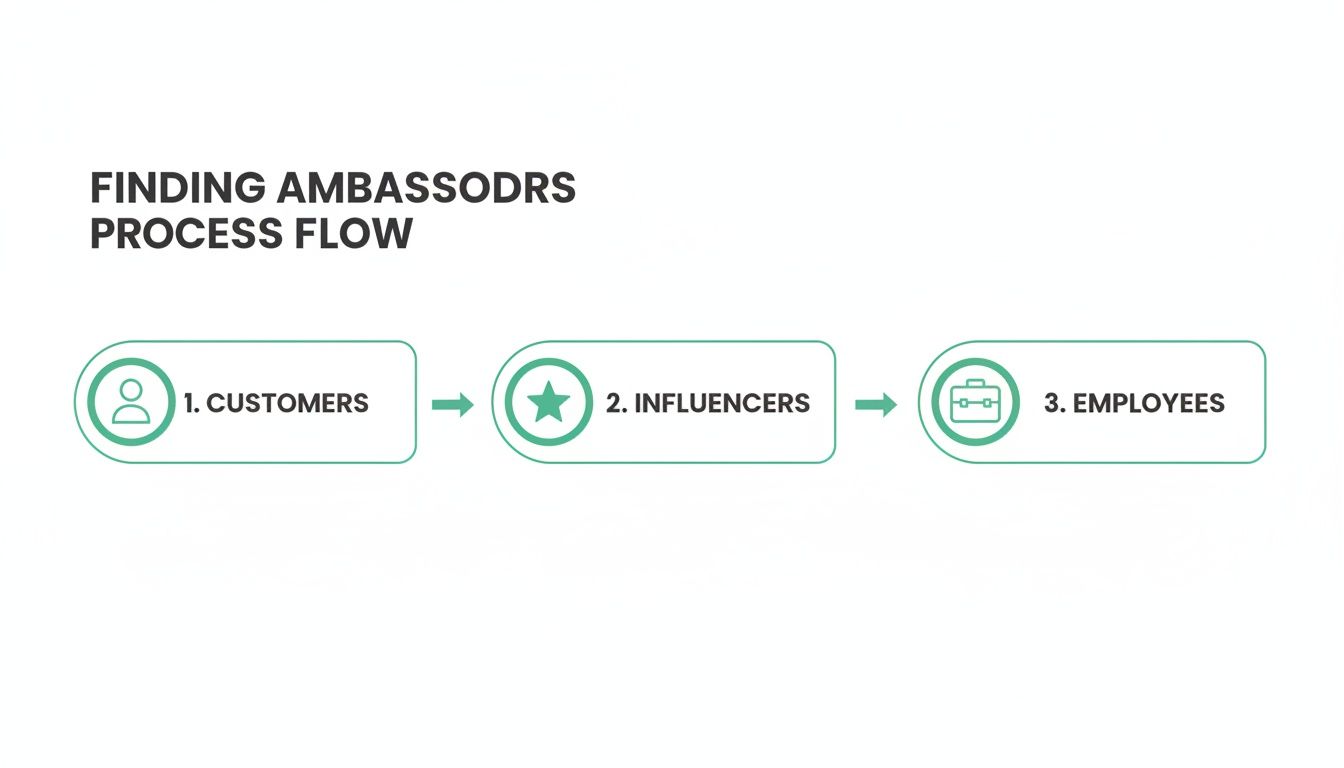
As you can see, the most authentic and powerful partners often come from your existing customer base. After that, look to aligned influencers and even your own passionate employees. This inside-out approach really prioritizes genuine brand love from day one.
This whole process taps into one of the oldest and most powerful marketing truths: word-of-mouth is everything. It’s no surprise that a staggering 92% of consumers trust recommendations from people they know over traditional advertising. It's also why referred customers tend to have a 37% higher lifetime value. When you carefully define your ideal ambassador, you're really just finding the perfect person to kickstart those valuable conversations.
Finally, remember that this persona isn't set in stone. It's a living document that should evolve as your brand grows and you learn what resonates. For a deeper dive into this, check out our guide on how to identify your target audience—many of the same principles are at play.
Uncovering Hidden Gems in Your Own Community
Your most powerful brand ambassadors are often hiding in plain sight. Before you even think about spending a dime on fancy outreach tools or influencer platforms, your first move should always be to look inward. Seriously. The people who are already talking about your brand for free are your most authentic, most passionate, and most effective potential partners.
This whole process kicks off with a good, old-fashioned audit of your own Instagram presence. You need to dive deep into your tagged photos, your brand mentions, and even your story replies. Who’s consistently creating awesome content with your products without even being asked? These organic advocates are your low-hanging fruit—they already own the product, love it enough to post about it, and genuinely get what your brand is all about.

Sifting Through Your Digital Footprint
I know, manually digging through your social channels sounds like a lot of work, but having a system makes it totally manageable. Block out some time each week to specifically hunt for these potential ambassadors. Don't just scroll past—really look at the quality of their content and, just as importantly, see how their own followers are reacting to it.
Check Tagged Photos & Mentions: Look for people who tag you in well-shot, on-brand photos. These aren't just customers; they're budding content creators who already like you.
Scan Your Comments: Pinpoint the users who always leave thoughtful, positive comments. Who’s in there answering questions for other followers? Those are your super-fans, right there.
Watch Story Replies: Pay close attention to who replies to your stories with genuine excitement or useful feedback. That direct line of communication is a goldmine for finding loyal followers.
By actively keeping an eye on these interactions, you're doing more than just finding candidates. You're building a list of people who are already invested in your brand’s journey. This groundwork is essential if you want to build an online community that feels real and thrives on genuine connection.
Key Takeaway: The best ambassadors don't need to be convinced to love your brand—they already do. Your job is to find them, acknowledge their support, and give them a platform.
Expanding Your Search Beyond Your Feed
Once you’ve exhausted your immediate network, it’s time to start looking a little further afield. Strategic hashtag research is your next best friend. Think beyond your own branded hashtags and start searching for the broader, niche-specific terms your ideal customer would be using. For example, if you're a sustainable skincare brand, you should be digging through tags like #CleanBeautyRoutine or #EcoFriendlySkincare.
Here's another trick I love: check out your competitors' tagged photos and comment sections. See who is consistently engaging with them. If you spot a creator who aligns with a competitor but also fits your brand’s vibe, they might be open to a new partnership—especially if they feel a bit underappreciated where they are.
This shift toward smarter, data-driven ambassador selection is really changing the game. The Brand Ambassador Solution market, valued at $408.4 million in 2024, is expected to more than double by 2032, all because technology is making it easier for brands to find the perfect match. To get a handle on this trend, you can read more about the growing brand ambassador market and its future. If you're looking to make this discovery process a bit smoother, specialized tools like the Saucial platform can help you identify and manage these key relationships without all the manual legwork.
Crafting Outreach That Builds Real Connections
Alright, you’ve got a list of potential ambassadors. Now comes the tricky part—making that first contact. This is where a lot of brands stumble. A generic, copy-paste DM is the quickest ticket to being left on "read." Your first message sets the entire tone, so it needs to feel personal, genuine, and respectful of their time.
The real goal here isn't just to pitch a deal; it's to start a conversation. That means you need to do your homework. Seriously, before you even think about hitting send, spend a few minutes actually looking at their profile. Find a specific post, story, or caption you genuinely connected with. A lazy "Hey, love your content!" just doesn't work anymore.
Instead, try something that shows you're paying attention. For example: "Your recent post about your sustainable morning routine really resonated with our team's values." A single sentence like that proves you see a real alignment and aren't just chasing follower counts.

Differentiating Your Message
You wouldn't talk to a longtime friend the same way you talk to a new acquaintance, right? The same logic applies here. The way you approach a loyal customer should be completely different from how you contact a creator you admire from afar.
For a Loyal Customer: You can be more familiar and warm. Acknowledge their support right away. "We've noticed you’ve been a huge supporter for a while, and we're so grateful for it. Your post featuring our new serum was amazing!" This immediately validates their loyalty and makes them feel seen.
For a New Creator: Here, you need to be a bit more formal but still personal. Briefly introduce your brand, explain exactly why you think their specific audience and content style are a perfect match, and then clearly state why you're reaching out.
Your first message is an audition for what it's like to work with your brand. Be professional, be personal, and most importantly, be human. A little authenticity goes a long way in building trust.
No matter who you're messaging, be upfront about what’s in it for them. Vague offers like "let's collaborate" are annoying and easy to ignore. Get straight to the point about the value you're offering, whether it's free products, early access to launches, or a commission-based partnership.
Many of the same principles apply to other partnership models. It’s worth exploring proven tactics for recruiting affiliates, as the core ideas of clear communication and a strong value proposition are universal.
Building a great outreach message is like putting together a puzzle; each piece has a purpose. Here's a quick breakdown of the components that make a message impossible to ignore.
Outreach Message Template Components
Personalized Opener: Start your message by showing that you’ve done your research and aren’t just sending a generic pitch. For example, you might say, “I loved your recent reel on styling wide-leg jeans…”
Genuine Compliment: Acknowledge the creator’s specific skill, style, or content quality rather than just their follower count. For instance, “…your editing style is so clean and engaging.”
Brand Connection: Briefly explain why your brand aligns with their content or audience. Example: “At [Your Brand], we’re all about that same minimalist aesthetic.”
Clear Proposal: Clearly state what you are offering and what the collaboration will involve. For example, “We’d love to send you our new collection to feature in a post.”
The “What’s In It For Them”: Outline the direct benefits they’ll receive from the partnership, like “In addition to the free products, we offer a 15% commission on sales.”
Simple Call-to-Action: End with an easy way for them to respond, such as, “Would you be open to hearing more?”
Putting these pieces together in a natural way will make your message feel less like a pitch and more like the start of a genuine partnership.
The Do's and Don'ts of Outreach
Crafting the perfect message can feel a bit nerve-wracking, but sticking to a few simple rules will make a huge difference in your response rate. This is a crucial part of how to find brand ambassadors who are actually excited to work with you.
Do:
Keep it concise. Get to the point quickly. Their inbox is probably flooded.
Proofread everything. Typos and bad grammar look sloppy and unprofessional.
End with a clear question. Give them something easy to respond to, like a simple yes/no.
Don't:
Use generic templates. Personalization is everything. I can't stress this enough.
Make it all about you. Frame the conversation around mutual value and why they are a great fit.
Be pushy. Give them time to respond. If you follow up, do it politely and only once.
Onboarding Your New Ambassador: From "Yes" to a Powerful Partnership
Getting an enthusiastic "yes" from a potential ambassador is a great moment, but the real work is just getting started. A solid onboarding process is what turns that initial excitement into a successful, long-term relationship. It's your opportunity to make sure they're the right fit and welcome them in a way that makes them feel like part of the team from day one.
It’s tempting to rush things when everyone is excited, but now is the time to be thorough. You need to confirm that their online personality truly matches your brand's values. This isn’t about snooping; it’s about smart brand protection and making sure the partnership is a genuine win for both of you.
Take a look at their past brand collaborations. Do they promote products that make sense alongside yours, or is their feed a random mix of sponsored posts? You're looking for someone who has a consistent voice and a track record of authentic partnerships, not just a walking billboard.
The Final Vetting Checklist
Before you even think about sending out a welcome kit, run through this quick but crucial final check. This last look ensures you’re about to partner with someone professional, reliable, and truly connected to their audience—all non-negotiables for a great brand ambassador.
Look at Their Engagement Quality: Go deeper than just likes and follower numbers. Are they actually replying to comments? Do their followers seem like real people having real conversations? You want an engaged community, not just vanity metrics.
Check for Brand Safety: Do a quick scroll through their recent content, comments, and tagged photos. You need to be sure their communication style and the topics they engage with are a safe and positive reflection of your brand.
Assess Their Professionalism: Think back to your initial emails. Were they responsive, clear, and professional? How they communicate early on is a pretty good indicator of what it will be like to work with them down the road.
A great onboarding experience does more than just give instructions. It builds genuine excitement and confirms to the ambassador that they made the right choice. This is how you set the stage for a respectful, mutually beneficial relationship.
Building a Strong Foundation from Day One
Once you're confident you've found the right person, it's time to officially welcome them aboard. A thoughtful onboarding process makes your new ambassador feel like a valued team member, not just another contractor. This is key to nurturing the kind of loyalty you want them to share with their audience.
Your onboarding should be a mix of essential information and genuine enthusiasm. Don’t just send over a dry PDF with rules and regulations. Make it an experience that celebrates this new partnership.
Your Onboarding Success Kit
Your goal is to give them everything they need to succeed, all wrapped in a welcoming package.
Send a Welcome Packet: This should be more than just products. A handwritten note, some cool brand swag, and a clean, beautifully designed one-pager outlining the next steps go a long way.
Provide Clear Brand Guidelines: Give them a concise guide on your brand's voice, visual style, and core messages. Be sure to include the "do's and don'ts," like mandatory hashtags or phrases to avoid.
Outline Expectations Clearly: Create a simple document that covers content deliverables, timelines, and how you'll communicate. Be completely transparent about how and when they will be paid.
Schedule a Kick-off Call: A quick 15-minute video call can build a much stronger connection than a dozen emails. Use it to answer their questions and share how excited you are to start working together.
This kind of structured start gets rid of any guesswork and gives your new ambassador the confidence to begin creating fantastic content right away. A strong start is the best guarantee that your partnership will not only work but thrive.
Measuring the True Impact of Your Ambassador Program
Getting your ambassador program off the ground is a fantastic first step, but the real work is just beginning. To make sure all that effort pays off, you have to prove it's actually working. This means looking past surface-level vanity metrics and digging into the numbers that really matter to your business's growth.
You need to draw a straight line from your ambassadors' content to your bottom line. Without solid tracking, you're flying blind. A great program isn't just about creating a little buzz; it’s about generating a tangible return on investment (ROI) that you can confidently report back to your team.

This dashboard from Gainsty is a perfect example of how a growth platform gives you real-time analytics. You can watch follower gains and engagement trends as they happen, allowing you to see the direct results of your Instagram efforts and make decisions based on hard data.
Moving Beyond Likes to Measure Real ROI
The secret to proving your program’s worth is tracking a few core Key Performance Indicators (KPIs). These numbers give you a clear, data-backed picture of what's working and what isn't, so you can stop guessing and start refining your strategy.
Here are the essential KPIs you should be watching from day one:
Engagement on Ambassador Content: This is your first clue. Keep an eye on the likes, comments, shares, and saves on any post featuring your brand. High engagement is a strong signal that an ambassador’s audience is connecting with their message.
Referral Traffic: Give each ambassador a unique, trackable link using UTM parameters. This is how you'll know exactly how many people are clicking through from their specific posts to your website.
Conversion Rates: This is where the magic happens. Assign every ambassador their own unique discount code. It's the cleanest, most direct way to attribute sales to their influence and calculate a clear ROI. A 15% discount code is a solid place to start.
Key Insight: Don't underestimate the power of a unique discount code. It's often the most compelling metric you have, providing undeniable proof that an ambassador can do more than just build awareness—they can drive sales.
By keeping a close eye on these KPIs, you’ll quickly see who your star players are and what type of content gets people to take action. This is the kind of insight that helps you build a truly effective program.
Keeping Your Ambassadors Engaged and Motivated
A brand ambassador program is a living thing; you can't just set it and forget it. Keeping your partners motivated is absolutely critical for any kind of long-term success. Consistent communication and building a real sense of community are just as important as what you're paying them.
Think of it like any other important relationship. Regular check-ins, sharing positive results, and celebrating their successes will make them feel like they're truly part of your team, not just a hired gun.
Here are a few simple, proven ways to keep the momentum going:
Create a Communication Hub: A private Slack channel or a dedicated Instagram group works wonders. It gives ambassadors a place to connect with each other, share what's working, and feel like they belong to something.
Offer Performance-Based Perks: Nothing motivates like a little friendly competition. Reward your top performers with exclusive bonuses like early access to new products, a bump in their commission rate, or a feature on your brand’s official social accounts.
Share a Performance Dashboard: Keep them in the loop. Sending simple, regular updates on how their content is performing shows them the real-world impact they're having. Seeing the numbers climb is a huge motivator.
At the end of the day, a successful program is a genuine partnership. When your ambassadors feel supported and can see the results of their work, their passion for your brand grows. That creates a powerful positive feedback loop that will drive sustainable growth for years to come.
A Few Common Questions About Brand Ambassadors
Diving into the world of brand ambassadors can feel a bit overwhelming at first. I get it. When you're just starting, a lot of questions pop up. Let's clear the air on some of the most common ones I hear so you can build your program with confidence and sidestep those early-stage mistakes.
Ambassador vs. Influencer: What’s the Real Difference?
One of the first things people ask is about the difference between an ambassador and an influencer. It really all boils down to the relationship.
Think of an influencer as a short-term collaborator. You might hire them for a specific campaign to get your brand in front of a new audience. It's often transactional.
A brand ambassador, on the other hand, is in it for the long haul. This is usually someone who already loves and uses your products. The partnership is official and built on genuine advocacy that provides a steady stream of support, not just a one-off promotional blast.
Talking Money: How Do You Pay Ambassadors?
This is the big one: "How much should I pay them?" There’s no magic number here, and the compensation can look very different from one brand to the next.
Your approach can range from simply gifting free products to your most loyal fans all the way to monthly retainers, commission on sales, or a flat fee for specific content. The right model really depends on the ambassador's audience size, how engaged their followers are, and exactly what you're asking them to do.
Do We Really Need a Contract?
Yes. A thousand times, yes. A formal, written agreement is absolutely non-negotiable.
A clear contract is your best friend. It’s not about mistrust; it’s about professionalism. It protects both you and the ambassador by setting clear expectations right from the start and preventing headaches later on.
A solid agreement makes for a healthy partnership. Make sure it clearly outlines a few key things so everyone is on the same page:
Deliverables and Timeline: What are they creating, and when is it due? Be specific.
Compensation Structure: How and when are they getting paid? Don't leave any room for confusion.
Content Usage Rights: How can you use the content they create? Be clear about where you can repurpose it.
Partnership Duration: How long does this agreement last?
Ready to grow your Instagram with authentic advocates? Gainsty uses advanced AI and expert strategies to connect you with the right people and boost your organic growth. Start building your community today.
.png&w=1920&q=75&dpl=dpl_D59Qa4oJ5cFQ7dZDLQ1JPQVnqHSs)



.png&w=750&q=75&dpl=dpl_D59Qa4oJ5cFQ7dZDLQ1JPQVnqHSs)