.jpg&w=1920&q=75&dpl=dpl_34ZXCf12K5qjjdZjPn9snwDRADrB)
Building a Brand That Sponsors Want to Work With
Let's be blunt: a brand isn't going to invest in you unless they see a clear path to a return. This goes way beyond your follower count. They're looking for a focused, professional brand that tells a story and connects with a specific audience they want to reach.
Think of your Instagram account as a high-end boutique, not a sprawling department store. The boutique has a distinct vibe, a curated selection, and a loyal clientele who trusts its expertise. The department store has a bit of everything but doesn't really stand for anything in particular. Sponsors are always looking for the boutique.
This whole process boils down to three core pillars: defining your niche, creating killer content, and building a loyal community. Get these right, and the sponsors will start noticing.
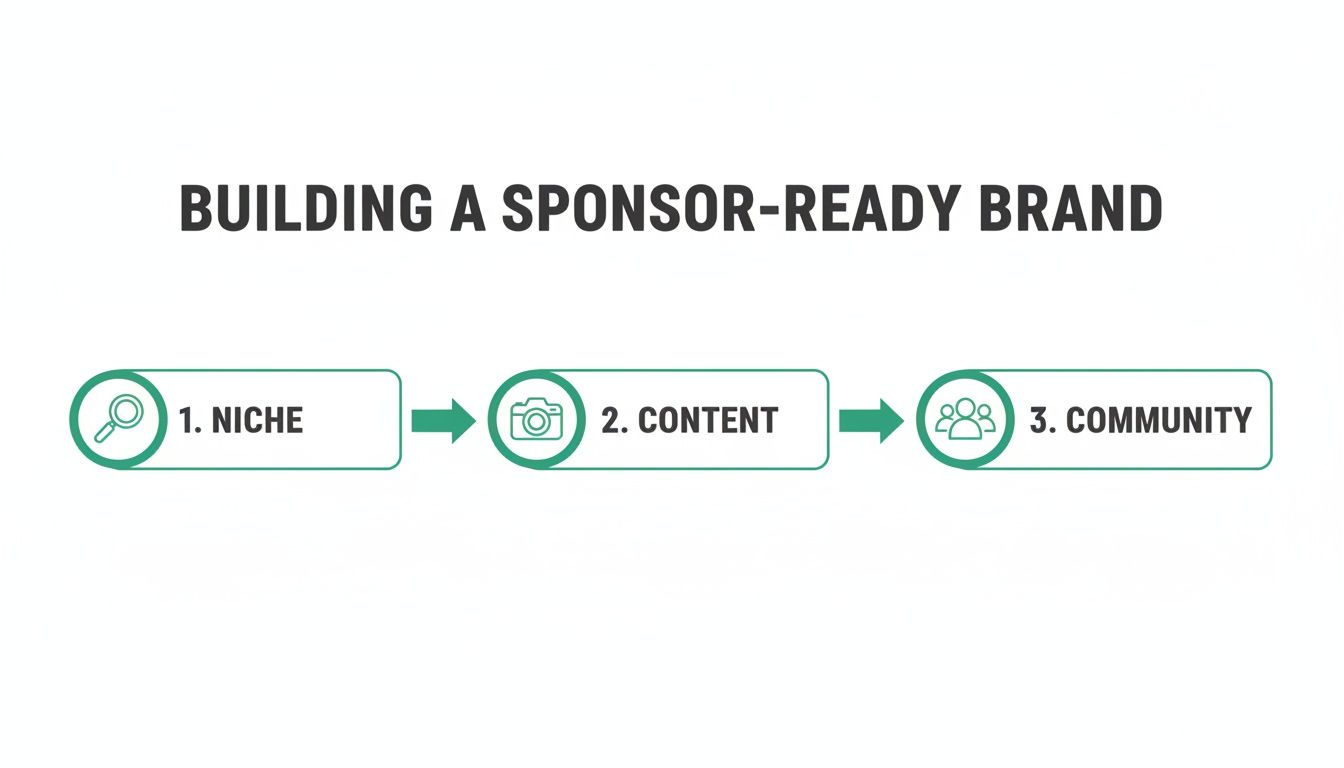
As you can see, it all starts with your niche. That foundation dictates the kind of content you create, which in turn attracts the community that brands want to connect with.
Carve Out Your Niche and Own It
The very first move is to get crystal clear on your niche. What’s the specific topic you could talk about for days? Are you the go-to person for sustainable fashion, a vegan recipe developer for parents on the go, or a tech reviewer who only covers budget-friendly gadgets?
The more specific you are, the more powerful your brand becomes. A generic "lifestyle" account is almost impossible for a brand to evaluate. But an account focused on "minimalist home organization for small apartments"? That immediately tells a brand exactly who your audience is and what value you provide. This focus is your biggest advantage.
Pick something you're genuinely passionate about. Authenticity is everything in this game, and brands can spot a creator just chasing a trend from a mile away.
Create Content That Screams "Value"
With your niche locked in, your content strategy becomes your portfolio. Every single post, Reel, and Story needs to reinforce your expertise and give your audience something valuable. This value can take a few different forms:
Educate: Teach your followers something they didn't know, like "Three Ways to Style a Classic White Tee" or "A Beginner's Guide to Investing in Crypto."
Inspire: Share your personal journey, behind-the-scenes glimpses, or success stories that motivate and connect with your audience on a human level.
Entertain: Use humor, jump on a relevant trend, or use creative storytelling to grab attention and make your personality shine.
The real magic is in consistency. A potential sponsor should be able to scroll through your feed and, within seconds, understand who you are, what you stand for, and the quality of work you consistently deliver.
This isn't just about gaining followers. It's about proving you can create engaging content that moves an audience. And it pays off. Data shows that 61% of consumers will unfollow a creator for promoting products that don't fit their niche. On the flip side, creators who stick to relevant partnerships report 30% higher engagement and land stronger, long-term deals. Staying true to your audience literally builds your career.
Polish Your Profile Until It Shines
Your Instagram profile is your digital storefront. It’s often the first and only chance you get to make an impression on a potential sponsor, so it needs to be professional and polished from top to bottom. For a deeper dive, our guide on how to create a personal brand has you covered.
Here's a quick audit you can run right now to see if your profile is ready for brand outreach.
Your Sponsorship-Ready Profile Checklist
Use this list to quickly audit your profile against the key elements brands evaluate before deciding to partner with a creator.
Profile picture: Brands look for a clear, high-quality headshot or a crisp brand logo. Ensure the image is well-lit and professional, and avoid photos that are blurry, dark, or visually cluttered.
Instagram bio: Brands expect a concise elevator pitch that clearly explains who you are, what you do, and who you serve. Make full use of the 150-character limit by including your niche, location if relevant, and a clear call-to-action.
Contact information: A professional email address should be listed directly in the bio or enabled through contact buttons. Avoid using “DM for collabs” and make it easy for brands to reach you through a professional channel.
Link in bio: Brands look for a link that leads to your website, media kit, or a Linktree-style page with key resources. Confirm that the link is functional and directs visitors to a polished, up-to-date destination.
Story highlights: Curated Highlights should function like a portfolio, showcasing sections such as past work, press features, or an about page. Use a consistent highlight cover style that aligns with your brand aesthetic to create a clean, professional appearance.
Make sure every single one of these elements is buttoned up. This shows brands you're not just a hobbyist; you're a professional partner they can trust with their marketing budget.
Creating a Media Kit That Actually Closes Deals
Think of your Instagram profile as the storefront. It’s what draws people in. But your media kit? That's your professional business proposal, the document that takes you from casual creator to a serious partner brands want to work with.
Honestly, if you don't have one, you're leaving money on the table. A great media kit does more than flash your follower count—it tells a story. It’s your chance to control the narrative, showing a brand exactly why a partnership with you is a smart investment before they even have to ask.
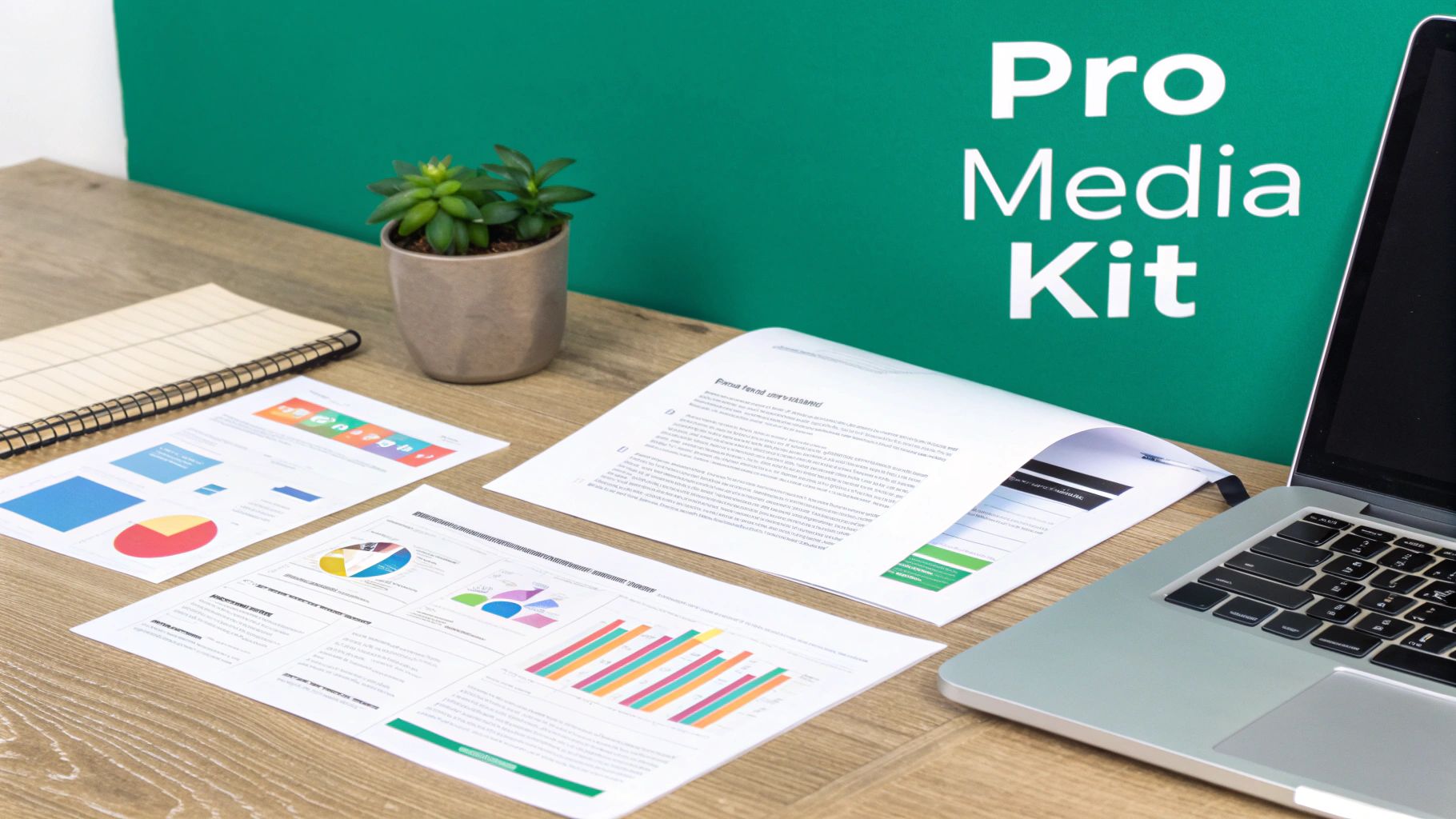
This isn’t just a numbers dump. It’s your resume, portfolio, and pitch deck all rolled into one polished, visually appealing package. Make it clean, easy to scan, and full of the exact information a brand manager is looking for.
What Every Winning Media Kit Must Include
A truly effective media kit anticipates a brand's questions. It should guide them straight to an easy "yes." Let's walk through the absolute must-haves.
A Powerful Introduction: Kick things off with a high-quality headshot and a sharp bio. Don't just copy and paste your Instagram bio. In just 2-3 sentences, explain your mission, your niche, and the "why" that fuels your content. What are you all about?
Deep-Dive Audience Demographics: This is where the magic happens. You need to prove you have the right audience for them. Go way beyond your follower count. Grab screenshots from your Instagram Insights and show them the hard data: age range, gender split, and top cities and countries.
Your Key Performance Metrics: Brands speak the language of data, so you need to, as well. Clearly showcase your average reach, impressions, and engagement rate from the last 30 days. But don’t stop there. Give those numbers context. If your engagement rate is double the average for your niche, say so!
Showing up with this data-driven approach instantly builds credibility. It signals that you're not just a creator; you're a business-savvy professional.
Showcasing Your Value and Past Success
Okay, you've hit them with the data. Now it's time to bring in the human element that truly seals the deal. This is where you connect the dots, showing a brand not just what you've done, but what you can do for them.
Create a section for past collaborations or case studies. Even if you've only done gifted partnerships, you can frame them professionally. For each one, outline the brand, the campaign goal, the content you produced, and most importantly, the results. Highlighting specific wins like 150,000+ Reel views or a 10% Story tap-through rate gives them concrete proof of what you can deliver.
Pro Tip: Haven't landed a paid deal yet? No problem. Create a "mock" case study for a brand you genuinely love. Outline a creative concept you'd pitch to them and the results you'd aim for. This is a brilliant way to showcase your strategic and creative thinking.
This is also the perfect spot to state your Unique Value Proposition (UVP) clearly. What makes you different? Maybe it's your incredible knack for storytelling, your super-niche audience of urban gardeners, or your skill in creating user-generated content that converts like crazy. Spell it out.
Structuring Your Services and Rates
Finally, you need a crystal-clear rate card. Ambiguity is the ultimate deal-killer. Avoid just listing a single, flat price for "one Instagram post." That's thinking small. Instead, build tiered packages that offer escalating value.
Think about bundling your services into compelling offers, like:
The Story Spotlight: A package of Instagram Stories designed to drive immediate traffic and buzz.
The Reel Feature: A high-production value Reel built for maximum reach and shareability.
The Full Campaign: A comprehensive partnership including a static post, a Reel, and a series of Stories to tell a complete brand story.
Packaging your services like this makes the buying decision easier for brands and often encourages them to invest in a larger collaboration. If you're just starting and need some ideas, browsing through different influencer media kit examples can be a huge help for design and structure. Just remember to update your kit every quarter to keep your stats and successes fresh.
How to Find and Qualify the Right Brand Partners
Having a polished profile and a slick media kit gets you in the game, but now it’s time to play offense. Just waiting around for brands to discover you is a slow, unpredictable path. The creators who are really winning are proactive, constantly building a pipeline of potential partners who are a perfect match for their audience.
This isn't about just finding brands you personally like; it's about strategic prospecting. Stop sending cold pitches into the void. Instead, start building a curated "dream list" of companies already investing in creators just like you. Shifting your approach this way will dramatically increase your response rate and, just as importantly, protect the credibility you've earned with your followers.
Where to Find Potential Sponsors
Believe it or not, your next brand partner is probably hiding in plain sight. You just need to know where to look. Instead of blindly searching, focus your energy on a few key places where brands are actively looking for collaborations.
Look at your competitors. Who are other creators in your niche partnering with? Make a list of every single brand you see in their sponsored posts. This is gold. These companies have already proven they're willing to invest in your specific audience.
Keep an eye on industry hashtags. Follow the tags that matter in your space (like #sustainablefashion, #veganbeauty, or #homegymsetup). Notice which brands are consistently showing up and engaging with content. That tells you they’re active and invested in the community.
Scan your own followers. Who’s following you? Sometimes, a social media manager or a small business owner will follow creators they admire. A quick look through your follower list might just reveal a brand that’s already a fan.
Don’t just chase the big household names. Smaller, direct-to-consumer (DTC) brands often have dedicated budgets for creator marketing and can be much more accessible when you're just starting to build your partnership portfolio.
This initial discovery phase is all about casting a wide, but smart, net. The goal is to build a long list of potential partners that you can then whittle down through a proper qualification process.
Qualifying Brands for True Alignment
Finding a brand is just step one. The real work is in qualifying them to make sure a partnership would be a genuine fit. A mismatched collaboration can confuse your audience and seriously damage the trust you’ve worked so hard to build.
For every brand on your list, you need to ask a few critical questions.
Does their target audience actually overlap with yours? A mismatch here is a complete non-starter. Look at their followers, check out the language they use in their captions, and get a feel for their content style. If they’re targeting Gen Z with edgy memes but your audience is mainly millennials interested in mindful living, the partnership is going to feel forced and inauthentic. When you're digging in and researching potential partners, getting a clear picture of their Instagram presence is crucial. A dedicated Instagram Profile data tool can give you deep insights into their audience and engagement metrics.
Next, what are their brand values? And do they line up with yours? If sustainability is a core part of your personal brand, partnering with a fast-fashion company will immediately ring false to your followers. True alignment goes way beyond a product; it’s about sharing the same principles.
Building Your Dream 100 List
After filtering your initial list, the goal is to create what’s often called a "Dream 100"—a curated group of brands you'd be genuinely proud to work with.
Organize this list in a simple spreadsheet. You'll want to track a few key pieces of information:
Example Brand A: The identified contact person is Jane Doe from the marketing team. This brand is a strong fit because its audience consists primarily of women aged 25–34, and it emphasizes organic ingredients. The current status is Researching.
Example Brand B: No specific contact person has been identified yet. The brand appears to be a good fit due to competitor collaborations and strong visual alignment. The current status is To Pitch.
This simple, organized approach turns a vague goal like "getting sponsors" into an actionable sales process. You suddenly have a clear roadmap of who to contact and why, which sets you up perfectly for a personalized and much more effective outreach campaign.
The opportunity here is massive. The Instagram influencer marketing industry is booming, with the global market hitting a staggering $40 billion. For creators, this is huge, especially since 87% of influencers prefer collaborating on Instagram over any other platform. This intense focus means brands are actively searching for the right partners, making your qualified list more valuable than ever. Find out more about these Instagram influencer statistics.
How to Craft a Pitch That Actually Gets a 'Yes'
Let's be real: a generic "let's collab" message slid into a brand's DMs is the fastest way to get ignored. If you’re serious about getting sponsors on Instagram, you have to shift your mindset. You're not just a fan asking for free stuff; you're a strategic marketing partner with something valuable to offer.
Your pitch is your audition. A personalized, professional approach is the only thing that will get you a callback.
This means every single outreach email proves you've done your homework. A brand manager can spot a copy-pasted template from a mile away. The secret to standing out is simple: show them you understand their brand, their goals, and how your unique voice is the solution they've been looking for.
The Anatomy of a Winning Pitch Email
Forget what you think you know about cold outreach. A successful pitch isn't a long-winded essay about how great you are. It’s a short, value-packed proposal that respects the brand manager's time.
Each part of your email has a specific job to do, guiding them from a curious open to an enthusiastic "let's talk."
Let's break down exactly what a winning email pitch looks like. I've seen this structure work time and time again because it puts the brand's needs first and makes saying "yes" incredibly easy for them.
Anatomy of a Winning Email Pitch
Compelling subject line: The purpose of the subject line is to encourage the recipient to open the email by standing out in a crowded inbox. It should be specific and intriguing, such as “Partnership Idea: Your New Eco-Friendly Line.”
Personalized opener: This section demonstrates genuine interest in the brand and avoids the impression of mass outreach. It serves as the hook, for example: “I’ve been using your sustainable cleaning products for months and was impressed by the ‘Refill & Reuse’ campaign…”
The creative concept: This part presents a clear and tangible collaboration idea, showing practical value rather than making vague claims. An example would be outlining a specific content series, such as a multi-part Reel concept demonstrating real product use.
Clear call to action: The goal here is to make the next step obvious and easy for the brand manager. A strong example is a simple invitation to schedule a brief call to discuss the idea further.
The follow-up: This section helps keep the conversation active without being intrusive. Since many partnerships are finalized during follow-up, a polite reminder—such as briefly resurfacing the email and expressing interest in their feedback—is often effective.
By following this blueprint, you move from just another creator in their inbox to a potential partner they take seriously.
From Metrics to a Creative Concept
The biggest mistake I see creators make is leading with their stats. While your follower count and engagement rate are important, they aren't the heart of the pitch.
Your metrics belong in your media kit (which you should always attach). The body of your email is prime real estate for presenting a creative idea. Propose a clear, compelling concept that shows you’ve already thought about how your content style can bring their product to life for your specific audience.
Don't say this: "I have 50k followers and a 4% engagement rate."
Instead, try this: "I envision creating a 3-part Reel series showing my audience how I use your travel backpack for a weekend getaway, highlighting its durability and clever compartments. This would resonate perfectly with my followers, who are constantly asking for practical travel gear recommendations."
See the difference? This approach changes the entire dynamic. You're no longer asking for something; you're offering a tangible marketing solution and demonstrating your creative value from the very first email.
The Call to Action and Follow-Up Strategy
Always end your pitch with a clear and simple call to action. Your goal is to make it incredibly easy for them to say "yes" to the next step. Don't leave things open-ended.
Avoid this: "Let me know what you think."
Use this: "If this sounds interesting, I'd be happy to share my media kit and discuss this further. Are you available for a quick chat next week?"
Finally, don't be afraid to follow up! Brand managers are juggling a million things. A polite follow-up email 5-7 days later is standard professional practice.
A simple nudge like, "Just wanted to bring this back to the top of your inbox. Looking forward to hearing your thoughts on a potential partnership!" is all it takes. Professional persistence shows you're serious and can make all the difference.
Know Your Worth: Nailing Down Pricing and Contracts
Let's talk money. This is often the most awkward part for creators, but getting comfortable with pricing and contracts is what separates a hobby from a real business. It’s where you shift from just creating content to building professional partnerships that value your work and protect you.
Too many creators sell themselves short, especially when they're starting. It's tempting to accept the first offer that comes along, even if it feels low or the terms are fuzzy. But that's a recipe for burnout. Learning to set your rates confidently and understand what goes into a contract is how you build a sustainable career.

Setting Your Rates with Confidence
Figuring out what to charge feels like a mix of art and science, but it shouldn't be a random guess. Instead of pulling a number out of thin air, you need to build your rate based on real data and the unique value you bring to the table.
A great starting point is the old 1% rule. Just take your follower count and multiply it by 0.01. So, if you have 20,000 followers, a single in-feed post might start around the $200 mark. But that's just the floor—the real magic happens when you add in other factors.
Your baseline is just the beginning. Now, you need to layer on these critical value drivers:
Engagement Rate: Is your audience super active? If your engagement rate blows the industry average out of the water, that's a premium feature. An engaged audience is worth far more than a passive one, and your pricing should reflect that.
Scope of Work: The effort behind the content matters. A quick Instagram Story is one thing, but a fully produced Reel with original shooting, editing, and sound design is a different beast entirely. Price each deliverable based on the time and resources it takes to create.
Usage Rights: This is a big one. Is the brand just reposting to their stories, or are they planning to use your content in paid ads? If they want to use your content on their own channels or for advertising, that's a separate license, and it comes with a separate fee.
Instead of quoting one-off prices, try bundling your services into packages. This positions you as a strategic partner, not just a content vending machine, and encourages brands to think bigger. For a deep dive into building out your pricing, this influencer rate card template is a fantastic resource.
The Art of the Counter-Offer
Don't panic when a brand comes back with a lower number. A counteroffer isn't a "no"—it's the start of a negotiation. If their budget doesn't match your rate, you have options. You can hold firm, offer a smaller package that fits their budget, or meet in the middle.
Remember, you're not just selling a post. You're selling your creative talent, your unique perspective, and the hard-earned trust of your audience. Don't be afraid to politely explain that value when you're negotiating.
If a brand pushes back on price, you could respond with something like, "I appreciate you sharing your budget. To make that $500 work, we could adjust the deliverables from one Reel and three Stories to a static post and three Stories instead. Would that work for you?" This shows you're flexible without devaluing your work.
Deconstructing the Creator Contract
Never, ever start working without a signed agreement. A contract is your safety net. It protects both you and the brand by making sure everyone is on the same page before a single piece of content gets made.
Even if the brand provides the contract, you need to know what to look for. Here are the absolute must-haves:
Deliverables: This clause defines the exact scope of content you are responsible for creating, such as a specific number and type of posts or Stories. Clearly outlining deliverables prevents scope creep, where additional requests are made outside the original agreement.
Content ownership: This section determines who owns the content once it is created. Creators should retain ownership of their intellectual property, with brands paying for a license to use the content rather than purchasing it outright.
Usage rights: Usage rights specify how, where, and for how long the brand is permitted to use the content, such as organic posting on their social channels for a defined period. This clause is critical because expanded use—such as paid advertising or offline placements—requires separate, higher compensation.
Exclusivity: An exclusivity clause restricts you from working with competing brands for a defined timeframe. It is important to ensure the exclusivity period is reasonable and that additional compensation is provided for any limitations placed on future partnerships.
Payment terms: This clause outlines the payment amount, schedule, and method, such as partial upfront payment and final payment upon completion. Clear payment terms protect you by ensuring timely compensation and providing legal recourse in the event of late payment.
Giving these clauses a thorough review is the final step in locking down a sponsorship like a true professional. It turns a good partnership into a great one, built on clarity and mutual respect.
Common Questions About Instagram Sponsorships
As you dive into the world of Instagram sponsorships, you’re going to have questions. It's totally normal. How many followers do you actually need? What’s the deal with getting paid versus getting free stuff? Let's clear up some of the most common questions I hear from creators.
Think of this as your cheat sheet for navigating the early stages. Getting these basics right from the start will save you a ton of headaches and help you build a real, sustainable business as a creator.
How Many Followers Do I Really Need to Get Sponsored?
Forget the idea that you need a six-figure follower count. That’s old-school thinking. Today, brands are way more interested in your engagement and how much influence you have within a specific niche.
In fact, nano-influencers (1k-10k followers) and micro-influencers (10k-50k followers) are in high demand. Why? Because they tend to have incredibly tight-knit communities that genuinely trust their recommendations. If you have a few thousand followers who hang on your every word, you're in a great position to land a sponsorship.
The real goal isn't just a big number; it's building a quality community. A smaller, loyal audience that actually buys what you recommend is infinitely more valuable to a brand than a massive, silent one.
What Is the Difference Between a Gifted Collab and a Paid Sponsorship?
This is a big one. Knowing the difference is what separates a hobby from a profession, and it helps you understand when it's time to ask for real money.
Gifted Collaboration: This is basically a trade. A brand sends you their product for free, and in exchange, you create a post about it. There's usually no cash involved and often no formal contract. It's a common first step for new creators.
Paid Sponsorship: Now you're talking business. This is a professional agreement where you're paid actual money to create and share content. Paid deals should always come with a contract that details exactly what you need to do, payment terms, and how the brand can use your content.
Gifted collabs are great for building a portfolio, but don't get stuck there. The end game is always paid work that respects your time, effort, and the audience you've worked so hard to build.
How Do I Disclose a Sponsored Post Correctly?
Being transparent isn't just good manners—it’s a legal requirement in many countries (like the FTC rules in the U.S.). More importantly, it's the foundation of trust with your audience. Don't mess this up.
The easiest and most official way is to use Instagram's built-in "Paid partnership with" label. It appears right at the top of your post or Reel, so nobody can miss it. You should also add a clear hashtag like #ad or #sponsored at the very top of your caption. Don't try to hide it in a sea of other tags. One of the first things people wonder about is how to make money on Instagram Reels, and paid sponsorships are a huge part of that—but only if you disclose them properly.
What Metrics Should I Share in a Campaign Report?
Your job isn't over when you hit "publish." A solid campaign report is what turns a one-time deal into a long-term partnership. You need to show the brand that their investment in you paid off.
Here’s what every good report should include:
Reach: How many unique people saw your content?
Impressions: The total number of times your content was seen.
Engagement Rate: A calculation of your likes, comments, saves, and shares.
Story Views and Replies: Key metrics for Story-based campaigns.
Link Clicks: If you were driving traffic to a specific URL, this is crucial.
I also like to add a human touch. Grab a few screenshots of the best comments from your community. Showing a brand how real people responded to their message can be just as powerful as the raw numbers.
Ready to grow your audience and attract even more sponsors? Gainsty uses advanced AI and Instagram expertise to help you gain real, organic followers who are genuinely interested in your niche. Stop guessing and start growing with a strategy that works. Get started with Gainsty today!
.png&w=1920&q=75&dpl=dpl_34ZXCf12K5qjjdZjPn9snwDRADrB)




.png&w=750&q=75&dpl=dpl_34ZXCf12K5qjjdZjPn9snwDRADrB)