Building a Sponsorship-Ready Instagram Profile

Think about it from a brand's perspective. They're scrolling through dozens, maybe hundreds, of potential partners. If your profile is confusing, messy, or looks unprofessional, they're going to keep scrolling without a second thought.
This foundational work is everything. If your profile isn't sharp and professional, even the best outreach emails in the world won't get a response.
Define Your Profitable Niche
One of the biggest mistakes I see creators make is trying to be everything to everyone. When you do that, you end up being nothing to anyone—especially to brands. A focused niche is your superpower. It instantly tells a brand who you are, what you're about, and most importantly, who follows you.
Let's say you're a food creator. "Food" is way too broad. "Vegan recipes" is getting warmer. But "Easy 30-minute vegan recipes for busy professionals"—now that’s a niche. Brands selling health foods, meal prep kits, or time-saving kitchen gadgets will immediately recognize that your audience is precisely who they want to reach.
Not sure where to focus? Ask yourself a few key questions:
What could you talk about all day? Genuine passion is magnetic, and it keeps you from burning out.
Who, specifically, are you trying to help? Get into the nitty-gritty of their demographics, their interests, and what problems you can solve for them.
Is this niche actually monetizable? A quick search will reveal whether other creators in that space have already secured sponsorships. If they are, that’s a great sign.
Craft a Compelling Bio
You get 150 characters for your Instagram bio. That’s it. You need to use them wisely to craft an elevator pitch that grabs attention and gives brands all the essential info. A vague bio is an instant deal-breaker.
Your bio is a filter. It should attract the right kind of partners and politely show the wrong ones the door. It needs to be clear, professional, and scream value to both your followers and potential sponsors.
For instance, a travel creator's bio could be: "Sustainable travel adventures 🗺️ | Helping eco-conscious explorers find hidden gems | 📍Based in PNW | Collabs: contact@email.com". In a few lines, you know their niche, the value they provide, where they are, and how to get in touch professionally.
If you're stuck, these Instagram bio tips are a great resource for making your profile pop.
Switch to a Creator or Business Account
If you’re still using a personal account, you’re flying blind. Switching to a free creator or business account is the single most important technical step you can take. It’s a simple toggle in your settings that unlocks a whole suite of professional tools.
The game-changer here is Instagram Insights. This is your analytics dashboard, and it's where you'll find the hard data that brands need to see before they invest in you.
With Insights, you can show them:
Audience Demographics: The age, gender, and location of your followers. A brand needs to know if its audience is its target market.
Post Performance: You can track key metrics like reach, impressions, and saves for every single piece of content.
Follower Activity: Find out exactly when your audience is most active so you can post for maximum impact.
Without this data, you have no way to prove your value. Making the switch signals to brands that you're a serious professional who is ready to talk business based on real results, not just a follower count.
Creating Content That Brands Actually Want to Sponsor
Think of your Instagram feed as your portfolio. It's the very first thing a brand manager will look at, and they'll make a snap judgment in seconds. What they need to see is professionalism, a clear point of view, and a creator who knows who they are. If your feed feels random or inconsistent, you’re making it easy for them to pass you by.
Brands aren't just looking for pretty pictures; they're hunting for skilled storytellers. They want creators with a distinct voice and a community that hangs on their every word.
Developing a signature style is your first, most critical task. This isn’t just about using the same filter. It's about a cohesive aesthetic—your color palette, your editing choices, your tone of voice—that all work together. When a brand lands on your profile, they should instantly get it. They should understand your niche, see the value you offer, and be able to picture their product fitting right in.
Build a Smart and Consistent Posting Schedule
If you want to be treated like a professional, you have to act like one. Posting whenever you feel like it sends a clear signal to the algorithm and your audience that you aren't taking this seriously. A reliable schedule does two things: it trains your followers to look for your content, and it feeds the algorithm the consistent engagement signals it loves.
A good starting point is three to five times per week, but don't ever sacrifice quality just to hit a number. The real magic isn't just in how often you post, but what you post. You need to keep things interesting.
For instance, a food blogger might have a weekly rhythm like this:
Tuesday: A detailed Carousel post breaking down a new recipe step-by-step.
Thursday: A quick, high-energy Reel showing the cooking process in 30 seconds.
Saturday: An interactive Story asking followers what ingredient they'd like to see featured next.
This variety shows brands you’re not a one-trick pony. You can create different types of compelling content to meet various campaign goals. To get this part right, you have to nail down your core topics. Our guide on building powerful Instagram content pillars is the perfect place to start.
Master the Full Toolkit of Content Formats
Still just posting static photos? You're leaving a massive opportunity on the table. Brands are looking for partners who can use all of Instagram's tools to tell a story and get people to act.
Reels are your growth engine. Short-form video is essential, period. The numbers don't lie: creator Reels consistently see engagement rates above 2%, while standard video and photo posts often struggle to break 1.2%. If you want to get discovered, you need to be making Reels.
Stories are for connection. This is where you build a real, two-way relationship. Use polls, quizzes, and question stickers to get your audience talking. Some reports show that using interactive stickers in Stories can boost campaign engagement by as much as 80%—a huge selling point for brands that care about results. You can dig into more of these numbers in these Instagram statistics and benchmarks.
A creator who can produce a cinematic Reel, an educational Carousel, and an authentic, chatty Story is infinitely more valuable to a brand. It proves you’re a versatile partner who can adapt to any campaign goal, whether it's building buzz, sending traffic to a website, or driving sales.
Don't Skimp on Quality: Visuals and Captions Matter
Blurry, poorly-lit photos are an immediate deal-breaker for any brand worth its salt. You don't need a high-end studio, but you do need to master the basics. Your visuals have to be sharp, clean, and thoughtfully composed. Your smartphone is more than capable, but take the time to learn basic editing to give your content that professional polish.
But a great photo is only half the story. Your captions are where you turn followers into a real community. A caption shouldn't just describe what's in the picture; it should start a conversation and pull people in.
Here are a few quick tips for writing captions that brands will love:
Hook them fast. Your first sentence has to grab their attention.
Tell a real story. Share something personal or a behind-the-scenes moment.
Ask a question. Give people a reason to leave a comment.
End with a call-to-action (CTA). Tell your audience exactly what you want them to do next—save the post, tag a friend, or share their own experience.
When you nail these elements, your Instagram stops being just a personal page and becomes a professional asset. You're no longer just hoping for opportunities; you're actively building a platform that attracts the sponsorships you deserve.
Crafting Your Media Kit and Nailing Down Your Rates
Think of your Instagram profile as your storefront. If that's the case, your media kit is your professional resume and business card rolled into one. It’s the single document that elevates you from a creator to a serious business partner in the eyes of a brand.
A solid media kit does more than just list stats. It tells the story of your brand, who your audience is, and why a partnership with you is a smart investment. You're not just selling a post; you're offering access to a community you've worked hard to build. Your media kit is how you prove it.
What Goes Into a Winning Media Kit?
The best media kits are clean, visually engaging, and straight to the point. A brand manager should be able to scan it and get everything they need. Stick to a polished, 2-3 page PDF that you can easily attach to your pitch emails.
Make sure you nail these essentials:
A Polished Intro: Kick things off with a professional headshot and a short, punchy bio. Who are you? What’s your niche? What makes your content special?
The Core Metrics: This is the meat of your media kit. Of course, include your follower count, but what brands really care about are your engagement rate, average reach, and impressions.
Deep-Dive Audience Demographics: Brands need to know if your audience is their audience. Pull screenshots directly from your Instagram Insights to show the age, gender, and top locations (cities and countries) of your followers.
Proof of Your Work: If you’ve worked with brands before, show it off! Include high-quality examples from past campaigns and explain how you delivered results. A glowing testimonial from a past partner? That's pure gold.
Your Menu of Services: Clearly spell out what you offer. Are you selling single posts? A package of Reels? A Story takeover? When you present clear options, it makes it much easier for a brand to say "yes." For some great ideas on how to structure this, check out these influencer media kit examples.
How to Confidently Price Your Work
Figuring out what to charge is often the scariest part of this whole process. It's so easy to sell yourself short, but pricing is less of an art and more of a science than you think. Don't just pull a number out of thin air.
A great place to start is the Cost Per Mille (CPM) model, which basically means your price per 1,000 views or impressions.
A simple formula to get a baseline is: > (Average Views/Reach per Post ÷ 1,000) x Your CPM Rate = Your Baseline Post Rate
If you're just starting, a CPM of $25-$50 is realistic. Let’s say your average Reel gets 20,000 views. With a $30 CPM, your starting rate would be ($20,000 / 1,000) x $30 = $600. This isn't just a random number; it's a data-backed figure you can confidently bring to the negotiation table.
Once you have a few partnerships under your belt, you can start offering more than just one-off posts. Brands often prefer buying packages because it gives them more content and a bigger impact.
Package Deals: Bundle a few things together for a better price. For example, offer a package of one Reel, one Carousel post, and three Stories for a single flat fee.
Long-Term Retainers: If you find a brand you genuinely love, propose a monthly retainer. This gives them a consistent brand ambassador and gives you a predictable source of income. It's a win-win.
The type of content you create also massively impacts its value. The data is pretty clear on what brands are willing to pay more for.
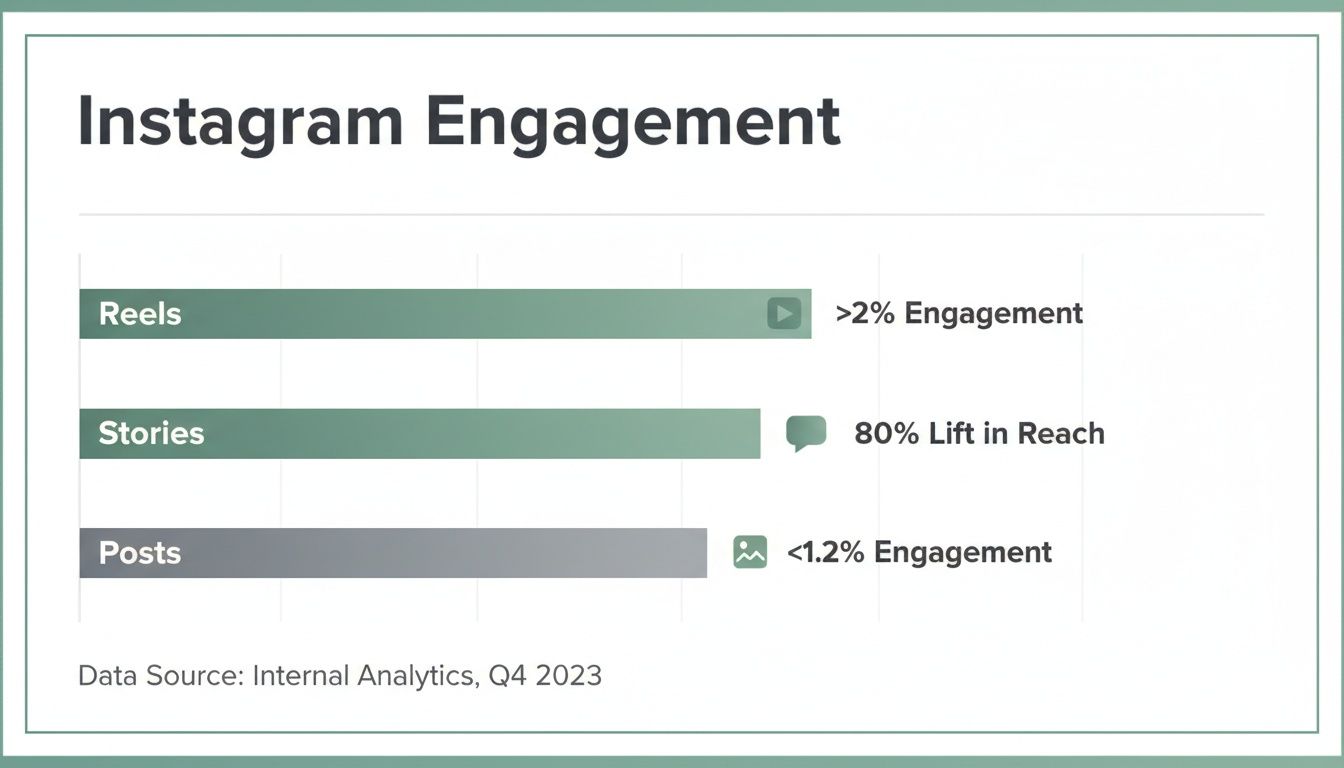
This chart just confirms what we all feel: Reels drive the most engagement. That’s precisely why they command the highest rates.
While engagement is king, follower count still provides a general framework for pricing in the industry. Here’s a rough idea of what you can expect to charge per post based on your size.
Estimated Instagram Sponsorship Rates by Follower Tier
This gives you a ballpark idea of standard per-post rates. Remember, high engagement can allow you to charge at the upper end of your tier—or even above it.
Nano-Influencer: 500–10,000 followers; estimated rate per post: $500–$2,000.
Micro-Influencer: 10,000–50,000 followers; estimated rate per post: $2,000–$8,000.
Mid-Tier Influencer: 50,000–100,000 followers; estimated rate per post: $8,000–$20,000.
Macro-Influencer: 100,000–1M followers; estimated rate per post: $20,000–$50,000+.
Mega-Influencer: 1M+ followers; rates vary, often $50,000+ per post.
These numbers aren't set in stone, but they give you a powerful reference point. Knowing where you stand in the market is the key to negotiating from a position of strength and getting paid what you're truly worth.
How to Pitch Brands and Secure Partnerships

Let's be real: sitting around and waiting for brands to find you is a painfully slow strategy. If you want to land sponsorships consistently, you need to get proactive. Taking control of your outreach lets you connect with brands you genuinely love and believe in—the kind of partnerships that feel natural to your audience.
This isn't about spamming DMs with a generic, copy-pasted message. It's about smart research, personalized pitching, and building real relationships that can turn a one-off post into a lucrative, long-term collaboration.
Identifying Your Dream Brand Partners
Before you even think about writing a pitch, you need a highly targeted list of brands that are a perfect fit for your content and audience. Pitching to a company that doesn't align with your niche is a complete waste of everyone's time. Your goal is to find brands whose products you'd be excited to recommend even if you weren't getting paid.
Start by looking at what you already use and love. What products are already sitting on your shelves or featured in your photos? The most authentic partnerships bloom from genuine affinity.
From there, put on your detective hat and dig into your niche:
See Who's Sponsoring Your Peers: Check out which brands are already working with creators similar to you. This is the clearest sign they have a marketing budget and already see the value in what you do.
Leverage Influencer Marketplaces: Platforms like Instagram's own Creator Marketplace are built to connect creators with brands on the hunt for talent. Get your profile set up—it makes you discoverable.
Go Hashtag Hunting: Search for specific hashtags in your space, like
#veganskincareor#sustainablefashion. Pay attention to the brands that are consistently showing up and engaging with that content.
I highly recommend building a simple spreadsheet to track your prospects. List the brand name, their Instagram handle, and a quick note on why you think they're a good fit. This little bit of organization will be a lifesaver when you start reaching out.
Crafting a Pitch That Actually Gets a Response
Marketing managers are drowning in emails. Their inboxes are a battlefield of generic requests. To even get noticed, your pitch has to cut through that noise by being personal, professional, and packed with value. A lazy "Hey, wanna collab?" DM will get you ignored 99% of the time.
A well-crafted email is your best shot. After you’ve identified your target brands, the next crucial step is finding the right person to contact. This guide on how to find company email addresses is a fantastic resource for tracking down the decision-makers.
Your pitch needs to be a concise, compelling message that makes it incredibly easy for them to say "yes."
The secret to a killer pitch is making it about them, not you. It needs to prove you've done your homework, that you understand their goals, and that you have a specific idea for how you can help them win.
Here’s a simple structure I’ve seen work time and time again:
A Clear, Personalized Subject Line: Something like "Partnership Idea: [Your Niche] Creator & [Brand Name]" is direct and professional.
The Hook: Lead with why you love their brand. Mention a specific product you use or a recent campaign you admired. This immediately shows you're a real fan.
The Value Prop: Briefly introduce yourself and your audience. Hit them with a few key stats from your media kit, like your engagement rate or audience demographics.
The Idea: Don't just ask for a partnership; propose a concrete concept. For example: "I’d love to create a Reel showing how I use your travel backpack on my next hiking trip, sharing it with my audience of 25,000 outdoor enthusiasts."
The Call to Action: End with a clear next step. Attach your media kit and suggest a brief call next week to talk through the idea.
Following Up Like a Pro
Here’s a hard truth: most brand managers won't reply to your first email. That’s perfectly normal. A polite, professional follow-up is often the one thing that seals the deal.
Give it about a week, then reply directly to your original email with a simple, friendly nudge. A message like, "Hi [Name], just wanted to gently follow up on my email below. I’m still really excited about the possibility of collaborating!" is perfect. It's persistent without being annoying.
Building these connections takes patience, but this proactive approach is how you stop waiting for opportunities and start creating them for yourself.
Getting the Deal Signed and Delivering Killer Results
Getting that "yes" from a brand feels amazing, but don't pop the champagne just yet. The real work—the part that turns a one-off deal into a long-term partnership—is just getting started.
This is where you shift from being a creator to being a reliable business partner. It all begins with the contract. My number one rule? Never, ever start creating content without a signed agreement. It’s the single most important document protecting both you and the brand, making sure everyone is on the same page.
What to Look for in Your Contract
Sponsorship contracts can look like a wall of legal jargon, but they really boil down to a few key sections. Don't be afraid to read it carefully, ask questions, and even suggest changes. This is a two-way street, not a list of demands.
Here’s what I always zoom in on:
Deliverables: This needs to be incredibly specific. If it says "a few posts," send it back. It should detail the exact number of posts (e.g., one Reel, one 5-slide Carousel, three Stories), the posting schedule, and every required tag, hashtag, or link.
Content Ownership & Usage Rights: Who owns the amazing content you create? You do. The brand is essentially buying a license to use it. The contract has to clearly define how they can use it (on their Instagram, in email newsletters, as a paid ad?) and for how long (30 days? 90 days? In perpetuity?).
Exclusivity: It’s common for a brand to ask that you don’t work with their direct competitors for a short period. This is fair, but make sure the timeline is reasonable—say, 30 days around the campaign. If they want a longer period, you should be compensated for that lost opportunity.
Payment Schedule: How and when do you get paid? Look for clear terms. A common and fair structure is 50% upfront to start the work and the final 50% upon completion. Some larger brands work on a Net-30 basis, meaning you get paid within 30 days after the campaign ends.
Executing a Campaign That Gets You Rehired
Once the contract is signed, it's go-time. Your goal shouldn’t be to just check the boxes on the deliverables list; it should be to knock their socks off.
Communication is everything. Keep your contact person in the loop. Let them know when you’re shooting and send content for approval a few days before the deadline. This little bit of professionalism makes you a dream to work with and builds a ton of trust.
When it's time to create, bring your A-game. The brand chose you for your voice and your audience. A stiff, overly scripted ad will fall flat with your followers and won't get the brand the results they’re paying for.
Show Them the Money: The Campaign Report
After your last post is live, you have one final step: the campaign report. This is a total pro move that many creators skip. It shows you’re serious about results and gives the brand the hard data they need to prove the campaign was a success.
A strong campaign report is more than just a list of numbers; it's a value statement. It proves your ROI and solidifies your reputation as a results-driven creator who understands the business side of influence.
Your report doesn't need to be fancy. Just a clean, simple summary of how everything performed.
Make sure to include these key metrics for each deliverable:
Reach: How many unique people saw your content?
Impressions: The total number of times your content was viewed.
Engagement: The total likes, comments, shares, and saves.
Clicks: If they gave you a special link, how many people clicked it?
Audience Feedback: I love to grab a few screenshots of the best, most positive comments to show real audience sentiment.
This data is your proof. Industry research shows that influencer marketing can be incredibly effective, with some studies calculating an average earned media value of $4.12 for every $1 invested. By sending a report, you’re not just showing off your engagement rate; you're demonstrating a tangible business value that makes it a no-brainer for them to hire you again. You can learn more about the power of influencer ROI and use that knowledge to your advantage.
Your Top Instagram Sponsorship Questions, Answered
Diving into Instagram sponsorships can feel like a maze. There are so many questions that pop up along the way, from wondering if your follower count is "good enough" to figuring out what to do when a brand offers you a free t-shirt instead of actual money.
Let's clear up the confusion. Here are the real answers to the questions every creator asks.
How Many Followers Do I Really Need to Get Sponsored?
Forget what you’ve heard—there’s no magic number. The days of brands only chasing accounts with millions of followers are long gone.
In fact, many brands now actively hunt for nano-influencers (that’s anyone with 1,000-10,000 followers) who have built a super-engaged, trusting community in a specific niche. A creator with 5,000 dedicated followers who truly listen is often way more valuable than an account with 50,000 passive scrollers. Brands care more about the quality of your engagement and the trust you’ve built than some vanity metric. If you can prove your audience listens, you can land a deal.
What Should I Put in My First Pitch Email?
Your first email needs to be short, personal, and straight to the point. Brand managers are drowning in emails, so you have to stand out fast by showing you’ve actually done your homework.
Make sure your pitch always includes these four things:
A personal intro: Briefly say who you are and why you genuinely love their brand. Mention a specific product you use or a campaign of theirs that you admired.
Your key stats: Don't bury the lead. Highlight your most compelling numbers, like your engagement rate, average Reel views, and a snapshot of your audience demographics.
A specific idea: This is the most important part. Don’t just say, “Let’s partner!” Propose a real concept. For example, "I'd love to create a 3-part Reel series showing how I pack your travel backpack for a weekend getaway."
A clear call to action: End by telling them what to do next. Attach your media kit and suggest a quick call to chat more about your idea.
How Do I Respond When a Brand Offers Free Stuff Instead of Cash?
Getting free products is a nice perk, but it won’t pay your rent. Your time, your creativity, and the access you provide to your audience are valuable services that absolutely deserve to be paid for. When a brand offers a product-only deal, you need to handle it professionally while clearly communicating your worth.
The goal is to thank them for the offer but gently pivot the conversation toward a paid partnership. This sets a professional tone from the start and opens the door for a real negotiation. If you don't value your work, brands won't either.
A simple, polite script works best: "Thank you so much for this opportunity! I’m a huge fan of your products. At this time, I am prioritizing paid partnerships to ensure I can dedicate the proper time and resources to creating high-quality content. For a dedicated post, my rate is [Your Rate]. Would this fit within your campaign budget?"
How Do I Disclose Sponsored Posts the Right Way?
Being transparent about sponsorships is completely non-negotiable. It’s not just a nice thing to do to maintain trust with your audience—it’s a legal requirement in many places, like the FTC guidelines in the US. Trying to hide that a post is an ad is a fast way to destroy your credibility and get into legal hot water.
To manage your own expectations and nail your negotiation strategy, it's helpful to understand industry benchmarks like how much Instagram pays for 100k followers, as this influences the entire monetization ecosystem.
For disclosure, the best and safest approach is to use Instagram's built-in "Paid Partnership" label. It appears right at the top of your post, leaving no room for confusion. On top of that, you should also include a clear hashtag like #ad or #sponsored right at the beginning of your caption for total transparency.
Ready to stop waiting and start growing? Gainsty uses advanced AI and real Instagram expertise to help you gain authentic, engaged followers that brands want to reach. Start your organic growth journey and build a sponsorship-ready audience today at https://www.gainsty.com.
.png&w=1920&q=75&dpl=dpl_34ZXCf12K5qjjdZjPn9snwDRADrB)




.png&w=750&q=75&dpl=dpl_34ZXCf12K5qjjdZjPn9snwDRADrB)