1. Micro-Influencer Partnerships
One of the most effective influencer marketing strategies involves shifting focus from celebrity-status accounts to micro-influencers. This approach centers on collaborating with creators who have smaller, yet highly dedicated audiences, typically ranging from 10,000 to 100,000 followers. Unlike mega-influencers, these individuals often boast higher engagement rates and a more authentic, trust-based relationship with their community.
This authenticity translates into more genuine endorsements. Because their audience sees them as peers rather than distant celebrities, their recommendations carry significant weight, making them perfect for brands in niche markets seeking credible advocacy.

Why This Strategy Works
Micro-influencer partnerships are powerful because they prioritize connection over reach. Their followers are more likely to be a homogenous group with shared interests, leading to higher conversion rates and ROI. Brands like Glossier built their empires on this model, leveraging the power of relatable creators to build a loyal customer base. This strategy aligns perfectly with an organic growth mindset by emphasizing genuine engagement over inflated follower counts.
How to Implement This Strategy
Identify Potential Partners: Use platform analytics and specialized tools to find creators in your niche. Dive into hashtags and location tags relevant to your brand to discover active micro-influencers.
Vet for Authenticity: Don't just look at follower count; analyze the engagement rate (likes and comments vs. followers). A high rate often indicates a healthy, active community.
Build Real Relationships: Approach partnerships as long-term collaborations, not one-off transactions. This fosters deeper brand loyalty and more consistent messaging. If you need help with the discovery process, you can learn more about how to find micro-influencers for your brand.
Offer Creative Freedom: Provide clear guidelines but allow the influencer to create content in their own voice. Their audience follows them for their unique style, and authenticity is key.
Track and Measure: Use unique discount codes, affiliate links, or UTM parameters to precisely track the performance and ROI of each collaboration.
2. Authentic Product Integration & Unboxing
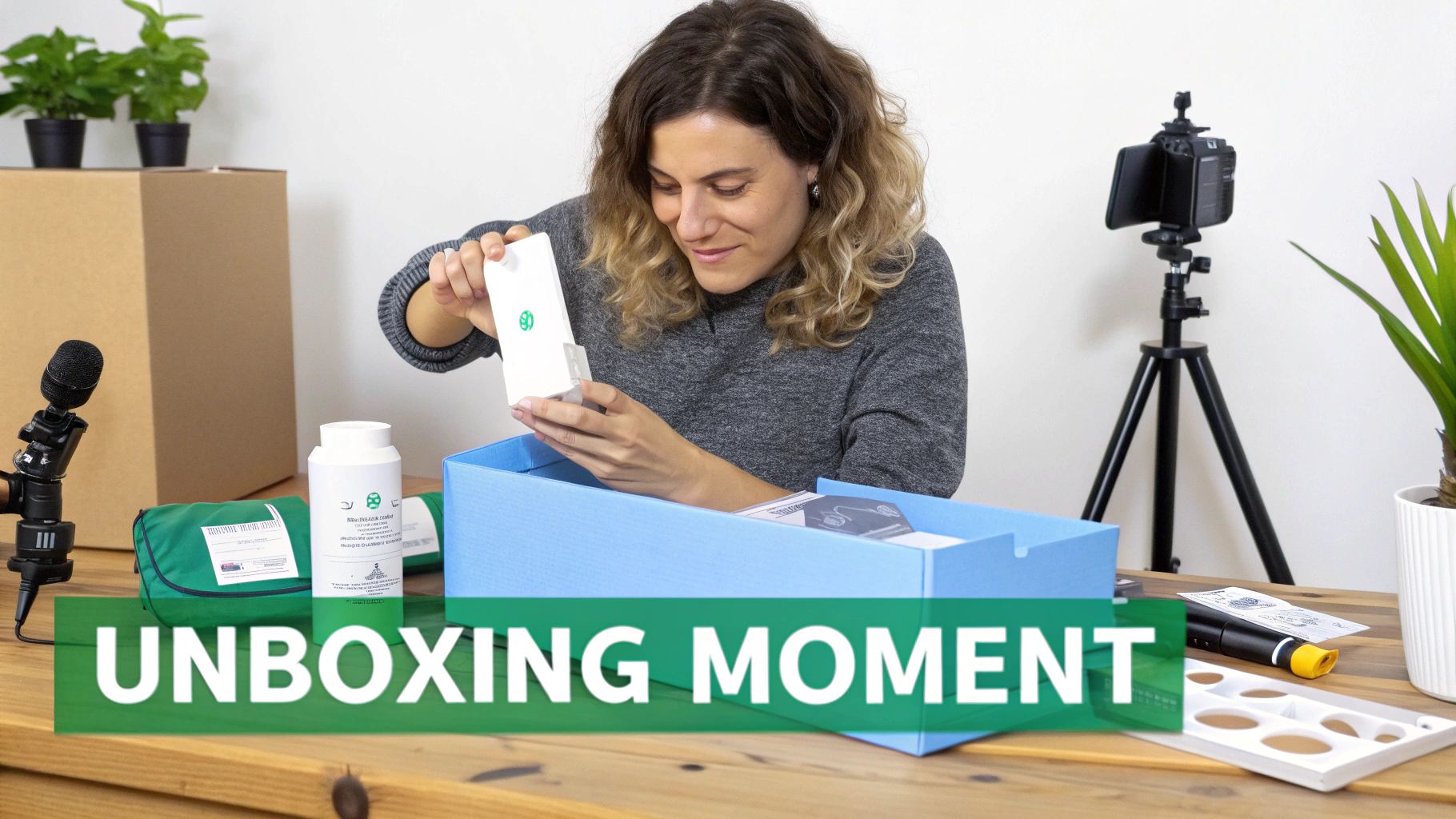
Moving beyond traditional sponsored posts, this strategy focuses on having influencers naturally incorporate products into their everyday content. This includes unboxing videos, "get ready with me" routines, and honest product reviews that showcase genuine use and experience. Instead of a scripted advertisement, the goal is to present the product as a seamless and authentic part of the creator's life.
This approach builds immense trust because the content feels less like a sales pitch and more like a genuine recommendation from a trusted source. Audiences are more receptive to content that shows a product in action, offering real-world value and a transparent look at its benefits and features.
Why This Strategy Works
Authentic integration is effective because it prioritizes storytelling over selling. Viewers get to see the product's journey from the initial unboxing excitement to its practical application, which is far more compelling than a static image. Tech YouTubers like Marques Brownlee (MKBHD) popularized this by turning unboxings into a cinematic and informative experience. This method generates higher engagement and fosters a stronger emotional connection between the audience, the influencer, and the brand.
How to Implement This Strategy
Select Influencers with Genuine Alignment: Partner with creators who already use or show interest in products similar to yours. Their audience is already primed for this type of content.
Encourage Honest and Detailed Reviews: Give influencers the freedom to share their honest thoughts, including any constructive criticism. This transparency builds credibility and trust.
Request Diverse Content Formats: Ask for a mix of content, such as an initial unboxing on Instagram Stories, a detailed review on YouTube, and a post showing the product in use a few weeks later.
Prioritize the User Experience: Frame the collaboration around how the product solves a problem or enhances the creator's life. Focus on benefits rather than just features.
Co-Create a Story: Work with the influencer to build a narrative around the product. For example, a fitness creator could show how your gear helped them achieve a new personal record.
3. Community-Driven Engagement & User-Generated Content
This strategy shifts the focus from an influencer’s content to the audience’s, leveraging the power of participation by encouraging followers to create and share content related to your brand. This is achieved through hashtag campaigns, contests, and challenges that motivate users to become active advocates, generating a powerful stream of authentic content.
Instead of paying for a single post, you’re inspiring an entire community to engage. This approach builds a loyal following, increases organic reach, and provides your business with a diverse library of authentic content to repurpose across all your marketing channels.
Why This Strategy Works
Community-driven influencer marketing strategies are effective because they build social proof at scale. When potential customers see real people enjoying your products, it serves as a powerful, unbiased endorsement. Brands like GoPro and Airbnb built their empires on this model, turning customers into their most impactful marketers. This method transforms passive followers into an active community, creating a self-sustaining cycle of engagement and authentic growth.
How to Implement This Strategy
Launch a Branded Hashtag Campaign: Create a simple, memorable hashtag and a clear call to action. For example, a fitness brand could launch a #30DayGlowUp challenge, encouraging users to share their progress.
Make Participation Easy and Fun: Don't create complicated rules. The lower the barrier to entry, the more participation you will see. Starbucks’ seasonal cup design contests are a perfect example of a simple yet highly engaging campaign.
Offer Meaningful Incentives: Reward participants with prizes, features on your page, or exclusive discounts. The incentive should be valuable enough to motivate action.
Engage with Every Submission: Like, comment on, and share user-generated posts. Acknowledging participation makes your community feel valued and encourages others to join in.
Repurpose and Credit: Showcase the best user-generated content on your official channels, always crediting the original creator. To get started, you can learn more about how to leverage user-generated content for maximum impact.
4. Niche & Vertical-Specific Influencer Selection
This influencer marketing strategy prioritizes depth over breadth by selecting creators based on their expertise within a specific industry vertical or lifestyle niche. Instead of focusing on general popularity, this approach ensures perfect audience alignment by partnering with influencers who are seen as credible authorities in a highly targeted field.
This method moves beyond broad categories like "fashion" or "travel" into specialized sub-niches. For example, a property development company would collaborate with a real estate investment influencer, not just a general finance guru. The goal is to connect with an audience that is not just interested, but actively engaged and educated in your specific market.
Why This Strategy Works
Vertical-specific influencer selection works because it guarantees relevance and credibility. These influencers have built trust by consistently providing value and expertise on a single topic. Their followers are highly qualified, pre-vetted leads for your brand, making conversions more likely. This strategy is essential for B2B brands, where industry authority is paramount, and for consumer brands in crowded markets like wellness or finance.
How to Implement This Strategy
Define Your Vertical: Be extremely specific. Instead of "fitness," narrow it down to "postnatal yoga" or "vegan bodybuilding." This hyper-targeting is the foundation of the strategy.
Verify Industry Credibility: Look beyond follower counts to their professional background, certifications, or portfolio. Does their content demonstrate true expertise?
Analyze Audience Demographics: Ensure the influencer’s audience matches your ideal customer profile. A B2B tech influencer’s audience should consist of industry professionals, not just tech enthusiasts.
Leverage Niche Platforms: Search beyond Instagram. Look for experts on LinkedIn for B2B, Behance for design, or specialized forums and blogs related to your industry.
Focus on Shared Values: A partnership with a niche expert is most effective when their professional ethos aligns with your brand’s mission. This creates a seamless and trustworthy endorsement.
5. Long-Form Storytelling & Brand Narrative Building
Instead of focusing on single, promotional posts, this advanced influencer marketing strategy involves collaborating with creators on longer, more immersive content. This approach builds a deep, authentic narrative around your brand, its values, and its mission. It moves beyond a simple product feature to tell a compelling story through formats like YouTube documentaries, podcast interviews, or multi-part Instagram Reels.
This method establishes a stronger emotional connection with the audience. By weaving the brand into a meaningful narrative, creators can communicate its purpose and impact in a way that resonates far more deeply than a standard advertisement, fostering genuine loyalty and brand advocacy.
Why This Strategy Works
Long-form storytelling is effective because it prioritizes depth over brevity. In a world of fleeting content, a well-told story captures attention and builds a memorable connection. It allows your brand to showcase its human side, its origins, and its core values, which is exactly what modern consumers seek. Brands like Patagonia have mastered this by partnering with creators who produce documentary-style content about environmental conservation, aligning perfectly with their mission.
How to Implement This Strategy
Find True Storytellers: Identify influencers known for their narrative skills, such as podcasters, documentary-style YouTubers, or bloggers who write in-depth articles.
Co-Create the Narrative: Work with the influencer to develop a story arc. This could be a founder's journey, the making of a product, or the impact your brand has on a community.
Provide Creative Freedom: Authenticity is paramount. Give the creator the freedom to tell the story in their own voice and style to ensure it connects with their audience.
Plan for Multi-Platform Distribution: A long-form piece, like a YouTube video, can be repurposed into shorter clips for Instagram Reels, audio snippets for podcasts, and pull quotes for Twitter.
Focus on Emotional Engagement: Measure success not just with sales, but with metrics like watch time, comments, and shares. These indicate a deeper audience connection. You can find more inspiration by exploring effective visual storytelling techniques.
6. Performance-Based & Affiliate Marketing Partnerships
A shift towards data-driven accountability, this strategy moves away from upfront flat fees and instead compensates influencers based on measurable results. This approach ties payments directly to performance metrics like sales, clicks, lead conversions, or app downloads, creating a mutually beneficial partnership where both the brand and the creator are invested in achieving tangible outcomes.
This model is particularly effective for e-commerce, SaaS, and direct-to-consumer brands that need to prove a clear return on investment. By aligning financial incentives with business goals, it turns influencer collaborations into a predictable and scalable growth channel, minimizing risk while maximizing performance.
Why This Strategy Works
Performance-based partnerships are powerful because they are built on results, not just reach. This data-centric approach provides undeniable proof of an influencer's impact, making it easier to justify marketing spend and identify top-performing partners. Brands like Fashion Nova and programs like Amazon Associates have popularized this model, demonstrating its effectiveness in driving high-volume sales through a network of motivated creators. When exploring diverse partnership models, understanding various affiliate marketing strategies is key to setting up a successful program.
How to Implement This Strategy
Define Clear KPIs: Determine exactly what action you want to drive. Is it a sale, a free trial sign-up, or a newsletter subscription? Be specific with your goals.
Use Reliable Tracking: Implement unique affiliate links (using UTM parameters) or custom discount codes for each influencer. This is crucial for accurate attribution and ROI calculation.
Set an Attractive Commission Structure: Offer a competitive commission rate or a fixed payout per action that motivates influencers to promote your brand actively. Consider tiered bonuses for exceeding targets.
Provide a Resource Hub: Arm your partners with success tools, such as brand assets, key messaging points, and content examples, to help them create effective promotions.
Monitor and Optimize: Use an affiliate platform or analytics dashboard to track performance in real-time. Identify your most effective partners and provide them with additional support to scale their efforts.
7. Cross-Platform Content Syndication Strategy
One of the most efficient influencer marketing strategies is to create content once and distribute it across multiple channels. This approach, known as cross-platform content syndication, involves repurposing a single piece of influencer-generated content and adapting it for various platforms like Instagram, TikTok, YouTube, and even LinkedIn to maximize its value and reach.
Instead of commissioning separate campaigns for each platform, this strategy leverages a core asset, ensuring consistent messaging while tailoring the delivery to fit each channel's unique audience and algorithm. For instance, a long-form YouTube video can be sliced into compelling Instagram Reels, TikTok clips, and even quote graphics for Twitter, multiplying the content's impact with minimal extra effort.
Why This Strategy Works
This strategy is powerful because it prioritizes efficiency and reach. By repurposing content, brands can engage different audience segments where they are most active without draining resources, creating new assets from scratch. Creators like Gary Vaynerchuk have built their entire media empires on this model, turning one keynote speech into dozens of micro-content pieces. This approach amplifies brand visibility and reinforces key messages through repetition across the digital ecosystem.
How to Implement This Strategy
Create Pillar Content: Start with a substantial piece of content, like a detailed YouTube review, a podcast episode, or an in-depth blog post. This will serve as the "pillar" from which all other assets are derived.
Plan for Repurposing: During the initial content creation process, encourage the influencer to capture extra footage, soundbites, and behind-the-scenes moments that can easily be repurposed later.
Adapt for Each Platform: Don't just copy and paste. Trim videos for TikTok's fast-paced format, add trending audio to Instagram Reels, and create professional graphics for LinkedIn. Each piece should feel native to its platform.
Optimize Captions and Hashtags: Tailor the accompanying text for each network. Use industry-specific hashtags on LinkedIn, trending tags on TikTok, and community-focused hashtags on Instagram.
Track Performance Separately: Monitor engagement, reach, and conversions for each repurposed asset on each platform to understand which channels and formats deliver the best results for your brand.
8. Strategic Partnership & Co-Branding Collaborations
Beyond one-off sponsored posts, this strategy involves creating deeper partnerships where complementary brands, businesses, and influencers collaborate on joint campaigns or co-branded products. This approach amplifies reach and credibility by uniting the audiences of all parties involved, creating a powerful synergistic effect that benefits everyone.
Instead of a simple endorsement, this is a true partnership. It signals a shared vision and value proposition, which resonates strongly with consumers. Examples include a fitness apparel brand co-designing a limited-edition collection with a top-tier gym influencer or a tech company launching a new product exclusively through a trusted tech reviewer’s platform.
Why This Strategy Works
Strategic partnerships and co-branding are effective because they leverage shared authority and trust. When two respected names join forces, their combined credibility creates a unique offering that feels more substantial and exclusive than a standard ad. This strategy taps into the audiences of both partners, dramatically expanding reach organically and generating buzz far beyond what one brand could achieve alone.
How to Implement This Strategy
Identify Aligned Partners: Look for brands or influencers whose audience demographics and brand values mirror your own. The synergy must feel natural to be effective.
Define Clear Roles and Benefits: Establish who is responsible for what (content creation, promotion, logistics) and how each partner will benefit. This clarity prevents misunderstandings down the line.
Create an Exclusive Offering: Develop something unique for the collaboration, like a co-branded product, a joint event, or an exclusive content series. This gives audiences a compelling reason to engage.
Plan a Multi-Channel Launch: Coordinate promotional efforts across all partners' channels, including social media, email newsletters, and websites, to maximize visibility and impact.
Establish Success Metrics Upfront: Agree on key performance indicators (KPIs) before the campaign begins. This could include shared sales goals, lead generation targets, or engagement metrics.
9. Educational Content & Thought Leadership Positioning
A powerful influencer marketing strategy is to position the brand or influencer as a thought leader through educational content. This approach prioritizes providing genuine value by creating informative content that solves an audience's problems, rather than simply promoting a product. This includes in-depth tutorials, expert guides, webinars, and data-driven insights.
This strategy builds immense trust and credibility. By consistently offering expertise, you attract a loyal following that views you as a go-to resource in your niche. It shifts the dynamic from a transactional promotion to a value-based relationship, fostering deep-seated loyalty and organic community growth.
Why This Strategy Works
This strategy works because it addresses the audience's core needs and pain points, establishing authority over advertising. In a world saturated with sales pitches, providing actionable solutions creates a powerful competitive advantage. Brands and influencers like Neil Patel and HubSpot Academy have built entire empires by offering free, high-quality educational content, which in turn drives demand for their premium services. This method naturally attracts an engaged, high-intent audience seeking real answers.
How to Implement This Strategy
Identify Audience Problems: Use audience surveys, keyword research, and community forums to discover the most pressing questions and challenges in your niche.
Create Value-Driven Content: Develop content that directly solves these problems. This could be a detailed tutorial, a downloadable guide, a free webinar, or a series of expert tip videos.
Share Genuine Expertise: Focus on teaching and informing without an overt sales pitch. The goal is to build trust first; conversions will follow.
Use Data to Build Credibility: Back up your claims with research, statistics, and case studies to reinforce your position as a credible expert.
Foster a Learning Community: Encourage questions, host Q&A sessions, and engage in discussions to create a space where your audience feels supported and heard.
Maintain Consistency: Regularly publish high-quality educational content to stay top-of-mind and continuously reinforce your thought leadership status.
Track Engagement on Topics: Monitor which educational themes generate the most comments, shares, and saves to refine your content calendar and double down on what works.
10. Authentic Local & Community Influencer Advocacy
This influencer marketing strategy drills down to the hyperlocal level, focusing on empowering community advocates and local figures with deep, trusted connections in a specific geographic area. These individuals might be neighborhood organizers, small business owners, or well-regarded local personalities who have significant sway within their tight-knit communities, even with a modest online following.
This approach is invaluable for brick-and-mortar businesses, service providers, and regional brands looking to build genuine grassroots support. The endorsements from these community pillars feel less like advertising and more like a trusted neighbor's recommendation, fostering powerful word-of-mouth marketing and authentic local credibility.
Why This Strategy Works
Local and community advocacy thrives because it taps into the power of proximity and shared identity. Consumers inherently trust recommendations from people they perceive as part of their own community. A local fitness instructor promoting a new yoga studio or a respected real estate agent highlighting a local café carries immense weight because their endorsement is rooted in a shared local experience. This fosters deep-seated loyalty and drives tangible foot traffic.
How to Implement This Strategy
Identify Community Pillars: Look beyond social media metrics. Identify influential figures by attending local events, engaging in community Facebook groups, and speaking with other local business owners.
Support Their Causes: Build goodwill by genuinely supporting local initiatives, charities, or events that these community leaders champion. A partnership should be mutually beneficial.
Create Community-Centered Campaigns: Design promotions that directly benefit the community, such as hosting a local event or offering a special discount for residents.
Encourage Organic Advocacy: Instead of a rigid script, focus on building a real relationship. Provide your product or service and let their authentic experience create genuine word-of-mouth buzz.
Leverage Geo-Targeted Features: Use geo-tags, location-specific hashtags, and targeted ads on platforms like Instagram to amplify the influencer’s content within the specific community you're targeting.
10-Point Comparison: Influencer Marketing Strategies
Micro-influencer partnerships: This strategy has medium implementation complexity due to managing multiple influencer relationships. It requires low to medium resources, as fees are generally affordable but demand more coordination time. Outcomes typically include high engagement and strong niche conversions, though overall reach is limited. It is ideal for niche brands, small to mid-sized businesses, and local campaigns. Key advantages include authentic endorsements and strong niche ROI, while drawbacks include limited scalability and the need to manage many partnerships simultaneously.
Authentic product integration and unboxing: This approach involves medium complexity, combining product seeding with creative coordination. Resource requirements are low to medium, mainly covering product samples and influencer production time. It often results in high trust, strong engagement, and persuasive demonstrations. Best suited for consumer goods, beauty, tech, and lifestyle brands, it benefits from an authentic, highly shareable format. However, it offers less control over messaging and carries the risk of negative or mixed reviews.
Community-driven engagement and UGC: This strategy requires medium complexity through campaign setup, moderation, and content curation. It is low-cost, relying primarily on user-generated content and community management time. Expected outcomes include large organic reach, brand advocacy, and a high volume of reusable content. It works well for awareness campaigns, viral challenges, and seasonal pushes. While it scales reach efficiently and provides diverse creative assets, drawbacks include inconsistent content quality and rights or moderation challenges.
Niche and vertical-specific influencer selection: This is a high-complexity strategy due to extensive research and rigorous vetting. It requires medium resources, including specialist fees and research effort, but delivers very high relevance and strong conversion rates within specific verticals. It is particularly effective for B2B, industry-specific offerings, and high-value niche products. Advantages include precise audience alignment and strong credibility, while drawbacks include a smaller influencer pool and limited scalability.
Long-form storytelling and brand narrative building: This strategy involves high complexity, requiring detailed production planning and ongoing series management. It demands significant time, budget, and skilled creators but produces deep emotional connections, long-term retention, and SEO benefits. It is ideal for brand-building initiatives, mission-driven campaigns, and founder-led storytelling. The primary advantages are lasting brand affinity and discoverability, while the main drawback is slow ROI due to high resource and time investment.
Performance-based and affiliate marketing partnerships: This approach has medium complexity, centered on tracking infrastructure and contract management. It requires low upfront costs but depends on reliable analytics and attribution systems. Outcomes are clear, measurable conversions and transparent ROI, making it well-suited for e-commerce, SaaS, apps, and sign-up–driven businesses. Advantages include pay-for-performance efficiency and accountability, while drawbacks include tracking complexity and reduced appeal to premium influencers.
Cross-platform content syndication strategy: This strategy has medium complexity, as content must be adapted for different formats, audiences, and posting schedules. It requires medium resources for editing and platform expertise and typically results in broader reach and improved content ROI. It is ideal for omnichannel creators and brands aiming to maximize existing assets. While it efficiently scales content impact, poor adaptation can lead to generic or underperforming posts.
Strategic partnership and co-branding collaborations: This is a high-complexity strategy involving negotiation, legal alignment, and shared strategic planning. It requires medium to high resources through coordination and pooled investments, but can deliver exponential reach and mutual credibility. It is best suited for complementary brands, co-launches, and limited-edition campaigns. Key advantages include significant reach amplification and shared trust, while drawbacks include complex execution and the risk of brand misalignment.
Educational content and thought leadership positioning: This strategy carries medium to high complexity due to the need for subject-matter expertise and consistent accuracy. It requires moderate resources for research, production, and expert contributors and builds authority while attracting highly qualified audiences. It is ideal for B2B, professional services, finance, and SaaS sectors. Advantages include long-term trust and retention, while drawbacks include slow momentum and the need for ongoing credibility maintenance.
Authentic local and community influencer advocacy: This approach has low to medium complexity, focusing on local outreach and occasional event coordination. It requires minimal resources and produces strong local trust and direct conversions. It is best suited for local businesses, real estate, and regional service providers. The key advantage is deep community credibility at low cost, while the primary limitation is restricted geographic reach and limited scalability.
Putting Strategy Into Action: Your Next Steps for Influencer Marketing Success
You've just navigated a comprehensive blueprint of the most potent influencer marketing strategies available today. We've moved beyond surface-level tactics, exploring the nuanced approaches that drive genuine connection and deliver measurable results. From the highly targeted impact of micro-influencer partnerships to the long-term brand equity built through educational content and thought leadership, one core principle shines through: authenticity is the new currency.
The era of simply paying for shoutouts from massive accounts is over. Lasting success now hinges on forging genuine relationships, co-creating valuable content, and integrating your brand into communities in a way that feels natural and additive. The strategies detailed in this article, whether focused on user-generated content, local advocacy, or long-form storytelling, are all designed to build trust first and drive sales second. This foundational trust is what transforms a one-time campaign into a sustainable growth engine.
From Theory to Tangible Results: Your Action Plan
Absorbing these strategies is the first step; implementing them effectively is where the real work begins. The sheer volume of options can feel overwhelming, so it's crucial to approach implementation with a clear, focused plan. Avoid the temptation to try everything at once. Instead, choose two or three strategies that most closely align with your brand's immediate goals, target audience, and available resources.
Here are your actionable next steps to turn this knowledge into a powerful marketing force:
Conduct a Strategic Audit: Review your current marketing objectives. Are you aiming for brand awareness, lead generation, direct sales, or community growth? Match your primary goal with the strategies best suited to achieve it. For example, performance-based partnerships are ideal for direct sales, while community-driven UGC campaigns excel at building brand love.
Define Your Ideal Influencer Persona: Move beyond follower counts. Detail the specific values, aesthetics, content style, and audience demographics of your perfect partner. This clarity will make your outreach for niche-specific or local influencers far more effective and save you countless hours.
Establish Your Measurement Framework: Before you launch, define what success looks like. Key Performance Indicators (KPIs) like engagement rate, conversion rate, click-through rate, and sentiment analysis are non-negotiable. Use these metrics to continuously refine your approach and prove the ROI of your influencer marketing efforts.
Leverage Technology to Scale: As you execute your chosen strategies, particularly those involving content creation like authentic product integrations or long-form storytelling, efficiency becomes key. To effectively put your influencer marketing strategy into action, consider leveraging advanced tools such as the best AI video generators that streamline content creation and enhance engagement, allowing you and your partners to produce high-quality assets at scale.
Mastering these influencer marketing strategies is not just about staying current; it's about future-proofing your brand. By prioritizing genuine connection and providing real value, you build an ecosystem of advocates who are personally invested in your success. This approach creates a powerful flywheel effect where every campaign strengthens your brand's reputation, deepens customer loyalty, and ultimately drives sustainable, long-term growth.
Ready to amplify the impact of your influencer marketing strategies with a powerful foundation of organic growth? Gainsty is your AI-powered social assistant, designed to attract real, engaged, and targeted followers to your Instagram profile. Let us handle the daily growth so you can focus on building the strategic partnerships that matter most. Discover how Gainsty can change your Instagram brand today.

.png&w=1920&q=75&dpl=dpl_D59Qa4oJ5cFQ7dZDLQ1JPQVnqHSs)







.png&w=750&q=75&dpl=dpl_D59Qa4oJ5cFQ7dZDLQ1JPQVnqHSs)