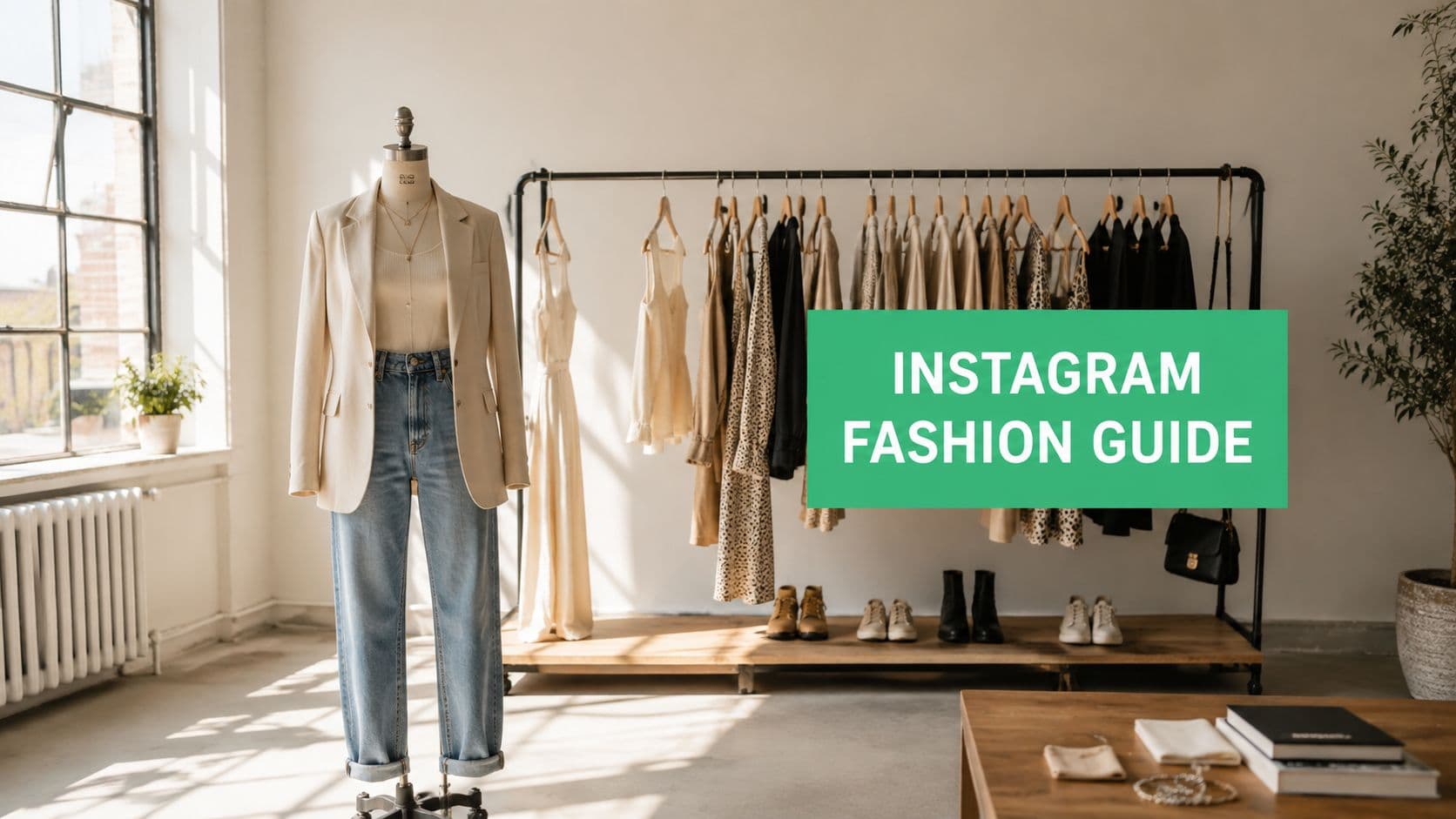
Why Instagram Still Matters for Fashion Brands in 2026
Instagram matters because fashion already built its habits there. A 2014 analysis of 57 brands across 14 leading fashion-retailing groups found that 98% of the international top fashion retailers were already using Instagram as a brand, product, and promotion channel, mostly in a one-way format (AECA study). That history still matters. Instagram did not just become another social app for fashion. It became part of the category's operating system.
The channel still owns the handoff
TikTok and Pinterest are strong at pushing discovery upstream. Instagram is better at moving people from interest to action because it combines visual product review, DM-based service, and Shopping in one place. Fashion brands waste time trying to force every platform to do the same job. TikTok can spark curiosity. Pinterest can feed mood and intent. Instagram is where a buyer often checks the details, asks a question, taps the product, and decides.
> Practical rule: use Instagram for the last mile of attention. If a post cannot help someone save it, send it, tap it, or DM about it, it is not doing enough.
Audience fit is still strong
Instagram's fashion relevance is reinforced by who uses it. One study cited in a fashion thesis reported that 59% of 18-29-year-olds use Instagram (Theseus thesis). That matters because fashion's core audience still skews young enough that the platform remains a sensible investment, even when engagement is frustrating.
FashionUnited's 2026 Instagram Fashion Index shows the scale fashion brands can build there, with follower totals such as Nike at 297,655,034, Victoria's Secret at 79,559,913, Zara at 62,328,796, Chanel at 59,933,128, and Louis Vuitton at 56,027,164.
That is why leaving Instagram would be a mistake. Posting more is not the answer. Brands win by fixing creative for saves and shares, choosing creator formats by market, and using Shopping as conversion infrastructure instead of treating it like a sticker. If your team is still measuring success by how full the grid looks, you are spending time on the wrong problem.
Setting Up a Fashion-Ready Instagram Profile
A fashion profile should work like a storefront, a pitch deck, and a service desk at the same time. Most brands still design it like a mood board. That's lazy. The profile has one job, move the right visitor to the next action with as little friction as possible.
Make every profile asset pull its weight
Start with the handle. Keep it short, searchable, and consistent with your domain wherever possible. Decorative underscores and cute spelling variations make you harder to find, which is pointless if you want people to shop or DM you.
Your profile photo should be instantly readable in the tiny 110 by 110 crop. Use a clean wordmark if your logo is legible at that size, or a recognizable product mark if the brand is product-led. If someone sees your post in a tagged feed and glances at the profile, the image has to confirm they're in the right place.
The bio should do three things fast. State what you make, who it's for, and what to do next. Add one trust cue, such as a press mention or retail partner, if it fits naturally. Keep highlight covers organized by buyer intent, not by your internal calendar. New In, Fit Guide, Reviews, Shipping, and Sustainability are useful. Spring Drop 3 is not.
Practical rule: if a new visitor can't tell what you sell, how to shop it, and why to trust it in under 10 seconds, your profile is costing you money.
Treat contact and links like commerce tools
Use the action button for the next step. Route it to Shop or Book if you sell direct or do fittings. Retail brands serving LATAM, MENA, or South Asia should enable WhatsApp if that's where customer service already happens. The link in bio can be a hub, but direct deep links to collection pages usually outperform generic link lists because they remove choice overload. Keep the hub updated weekly if you use one.
Quarterly profile audit checklist
Bio testing: check whether the CTA still matches the current drop or service offer.
Highlight refresh: update covers and reorder buyer-intent highlights before each launch.
Link validation: confirm the bio link lands on the right collection or booking page.
Contact routing: make sure Shop, Book, or WhatsApp still reaches a live response path.
The point is simple. Your profile should behave like conversion infrastructure, not branding decoration.
Content Strategy and Reels That Drive Real Engagement
Fashion teams still waste too much time on polished static looks that nobody saves. A 2026 fashion benchmark put Reels at 1.9% engagement versus 0.8% for static images and 0.8% for carousel posts, while fashion brands averaged 1.3% engagement overall (Dash Social benchmark). Another 2026 benchmark said fashion Instagram median engagement was around 2.2%, with Reels driving the best performance, not still posts (NetInfluencer report). That's not a subtle signal. Motion wins more often than stillness, but only if the motion serves a buying decision.
Build pillars around product behavior, not brand vanity
Hero product Reels should be short, visually clean, and specific. Think 8 to 15 seconds, one product, one movement, one reason to care. The hook should open on the product in motion, not the logo. Use these for launch discovery and track profile visits or product taps, not likes.
Behind-the-scenes clips work because they make the brand feel real. Show pattern cutting, fabric selection, packing, or fitting room decisions. Keep them rough enough to feel human but not sloppy. The KPI here should be saves or shares, because people keep process content when it feels useful or credible.
Styling Reels should target one occasion per post. Stop mixing office, dinner, travel, and event dressing in one piece of content. One Reel, one scenario, one wardrobe problem solved. That format makes the video easier to save and easier to recall later.
Customer fit reviews and try-ons should be direct and unglamorous. Let people speak plainly about sizing, drape, comfort, and return risk. UGC remixes work because they borrow trust from real bodies and real use cases. Use them for social proof and measure shares plus tag taps.
Run the cadence like a media plan
A workable cadence is 4 to 5 in-feed posts per week, with Reels weighted toward Tuesday, Thursday, and Saturday, plus daily Stories. Keep captions tight. Lead with the hook, add the product fact or styling angle, then end with one action, such as save, tap, or DM. Use 3 to 5 relevant hashtags, not a hashtag dump. Add alt text for accessibility and search relevance, especially on product-heavy posts.
For execution help, teams often need editing support more than more ideas. A practical resource like the best 2026 AI tools by ViewsMax can speed up caption drafting, clipping, and versioning without changing the creative direction. The point is to work faster on better concepts, not to automate bad taste.
Plain truth: lookbook content alone is weak. If your post only shows the outfit and nothing else, Instagram has little reason to spread it.
Instagram Reels in 2026 remains the better reference if your team wants a deeper playbook on short-form execution.
Instagram Shopping and Shoppable Posts Setup
Instagram Shopping should be treated as conversion infrastructure. Too many brands bolt on product tags after the content is already live, then act surprised when nothing happens. If the catalog is messy, the feed is stale, or the policies are incomplete, Shopping becomes decorative. That's not a platform problem. That's an operations problem.

Get the prerequisites right before tagging anything
You need a Meta Business account, an approved Commerce eligibility review, and a connected product catalog through Commerce Manager, Shopify, or a feed before you can use product tags properly. Set tax and shipping policies first. Then get the Instagram Shop channel approved. If you skip that sequence, you end up troubleshooting approval problems after the campaign is already planned.
The difference between the shoppable surfaces matters. Feed product tags work well for editorial posts and launch content. Reels product tags help when motion sells the garment better than a still frame. Stories shoppable stickers are useful for urgency and drops. The Shop tab acts more like a storefront. Each format serves a different intent, so don't treat them as interchangeable.
Watch the categories that trip approval
Fashion brands in lingerie, swimwear, and used items need to pre-clear their catalog assumptions before launch. Those categories are more likely to raise review issues, so the brand and merchant teams should verify product descriptors, imagery, and policy language early. Don't leave that to the week of the campaign. It always creates avoidable delays.
SKU hygiene matters more than creative teams want to admit. Sizes, colors, and variants must stay synced or your tags will point to out-of-stock items and broken shopping paths. If you use Instagram checkout, make sure the funnel is tested on every hero SKU. If you link out instead, the landing page has to match the tagged product exactly.
Instagram shoppable feature is worth reviewing if your team still treats product tagging like a novelty instead of a system.
Practical rule: if Shopping isn't synced, approved, and updated weekly, it's not a sales channel. It's a liability.
Measure the right outcomes. Track tag taps, product page views, checkout initiations, and assisted purchases. Ignore vanity impressions. A post can look healthy and still fail to move anyone into the product path.
Influencer and Creator Partnerships That Fit Fashion
Creator strategy is where a lot of fashion brands get lazy. They default to “find creators and post more,” which is a weak answer to a market that behaves differently by country, content format, and spend model. A more useful benchmark comes from Traackr's 2025 fashion data. In the US, fashion brands earned higher average engagement on organic content at 1.65% than on sponsored content at 1.14%, while France showed an increase in creator-content engagement overall (Traackr benchmark). That means the same creator play can perform very differently depending on the market.
Pick the format based on the job
A paid Reel works best when you need category education, speed, or a clear product demonstration. A carousel is better when you need detail, fit explanation, or a collection story. A Story takeover is useful for fast credibility and behind-the-scenes access. Live shopping fits moments of urgency, drop culture, or launch theatre.
Sponsored Reels are best for product education, reach, and fast testing. In the US, they tend to perform well when the brief is specific, and the product is clearly visible. In France, they can work too, but local trust often matters more. Use this format when you need scale and a tight conversion message.
Organic gifted Reels are a strong fit for editorial feel, credibility, and discovery. In the US, they often build more trust than hard-sell sponsored posts. In France, they are also a strong fit for earned engagement. Use them when the creator's audience values authenticity.
Carousel posts work best for fit details, styling education, and saved content. In the US, they are useful for considered purchases. In France, they are helpful for brand storytelling. Choose this format when you want depth, not just views.
Story takeovers are useful for launch access, brand voice, and daily touchpoints. In the US, they can support awareness and Q&A. In France, they also work well when creator trust is high. Use them when you want quick, low-friction exposure.
Live shopping fits drops, urgency, and direct response. In the US, it works best when both the product and the host are strong. In France, it is better used selectively for community-led moments. Choose it when you need immediate action.
Decide by market, not by habit
Use sponsored partnerships when you need speed-to-scale, category education, or you want to control the message tightly. Use organic seeding when editorial credibility matters more than immediate response. That's the clean decision rule. Don't pay for every creator post just because it feels active.
Micro creators often give you the best balance of trust and flexibility, but tier only matters if the audience and format fit. A nano creator can be excellent for local proof. A micro creator can carry fit education. A mid-tier creator can scale launch awareness. Compensation can be gifting, flat fee, affiliate, or revenue share, but the model should follow the objective, not the other way around.
If you need help formalizing creator briefs, the best influencer media kit examples are useful because they show how strong partnerships package audience, deliverables, and proof without bloated language.
How to collaborate with influencers is a useful internal reference if your team still negotiates creator work ad hoc.
Contract basics: lock usage rights, whitelisting, exclusivity, and disclosure requirements before content goes live. Don't negotiate those after a post starts performing.
Measuring Performance With the Right Fashion Metrics
Fashion brands lose time when they review the wrong numbers. Likes are easy to celebrate and useless to plan from. Follower milestones feel good in a deck, but they don't tell you whether your content is moving products or building the right audience. The weekly review has to be more demanding.

Review saves and shares before anything else
For fashion, saves and shares are the clearest signals that content has value beyond a casual glance. They suggest people want to come back to it, send it to someone else, or use it as a reference. Likes don't tell you that. Build your dashboard around the content that earns those behaviors.
Track reach by content pillar so you know what's doing the discovery work. If styling content drives reach and fit reviews drive saves, your plan should reflect that. If UGC brings in shares while product detail posts bring profile visits, that tells you how each format contributes to the funnel. Don't average all content together and call it strategy.
Check audience quality, not just audience size
Review unfollows after posts to spot content that alienates the wrong people. Audit bot-like or obviously inactive accounts monthly. Then compare your follower quality with category norms over time, not in isolation. A large account with weak interaction is still a weak asset.
For Shopping, monitor tag taps, product page views, add-to-cart, and checkout starts. Those are the metrics that show whether Instagram is doing commerce work. I'd rather see a smaller audience with strong product path behavior than a bloated audience that never touches the catalog.
Compare Reels growth tools if your team needs a better way to benchmark video performance and identify where your Reels are underperforming.
Use a simple weekly dashboard
Keep the review to four blocks.
Content performance: saves, shares, reach by pillar.
Audience quality: unfollows, suspicious follower activity, profile visits.
Commerce behavior: tag taps, product page views, add-to-cart, checkout starts.
Creative learnings: hook type, length, product angle, and creator format.
Ignore raw like counts unless you need a very rough directional signal. Ignore Stories view totals without tap-through context. The weekly question should be blunt. What content moved someone closer to buying, and what content only looked busy?
Your 30 and 90 Day Fashion Instagram Plan
The right way to fix Instagram for fashion brands is to stop redesigning everything at once. Ship the basics first, then scale what proves itself. A clean 90-day plan beats a vague annual strategy every time because it forces the team to make decisions on a real timeline.
Days 1 to 30, lock the foundation
Week 1 should be profile and Shopping eligibility. Audit the handle, bio, highlight structure, and contact buttons. Confirm your catalog, commerce review, and shop setup are in motion. If the account can't tag products yet, that's fine. But the prerequisites need to be live before you post harder.
Week 2 is the first Reels batch. Publish 3 to 5 Reels that each serve a different pillar, such as hero product, styling, or behind the scenes. Don't wait for perfection. You need baseline signals, not a polished silence.
Week 3 is about tagging existing posts and cleaning the archive. If older posts still support current products or evergreen categories, tag them. Update any stale bio link paths at the same time. That work often yields more value than a brand-new campaign does.
Week 4 should establish the first baseline metrics. Document saves, shares, profile visits, tag taps, and product page views. Write down which creative angles got the most useful response, not the loudest one.
Days 31 to 60, build the content engine
At this point, stabilize cadence at roughly 4 Reels and 12 feed posts per month, plus daily Stories. Launch the first creator partnership, ideally in the format that matches the market and objective you chose earlier. Then start A/B testing hooks. Change the opening frame, the first caption line, or the product order in the Reel. Don't test six things at once.
Weekly reviews should now compare pillar performance. One pillar may drive reach while another drives saves. That's normal. The mistake is to collapse everything into one score and then overfund the loudest format.
If you want a practical growth layer during this phase, Gainsty offers an AI-powered Instagram growth tool for brands that want organic follower growth and engagement support without using bots or fake followers. Use it as an operational assist, not as a substitute for content quality.
Days 61 to 90, scale the winners
Double down on the top three content pillars. Formalize a creator pipeline with 2 to 3 recurring partners, so you're not starting from scratch each month. Activate Shopping tags on best-sellers and test paid amplification on the best-performing Reels, not on everything that happened to be produced.
This is also when the team should look for traction signals that justify more spend. The exact milestones I'd watch are save rate above 1.5%, Shopping click-through above 1.2%, and creator content outperforming brand content by 30% or more. If you're not seeing those signals, don't scale the budget yet. Fix the creative or the product path first.
The last question in the 90-day review is the one that matters. Which format helped the right customer save, share, tap, and buy, and which format only made the grid look active?
If your fashion team wants Instagram to do more than pad awareness, build the next quarter around creative that earns saves and shares, creator formats matched to market, and a Shopping setup that converts. Gainsty can help brands organize that organic growth work without bots or fake followers, and you can see how it fits your workflow at Gainsty.
.png&w=1920&q=75&dpl=dpl_2si4hWs7xtpQVmrY6d8xhJ1wLJZL)



.png&w=750&q=75&dpl=dpl_2si4hWs7xtpQVmrY6d8xhJ1wLJZL)