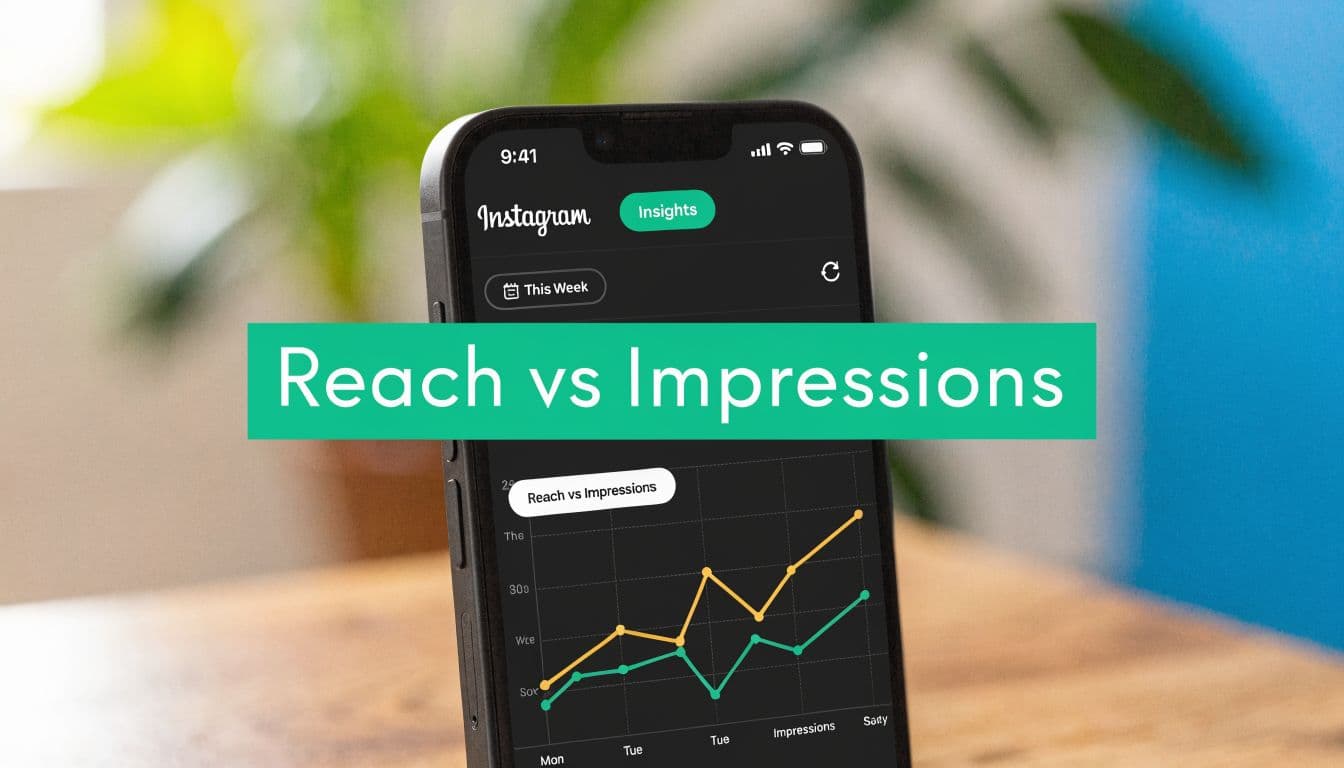
The End of Easy Organic Reach
A lot of creators still assume the problem is their content volume. If reach drops, they post more. If views look flat, they add more Reels. If engagement feels inconsistent, they chase trend after trend.
That approach misses the bigger shift.
Instagram's organic reach has fallen to 3.5% of followers, and the trend is still heading downward as of 2026, which means over 96% of an account's audience likely won't see its unpaid content, according to Social Plus on Instagram organic reach decline. If you've been wondering why solid posts don't seem to travel very far, that's the answer.
Most accounts aren't failing because they forgot a hashtag. They're operating in a system where unpaid distribution is much tighter than it used to be.
What do these changes mean for creators and brands
Old advice said, "Just increase reach." That sounds reasonable until you realize that a broad reach is no longer something Instagram gives out easily. The platform now filters harder, tests content with smaller pockets of users, and rewards posts that hold attention or trigger meaningful actions.
That means reach and impressions shouldn't be treated as interchangeable signs of success. One tells you whether Instagram is introducing you to people. The other tells you whether Instagram keeps resurfacing your content.
The new goal
The goal isn't to chase the biggest top-line number on a single post. The goal is to understand what your numbers are saying about content quality, audience fit, and repeat exposure.
If your content gets shown repeatedly to the same people, that can be useful. It can also be a warning. If your reach expands but your audience doesn't engage, that can mean your content is getting exposure without resonance.
The smart move in 2026 is simpler than it sounds. Stop asking, "How do I get more views?" Start asking, "What does the relationship between my views and reach say about how Instagram is distributing this content?"
Reach vs Impressions: The Billboard and The Flyer Analogy
The easiest way to understand instagram reach and impressions is to stop thinking like a dashboard and start thinking like a street marketer.

One person, one count versus many exposures
Reach is like a billboard on a busy road. If 500 different people drive past it, your reach is 500. Even if one person drives by three times that week, they're still one unique person reached.
Impressions are like handing out flyers. Every time someone gets one, that counts. If the same person picks up three flyers from your table on different days, that's three impressions.
Simple rule: Reach counts people. Impressions count appearances.
That distinction matters because the two metrics answer different questions:
Reach asks: how many unique accounts saw this?
Impressions ask: how many total times did this appear on screens?
How this shows up on Instagram
On Instagram, this can happen across posts, Stories, and Reels. One follower might see your Reel in the Reels feed, then again when a friend shares it, and then later from your profile. That can create multiple exposures while still representing one account reached.
Instagram's reporting has evolved, so organic reporting often emphasizes Views rather than the old impressions label. But the practical idea hasn't changed. You still need to separate the unique audience size from total exposure.
If you want a useful companion read on platform-wide visibility metrics, this guide to what impressions mean on social media is a helpful reference.
Instagram Reach vs. Impressions at a Glance
Reach measures the number of unique accounts that saw your content. It does not count repeat views, so each person is only counted once. It is best for understanding audience size and discovery. A useful question to ask is: “How many people did this reach?” A common mistake is assuming high reach automatically means strong content performance, when it may only reflect distribution, not engagement quality.
Impressions measure the total number of times your content was shown, including repeat views from the same users. It is useful for understanding visibility and repetition frequency. A good question to ask is: “How often was this seen?” A common mistake is assuming high impressions mean you’re reaching new audiences, when it may simply indicate the same people are seeing the content multiple times.
Where people get mixed up
A post can have lower reach but higher impressions if the same audience keeps seeing it. That doesn't automatically mean the post is performing badly. It may mean Instagram sees enough interest to keep showing it.
But if you're trying to grow, you don't just want repeated exposure. You also want content to travel to people who don't already know you. That's where the ratio between these metrics becomes useful.
Why These Metrics Define Your Instagram Growth in 2026
A few years ago, marketers often treated reach as the headline metric and impressions as a supporting detail. That order no longer works.
In 2025, overall Instagram post reach fell by 31%, while impressions grew by 27%, according to Metricool's Instagram statistics analysis. That split tells you something important: Instagram is showing content more often, but to narrower groups of people. It's favoring repeated exposure with interested viewers over broad, casual distribution.

What the algorithm is signaling
If reach is shrinking while total exposure rises, Instagram is acting less like a megaphone and more like a recommendation loop. It tests your content, notices who watches, saves, or shares it, and keeps putting that content in front of similar interested users or the same engaged cluster.
That changes how you should read performance:
High reach with low follow-through can mean broad exposure but a weak connection.
High impressions with flat reach can mean strong repeat interest, or it can mean you're stuck circulating among the same audience.
Balanced growth in both usually points to healthier discovery.
Top of funnel and middle of funnel
These metrics also map well to the marketing funnel.
Reach is your top-of-funnel signal. It tells you whether Instagram is introducing your content to distinct accounts, especially people who don't already follow you.
Impressions or Views are more of a reinforcement signal. They show repeated visibility. That's useful when you're trying to stay familiar, build recall, or keep a message in circulation.
A creator who wants growth needs both. Reach brings new people in. Repeated exposure helps those people remember you.
The ratio matters more than the raw total
Many dashboards are often misleading. Big numbers can hide weak distribution quality. A post with strong total exposure but limited unique reach may look successful at first glance, yet it may not be expanding your audience.
A better diagnostic is the impressions-to-reach ratio, often called frequency. It tells you how many times the average account reached saw the content.
Think of it this way:
A lower ratio usually suggests a broader spread.
A higher ratio suggests more repeat exposure per person.
Neither is automatically good or bad. The meaning depends on your goal. If you're launching a new offer, repeated views can help. If you're trying to grow your audience, too much repetition without fresh reach can become a problem.
What to watch weekly
Review these metrics in pairs, not in isolation:
Reach rising, exposure rising – This often suggests healthy discovery and sustained interest, meaning your content is reaching new people and continuing to circulate effectively.
Reach flat, exposure rising – This usually indicates recycling among existing viewers, where the same audience is repeatedly seeing the content without new audience growth.
Reach rising, engagement weak – This points to discovery without enough resonance, meaning people are seeing the content, but it isn’t compelling them to interact.
Exposure strong, profile actions weak – This suggests visibility without conversion, where content is being seen frequently but is not driving meaningful actions like profile visits, follows, or clicks.
This is why instagram reach and impressions now define growth strategy. They don't just measure outcomes. They tell you how Instagram is classifying your content.
How to Find and Analyze Your Metrics in Instagram Insights
You don't need a complicated analytics stack to start reading these signals well. Instagram Insights already gives you enough to diagnose a lot, as long as you know where to look and what each number means.

Where to find the numbers
If you use a professional Instagram account, open your profile and go into the Professional Dashboard or Insights. From there, review both account-level and post-level performance.
At the account level, look for overall content performance trends. At the post or Reel level, look for how one piece of content performed in terms of exposure, reach, engagement, and audience actions.
For a deeper walkthrough of the dashboard labels and what they mean, this explainer on Instagram Insights explained is useful.
The naming change that confuses people
Instagram's reporting now centers more on Views for organic content. In practical terms, think of Views as your broad exposure count. Reach still represents unique accounts.
So if you're looking for the old Impressions label and can't find it on some content types, you're not missing anything. Instagram changed the reporting architecture. The important habit is to keep separating total exposure events from unique account exposure.
How to analyze one post without overthinking it
Use this short checklist when you open a post's metrics:
Check reach first. Did this content get in front of a meaningful number of unique accounts?
Check total exposure next. Did people see it more than once?
Look at engagement actions. Saves, shares, comments, and reactions tell you whether the exposure mattered.
Review profile outcomes. Did the post trigger profile visits, follows, or direct messages?
A clean interpretation often beats a complicated spreadsheet.
Practical rule: Don't judge a post by Views alone. Always pair exposure with unique reach and engagement actions.
A better KPI than vanity metrics
Instagram now supports engagement rate by reach, calculated as total engagement divided by accounts reached. An industry benchmark of 5% is considered a baseline acceptable level, according to Talkwalker's guide to Instagram impressions and engagement rate by reach.
That metric helps because it asks a better question: among the people who saw this, how many cared enough to do something?
If your reach is modest but your engagement rate by reach is healthy, that often means your content is connecting. If your reach is large but the engagement rate by reach is weak, the content may have gotten distribution without much response.
A simple weekly review habit
Don't just inspect isolated posts. Compare content patterns over time. Look at educational posts versus personal posts. Compare face-to-camera Reels with voiceover tutorials. Check whether certain content types consistently generate stronger reach, stronger exposure, or better engagement rate by reach.
That's how you stop reacting emotionally to one post and start building a strategy.
7 Practical Tactics to Increase Instagram Reach and Impressions Organically
The fastest way to improve instagram reach and impressions is to align your content with the signals Instagram already rewards. The platform pays close attention to behavioral actions such as shares through direct messages, saves, and video replays. It may even value concentrated repeat viewing more than broad but shallow exposure. In one example shared by ALM Corp's breakdown of Instagram's newer metrics, a post with 20,000 views from 8,000 accounts can be more valuable than one with 20,000 views from 18,000 accounts because the first pattern suggests stronger repeat interest.

Tactic 1 and 2
Build for saves, not just likes
Save-worthy content tends to be concrete. Checklists, swipe tutorials, mini frameworks, before-and-after breakdowns, and captions people want to revisit all fit here. If someone saves your post, they're telling Instagram the content has lasting value.Give Reels a replay reason
Replay usually comes from density or curiosity. A fast tutorial, a layered visual sequence, or a Reel with a strong ending can trigger a second watch. If you want a practical resource on mastering Instagram Reels for better reach, that guide is worth reviewing.
Tactic 3 and 4
Write captions that invite sharing in DMs
Shares are one of the clearest quality signals. Instead of generic captions, write posts that make someone think, "I need to send this to a friend." Useful opinions, relatable pain points, and niche-specific advice work well.Target discoverability with niche hashtags
Broad hashtags usually put you in crowded spaces. Niche hashtags can help Instagram place your content in more relevant discovery paths. This guide to an Instagram hashtag strategy can help you organize them with more intention.
Tactic 5 and 6
Turn Stories into a repeat-touch channel
Stories are ideal for raising exposure frequency without recycling the exact same feed content. Use polls, sliders, question boxes, and quick updates to create more return visits. Stories don't need to be polished. They need to feel active and interactive.Study content by ratio, not by ego
When a post gets lots of exposure but weak unique reach, ask whether you're being resurfaced to the same people. When a post reaches many accounts but gets little engagement, ask whether the idea was too broad or too shallow. If you use analytics tools outside native Insights, platforms such as Gainsty can help track these patterns in a live dashboard.
Posts that earn shares, saves, and replays usually keep traveling longer because they signal real usefulness, not just momentary attention.
Tactic 7
Create a series, not random one-offs
Random posting makes it harder for Instagram and your audience to understand what you're known for. A recurring content series builds expectation. It also helps you compare formats more accurately because you're testing within a recognizable theme instead of changing everything at once.
Here are a few examples:
For coaches: weekly myth-busting Reels
For product brands: customer problem and solution carousels
For local businesses: recurring behind-the-scenes Story segments
For creators: part one, part two educational sequences
The bigger pattern
Organic growth doesn't come from gaming one metric. It comes from creating content that gives Instagram strong evidence of audience satisfaction. If your content gets watched closely, shared privately, saved for later, and revisited, reach and exposure tend to improve as a consequence.
Real-World Examples Applying These Metrics for Growth
Theory gets easier when you see how these numbers affect decisions.
An influencer with high reach but weak response
A fitness creator posts a motivational Reel that reaches a lot of new accounts. On paper, that sounds promising. But the comments are thin, saves are low, and profile visits don't move much.
The likely read is that the content got surface-level discovery but didn't create enough depth. The creator responds by shifting from generic motivation to highly specific training tips and meal-prep sequences. The next few posts reach fewer people at first, but the audience response is stronger and easier to build on.
A small business with strong repeat exposure
A neighborhood café notices one style of post keeps showing up well in Insights. The unique audience isn't expanding much, but regulars keep seeing and interacting with these posts, especially when the café shares menu changes through Stories and short behind-the-scenes clips.
That tells the owner something useful. This content isn't broad discovery content. It's reinforcement content. So the café keeps using it for retention while creating separate local discovery posts around staff personality, nearby events, and customer favorites.
Sometimes the right answer isn't "make this post reach more people." It's "use this format for loyalty, and make a different format for discovery."
An agency comparing client content patterns
A small agency manages accounts in different niches. One client gets broad reach on entertainment-style Reels but weak saves. Another gets a narrower reach on educational carousels but much stronger saves and direct messages.
The agency doesn't force one strategy onto both. It treats the first account as needing stronger conversion mechanics and the second as needing more discoverable packaging. Same platform, different interpretation.
What these examples have in common
None of these decisions came from staring at one number in isolation. They came from asking practical questions:
Is this content attracting new people?
Is it being shown repeatedly to familiar viewers?
Are the right actions happening after people see it?
Should this format be used for discovery, nurturing, or both?
That's the value of instagram reach and impressions. They help you assign each content type a job.
Measurement Tips and Common Pitfalls to Avoid
The biggest reporting mistake is treating high exposure as automatic proof of growth. It isn't. Sometimes it means Instagram found your content useful. Sometimes it means the same people keep seeing it.
Watch for the frequency trap
When impressions significantly exceed reach and create a frequency above 3 to 4, it often means Instagram is recycling content to a fatigued audience instead of expanding it to new followers, according to Meltwater's guide to Instagram impressions and frequency.
That doesn't mean every high-frequency post is bad. It means you should ask whether the content is still opening new doors or just bouncing around the same room.
Other mistakes that distort your judgment
Judging single-post spikes: One strong post can be a fluke. Trends matter more than isolated wins.
Ignoring non-follower distribution: If your content mostly circulates among current followers, growth will feel slow even when Views look decent.
Overvaluing reach without action: Broad exposure means less if nobody saves, shares, or visits your profile.
Using no business outcome lens: Creators should connect platform metrics to actual outcomes. If you want a clean framework for that, this guide on how to track social media ROI for creators is a practical next step.
Healthy measurement asks two questions at once: "How far did this travel?" and "What happened because it traveled?"
The best accounts don't obsess over vanity totals. They study patterns, notice fatigue early, and keep improving the fit between content, audience, and algorithm.
If you want help turning these signals into a repeatable growth process, Gainsty offers tools for tracking Instagram performance and spotting what content is helping you grow, not just generating more surface-level views.

.png&w=1920&q=75&dpl=dpl_34ZXCf12K5qjjdZjPn9snwDRADrB)





.png&w=750&q=75&dpl=dpl_34ZXCf12K5qjjdZjPn9snwDRADrB)