Why Great Instagram Content Still Gets Lost
A lot of creators assume they've got a content problem when they really have a discovery problem. They're posting consistently, they're getting some likes, and the work itself is good, but the account still feels invisible to anyone outside the current audience. That gap is frustrating because it makes effort look like the issue when the issue is that the platform can't clearly tell who the content is for.
Instagram has grown into a much larger discovery surface than a simple follower graph. In January 2025, Instagram's advertising tools indicated a potential global reach of 1.74 billion users, equal to 26.9% of the world's population aged 13 and older, with large audiences in India, the United States, Brazil, and Indonesia DataReportal. That scale matters because a profile built only around a personal name leaves a lot of intent on the table, especially when searches happen by topic, service, city, or problem instead of by creator name.
Think beyond the feed
If you only optimize for followers, you're optimizing for the wrong place. Discovery starts before someone lands on your post, and Instagram reads several surfaces for relevance. That includes the words in your username, display name, bio, captions, hashtags, and location references.
Practical rule: if a stranger can't tell what you do from the text fields alone, you're making discovery harder than it needs to be.
The easiest way to see this is to compare two accounts in the same niche. One says “Sarah” and posts beautiful content. The other says “Sarah, Wedding Photographer in Lisbon,” writes about the same work, and uses the city naturally in the profile and captions. The second account gives the search system a clearer map.
Instagram's size also changes how you think about language. A local service, a niche creator, and a global brand all need different wording because people search differently across regions and languages. That's why the work is not “add more keywords.” It's to make your niche legible enough that the right searcher knows they've found the right account.
How Instagram Search Actually Works
A creator posts a strong reel, but it barely shows up in search. Another account covers the same topic and keeps appearing for the right queries. The difference is rarely luck. Instagram search behaves more like a library catalog than a feed, so the system first matches a query to readable text, then sorts results by how closely they fit the intent and how people respond to them. Relevance gets you eligible. Behavior pushes you higher.
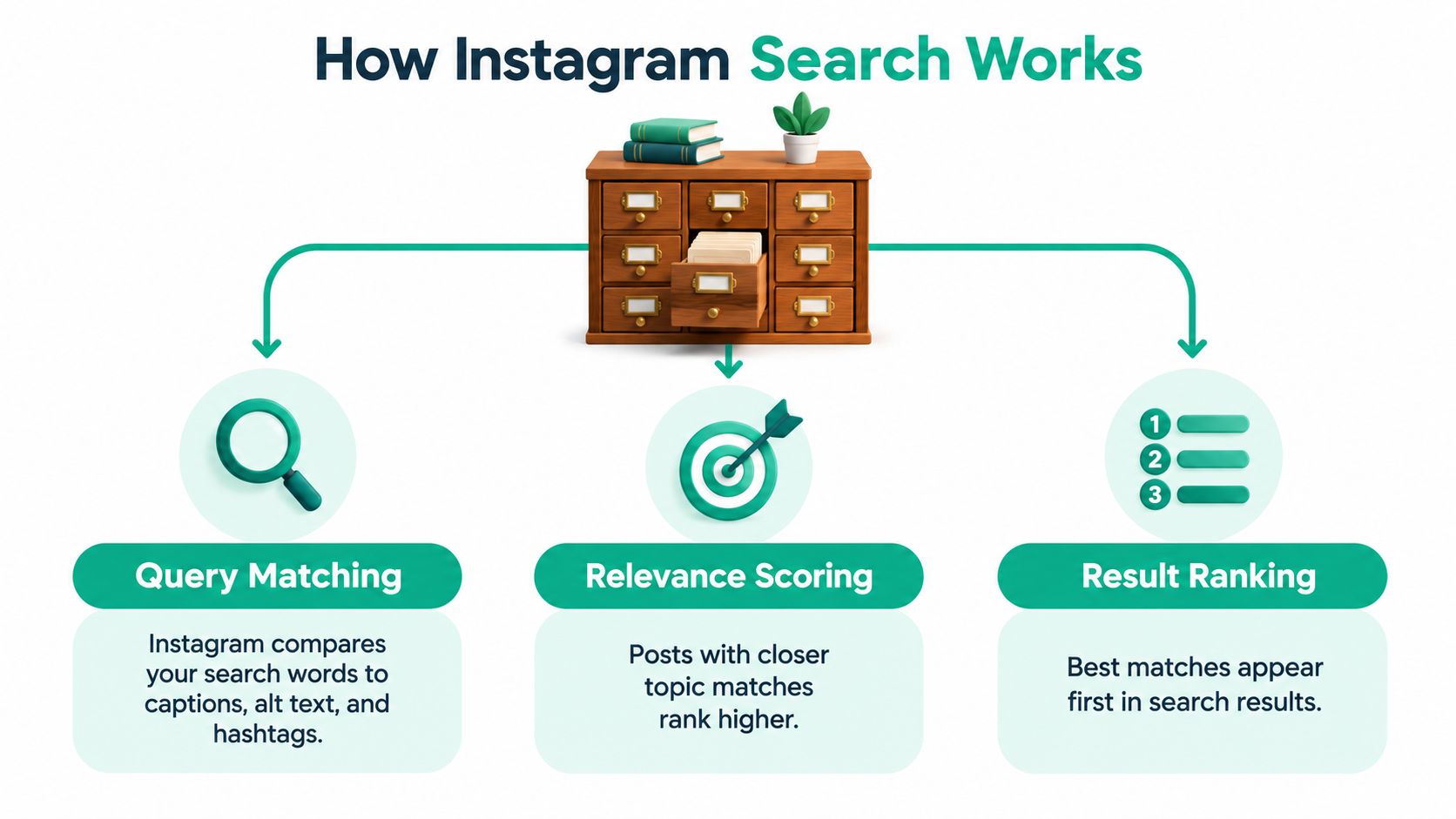
Instagram says discovery runs through multiple algorithms, classifiers, and thousands of individual signals rather than a single rule Instagram ranking explained. That matters because the same topic can perform very differently depending on who reacts to it and how they react. A post that earns saves and shares from the right audience can outrank a post that collects more shallow likes from people who were never looking for that answer.
What the system reads first
The search layer compares user intent with visible text in usernames, biographies, captions, hashtags, and locations Hootsuite. Instagram's Help Center also frames search around the words people type and the information the platform can interpret from accounts and content. If someone searches “freelance photographer Amsterdam,” the system looks for accounts and posts that echo that wording or a close variation. A clear niche phrase in the right field does more than label your brand. It gives the account a better chance to appear for the search that matters.
A strong Instagram result contains the keyword and answers why the person searched.
Why ranking changes after the match
Once a post is eligible, Instagram uses signals like likes, saves, shares, follows, and recency to sort results Instagram ranking explained. Saves and shares tell the platform the content was worth keeping or sending. Recency helps because fresh posts can match current intent better than older ones.
Two posts on the same topic can end up in very different places. One may get a burst of quick reactions from broad curiosity. Another may speak directly to a real search query, use wording that matches that query, and earn the kind of engagement that shows usefulness. The first draws attention. The second gets distribution.
Optimizing Your Profile for Search Intent
A strong profile does two jobs at once. It tells Instagram what kind of account this is, and it tells a visitor whether they are in the right place. If the fields are vague, the platform has to guess, and so does the person deciding whether to tap follow, visit your site, or send a message.
The mistake is building a profile around identity alone. That works only if people already search for your name. If they search by service, niche, or outcome, the profile has to speak in those terms, because the search system reads the words you give it and uses them as signals.
The five fields that matter
Username or handle: keep it memorable, but make room for a niche cue if it still reads naturally.
Display name: use this for the clearest search phrase you want associated with the account.
Bio lines: say what you do, who you help, and what kind of account this is in plain language.
Category label: choose the closest fit, not a vague identity label.
Links: send visitors to a page that matches the promise in the profile, not a generic homepage.
A wedding photographer in Lisbon who uses only a personal name is harder to find than one whose display name reads Wedding Photographer Lisbon and whose bio repeats that service clearly. The same logic applies to a SaaS founder. If buyers search by the problem they want solved, a bio built around that phrase gives the account a better chance of attracting qualified profile visits instead of casual curiosity.
A practical Instagram bio tips guide can help you turn that text into something searchable without making it sound robotic.
What changes after the rewrite
Specific profile text makes the rest of the account work harder. Searchers understand the offer faster, profile visits are more likely to come from people with intent, and the account stops depending on recognition alone. The display name and bio become working signals, not decoration.
A simple test helps here. If a stranger lands on your profile and cannot repeat your niche in one sentence, the bio is too soft. That usually means the account is still asking people to do the interpretive work that the profile should already be doing.
Writing Captions, Hashtags, and Alt Text That Match Search Intent
A post works better when every textual element points at the same topic. The caption, hashtags, alt text, and on-screen text should all support one clear search idea instead of competing with each other. That's how you create a strong relevance package without stuffing in random keywords.
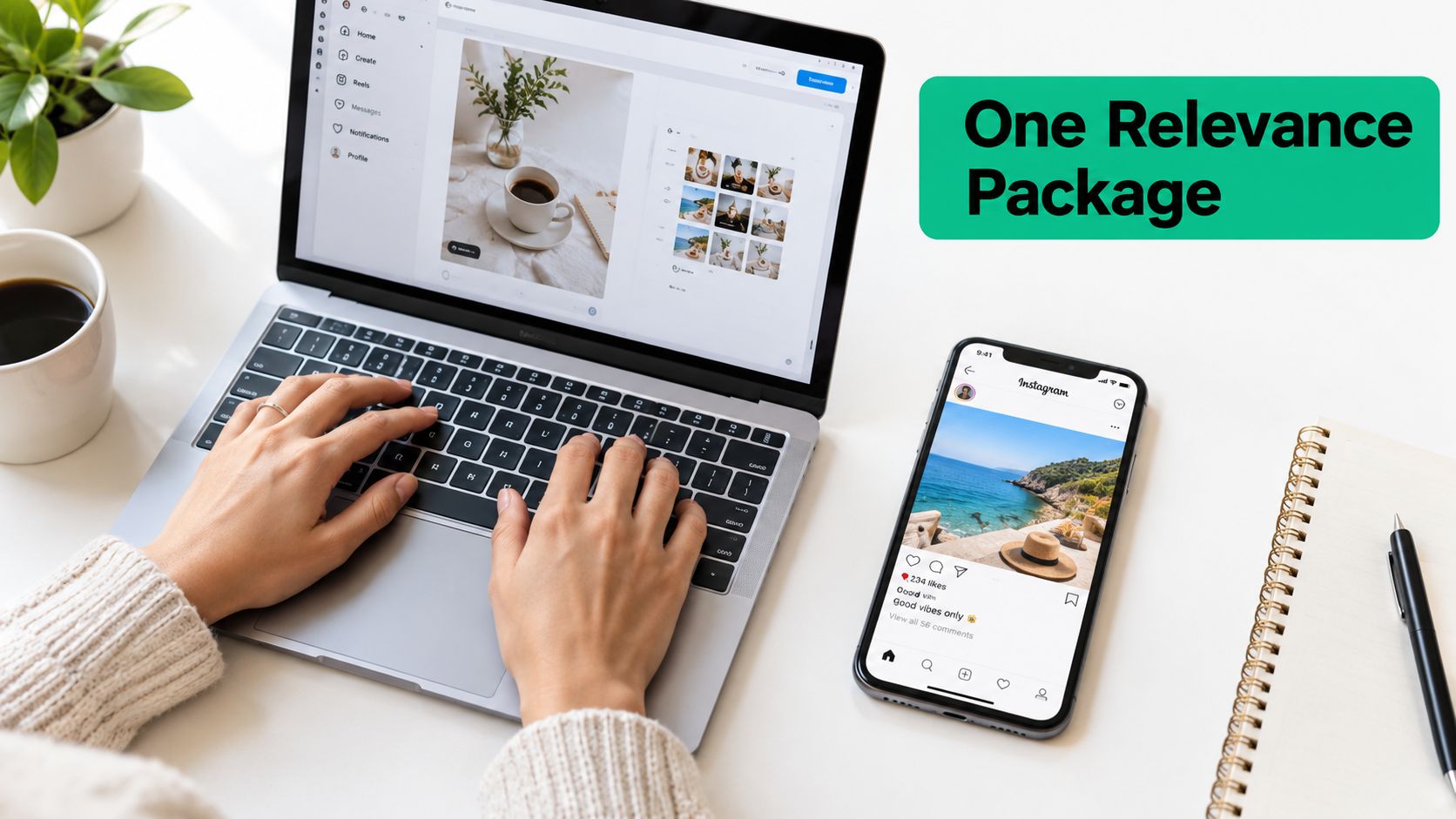
A baker posting a Reel about sourdough discard crackers should lead with that phrase naturally, not bury it under generic food language. The first line of the caption can say what the video teaches, the hashtags can stay specific, and the alt text can name what's visible in plain words. If the video is location-relevant, the location field should match the actual context.
For caption structure ideas that stay clear without sounding stiff, the social media captions examples for home pros resource is a useful reference point because it shows how plain language can still feel useful and specific.
A simple content stack
Open with the search phrase. Use the topic early, not five sentences in.
Use two or three accurate hashtags. Keep them tied to the actual subject.
Write descriptive alt text. Name the object, action, or setting clearly.
Match the on-screen text. If the Reel says one thing visually and another thing in the caption, you weaken the signal.
Add a real location when it helps. Local relevance matters for local discovery.
The point isn't to stuff every field with the same exact phrase. The point is to make the topic obvious from multiple angles, so Instagram doesn't have to guess. That's also why keyword relevance alone isn't enough. The post still needs to earn saves, shares, and comments if you want it to travel further.
Instagram keyword research guidance is most useful when it starts with what the audience is already searching, not with a list of tags you hope will work.
Later, when the post is live, Instagram still judges how useful it feels to real people. The cleanest caption in the world won't help if the content disappoints the searcher after the click.
Matching Content Formats to Search Behavior
Format changes what kind of search intent a post can satisfy. A Reel can catch discovery in the Reels tab, Explore, and search results because it competes on attention, watch behavior, and repeat viewing. A carousel can keep earning relevance because each slide adds context, and a single image relies more heavily on caption clarity and topic alignment.
A lot of creators waste effort here. They pick a format because it feels familiar, not because it matches the query. If someone is searching for a fast answer, a concise Reel usually has a better shot. If they're comparing options or trying to understand a process, a carousel gives more room to explain.
Reels are best for discovery and quick-answer intent. Their main ranking signals are watch behavior and repeated views.
Carousels are best for comparison and education intent. Their main ranking signals are dwell time and slide engagement.
Single-image posts are best for brand story and behind-the-scenes intent. Their main ranking signals are caption relevance and engagement.
Use the format that fits the question
A tutorial topic usually belongs in a Reel if the hook is visual and the payoff is fast. A before-and-after case, a checklist, or a framework usually belongs in a carousel because readers need more than a quick glance. A single-image post works when the image itself carries the story, and the caption fills in the meaning.
If you need help turning still images into video-friendly assets, the tutorial for Instagram videos can help you understand how repurposing stills changes the distribution game.
Keep the format tied to intent
Reels for action intent: use them when someone wants a fast answer, demo, or quick proof.
Carousels for comparison intent: use them when the user needs a framework, steps, or side-by-side reasoning.
Single posts for identity intent: use them when the topic is about trust, origin, or brand voice.
The important part is not which format you like best. It's whether the format helps the platform satisfy the searcher faster. If the format and the query don't match, the content has to work much harder to earn the same outcome.
Engagement Signals That Move the Needle
Instagram doesn't rank posts on keyword matching alone. A post first becomes eligible because the text fits the query, then it moves because people behave in ways that suggest usefulness. Saves are the strongest practical sign that someone wants to come back. Shares tell Instagram the content was worth passing along. Comments matter when they're real, because they show the post has triggered a conversation instead of a reflex.
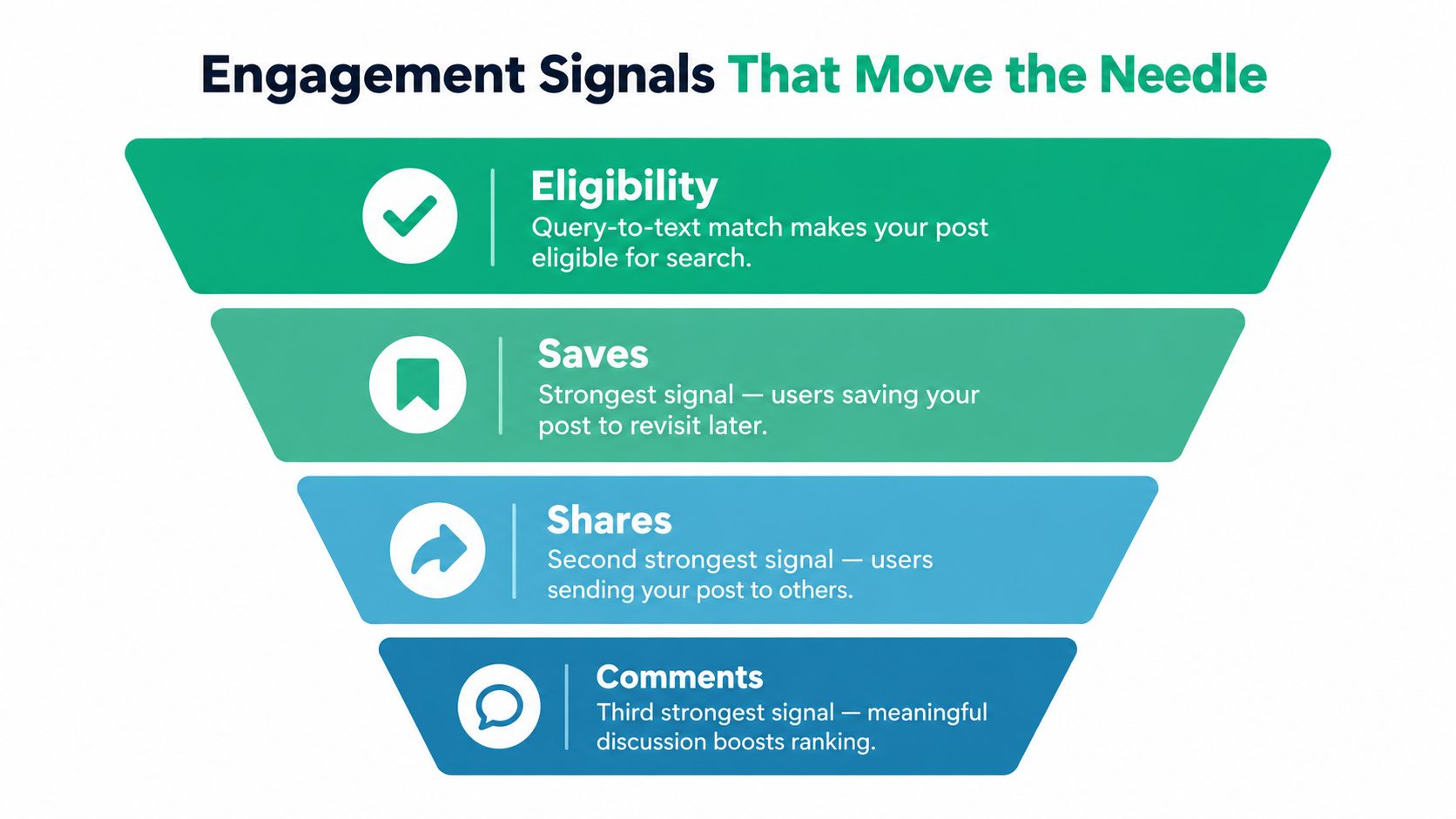
A fitness creator makes this easy to see. Her polished lifestyle posts may get likes, but her workout Reels that people save for later usually do better in search distribution because the behavior lines up with intent. Someone saving a workout wants to revisit it. Someone sharing it wants someone else to use it. Those are stronger ranking clues than a casual double tap.
Follow the causal chain
Search relevance works in a sequence. Query-to-text matching gets the post into consideration. Saves and shares tell Instagram it's useful. Comments, profile visits, and other downstream actions show the content is pulling people deeper into the account. That's the chain that matters.
Bottom line: if the post attracts attention but doesn't create saves, shares, or profile visits, it's probably entertaining the wrong audience or answering the wrong question.
That's why engagement bait usually weakens SEO even when it boosts raw activity. A “comment below” prompt can inflate the thread, but if the post doesn't answer a real search need, the extra noise won't build durable visibility. The algorithm is looking for relevance that holds up after the click.
The cleaner move is to write for usefulness first. When people save your post, send it, or tap through to your profile, they're telling Instagram the same thing in different ways, this content solved something.
A 90-Day Instagram SEO Strategy Roadmap
A strong Instagram SEO strategy works like a sequence, not a one-off tweak. If you change the bio, captions, and content style all at once, you won't know what improved search visibility. Audits, rewrites, publishing, and measurement give you cleaner signals, and cleaner signals lead to better decisions.
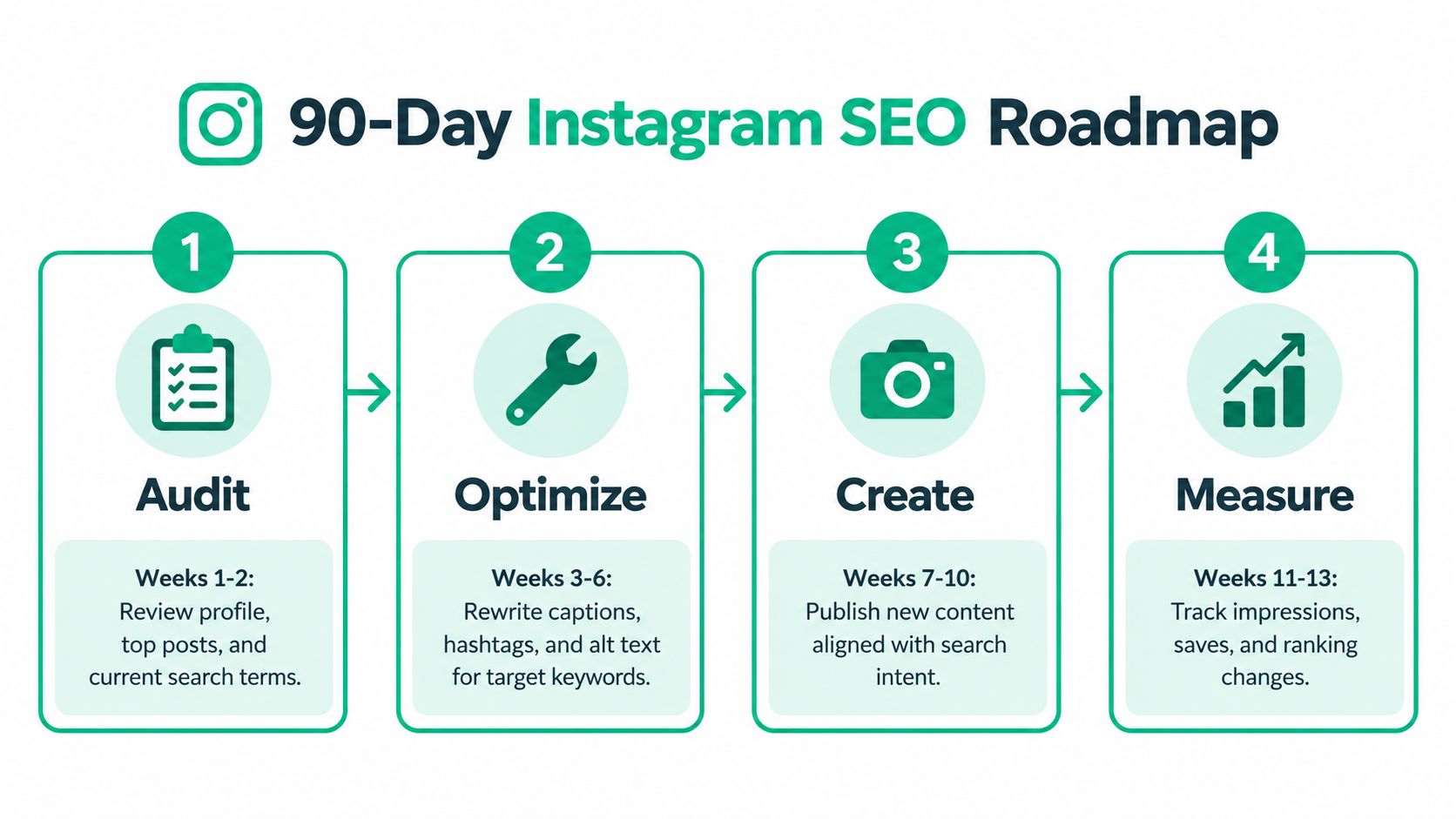
Weeks 1 to 2, audit
Review the profile, the top posts, and the search terms people already use to find you. Pull repeated words from comments, DMs, and profile visits, then compare them with your bio and captions. If the language does not match, the search intent gap is already visible.
Done looks like this: the niche is clear, the profile fields are specific, and you know which topics already attract the right attention.
Weeks 3 to 6, optimize
Rewrite the bio, refresh the display name if needed, and update captions on a few high-performing older posts so they match the target keyword cluster more closely. Add descriptive alt text where it is missing. Tighten location references that should have been there from the start.
Done looks like this: your profile reads like a direct answer to a search query, not a slogan.
Weeks 7 to 10, create
Publish around one core keyword cluster and keep the mix deliberate. A practical split is 60% Reels, 30% carousels, and 10% static posts if your niche depends on discovery and education. Each post should answer one search question at a time.
Done looks like this: each post has one clear topic, one audience, and one intended action.
Weeks 11 to 13, measure
Track saves, profile visits, external link taps, and DMs from non-followers. Those numbers show whether search visibility is turning into real interest. Impressions can be noisy. Followers can mislead. Qualified actions are harder to fake.
Done looks like this: you can point to actual intent, not just broad reach.
One platform option that supports this workflow is Gainsty, which offers keyword research, profile optimization guidance, and analytics for Instagram growth. Use the stack you prefer, but keep the focus on behavior that proves the searcher cared enough to act.
Common Myths and What to Measure Instead
The loudest Instagram advice is often the least useful. High hashtag volume doesn't fix weak positioning. Posting times don't rescue unclear content. Following trends and engagement pods can inflate activity without creating search relevance. None of that tells you whether the right people found you.
A better measurement system starts with the outcome you want. Saves tell you the content was useful. Profile visits tell you the post attracted the right curiosity. Link taps and DMs show intent that is closer to revenue than reach. If you want a healthy account, look at the follower-to-engagement relationship too, because a big audience that does not care is a liability, not an asset.
For a broader look at the metrics that matter, the Instagram performance metrics guide is useful because it frames performance around actions, not vanity totals.
Replace the wrong metrics
Hashtag count with relevance: use fewer tags, but make them accurate.
Posting time obsession with topic clarity: a great post can still fail if the message is muddy.
Follower growth with qualified traffic: the right visitors matter more than more visitors.
Impressions with actions: visibility is only useful when it leads somewhere.
Instagram SEO is not about gaming the search bar. It's about being the clearest, most useful answer to the exact phrases your buyer is already typing. When your profile, captions, and content all say the same thing, the platform can place you where intent already exists.
If you want help turning search intent into a cleaner Instagram profile, sharper captions, and a growth plan that tracks the actions that matter, Gainsty can help you organize the work without guessing. Use it to focus on the keywords, content signals, and measurement points that bring in qualified profile visits, saves, and inquiries instead of empty reach.