Choosing Your Platform: A Quick Guide
The whole "Instagram vs Facebook for business" debate often gets sidetracked. Yes, they’re both owned by Meta, but they play completely different roles. Treating them as interchangeable is a rookie mistake. A better approach is to see them as specialized tools in your marketing arsenal, each with its own unique job to do.
Your decision needs to start with your business goals. Are you laser-focused on generating leads and sales by sending people to your website? Or is your priority building long-term brand love through beautiful, engaging visuals? The answer to that question will point you in the right direction.
Key Platform Strengths
Facebook’s real strength is its incredible versatility and its sheer size, covering almost every demographic imaginable. It's the perfect playground for businesses that thrive on building communities, sharing detailed information, and, most importantly, driving traffic off-platform to a website. It’s also a powerhouse for reaching Gen X and Baby Boomers, who still hold a massive amount of purchasing power.
Instagram, by contrast, is a visual-first world where striking images and creative video are the currency. It's the natural home for industries like fashion, beauty, food, and travel, where looks are everything. Its audience skews younger, with Millennials and Gen Z flocking to the app to discover new products and connect with brands through immersive formats like Stories and Reels. This distinction is crucial, and for a more detailed look, our complete social media platform comparison breaks it down even further.
To help make that initial choice a little clearer, here's a quick look at where each platform shines.
Platform Strengths at a Glance
This list breaks down the core strengths of each platform, helping you align your business needs with the right social media tool.
Primary goal: Facebook for Business is best for driving website traffic, lead generation, and community building, while Instagram for Business focuses more on brand awareness, visual storytelling, and product discovery.
Audience focus: Facebook tends to reach broader demographics, particularly Gen X and Baby Boomers aged 35 and above, whereas Instagram is more popular with younger users, especially Millennials and Gen Z aged 18–34.
Content style: Facebook performs well with informational content such as text posts, shared links, long-form videos, and Groups, while Instagram is highly visual, favoring high-quality photos, Reels, Stories, and influencer-driven content.
Best use cases: Facebook is ideal for local services, B2B companies, and news-driven brands, while Instagram works best for e-commerce businesses, lifestyle brands, artists, and restaurants.
Ultimately, understanding these fundamental differences is the first step toward building a social media strategy that actually delivers results instead of just wasting your time.
Audience Demographics and User Intent
Before you can decide between Instagram and Facebook, you need to answer one fundamental question: who are you actually trying to talk to? Both platforms are social media behemoths with billions of users, but their audiences couldn't be more different. Getting to grips with these demographic nuances—and more importantly, why people are on each platform in the first place—is the first real step in building a strategy that works.
Facebook is the undisputed king of sheer scale. Think of it as a massive digital metropolis where you can find just about everyone. Its user base is incredibly diverse, spanning nearly every age group, location, and interest imaginable. This makes it a powerhouse for businesses with broad, mass-market appeal or those needing to find very specific, hard-to-reach niches within its vast population.
The platform is a go-to for Gen X and Baby Boomers, demographics that often hold significant spending power. They typically use Facebook to keep up with friends and family, get local news, and join communities built around their hobbies.
Facebook: The Community Hub
What really sets Facebook apart is its deep-rooted community focus. Users aren't just scrolling; they're actively joining and participating in Facebook Groups. These groups become highly-focused ecosystems where your business can build real authority and forge genuine connections. This is where you'll find in-depth conversations, trusted peer-to-peer advice, and a level of rapport that's tough to build elsewhere.
User Intent on Facebook is about connection and information. People log in to see what their social circle is up to, dive into group discussions, or ask for recommendations. They're in a community mindset, making them open to content that genuinely adds value to their day.
This user intent dictates your content strategy. Material that educates, sparks a real conversation, or helps build a sense of community is what thrives here. Forget the hard sell; focus on becoming a trusted voice.
Instagram: The Discovery Engine
Instagram, by contrast, is a visual playground built on inspiration and discovery. It skews significantly younger, making it a stronghold for Millennials and Gen Z. For them, Instagram is the primary channel for spotting new trends, following their favorite creators, and connecting directly with brands.
This audience is visually savvy and has little patience for anything that feels too corporate or staged. They're looking for authenticity, aesthetics, and entertainment, and they consume it rapidly through immersive formats like Stories and Reels. You can get a much deeper understanding of this audience by exploring detailed Instagram audience demographics.
User intent on Instagram is geared toward aspiration and immediate action. Someone might see a Reel from a travel influencer and start mapping out their next trip, or find a new skincare product from a sponsored Story and buy it on the spot. This makes it an incredibly powerful channel for e-commerce, fashion, beauty, and any brand that can tell a killer visual story.
This fundamental difference is everything. While Facebook offers unmatched scale with its staggering 3.07 billion monthly active users, Instagram delivers a more focused, highly engaged audience that is primed for discovery. Facebook’s sheer size gives it a massive advantage in reach, especially in markets across North America, Europe, and Asia, with its largest user segment being males aged 25-34.
Comparing Content Formats and Engagement
Knowing the audience is one thing, but speaking their language is another. This is where the Instagram vs Facebook for business debate gets really interesting—it’s all about mastering the unique content styles each platform demands. If you’re just cross-posting the same thing everywhere, you’re missing the point and probably wasting your time.
Think of it this way: Facebook is your digital community hall. It’s a space built for conversations, sharing news, and connecting with people. Instagram, on the other hand, is a glossy magazine or an art gallery. It's built for visual inspiration, aesthetics, and telling a story in a single glance.
This fundamental difference changes everything. A detailed, text-heavy post that kicks off a great debate in a Facebook Group will likely die a quiet death on Instagram’s visual-first feed. Likewise, a slick, trendy Reel that blows up on Instagram might just feel awkward and out of place on Facebook.
Crafting Content for Facebook's Community Focus
To win on Facebook, you need to create content that gets people talking. The algorithm is smart; it's looking for genuine interactions—comments, shares, and real reactions—not just empty likes. Your job is to become a go-to resource for your audience.
Here’s what consistently works well on Facebook:
Valuable Link Sharing: Driving traffic to your site is a core function here. Share links to blog posts, industry news, or helpful guides, but always frame them with a compelling question or a key insight to spark curiosity and conversation.
Long-Form Video and Facebook Live: Facebook is the place for deeper video content. Think detailed tutorials, live Q&A sessions, or behind-the-scenes looks at your business. Going Live is especially powerful because it lets you connect with your audience in real time, building trust and rapport.
Community-Building in Groups: This is one of Facebook's secret weapons. Creating a Group for your brand or niche allows you to build a dedicated community, share exclusive content, and host discussions that create true brand advocates.
Key Takeaway: The goal of Facebook content is to start a conversation. Ask questions, share in-depth information, and give your audience something worth discussing and sharing with their friends.
Mastering Instagram's Visual Storytelling
Instagram is a game of seconds. You have to stop the scroll with powerful visuals and quick, captivating stories. A strong aesthetic and dynamic video aren't just nice to have; they're essential for survival.
Your energy should be focused on these formats:
High-Impact Reels: Short-form video reigns supreme on Instagram. Reels are your number one tool for reaching new people, showing off your brand's personality, and jumping on trends. Every Reel should aim to entertain, educate, or inspire.
Interactive Stories: Use Stories for your casual, day-to-day content. The interactive features—polls, quizzes, Q&A stickers—are gold for boosting engagement and getting instant feedback from your followers.
A Curated and Cohesive Feed: Your main grid is your brand’s visual business card. A consistent look and feel, whether through a specific color palette, filter, or content theme, makes you look professional and gives people a clear reason to hit "Follow."
The difference in how users behave is striking. While both platforms are incredibly valuable, Instagram consistently crushes Facebook when it comes to direct engagement rates. Recent data shows Instagram's average engagement rate is significantly higher, making it a beast for brands wanting an active, vocal audience. It's particularly potent for reaching Gen Z and Millennials, with a massive 61% of users using the platform specifically for product discovery. If you want a deeper dive, check out the latest social media statistics to see the full landscape.
Analyzing Paid Advertising and ROI
Beyond just posting content, the real muscle of Facebook and Instagram for business comes from their powerful paid advertising systems. Both platforms are run through the same Meta Ads Manager, which is great, but that doesn't mean you should treat them the same. The smartest strategies come from knowing that ad performance, costs, and your return on investment (ROI) will look very different on each.
So, where should you put your ad dollars in the Instagram vs. Facebook debate? It all boils down to your main goal. Are you trying to snag high-intent leads for a service business, or are you hoping to spark impulse buys for a hot new product? Your answer points you to the right platform.
Facebook's strength has always been its incredibly deep targeting options and its ability to drive people off the platform to your website or landing page. It's the clear winner for campaigns built around lead generation, website traffic, and more complex sales funnels.
Facebook Ads: The Lead Generation Powerhouse
Facebook is your go-to when the goal is to get someone to leave the social media bubble and land on your own turf, like a product page or an online form. Its ad formats are built for this journey. You can zero in on people based on hyper-specific demographics, major life events, job titles, and even their past buying habits. This makes it a workhorse for B2B companies, local service providers, and anyone with a longer sales cycle.
Here's where Facebook ads really tend to shine and deliver a better ROI:
Complex Lead Funnels: If you need users to fill out forms, download a guide, or book a call, Facebook's native Lead Ads and conversion-focused campaign objectives are designed to make that happen efficiently.
Driving Article Traffic: For businesses that rely on content marketing, nothing beats Facebook for sending qualified readers to your blog posts or articles.
Reaching Older, High-Income Demographics: The platform's strong base of Gen X and Baby Boomers is incredibly receptive to ads that solve a clear problem or offer tangible value.
Instagram Ads: The Engine for Awareness and E-Commerce
Even though you manage them from the same dashboard, Instagram ads play a completely different game. Success here is all about grabbing attention with stunning visuals and prompting immediate action right there in the app. For building brand awareness and driving e-commerce sales—especially for products that look great on camera—Instagram is king.
You'll see the best results from Instagram ads when you're focused on:
Product Discovery and Sales: Ad formats like Shopping Ads and interactive Story Ads create a frictionless path from "Ooh, I like that" to "I just bought it." This is a goldmine for fashion, beauty, and home decor brands.
Boosting Brand Awareness: Eye-catching video ads and Reels placements can get your brand in front of a massive younger audience and make a memorable impression, fast.
Influencer-Driven Campaigns: Promoting content made by creators is a fantastic way to use social proof, making your ads feel more authentic and trustworthy.
The core difference really comes down to intent. You use Facebook to convert a user who is actively looking for a solution. You use Instagram to create the desire for a product they didn't even know they wanted until they saw it.
When you look at the hard numbers, Facebook often has a slight advantage thanks to its more mature conversion tools. Research shows that 28% of marketers see Facebook delivering the highest ROI of any social network, with Instagram close behind at 22%. What's more, 39% of consumers say they turn to Facebook to make direct purchases, which speaks volumes about its power to close a sale.
No matter which platform you lean into, understanding how to achieve a strong ROI in advertising is fundamental. At the end of the day, measuring your return is about more than just counting clicks. It’s about understanding what each platform truly brings to the table for your business. To get started, you should check out our guide on how to effectively calculate your social media ROI.
Making the Right Choice for Your Business
So, Instagram or Facebook? The truth is, there's no single "best" platform. The right choice really hinges on your specific goals, who you're trying to reach, and the nature of your business. It's all about matching what your company does best with how people actually use each network.
For some businesses, the decision is pretty clear-cut. If your marketing strategy relies on sharing in-depth information, building a real community, and sending people to your website, Facebook is almost always your best bet. The platform was fundamentally designed for discussion, link-sharing, and community building.
On the other hand, brands that live and breathe aesthetics, trends, and spur-of-the-moment purchases will feel right at home on Instagram. Think of it as a visual discovery engine—perfect for showing off products and services that pop in a photo or a quick video.
When to Choose Facebook
Facebook is a powerhouse for businesses that need to build authority, nurture a community, and walk customers through a more considered buying process. Its broad user base, especially its strong hold on Gen X and Boomers, makes it a goldmine for certain industries.
You should lean into Facebook if your business is a:
Local Service Provider: Plumbers, real estate agents, or local consultants can use Facebook's top-notch local targeting, community Groups, and customer recommendations to build trust and find leads right in their backyard.
B2B Company: If you're selling to other businesses, Facebook is a great place to share industry reports, promote case studies, and join niche professional Groups to position your brand as a thought leader.
Information-Driven Brand: Businesses in finance, education, or even complex tech fields that depend on long-form content like articles and detailed guides will find Facebook's link-sharing features indispensable for driving website traffic.
When to Choose Instagram
Instagram is the undisputed king for brands that thrive on visual storytelling and want to engage with a younger, trend-savvy audience. It’s built to spark desire and make product discovery feel effortless and immediate.
You should focus your energy on Instagram if your business is in one of these spaces:
E-commerce and Retail: For fashion, beauty, home decor, and other direct-to-consumer brands, high-quality photos, Reels, and shoppable posts can turn a moment of inspiration into a direct sale.
Hospitality and Travel: Restaurants, hotels, and travel agencies can use stunning food photography and breathtaking destination videos to sell an experience, driving bookings and foot traffic.
Creative and Lifestyle Brands: Artists, fitness influencers, and anyone building a personal brand can cultivate a devoted following by sharing their process, lifestyle, and personality through a cohesive feed and interactive Stories.
The Core Decision Framework: Choose Facebook to inform and convert through community and traffic. Choose Instagram to inspire and sell through visuals and trends. This simple distinction should guide your primary focus.
This decision tree helps visualize how your main advertising goal—whether that's getting leads or making sales—can point you toward the right platform to start with.
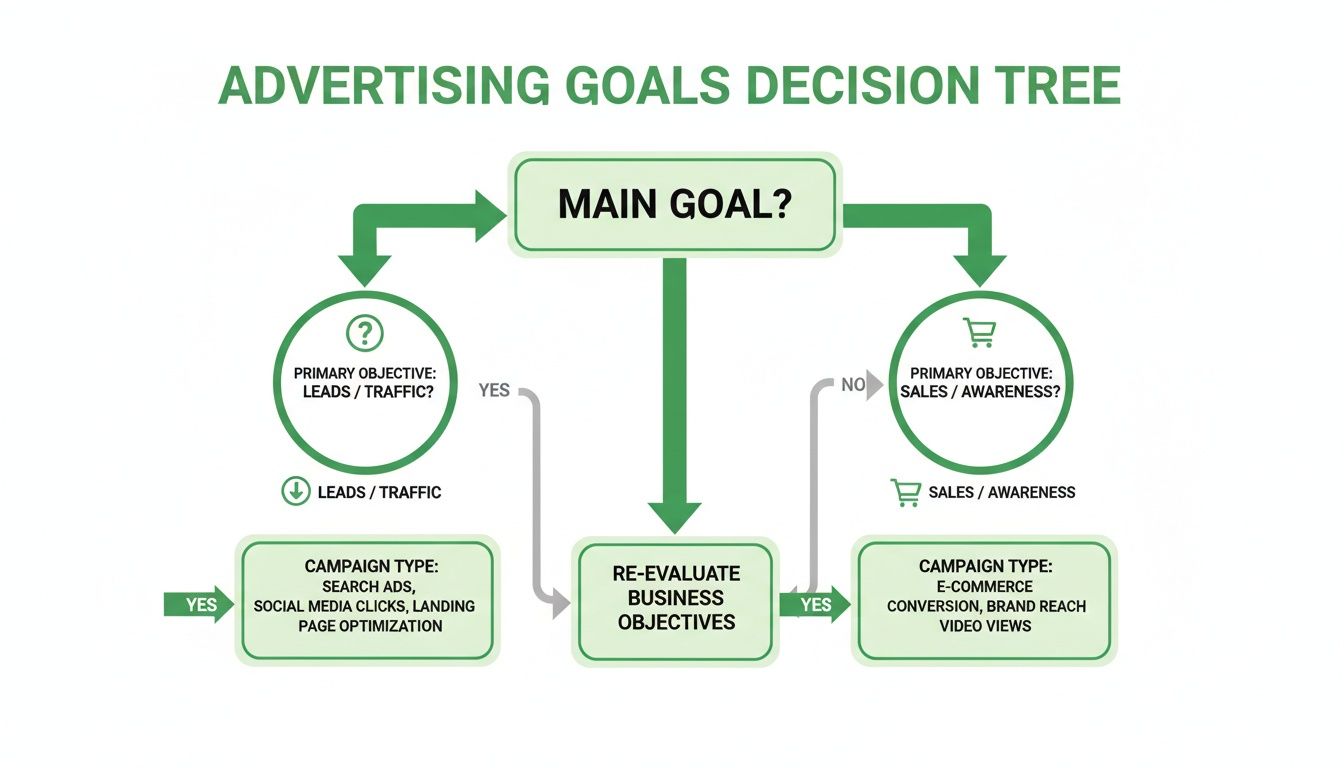
The image lays it out clearly: Facebook's structure is optimized for capturing leads and sending traffic off-platform, while Instagram's highly visual, product-focused environment is perfect for building brand awareness and closing sales right inside the app.
A Hybrid Strategy: The Best of Both Worlds
For most businesses, the real answer isn’t picking one platform and ignoring the other. It's about using them together. A smart hybrid approach lets you play to each platform's unique strengths for a much bigger impact.
Think about it: an e-commerce brand could use Instagram's beautiful Reels to create brand desire, then retarget people who engaged with those Reels over on Facebook, hitting them with an ad that links directly to the product page. For a more detailed breakdown, you can dive deeper into the Facebook vs Instagram: Which Is Better For Business debate to fine-tune your own dual-platform strategy. This lets you connect with audiences at every single stage of their journey.
So, after weighing Instagram against Facebook, you've decided Instagram is where you need to win. It makes sense. The platform is a visual powerhouse with a seriously engaged user base, perfect for many brands. But let's be honest: building a following from zero can feel like pushing a boulder uphill. You can create amazing content day in and day out, but sometimes, even the best strategy needs a little push to get rolling.
This is where a dedicated growth service can become a game-changer. Hitting a wall with slow follower growth and disappointing engagement is a common frustration, and it can stall an otherwise promising account. The key is to break through that initial slump so the Instagram algorithm starts noticing you and showing your content to more people. An effective growth service does just that—it connects your brand with a real, targeted audience that actually cares about what you're doing.
It's About Real Community, Not Just Numbers
The goal here isn't to rack up a bunch of bot followers or accounts that will never interact with you. That's just a vanity metric. Real growth means building an authentic community. A service like Gainsty focuses on attracting genuine people who are far more likely to become loyal customers and advocates for your brand. By zeroing in on your ideal audience, we make sure every new follower is a potential lead, not just another number on your profile.
This focus on quality over quantity is what turns a simple follower list into a thriving community. It’s the difference between having an audience and having real influence.
This approach brings a few major advantages that work hand-in-hand with your content strategy:
You Get Your Time Back: Let's face it, manually finding and engaging with potential followers is a grind. Automating the outreach frees you up to focus on what really matters: creating killer content that will keep your new audience hooked.
You'll Get More Love from the Algorithm: When Instagram sees a steady stream of new, engaged followers flocking to your account, it takes that as a signal that your content is worth showing to more people. This can boost your visibility on the Explore page and in user feeds, creating a snowball effect for your organic reach.
You'll Build Social Proof, Faster: A growing, engaged following is powerful social proof. It sends a clear message to potential customers that your brand is credible and trustworthy, which can have a huge impact on their decision to buy from you or even just hit that "Follow" button.
A Partner in Smart, Sustainable Growth
Think of a growth service less like a shortcut and more like an accelerator. Your content is still the engine of your Instagram strategy, but a service like Gainsty is the fuel that helps you get up to speed much more efficiently. We handle the heavy lifting of audience outreach so you can build the momentum and social proof you need to stand out. It’s a partnership that lets you focus on what you do best—running your business and connecting with your customers—while we make sure your Instagram brand is growing consistently and authentically.
Frequently Asked Questions
When you're deep in the weeds of social media strategy, a few key questions about Instagram and Facebook always seem to pop up. Let's tackle some of the most common ones to help you sharpen your focus and spend your marketing dollars wisely.
Which Platform is Better for B2B?
This is a classic. While you can definitely make Instagram work for B2B by showing off your company culture or creating cool behind-the-scenes content, Facebook is generally the more powerful B2B tool.
It’s just built for it. You have professional networking features, targeted advertising that can zero in on job titles and industries, and the incredible community-building power of Facebook Groups. If you need to get in front of specific business decision-makers, Facebook has the edge.
How Can I Manage Both Without Burning Out?
Running both platforms feels like a ton of work, but it doesn't have to be. The secret is to repurpose your content, not just mindlessly repost it.
Think of it this way: a deep-dive customer case study you post on Facebook can be broken down into bite-sized pieces for Instagram. Pull out a powerful quote for a graphic, turn key results into a quick Reel, or share a photo of the happy client in a Story. Plan your core marketing themes in a content calendar, then adapt the delivery for each platform's unique vibe.
Key Insight: The smartest dual-platform strategy uses Instagram for top-of-funnel brand awareness and visual storytelling, while Facebook nurtures leads and fosters deep community engagement. They’re two different tools for two different jobs, working in tandem.
How Do I Measure Success and ROI on Each?
Measuring success isn't one-size-fits-all; what matters on Instagram is different from what matters on Facebook.
On Instagram, you’re looking at brand-building metrics. Pay close attention to your engagement rate, follower growth, and Story views. These tell you if you're capturing attention and building an audience. For e-commerce brands, ROI can be directly tied to sales from shoppable posts.
Facebook, on the other hand, is often more about direct response. Here, you should be laser-focused on metrics like click-through rate (CTR), conversion rate, and lead generation. The ROI is clearer—you can often track the cost per lead or cost per acquisition directly from your ad campaigns.
Understanding these differences from the get-go helps you set the right goals and truly see the distinct value each platform delivers.
Ready to stop spinning your wheels on Instagram? Gainsty can help you connect with a real, targeted audience, accelerating your organic growth and building a genuine community. You focus on creating great content; we'll handle the visibility. Learn more at https://www.gainsty.com.
.png&w=1920&q=75&dpl=dpl_34ZXCf12K5qjjdZjPn9snwDRADrB)



.png&w=750&q=75&dpl=dpl_34ZXCf12K5qjjdZjPn9snwDRADrB)