Beyond a Simple Definition
To really get what a content creator does, we have to look past the simple act of posting online. At their heart, they are community architects. They build loyal followings around shared interests, whether that's gourmet cooking on YouTube, financial advice on TikTok, or the latest fashion trends on Instagram.
This isn't just about art; it's about being a multifaceted professional who manages an entire brand. Their days are a constant cycle of brainstorming ideas, planning content calendars, and talking directly with their audience to make everyone feel like they belong. The work doesn't stop when they hit "publish."
The Four Hats Every Content Creator Wears
A successful creator is constantly juggling several key functions, often all at once. If you were to break down their daily grind, you'd find they're wearing four primary hats that show just how much creative, business, and community-building skill it takes to make it.
Here’s a look at the different roles they play.
The Four Hats Every Content Creator Wears
The Producer focuses on the full creation process — from planning and filming videos to editing podcasts or writing blog posts. They bring the creative vision to life.
The Marketer ensures that content reaches the right audience. This includes optimizing for search (SEO), posting on social media, and sending out newsletters to boost visibility.
The Community Builder strengthens relationships with followers by replying to comments and DMs, hosting live Q&As, and managing online communities.
The Entrepreneur turns content into a business, negotiating brand partnerships, selling products or merchandise, and managing paid memberships or subscriptions.
Each role is critical, and the best creators move between them seamlessly throughout the day.
The most effective creators see themselves as entrepreneurs first. They build systems, understand their audience's needs, and create value that goes beyond a single viral video or post.
That entrepreneurial mindset is what separates the pros from the amateurs. It also means they understand the power of their audience and often encourage followers to share their own creativity. You can learn more about how this works in our quick guide to user-generated content—it's a powerful tool in any creator's kit.
Understanding the Global Creator Economy
The term “creator economy” gets thrown around a lot, but what is it really? Think of it as a massive, worldwide shift in how we create and consume media. It's not just a fad; it's a powerful economic engine that's completely changing how we find entertainment, learn new things, and even decide what to buy.
At its heart, this new economy is about individuals building dedicated audiences and making a living from their passions. Creators are essentially small businesses, building direct relationships with followers who trust their unique voice and expertise, bypassing the traditional media gatekeepers.
The sheer scale of this movement is mind-blowing. By 2025, there will be an estimated 207 million content creators globally. The market itself was valued at an incredible $212 billion in 2024, and it's not slowing down—projections show it could smash the $1 trillion mark by the early 2030s.
The Modern Creator Role
So, what does a creator actually do? This infographic nails it by breaking the role down into three core functions: producer, marketer, and entrepreneur.

As you can see, being a successful creator isn't just about having a great idea. It demands a mix of creative skill, smart promotion, and solid business sense. This is exactly why being a creator is now seen as a legitimate, full-fledged career in a booming global market.
At its core, the creator economy empowers individuals to turn their unique perspectives into sustainable livelihoods. It’s a fundamental change from being a consumer of media to becoming a producer of it.
Making it in this world means knowing which tools and platforms to use. For anyone serious about building a business, comparing different creator platforms is a crucial first step to finding the right fit for your content and how you plan to make money. Getting this right is key to thriving in such a fast-paced environment.
The Real Skills Behind Successful Content Creation
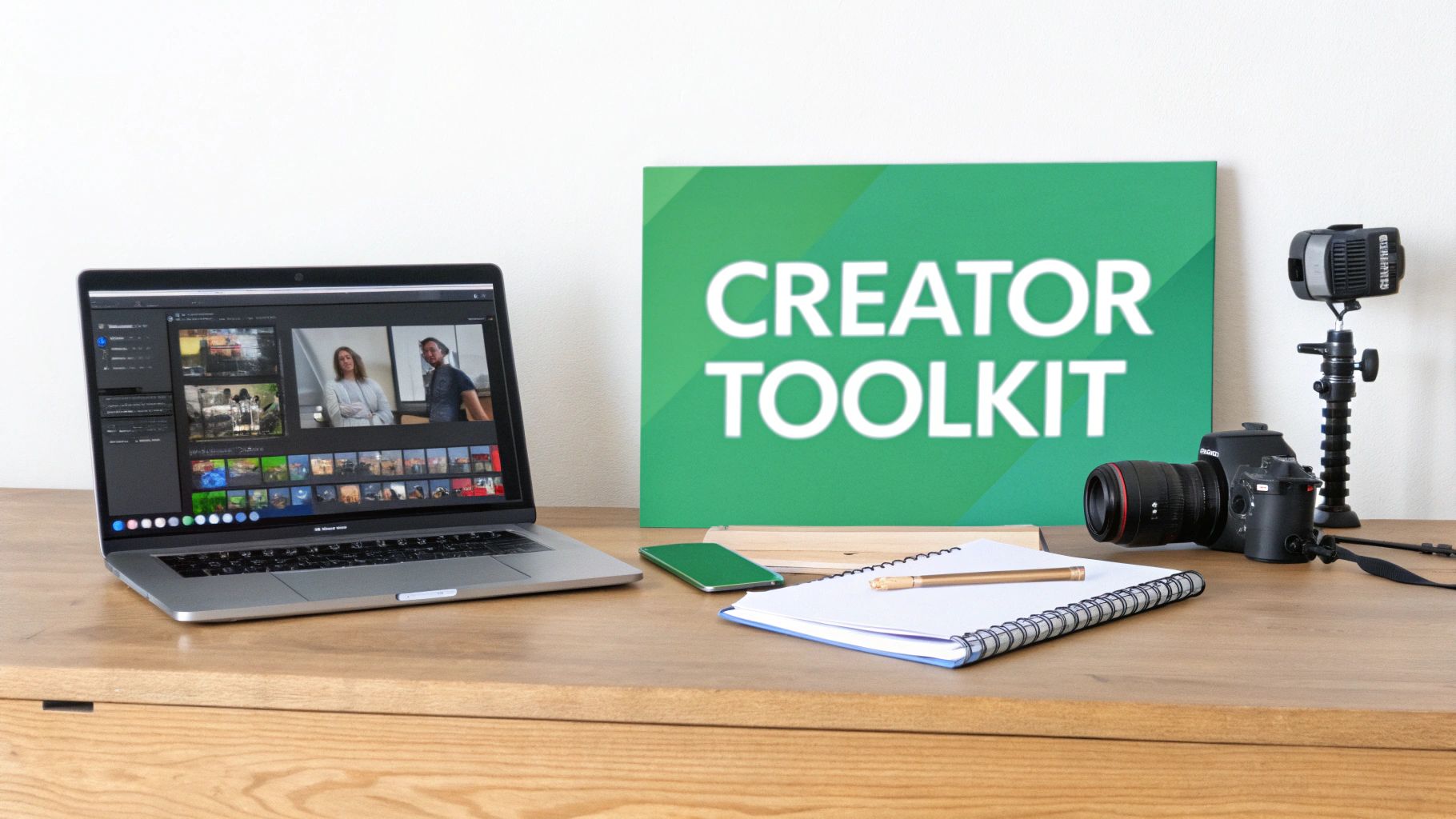
It takes more than a killer idea or a magnetic personality to make it as a content creator. The people who truly succeed have a surprisingly diverse toolkit, one that mixes raw creativity with some pretty sharp business sense. It really boils down to three core pillars that support a lasting career.
First and foremost is creative proficiency. This is the art of it all—telling stories that stick, whether through a captivating video, a genuinely helpful article, or an image that stops the scroll. It's about having a deep gut feeling for what your audience wants and delivering high-quality, interesting stuff so consistently that they can't help but come back.
Then you have the technical ability. This is the nuts and bolts of the job. Think video editing, sound mixing, graphic design, and even getting your head around the basics of SEO. Mastering these tools is what bridges the gap between a great idea in your head and a polished piece of content the world can see.
The Business Side of Creating
Finally, and this is the one most people miss, you need solid entrepreneurial skills. This is what separates the hobbyists from the pros. It's the ability to look at your content as more than just art—it's a business. This means developing a whole different set of muscles that drive growth and, ultimately, make it profitable.
Strategic Planning: This means having a real plan. You need to set clear goals, know exactly who you're talking to, and stick to a consistent posting schedule. A streamlined content creation workflow is your best friend for staying organized and not burning out.
Audience Analytics: You have to be willing to dive into the data. Creators need to understand which posts are hitting the mark, when their audience is online, and how to tweak their strategy to get the best possible engagement.
Monetization and Negotiation: This is where the money is. It could mean landing brand deals and knowing how to negotiate a contract, or even developing your own products and managing a subscription model.
A great idea gets you started, but business skills keep you going. The ability to market your work, manage finances, and build strategic partnerships is what turns a creative hobby into a thriving enterprise.
How Creators Are Building Careers Worldwide
The creator economy isn't just a trend happening in one corner of the world—it’s a global movement that's completely changing what it means to build a career. What works for a content creator in North America might not fly in Asia, simply because every market has its own cultural quirks, favorite platforms, and unique ways of doing business.
This diversity is exactly what’s fueling the industry’s massive growth. Success isn't about being in a specific city anymore. Instead, it’s about creators getting really smart about their local audiences, whether that means producing high-gloss vlogs for a U.S. audience or jumping on the live-stream e-commerce wave that’s huge across Asia.
A Look at Regional Growth
The numbers don't lie. We're looking at a global industry that's not just growing, but exploding, with some fascinating regional differences. North America might hold the top spot for now in market size, with revenues projected to leap from $34.12 billion in 2025 to an incredible $277.41 billion by 2032.
But keep your eye on the Asia-Pacific region. It's the fastest-growing market, set to climb from $26.16 billion in 2025 to $75.28 billion by 2032. You can dig into more of these fascinating creator economy statistics on inbeat. agency.
So, what does this tell us about what a content creator is and where the opportunities are?
Established Markets: North America is a beast. The advertising and brand partnership systems are well-oiled machines, meaning there's massive potential for making money.
Emerging Opportunities: Asia-Pacific is where the next big wave is building. It's a mobile-first world over there, with audiences eager to engage with new social commerce trends.
The big takeaway here is that a creator's potential is no longer fenced in by geography. By tuning into regional trends, you can build a career that clicks with a local crowd or even captivates a global one.
Ultimately, this worldwide view proves that becoming a successful content creator is a real, viable career path. Exciting opportunities are popping up everywhere, and every market is adding its own unique flavor to this ever-changing profession.
How Content Creators Actually Make a Living

The real question on everyone's mind is, how does this all turn into a career? Turning your creative spark into a reliable paycheck is the name of the game, and it’s a lot more complex than just cashing a check from YouTube.
The truth is, the most successful creators are masters of diversification. They don't put all their eggs in one basket. Instead, they build a financial safety net by weaving together several different income streams. This way, if one revenue source takes a hit—say, ad rates drop for a month—their entire business doesn't come crashing down.
Comparing Popular Monetization Strategies
So, what are these income streams? They usually fall into a few key categories: working with brands, recommending products, selling their own stuff, or getting direct support from their audience.
Let's dig into the most common ways creators earn money. The best strategy for you really depends on where you are in your journey and the kind of community you've built.
Ad Revenue: This model pays you a share of the advertising income generated by your videos or blog posts. It works best for creators who have large audiences and consistent traffic. However, it takes a massive following to earn significant income, and payouts can fluctuate.
Brand Sponsorships: Companies pay you to feature their products or services in your content. It’s ideal for creators with highly engaged, niche audiences. The main challenge is finding authentic partnerships that align with your values without compromising your voice.
Affiliate Marketing: You earn a commission whenever someone buys a product using your unique referral link. This works well for creators who genuinely use and recommend products. The downside is that your income depends heavily on how well your audience converts.
Direct Support: Platforms like Patreon, Ko-fi, or YouTube Memberships let your followers pay you directly. It’s most effective for creators with a loyal community, but it requires consistently providing exclusive, high-value content to keep supporters engaged.
Selling Products: You can create and sell your own merchandise, digital downloads, or online courses. This strategy suits creators with a strong personal brand, though it demands upfront investment, time, and effort for production and fulfillment.
Each of these paths offers its own rewards and hurdles.
Brand sponsorships, for example, are a fantastic way to earn a living once you’ve built a strong connection with your followers. If you're curious about diving into that world, our guide on how to get brand deals on Instagram is the perfect place to start.
Another powerful route is packaging your expertise into a digital product. Many creators find huge success by building online courses on a dedicated course creation platform, which helps handle everything from a technical standpoint.
The Unfiltered Reality of a Creator Career

Behind the polished videos and perfectly curated feeds, there's a much grittier reality. The life of a content creator isn’t really about overnight fame; it’s a path that demands entrepreneurial drive, serious resilience, and sharp business instincts.
For most people, this career doesn’t start with a viral bang. It begins as a side hustle, something you pour your energy into after your day job is done. This slow-burn approach is far more common than you might think, as building a stable income from content takes an incredible amount of dedication and patience.
The Financial Landscape
Let’s be honest about the money. The income distribution for creators reveals a challenging truth: making a full-time living is the exception, not the rule. It’s a fiercely competitive space where only a small percentage reach the top earning brackets.
Consider this: only about 4% of creators earn more than $100,000 annually. This number really puts things into perspective and helps explain why around 60% of creators keep their full-time jobs. That said, a dedicated 20% have successfully turned their passion into their own full-time business. If you want to dive deeper, you can find more creator income statistics on Spiralytics.com.
Success as a content creator is not a lottery ticket. It’s the result of treating your passion like a startup—investing time, analyzing data, and consistently showing up even when growth feels slow.
Ultimately, building a sustainable career requires a major mindset shift. You're not just a creator; you're the CEO of your own brand. This means you're handling everything from production schedules and marketing to financial planning. The creators who truly make it are the ones who embrace this dual role, blending their creative passion with smart, strategic execution to build something that lasts.
Got Questions About Content Creation? We've Got Answers.
Jumping into content creation can feel like learning a new language, and it's natural to have a ton of questions. Let's break down some of the most common ones that pop up for people just starting.
Creator vs. Influencer: What’s the Real Difference?
It’s easy to get these two mixed up. Think of it this way: a content creator is obsessed with the craft. They’re the photographers, videographers, writers, and podcasters focused on producing high-quality, valuable stuff. Their success hinges on the actual material they put out into the world.
An influencer, on the other hand, trades on their ability to sway their audience’s opinions and buying habits. Their primary asset is their connection and credibility with their followers. While almost all great influencers are also content creators (you need something to build an audience around, after all), the reverse isn't always true. A creator's main goal is to make great content; influence is often a byproduct.
How Do I Actually Start a Career in This?
First things first: pick a niche you genuinely love and could talk about for hours. This isn't just about what's popular; it's about what you can stick with for the long haul. Then, choose one primary platform and commit to mastering it. Are you a natural on camera? Head to YouTube. Love telling stories with pictures? Instagram is your playground.
Once you've got your home base, the game plan is simple: create consistently and engage with your community. Reply to comments, answer DMs, and build real connections. The goal at the beginning isn't to hit a million followers overnight; it's to build a small, loyal group of people who trust you and can't wait to see what you post next.
The biggest mistake I see new creators make is spreading themselves too thin. Get really good at one platform, build a dedicated following there, and then think about expanding.
How Long Until I Can Actually Make a Living From This?
There’s no set timeline, and anyone who tells you otherwise is selling something. For the vast majority of creators, it takes several years of dedicated, consistent work to reach a point where content creation can be a full-time job.
Success rarely comes from one place. The creators who build lasting careers don't just rely on ad revenue. They get smart and diversify, building multiple income streams from things like brand sponsorships, affiliate marketing, selling their own digital products, or offering coaching and services.
Ready to stop guessing and start growing? Gainsty combines smart AI with expert-led strategies to help you attract real, engaged Instagram followers who actually care about your content. Start building a genuine community today and see what authentic growth looks like. Learn more about how we do it at https://www.gainsty.com.

.png&w=1920&q=75&dpl=dpl_2si4hWs7xtpQVmrY6d8xhJ1wLJZL)







.png&w=750&q=75&dpl=dpl_2si4hWs7xtpQVmrY6d8xhJ1wLJZL)