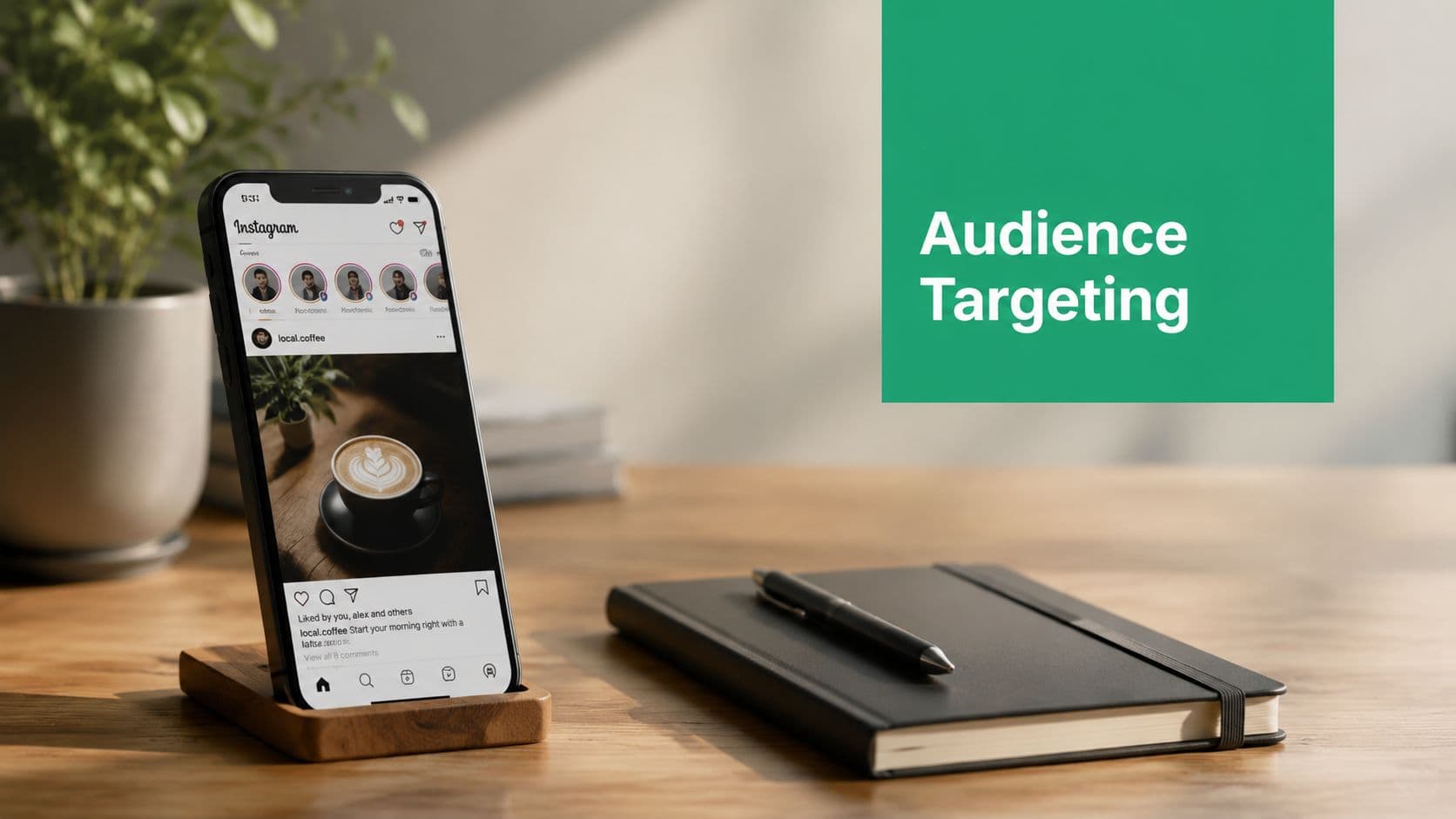
Why Your Content Isn't Getting Engagement
Low engagement usually has a delivery problem before it has a creativity problem.
If you run a skincare brand and your post reaches people who mostly follow comedy pages, your content can be excellent and still flop. If you're a fitness coach posting beginner workouts but Instagram is showing your content to advanced lifters, you'll get weak signals back. The platform sees low interest and shows it to fewer people.
Good content still fails when the audience is wrong
Think of Instagram like a crowded room. If you walk in and shout one message to everyone, many will ignore you. Not because they dislike you, but because what you said isn't for them.
Audience targeting fixes that by helping you speak to the part of the room already leaning in.
Practical rule: If people aren't engaging, don't only ask, “Is this post good?” Also ask, “Is this post for the specific people most likely to care?”
That's the difference between broad posting and strategic posting. One hopes the algorithm figures it out. The other gives the algorithm clear signals.
Why so many businesses guess instead of targeting
A lot of small brands rely on vague audience definitions like:
Too broad: “Women who like wellness”
Too generic: “Small business owners”
Too shallow: “People aged 18 to 34”
Those labels aren't useless, but they're incomplete. They don't tell you what the person wants, what problem they're trying to solve, what style of content they save, or what finally makes them click follow.
That gap shows up in the data. According to the Untitled.ai overview of audience targeting, citing Harvard Business School research, 82% of marketers say high-quality customer data is essential to succeed in their roles, yet only 42% effectively collect and utilize it. That's a practical problem, not just a marketing theory problem.
For an Instagram creator, it means this: many people know targeting matters, but they still post based on instinct alone.
What changes when you target better
When your targeting improves, your content gets sharper fast:
Your hooks improve: You stop writing for “everyone” and start writing for a specific type of follower.
Your visuals improve: You choose examples, language, and offers that match the audience's stage of awareness.
Your engagement improves in quality: Fewer random views. More saves, replies, profile visits, and qualified followers.
That's why understanding what audience targeting is isn't just useful for paid ads. It's one of the most practical organic growth skills on Instagram.
The Four Pillars of Audience Targeting
Audience targeting works best when you stop thinking in one dimension.
Many marketers start with demographics because they're easy. Age, gender, location. That's useful, but it's like fishing with a giant net. You'll catch something, but a lot of it won't be what you wanted. Strong targeting works more like a spear. You aim with intent.

Demographics and geography
Start with the basic frame.
Demographics tell you who the audience is. That includes things like age range, gender, life stage, and sometimes income or profession. For Instagram, this might look like women in their late 20s building healthier routines, or real estate agents trying to generate local leads.
Geography tells you where they are. This matters more than many creators think. A local bakery needs nearby followers. A fashion creator may need country-specific references, shipping language, or seasonal timing. A coach serving U.K. clients shouldn't write every post with U.S. pricing assumptions and examples.
These two pillars help narrow the field, but they don't explain motivation.
Psychographics and behaviors
Here, targeting gets much stronger.
Psychographics cover values, identity, interests, aspirations, and beliefs. On Instagram, this means the difference between targeting “women aged 25 to 40” and targeting “women who care about sustainable fashion, minimalist wardrobes, and conscious spending.”
That distinction matters. The Tinuiti explanation of audience targeting in e-commerce notes that including psychographic variables like interests and values can increase campaign conversion rates by up to 2.5x compared to demographics-only segmentation. In plain language, knowing what your audience cares about often matters more than only knowing who they are.
Behavioral targeting looks at what people do. Do they watch your Reels to the end? Save carousel posts? Click product tags? Visit your profile more than once? Follow competitor accounts? Behavior tells you intent in a way that self-description often doesn't.
People don't just reveal themselves by what they say they like. They reveal themselves by what they repeatedly do.
A simple Instagram example
Here's what these four pillars look like layered together:
Demographics: Instead of defining your audience broadly as women aged 25 to 40, be more specific. For example, first-time moms in their 30s gives you a clearer picture of who you’re creating content for and makes it easier to tailor your messaging.
Psychographics: Rather than saying your audience likes wellness, identify what motivates them. For example, they want simple, low-stress routines that fit into a busy lifestyle, which provides much more actionable insight for content creation.
Behavioral: Don’t stop at saying they follow health pages. A stronger description is that they regularly save quick meal prep Reels and watch short workout videos, revealing the type of content they actively consume and engage with.
Geography: Instead of targeting everyone who is English-speaking, narrow your focus to a more relevant audience, such as urban U.S. audiences with access to meal delivery services, so your recommendations, examples, and offers better match their circumstances.
That's the jump from a vague audience to a usable audience.
If you've ever asked, “What is audience targeting, really?” this is the practical answer. It's building a clearer picture of the person behind the screen, then creating content and offers that fit that person.
Key Targeting Strategies You Can Use Today
Once you know who you're trying to reach, the next question is how to reach them. On Instagram, three targeting strategies show up again and again because they solve different problems: finding new people, re-engaging warm people, and placing your content in the right environments.
Lookalike targeting for finding more of the right people
Lookalike targeting starts with a simple idea. If a certain type of person already follows you, saves your content, or buys from you, there are probably more people like them.
For a meal prep creator, your best current followers might be busy professionals who want healthy lunches that don't take much time. A lookalike approach means you build future content, collaborations, and ad audiences around people with similar traits and interests.
This works best when your current audience quality is strong. If your followers are random, a lookalike strategy just copies randomness.
Retargeting for people who already showed interest
Retargeting is for warm audiences. These are people who have already interacted with you in some way but didn't take the next step.
On Instagram, that can include people who:
Watched your Reels: Especially if they watched multiple pieces of content on the same topic
Saved your posts: A strong sign of relevance and future intent
Visited your profile: They were curious, even if they didn't follow
Messaged you or replied to Stories: They're already in a conversation with your brand
A fitness coach, for example, might create one Reel about beginner glute training, then follow it with Stories, a carousel, or an offer aimed at people who engaged with that topic. You're not starting from cold traffic. You're continuing a thread.
Contextual targeting for showing up in the right places
Contextual targeting is often overlooked by Instagram users, even though it's one of the easiest strategies to apply manually. Instead of targeting the person directly first, you target the environment they spend time in.
That means:
Relevant hashtags
Competitor comment sections
Niche meme pages - Location tags
Creator communities tied to your topic
If you sell home organization products, context matters. You want to appear around decluttering content, small apartment creators, and cleaning routines. The audience is already in the right mindset there.
This fits a larger shift in digital targeting. According to the ASU Thunderbird discussion of reaching the right audience, citing Quantcast's 2024 report, psychographic targeting was the most important factor in driving engagement at 71% in digital video campaigns. That supports what many Instagram strategists already see in practice: interests, identity, and mindset often outperform surface-level audience labels.
A helpful way to think about it is this comparison:
Lookalike strategy: This approach is best for expanding your reach to new people who resemble your existing audience. On Instagram, that means creating content that appeals to people with interests and behaviors similar to your best followers, increasing the likelihood of attracting more qualified users.
Retargeting strategy: This strategy focuses on people who have already interacted with your account but haven’t taken the next step. For example, you could re-engage users who saved one of your Reels, watched your videos, or visited your profile by publishing follow-up content or running targeted campaigns that encourage them to follow, inquire, or make a purchase.
Contextual strategy: This method helps you reach people while they’re already engaging with content related to your niche. On Instagram, this could involve participating in conversations around relevant hashtags, engaging with posts from creators in your industry, or creating content around topic-specific trends so your account appears in places where your target audience is already active.
If you want more ideas for how brands drive growth with customer segmentation, that resource is useful because it shows how segmenting different groups leads to more relevant messaging.
The practical lesson is simple. Don't rely on one targeting method. Use one strategy to discover new people, another to re-engage interested people, and a third to place your content where the right attention already exists.
How to Build Your Instagram Targeting Strategy
You don't need a large ad budget or a data team to build a useful targeting system. You can do a lot with Instagram Insights, competitor research, consistent testing, and a simple worksheet.
Start with this framework.

Start with one ideal follower, not a vague crowd
Open a doc and write out one person you want more of.
Not “everyone is interested in beauty.” Write someone specific. Maybe it's a woman in her late 20s who wants a simple skincare routine, gets overwhelmed by complicated product stacks, follows dermatologists and clean beauty creators, and usually buys after seeing repeated proof.
Your worksheet can include:
Who they are: life stage, role, basic profile
What they want: a result they care about
What frustrates them: confusion, time, cost, inconsistency
What they follow: creators, brands, topics, hashtags
What makes them act: tutorials, reviews, before-and-afters, social proof
That's the foundation of practical audience targeting.
Use Instagram Insights to find what's already working
Before you chase a new audience, study your current one.
Check which posts brought the most saves, shares, profile visits, and follows. Notice patterns. Maybe your audience responds better to plain-spoken tutorials than polished lifestyle photos. Maybe short Reels on one topic outperform everything else. Maybe one content pillar consistently brings in the right kind of follower.
For a deeper walkthrough, this guide on how to find your target audience on Instagram is useful because it helps translate audience research into actual account decisions.
Field note: The best audience clues usually come from your top-performing posts, not from your assumptions about who should care.
Research where your audience gathers
After Insights, move outward.
Look at competitor accounts, but don't just copy their content. Study their audience. Read comments. See what language people use. Notice which posts create conversation instead of passive likes. Check tagged locations and niche hashtags. Search the topic from your follower's point of view.
A local pilates studio might explore local wellness hashtags, nearby café tags, trainer accounts, and city-specific creator pages. A finance educator might spend time on entrepreneur pages, freelancer accounts, and startup communities.
Context becomes powerful. SparkToro's discussion of audience research notes that combining audience data with contextual intelligence can drive up to 119% greater reach through a hybrid approach, rather than relying on segmentation alone, as described in their data-driven audience research article. For Instagram users, that means your audience definition gets stronger when you pair “who they are” with “where they pay attention.”
Here's a simple checklist:
List ten competitor or adjacent accounts: Include direct competitors and creators your audience trusts.
Track recurring themes: What problems come up in captions and comments?
Collect language patterns: Save phrases your audience naturally uses.
Identify content context: Which hashtags, locations, and formats appear repeatedly?
Test for buyers and for amplifiers
Many Instagram strategies get too narrow. They target only the buyer and ignore the surrounding audience that shapes visibility.
Sometimes the person who shares your post isn't the one who buys. It's a creator, advocate, analyst, or niche commentator who influences the buyer. That matters on Instagram because organic reach often depends on social proof loops. The right share, mention, save, or Story repost can expose your content to a much more relevant network.
So test content for two groups:
Buyers: People likely to purchase, book, or inquire
Amplifiers: People likely to share, comment, repost, or validate your content publicly
If you serve both groups, your account grows faster, and your offers land with more trust.
Refine based on response, not hope
Once your audience hypotheses are in place, create content for one segment at a time. Don't mix five different audiences into one week of posting and expect clear signals.
Pick one angle, one pain point, one style of hook, and one audience slice. Then review the response. If the right people save, comment, follow, and message, keep going. If not, adjust the audience or the message.
That's what audience targeting is in real life. Not a static profile. A repeated cycle of observe, test, tighten, and repeat.
Supercharge Growth with Gainstys AI Targeting
Manual targeting works. It also takes time.
You have to study comments, review Insights, monitor competitor accounts, test different hooks, and keep adjusting as audience behavior shifts. For a solo creator or small business owner, that's often the bottleneck. You know targeting matters, but you don't have hours every week to do it well.
Where AI helps in practice
AI tools prove highly effective. They can process larger patterns faster than a human working inside Instagram manually. That includes spotting audience overlap, identifying likely high-intent users, and learning from engagement behavior over time.
The broader logic is established in performance marketing. The Team Simmer handbook on audiences and targeting explains that advanced audience targeting uses real-time measurement tools, split testing, and continuous refinement. When targeting algorithms are optimized using real user data, they lead to higher ROAS and stronger engagement.
For Instagram growth, the practical takeaway is straightforward. Better targeting comes from better feedback loops.
How does that apply to an Instagram workflow?
A tool like Gainsty can make advanced targeting more accessible by letting users define audience parameters such as competitor accounts, interests, demographics, and location, then using AI to identify people who are more likely to care about the content. Instead of random outreach or broad posting, the process becomes more selective and behavior-informed.

That matters most for non-marketers. You don't need to become a media buyer to benefit from targeting logic. You need a system that helps you narrow in on relevant people and keep refining as results come in.
If you want a broader sense of how brands apply AI across campaigns, Testimonial's AI marketing examples can give you a useful set of real-world patterns to study.
What to look for in any AI targeting tool
Not every automation tool helps you build a better audience. Some just create noise. When evaluating options, look for these traits:
Real audience filtering: It should narrow by meaningful attributes like interests, geography, and account relevance
Behavior-informed learning: It should improve based on actual engagement signals
Safe execution: It should support organic growth practices rather than fake followers or risky bot behavior
Clear analytics: You should be able to see whether the targeting is improving audience quality
If you're exploring how AI fits into a broader content system, this guide on how to use AI for social media marketing gives additional context.
The big idea isn't that AI replaces strategy. It removes some of the repetitive labor so you can spend more time making content that fits the specific audience you want.
Measure Success and Avoid Common Mistakes
Audience targeting only works if you measure whether the audience you reached was the right one.
On Instagram, that means looking beyond vanity metrics. A post can get attention from the wrong people and still do very little for your business. You want signals that show relevance, not just visibility.

The metrics that reveal targeting quality
Focus on a small set of indicators:
Engagement quality: Saves, shares, thoughtful comments, and Story replies usually tell you more than likes
Reach and profile activity: Reach matters when it leads to profile visits and follows from the right audience
Follower growth quality: Are new followers aligned with your niche, location, and offer?
Content retention clues: Story completion and Reel watch behavior help you see whether your message matched intent
If you want a better system for reading those signals, this article on how to measure social media success can help you build a cleaner scorecard. For teams thinking more broadly about attribution and performance analysis, this resource on AI for marketing measurement is also worth reviewing.
If the wrong people are reaching your content, more reach won't fix the problem. It usually makes the mismatch louder.
The mistakes that quietly damage targeting
The most common mistakes are usually simple.
Too broad: This happens when you try to create content for everyone in your niche instead of a specific audience. A better approach is to focus each content series on one clearly defined audience segment, making your messaging more relevant and compelling.
Too narrow too early: This occurs when you target an extremely specific audience before you’ve validated that your content resonates. A better approach is to start with a focused but broad enough audience, then refine your targeting based on real engagement and performance data.
Ignoring Insights: Posting repeatedly without reviewing who engaged with your content can cause you to miss valuable audience patterns. A better approach is to review your top-performing posts and Instagram Insights regularly to understand which topics, formats, and audiences generate the best results.
Set and forget: Assuming your audience never changes can cause your content strategy to become outdated. A better approach is to refresh your audience research periodically, using analytics, feedback, and changing audience behavior to keep your content relevant.
A narrow audience can be powerful, but only if the content is strong enough to perform with that group. As noted in the earlier discussion of niche targeting research, very small segments demand much stronger performance to succeed. That's why going smaller isn't automatically smarter.
A workable rhythm
Keep your process simple:
Review your top content each week
Identify who responded best
Adjust one targeting variable at a time
Repeat the winning angle until performance fades
That rhythm keeps your strategy grounded in evidence instead of guesswork.
If you want help turning audience targeting into a repeatable Instagram growth system, Gainsty offers an AI-powered approach for identifying relevant audiences and supporting organic account growth around real user interest rather than broad, unfocused outreach.

.png&w=1920&q=75&dpl=dpl_34ZXCf12K5qjjdZjPn9snwDRADrB)




.png&w=750&q=75&dpl=dpl_34ZXCf12K5qjjdZjPn9snwDRADrB)