Building a Brand That Sponsors Want to Partner With
Think of your Instagram account as your digital storefront. Before you even think about outreach, that storefront needs to be polished, professional, and instantly tell a brand manager what you're all about. They are constantly on the lookout for creators who are not only aligned with their values but are also reliable and easy to work with.
Your mission is to make their job as easy as possible. Every part of your profile, from your bio down to your contact info, should be fine-tuned to attract the right partnerships. A brand manager should be able to land on your page and immediately understand who you are, what you do, and why you’d be a perfect fit for their next campaign
Define Your Niche and Content Pillars
The fastest way to get noticed is to stop trying to appeal to everyone. Sponsors want experts, not generalists. Having a well-defined niche—like "sustainable fashion for young professionals" or "budget-friendly vegan recipes"—makes you a magnet for brands in that specific space.
Once you’ve nailed your niche, establish your content pillars. These are the 3-5 core topics you’ll create content around, time and time again. For instance, a travel creator’s pillars might look something like this:
Solo travel safety tips
Affordable luxury hotel reviews
Cultural immersion experiences
These pillars keep your content focused, which in turn helps build a loyal community. It’s also a clear signal to brands about the exact topics you have authority on. If you're looking for more guidance on this, our post on creating a personal brand is a great place to start.
Optimize Your Profile for Professionalism
A brand manager’s first impression of you is your profile. It needs to look the part and make it dead simple for them to get in touch.
Your Instagram bio is your 150-character elevator pitch. It has one job: to clearly state who you are, what you do, and who you help. Ditch the vague descriptions and be direct.
For example, "Lover of life and travel" is nice, but it tells a brand nothing. "NYC Travel Guide | Helping you explore the city on a budget," on the other hand, immediately communicates your niche, location, and the value you offer your audience.
Just as crucial is a professional way to get in touch. Switch your account to a Business or Creator profile so you can add a contact button. This allows brands to email you directly—a much more professional approach than asking them to slide into your DMs.
To make this crystal clear, here’s a quick checklist to audit your own profile.
Your Sponsorship-Ready Profile Checklist
Use this list to make sure your profile is primed for brand outreach.
A high-quality profile photo matters because it creates the first impression for sponsors. A clear, professional headshot or a clean brand logo immediately builds trust and credibility, while blurry or cluttered images can make brands hesitate.
A clear and concise bio acts as your elevator pitch to sponsors. It should quickly explain who you are, what niche you’re in, and the value you provide. Using relevant keywords (for example, “LA Food Blogger | Vegan Recipes”) helps brands instantly understand if you’re a good fit.
Having a professional contact method is essential for brand partnerships. Sponsors prefer a formal way to reach you, as DMs can be missed or feel unprofessional. Switching to a Business or Creator account and adding an email or contact button makes collaboration easier.
Curated Story Highlights function as your portfolio. They allow sponsors to quickly review your past work, brand values, and audience interaction. Highlights like “Past Work,” “About Me,” or “Testimonials” help showcase your credibility at a glance.
Aesthetic and feed consistency signals strong personal branding. A cohesive visual style—such as consistent colors, filters, or editing—shows that you take your content seriously and helps brands picture how their product would fit into your feed.
Running through these five points is a simple but powerful way to ensure you're putting your best foot forward when a brand manager lands on your page.
Cultivate an Engaged and Authentic Community
Let's be real: follower count isn't the whole story. What sponsors truly care about is authentic engagement. They are paying for your ability to influence your community, and that influence is built on a foundation of trust.
This is exactly why so many brands are shifting their focus to smaller creators. A nano-influencer with 1,000 to 10,000 followers can often command between $100 to $500 per sponsored post. Why? Because their communities are tight-knit and their recommendations carry weight. Recent data even shows a huge spike in yearly earnings for creators with under 10,000 followers as brands chase an authentic connection over passive reach.
Put your energy into building real relationships. Reply to comments and DMs, ask your audience questions, and create content that gets people talking. A small but highly engaged audience is infinitely more valuable to a brand than a massive, silent one. That engaged community is your most powerful asset when you're trying to land sponsorships.
Creating a Media Kit That Closes Deals
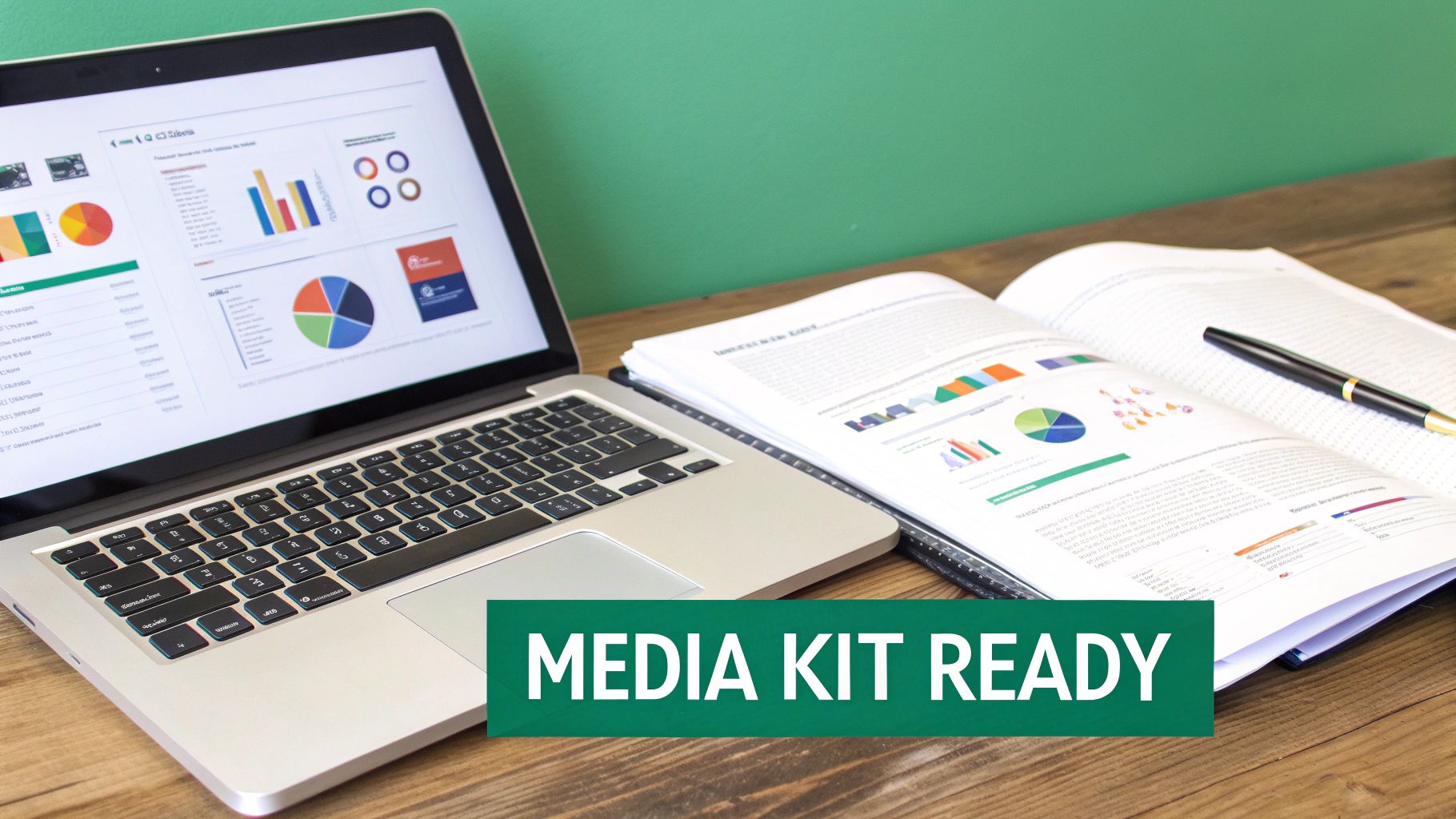
If your Instagram profile is your digital storefront, then your media kit is the polished business proposal you slide across the table. It’s the single document that elevates you from just another creator to a serious, professional partner.
A great media kit anticipates a brand's questions and answers them before they even have to ask. Think of it as your highlight reel and resume rolled into one—a tool designed to prove your value, showcase your influence, and make a sponsor's decision to work with you a no-brainer.
What to Include in Your Media Kit
A powerful media kit isn't just a jumble of numbers; it's a compelling story that shows a brand why your audience is exactly who they need to reach. It should be clean, visually on-brand, and packed with the right information.
Each section builds on the last to create a complete picture of the value you offer. Here are the absolute must-haves:
A Professional Introduction: A quick "About Me" that sums up who you are, what your niche is, and the mission behind your content.
Key Performance Metrics: This is the hard data—follower count, average reach and impressions, and your all-important engagement rate.
Audience Demographics: Who are you talking to? Brands need to see the breakdown of your audience's age, gender, and top locations (cities and countries).
Past Collaborations & Testimonials: Show off your track record. Include logos of brands you've worked with (even gifted campaigns count!) and maybe a screenshot of a high-performing post or a glowing comment. Social proof is huge.
Services & Rates: Be upfront about what you offer. Clearly define your packages (e.g., a single Reel, a post + story combo) and list your starting rates.
This structure gives a brand manager everything they need to quickly see if you're a good fit. To get inspired, it's always a good idea to check out different influencer media kit examples to see how others in your space are presenting themselves.
Showcasing Your Audience and Performance
The data section is where you really make your case. This is your chance to back up your claims with cold, hard numbers. Don’t just list them; frame them to highlight why they matter to a potential sponsor.
You don't need fancy tools for this—it’s all right there in your Instagram Insights. Head to your Professional Dashboard to pull your reach, impressions, and engagement stats. For audience info, tap on "Total Followers" to find detailed breakdowns of age, gender, and location.
A brand isn't just buying a post; they're investing in the trust you've built with your audience and your ability to get them to take action. This is why your engagement rate often carries more weight than your follower count.
To calculate your engagement rate, just add up the likes and comments from your last 10-15 posts, divide that by your total follower count, and then divide again by the number of posts you used. An engagement rate of 3% or higher is a strong benchmark in the industry and a number you should feature prominently.
Pricing Your Services with Confidence
Let’s be honest, the "Services and Rates" page can feel intimidating. But getting this right is how you turn brand interest into actual income. The key is to be clear and direct, not vague.
Create tiered packages that feel like a simple menu for brands to choose from. For example:
The Post Package: One static in-feed post + 3 accompanying Stories.
The Reel Deal: One dedicated Reel (30-60 seconds) showcasing the product in action.
The All-In Campaign: A full-funnel package with one Reel, one in-feed post, and a 5-frame Story series with a link sticker.
When setting your prices, factor in everything: your follower count, that killer engagement rate, the time it takes to shoot and edit, and any usage rights the brand wants. As a starting point, many micro-influencers price their work in the $100-$500 per post range, but this scales up quickly depending on your niche and performance.
Presenting your rates with confidence sends a powerful signal. It shows brands you know your worth and are a professional, making them far more likely to invest in you and get you closer to landing those Instagram sponsorships.
Finding and Vetting the Right Brand Partners
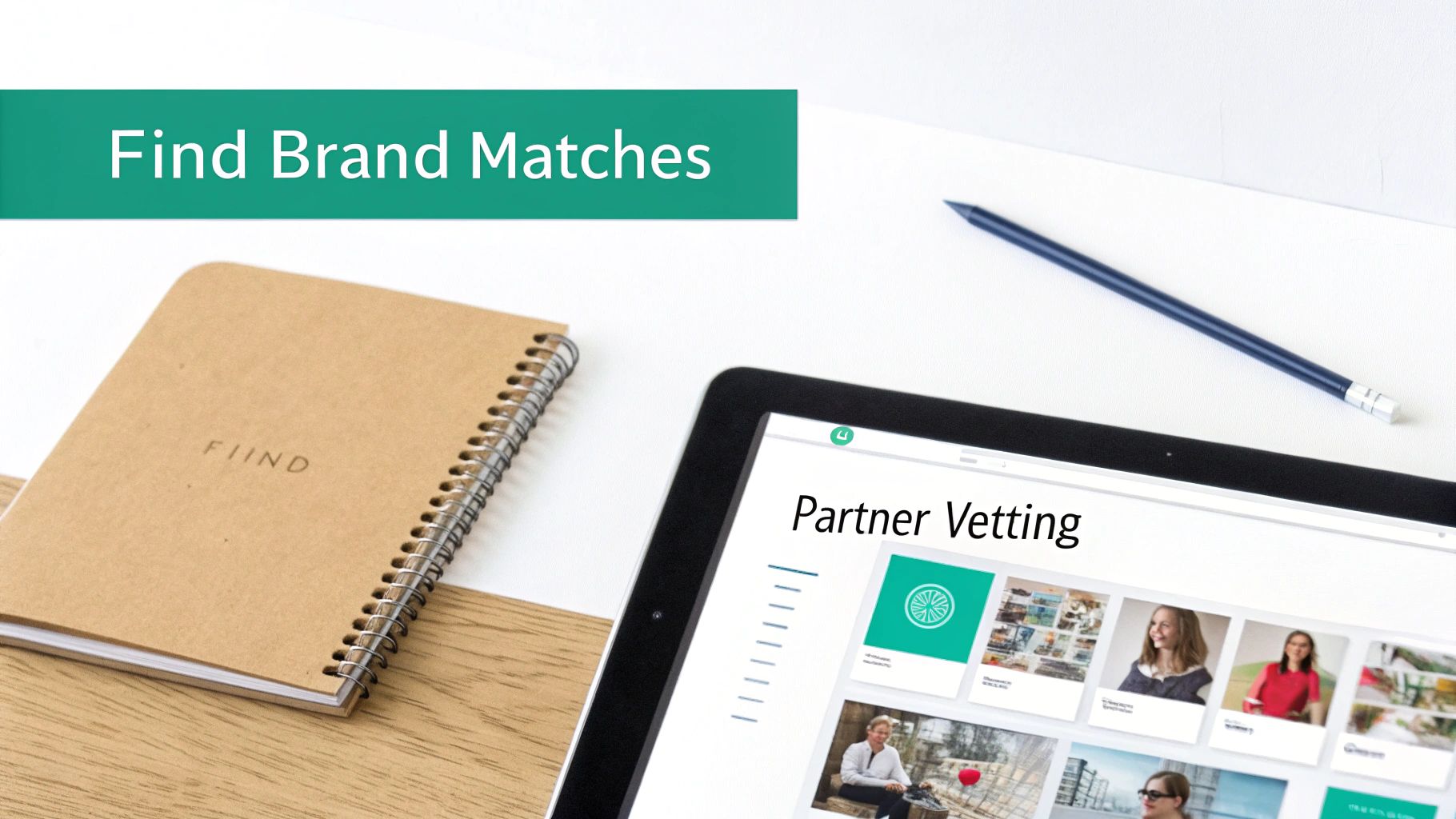
Let's be blunt: blasting a generic pitch to a hundred brands is a one-way ticket to the spam folder. The real secret to landing sponsorships on Instagram is all about smart, strategic targeting. You need to find brands that are a perfect fit for your niche and your audience.
When you do your homework, your outreach immediately stands out. It's no longer a random shot in the dark; it's a genuine business proposal. Brands can tell when you've put in the effort, and they're far more likely to see you as a serious partner worth investing in.
Where to Discover Potential Sponsors
So, where do you find these perfect-fit brands? Forget endless, aimless scrolling. You need a system for building a curated list of companies that are already investing in creators just like you.
Your best clues are often hiding in plain sight. Start by looking at what other successful creators in your space are doing.
Analyze Your Peers: Who are they working with? Jot down these brand names. If a company has already partnered with a similar creator, they've proven they value your specific audience.
Dig into Hashtags: Don’t just use hashtags, search them. Tags like #ad, #sponsored, and even super-niche ones like #veganskincarepartner can be goldmines for finding active sponsors.
Look for the "Paid Partnership" Label: This is Instagram's official flag for a sponsored post. It's a direct signal that a brand is actively running influencer campaigns, making them a warm lead.
Think of this as your intelligence-gathering phase. The more you understand the sponsorship landscape in your niche, the better you can position yourself when it’s time to reach out. To really nail this, it helps to create an ideal customer profile of the brand you want to work with.
Vetting Brands to Protect Your Credibility
Finding a brand is one thing; vetting them is everything. This is the step that too many creators skip, and it's a huge mistake. One bad partnership can seriously damage the trust you’ve spent months or years building with your community.
Your followers trust your taste and your recommendations. If you suddenly promote a low-quality product or a company with sketchy values, you risk losing that credibility in an instant. Protecting that trust is non-negotiable.
A partnership is a two-way street. You're not just looking for a brand that will pay you; you're looking for a brand that your audience will thank you for introducing them to.
Before a brand ever makes it onto your final outreach list, you need to put it through a quick reality check. This bit of due diligence will save you from major headaches and ensure your collaborations are a win for you, the brand, and your audience.
Your Brand Vetting Checklist
Run every potential partner through these questions before you even think about hitting "send."
Do their values actually align with mine? Check out their mission statement, their social media tone, and their company culture. If you're all about sustainability, partnering with a fast-fashion brand is going to create a pretty jarring disconnect for your audience.
Would I genuinely use (and pay for) this product? The best sponsored content comes from a place of real belief. If you wouldn't spend your own money on it, it's going to be incredibly tough to convince your followers to spend theirs.
What do their past creator campaigns look like? Go to their profile and look at their tagged photos. Are their past collaborations creative and authentic? Or are they all repetitive, cookie-cutter posts? This gives you a massive clue about the creative freedom they'll give you.
What's their general reputation? Do a quick search for product reviews or recent news articles. A brand with terrible customer service or a history of bad press can reflect poorly on you by association.
This methodical approach turns your outreach from spam into a strategic, high-value conversation. It's the key to making sure every pitch you send has the absolute best chance of landing.
Crafting a Pitch That Actually Gets a Response
You've got a polished media kit and a smart list of brands you'd love to work with. Now for the hard part: reaching out. This is where you have to shift from planning to action, and honestly, the quality of your pitch is what separates a deleted email from a real conversation.
Let's be blunt: a generic, copy-paste message is a one-way ticket to the trash folder. Brand managers are swimming in these pitches. To land an Instagram sponsorship, your message needs to scream, "I'm not just another creator asking for free stuff; I'm a strategic partner who gets what you're doing."
The Anatomy of a Winning Pitch
A great pitch is both an art and a science. It needs to feel personal but stay professional, be short and sweet but still pack a punch. You've got to hook them in the first few seconds and make your value crystal clear.
Think of your pitch less as an "ask" and more as a business proposal. You're offering a solution—direct access to a loyal, targeted audience that needs what they're selling. Every single word should reinforce that idea.
Here’s what every solid pitch needs:
An un-ignorable subject line: Your first and most important hurdle.
A personal opening: Show you've done your homework right away.
Your quick value prop: Who you are and why they should care.
A specific, creative idea: This is your secret weapon.
A clear call-to-action: Tell them what to do next.
Each of these pieces works together, pulling the brand manager from "who is this?" to "okay, I'm interested."
Nailing the Email Subject Line
Your subject line is the gatekeeper. If it’s boring or looks like spam, your perfectly written email is dead on arrival. The goal is to be professional and intriguing, not clickbaity.
Steer clear of generic stuff like "Collaboration Inquiry" or "Sponsorship Opportunity." Yawn. You want to create a connection or hint at the brilliant idea you've got inside.
Try one of these angles:
The direct approach: "Partnership Idea for [Brand Name] from [@YourInstagramHandle]."
Highlighting the perfect match: "Connecting [Brand Name] with my [Your Audience Niche] Community."
When you have a specific idea: "Idea for your upcoming [Product/Campaign Name] launch."
Think about it. A subject line like "Idea for your upcoming Summer Glow collection" is way more compelling to a beauty brand than a generic request. It’s timely, specific, and shows you're paying attention.
Writing the Body of Your Pitch
Once they click open, the clock is ticking. You have a few precious seconds to make your case. Keep your paragraphs short, scannable, and get right to the point.
Kick things off with a genuine, specific compliment. Instead of the tired "I love your brand," try something like, "I've been so impressed with your commitment to sustainable packaging—that’s a value my audience is incredibly passionate about." Boom. You've just shown you understand their brand beyond the surface level.
Next, give a quick intro to yourself and your audience. But don't just spit out numbers; tell a micro-story. For example, "I'm a travel creator with a community of 25,000 adventure-seekers who look to me for recommendations on eco-friendly travel gear." This immediately frames your value in their language.
The absolute core of a standout pitch is the specific, creative idea you bring to the table. It instantly changes the dynamic from you asking for money to you offering a valuable solution.
Don't just say, "I'd love to collaborate." Propose a real, tangible concept. For instance, "I'm picturing a Reel that shows how your hiking boots perform on the rugged trails of the Pacific Northwest, a location my audience constantly asks me about." See the difference? You've proven you’ve actually thought about how their product would fit naturally into your world.
Finally, wrap it up with a clear and confident call-to-action (CTA). No weak sauce like, "Let me know what you think." Guide them. Take charge. A strong CTA sounds like:
"My media kit is attached for your review. Are you available for a quick chat next week to dive into this a bit more?"
"If this idea resonates with you, I'd be happy to send over my media kit and full rate card."
This small but powerful shift in language puts you in the driver's seat and makes it incredibly easy for them to say "yes." Remember, the goal is to start a conversation, and a well-researched, personalized pitch is your single best tool to make that happen.
Navigating Negotiations and Securing the Contract
That feeling when a brand actually replies to your pitch? It’s a huge win. But don't pop the champagne just yet—the real work is about to begin. Now you have to shift from creator to negotiator and turn that initial interest into a solid, paid partnership.
This is where you need to be confident and professional. It’s about talking money, backing up your value with hard data, and understanding the nuts and bolts of a contract. Getting this part right sets the stage for a great collaboration where everyone feels respected.
Justifying Your Rates and Talking Money
Let’s be honest, talking about money can feel a little awkward. The secret is to approach it with confidence, using the data from your media kit as your foundation. Your rate isn't just a number you pulled out of thin air; it’s a direct reflection of the audience you’ve built and the value you deliver.
When a brand asks for your rates, don't just reply with a price. Give them the "why." You could say something like, "For the proposed concept, my rate is X. This is based on my average Reel reach of 20,000 and a highly engaged audience that drives a 4.5% engagement rate." See how that connects your price directly to performance? It’s not just what you charge, it’s what they get for it.
As you start landing deals, it helps to understand all the ways you can earn. Knowing more about how to make money as a content creator will give you the confidence and context to set fair prices for your sponsorships.
Common Sponsorship Deliverables and Starting Rates
To give you a clearer picture, here’s a look at what you might charge for different types of content. These are just starting points—your unique niche, engagement, and content quality will play a big role in your final pricing.
For a single static Instagram post, nano-influencers with 1k–10k followers typically charge between $100 and $250, micro-influencers with 10k–50k followers usually charge $250 to $750, while mid-tier influencers with 50k–500k followers can charge anywhere from $750 up to $3,500 depending on reach and engagement.
For an Instagram Reel lasting 30–60 seconds, nano-influencers generally charge $150 to $400, micro-influencers charge around $400 to $1,500, and mid-tier influencers command higher rates ranging from $1,500 to $5,000 due to stronger visibility and video performance.
For a Story sequence of 3–5 frames, nano-influencers usually charge $50 to $150, micro-influencers range between $150 and $500, and mid-tier influencers charge approximately $500 to $2,000, depending on swipe-ups, links, or CTAs.
For a post and story combo, nano-influencers typically price this package between $125 and $350, micro-influencers between $350 and $1,000, and mid-tier influencers between $1,000 and $4,500, making it a popular bundled option for brands seeking extended exposure.
Remember, this list is a guide. If a campaign requires extensive travel, video editing, or has a tight turnaround, you should absolutely adjust your rates upward to reflect that extra work.
Negotiating Key Terms Beyond the Price Tag
A sponsorship deal is about so much more than just the payment. The fine print contains details that can seriously affect your workload and creative freedom. Knowing what to look for and what to negotiate shows a brand you’re a serious professional.
Here are the big three you should always discuss:
Content Usage Rights: This is huge. Where can the brand use your content? Is it just for their Instagram feed, or can they turn it into a paid Facebook ad? Broader usage rights demand higher pay. A typical license might be for 30-90 days on their organic social channels. If they want to use it in paid advertising forever, that could easily double your rate.
Exclusivity: An exclusivity clause means you can't work with competitors for a specific time. It's a fair ask from the brand, but it also limits your ability to earn from other companies. Make sure you're compensated for that. A 30-day exclusivity period with a direct competitor is pretty standard, but if they want six months or a ban on an entire industry, that requires a significant bump in pay.
Payment Schedule: Do not agree to get paid 90 days after the campaign is over. The professional standard is 50% upfront before you start any work, and the final 50% upon completion. This protects you from chasing invoices for work you've already delivered.
Getting these terms right starts with a solid pitch that grabs their attention in the first place.
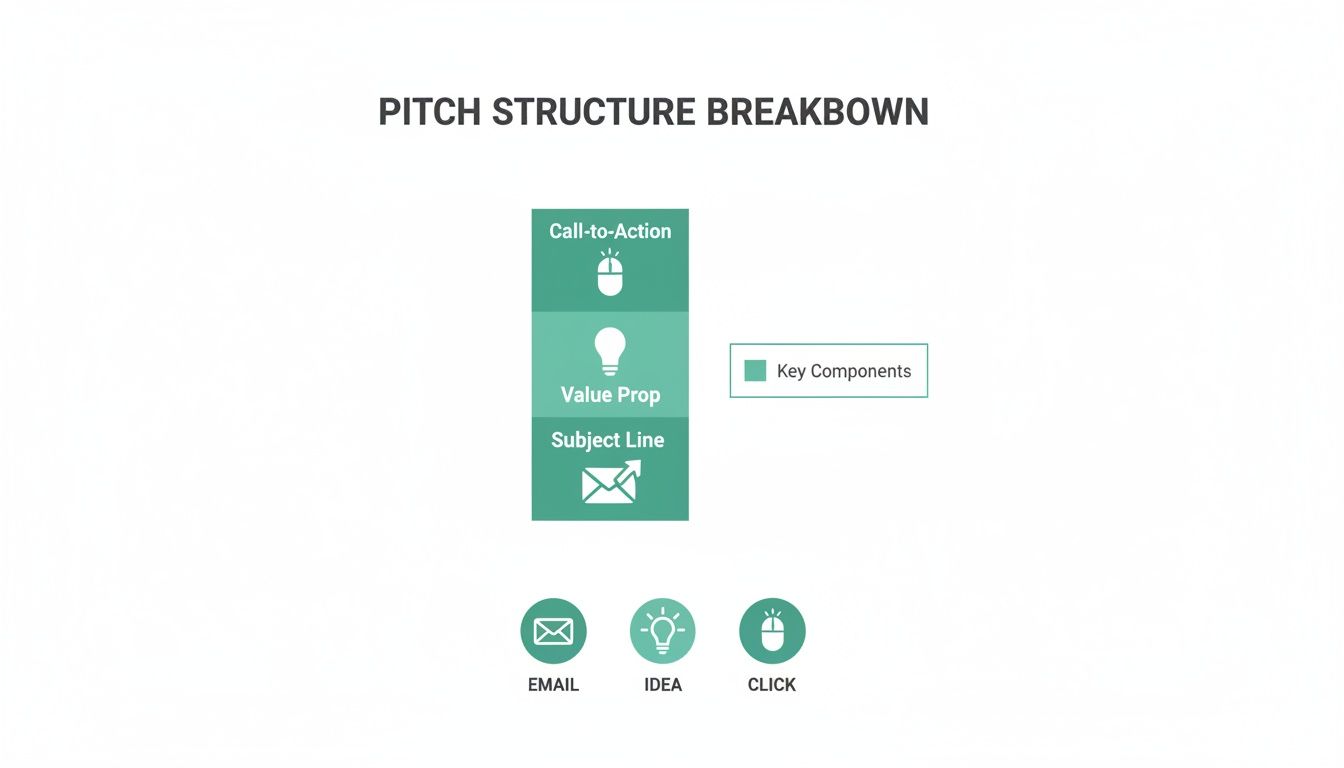
As you can see, a strong pitch with a clear value proposition is what opens the door to having these important contract conversations.
Understanding the Sponsorship Contract
I'm going to say this loud and clear: Never, ever start work without a signed contract. A DM agreement or a friendly email chain isn't enough. The contract is your safety net. It’s a legally binding document that lays out every single detail, so there are no surprises for you or the brand.
Read every word of that contract. Seriously. Pay extra attention to the scope of work (what, exactly, are you delivering?), deadlines, content approval process, and cancellation terms. If you see something you don't understand, ask. If you want to change something, propose an edit. This is all a normal part of the process.
Pro Tip: Watch out for red flags like vague descriptions of deliverables, fuzzy payment dates, or overly broad usage rights that basically give them your content forever for a one-time fee.
A clear, fair contract is what turns a good conversation into a great professional partnership. And if you need more help structuring your pricing, our guide to building an influencer rate-card template is the perfect place to start.
Got Questions About Instagram Sponsorships? We've Got Answers.
Jumping into the world of brand sponsorships can feel like a maze. There's a ton of conflicting advice out there, and it’s tough to know what really works. Let's clear the air and tackle the questions I hear most often from creators who are ready to start landing paid deals.
How Many Followers Do I Actually Need?
This is the big one, isn't it? The good news is, you probably need fewer followers than you think. The days of brands only caring about massive accounts are long gone. Today, the smart money is on genuine connection, which is why brands are actively seeking out nano-influencers (1,000-10,000 followers) and micro-influencers (10,000-50,000 followers).
What really moves the needle isn't your follower count; it's your engagement rate. Think about it from the brand's perspective: an audience of 3,000 die-hard sustainable pet product lovers is infinitely more valuable to a dog toy brand than 100,000 random followers who never like or comment.
So, what's the real magic number? Once you hit that 1,000-follower milestone and can show a healthy engagement rate (aim for 3% or higher), you're in a great position to start pitching. Focus on community first, and the opportunities will follow.
What Should I Say in My First Message to a Brand?
Your first outreach—whether it’s a DM or an email—has to cut through the noise. Brand managers see hundreds of these, so you need to be brief, personal, and immediately show your value. Forget generic templates.
Here’s a simple framework that works:
Lead with a real compliment. Don't just say "I love your brand." Mention a specific campaign you admired, a product you actually use and can prove it, or something about their company mission that resonates with you. It shows you've done your homework.
Introduce yourself quickly. Who are you and what do you talk about? Throw in a killer stat, like your engagement rate or a key audience demographic that perfectly matches their ideal customer.
Pitch a simple, creative idea. This is the game-changer. Instead of asking for something, offer something. "I have a great idea for a Reel showcasing how your travel backpack holds up on a weekend hike."
Give them a clear next step. End with a confident call-to-action. Something like, "If this sounds interesting, I'd be happy to send over my media kit." If you're emailing, just go ahead and attach it.
This approach flips the script. You’re not just another creator asking for free stuff; you’re a professional partner with good ideas.
How Do I Figure Out What to Charge?
Pricing feels like the wild west, but there are some solid starting points. A very common rule of thumb is to use $100 per 10,000 followers as a baseline for a single in-feed photo post.
But that’s just the beginning of the conversation. You absolutely must adjust your rates based on a few key things:
Your Engagement Rate: If your audience is super active, your rate should be higher. Period.
The Work Involved: A simple photo post is one thing. A multi-frame Story with custom edits or a polished Reel is a whole different level of effort and should be priced accordingly.
Usage Rights: This is a big one. If a brand wants to use your content on their website or in their own paid advertising, that’s a separate charge. You're basically licensing your content, and that has significant value.
Do a little digging to see what other creators in your niche with similar stats are charging. Don't sell yourself short!
Is It Okay to Accept Free Products Instead of Cash?
When you're just getting started, a "gifted" collaboration can be a smart play. It allows you to build a portfolio, get some experience under your belt, and collect data you can use to pitch paying clients down the road.
But let's be real: free products don't pay your rent. The goal should always be to transition to paid partnerships. Once you've completed a gifted collab or two, use the content and the results as proof of your value in your next pitch.
My advice? Only accept gifted-only campaigns from brands you are absolutely obsessed with and would buy from anyway. And always, always get a clear agreement in writing about exactly what you’ll deliver in exchange for the product. Your time and creativity are worth something.
Ready to build an audience that sponsors can't ignore? Gainsty combines smart AI with real Instagram experts to help you attract organic followers who actually care about your content. Stop chasing numbers and start building a real community. Check out Gainsty and start growing today.