1. Behavioral: Describe Your Experience Managing Organic Growth Campaigns
This behavioral interview question is designed to cut through the noise of vanity metrics and paid shortcuts. It directly assesses a candidate's ability to cultivate authentic, sustainable audience growth, a skill set that is increasingly valuable in an era of skeptical consumers and algorithm-driven platforms. For any brand focused on long-term loyalty, a manager who excels at organic growth is a strategic asset, not just a content publisher.
This question tests a candidate's understanding of the entire organic flywheel, from in-depth audience research and compelling content creation to strategic community engagement and iterative performance analysis. It separates those who can simply schedule posts from those who can build a thriving, engaged community from the ground up.

Why This Question Is Crucial
Organic growth is the bedrock of a healthy social media brand. It demonstrates a brand’s ability to connect with its audience on a genuine level, fostering trust and advocacy that paid campaigns can’t buy. A candidate who can articulate a successful organic strategy proves they possess the creativity, patience, and analytical skills needed to build lasting brand equity. They understand how to earn attention, not just rent it.
What to Look for in an Answer
A strong response will move beyond generic statements like “I created great content.” It should be a data-backed narrative showcasing a clear, repeatable process.
Look for STAR Method Responses:
Situation: “At my previous role with a B2B SaaS startup, our initial Instagram presence was stagnant with low engagement.”
Task: “My goal was to increase our follower count by 50% and double the engagement rate within six months without any ad spend.”
Action: “I implemented a three-pronged strategy: first, I conducted audience research to create content pillars around industry pain points. Second, I launched a user-generated content campaign using a branded hashtag. Third, I dedicated an hour daily to targeted outreach, engaging with potential followers in our niche.”
Result: “After six months, we grew followers by 65%, exceeding the goal, and our engagement rate jumped from 1.5% to 5.8%. This also led to a 15% increase in demo requests originating from social media.”
Follow-Up Questions to Dig Deeper
How did you adapt your strategy when an algorithm change impacted your reach?
Which specific content formats drove the most organic engagement, and why?
Can you walk me through a campaign that failed and what you learned from it?
How do you balance growth tactics with maintaining an authentic brand voice?
2. Situational: How Would You Handle a Follower Plateau After Rapid Initial Growth?
This situational interview question probes a candidate's problem-solving skills, analytical depth, and resilience under pressure. Rapid growth is exciting, but a subsequent plateau is an almost inevitable challenge. A great social media manager doesn't panic; they diagnose the issue with data, pivot their strategy, and communicate effectively with stakeholders.
This question reveals whether a candidate is reactive or proactive. It separates those who simply post content from strategic thinkers who can analyze performance, understand algorithmic nuances, and reignite momentum. Their response demonstrates their ability to navigate the natural ebbs and flows of social media performance, which is a critical skill for managing client expectations and delivering long-term value.
Why This Question Is Crucial
Stalled growth can cause alarm for clients and leadership. A manager who can calmly and methodically address a plateau proves their strategic value beyond content creation. This question assesses their diagnostic process: do they jump to random tactics, or do they start with a deep dive into analytics? Their answer showcases their maturity, data literacy, and ability to steer the ship through calm and turbulent waters alike.
What to Look for in an Answer
A strong response will outline a clear, multi-step diagnostic and action plan. It should be rooted in analysis, not assumptions. Avoid candidates who immediately suggest broad, unspecific actions like “post more” or “try new hashtags.”
Look for a Structured Problem-Solving Approach:
Diagnose First: “My initial step would be a deep dive into our analytics. I'd compare the plateau period with the high-growth period, looking at metrics like reach, impressions, engagement rate per post, and follower demographics. I'd also analyze specific content formats to see if performance has dropped on previously successful types, like Reels.”
External Analysis: “Next, I'd conduct a competitive analysis to see if our rivals are trying new tactics or if there's a broader industry trend. I'd also research recent algorithm changes for the specific platform to understand if that's a contributing factor.”
Formulate a Hypothesis: “Based on the data, I might hypothesize that our audience has become fatigued with our current content pillars. Or, perhaps a new competitor has captured their attention.”
Test and Iterate: “From there, I would develop a series of A/B tests. This could involve testing new content formats, adjusting posting times based on updated analytics, experimenting with different caption styles, or targeting a new micro-segment of our audience with personalized content.”
Communicate Proactively: “Crucially, I would communicate my findings and action plan to the client or stakeholders. I would frame it not as a failure, but as a natural phase of growth that requires a strategic pivot, setting realistic expectations for the next phase.”
Follow-Up Questions to Dig Deeper
What specific metrics would you look at first to diagnose the cause of the plateau?
How would you differentiate between an algorithm issue and content fatigue?
Walk me through how you would A/B test a new content hypothesis.
How would you explain this performance dip to a non-technical stakeholder?
3. Technical: Explain Your Proficiency with Instagram Analytics and Insight Tools
This technical question moves beyond content creation and community management to evaluate a candidate’s data literacy. It’s designed to assess their ability to read and interpret performance data, transforming raw numbers into actionable strategic insights. For any business serious about ROI, a manager who is fluent in analytics is non-negotiable, as they are the key to optimizing efforts and proving social media's value.
This question tests a candidate's practical skills with Instagram's native Insights and third-party platforms like Sprout Social or Later. It separates social media users from social media strategists, identifying those who can diagnose performance issues, spot opportunities, and justify their decisions with hard data.

Why This Question Is Crucial
Data-driven decision-making is the cornerstone of effective social media management. A candidate who can confidently navigate analytics demonstrates they can operate strategically, not just intuitively. They can answer critical questions like “What content resonates most?” and “When is our audience most active?” This proficiency ensures that the social media strategy is constantly evolving and improving based on real-world performance, not guesswork.
What to Look for in an Answer
A strong response will go beyond simply listing metrics. It should demonstrate a clear process for using data to inform strategy, showcasing both technical knowledge and analytical thinking.
Look for STAR Method Responses:
Situation: “At my last e-commerce role, we noticed our Reels were getting high views, but our link-in-bio clicks were flat.”
Task: “My goal was to understand the disconnect and leverage analytics to increase traffic from Instagram to our product pages by 20% in one quarter.”
Action: “I dove into Instagram Insights, specifically looking at audience retention on Reels and tap-forward rates on Stories. I found that Reels with clear, on-screen text CTAs in the first three seconds had a 40% higher profile visit rate. I then used this data to create a new content template for all promotional Reels and started tracking sticker taps in Stories more closely.”
Result: “By the end of the quarter, website clicks from Instagram increased by 28%, and we could directly attribute a 12% rise in sales to products featured in our new, data-informed Reels format.”
Follow-Up Questions to Dig Deeper
What's the difference between reach and impressions, and why do both matter?
How do you use data to identify new content pillars or themes?
Can you describe your process for creating and sharing a weekly or monthly performance report?
Which KPIs do you believe are most important for measuring brand awareness versus lead generation?
For a more profound understanding of this topic, learn more about how to use Instagram analytics for business on gainsty.com.
4. Technical: Walk Us Through Your Understanding of Instagram Algorithm and Growth Mechanics
This technical question moves beyond general strategy to evaluate a candidate's deep, platform-specific knowledge. It's a crucial differentiator in an industry where platform mechanics change quarterly. Answering this well proves a candidate isn't just following trends but understands the underlying systems that dictate content visibility and audience reach on one of the world's most competitive platforms.
This question tests a manager's ability to think like an engineer and a marketer simultaneously. It reveals whether they can deconstruct ranking signals like engagement, saves, shares, and watch time, and then translate that understanding into a concrete content strategy. It separates candidates who rely on guesswork from those who make data-informed decisions to maximize organic reach and growth.
Why This Question Is Crucial
Understanding the algorithm is the key to unlocking sustainable, authentic growth on Instagram. A candidate who can articulate these mechanics demonstrates they can create content that the platform wants to promote, rather than constantly fighting against it. This knowledge is essential for efficiently allocating resources, optimizing content for discovery, and building a strategy that is resilient to platform updates. They can explain why a Reel went viral, not just that it did.
What to Look for in an Answer
A top-tier response will be specific, current, and filled with cause-and-effect reasoning. It should showcase how they translate technical knowledge into tangible actions and business outcomes.
Look for STAR Method Responses:
Situation: “At my last company, an e-commerce fashion brand, our reach on feed posts had declined by 40% due to algorithm shifts prioritizing video.”
Task: “My objective was to pivot our content strategy to align with the new algorithm, aiming to recover the lost reach and increase profile visits by 25% in one quarter.”
Action: “I shifted 60% of our content production to Reels, focusing on strong opening hooks to maximize watch time. We also optimized captions to encourage saves and shares, which I identified as higher-value engagement signals than likes. For example, we created 'save this for later' style guides and lookbooks.” To dive deeper, you can learn more about how Instagram's algorithm works and the factors that influence it.
Result: “Within three months, our overall reach increased by 150%, far exceeding the initial goal. More importantly, profile visits from non-followers grew by 45%, leading to a direct 20% lift in website traffic from Instagram.”
Follow-Up Questions to Dig Deeper
How does the Instagram Explore Page algorithm differ from the main feed algorithm?
What role do hashtags play in discoverability in 2024, and how do you research them?
How do you optimize a single piece of content specifically for saves and shares, not just likes?
Can you explain how Instagram defines 'relationship strength' between an account and its followers?
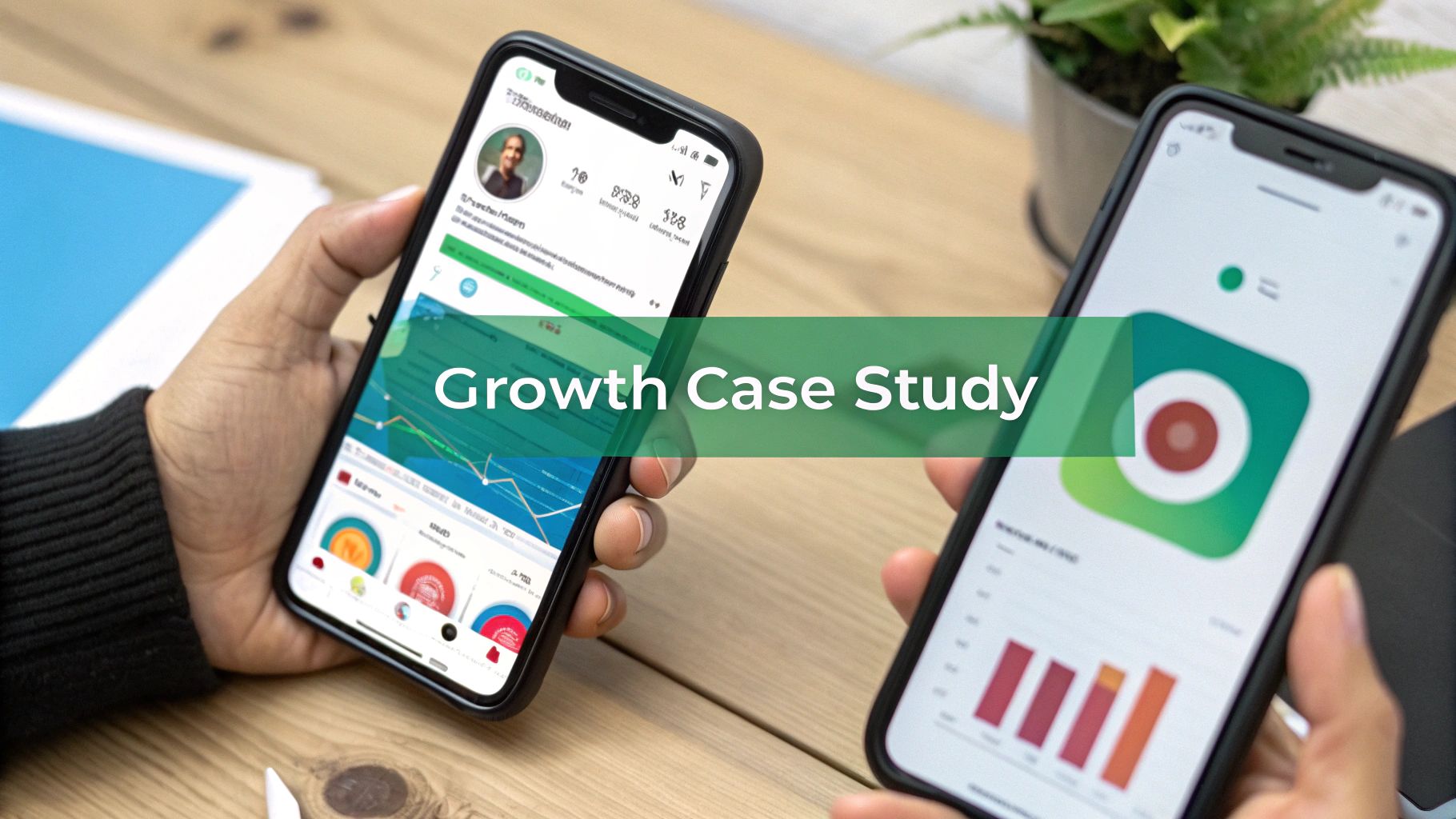
5. Portfolio Review: Present a Case Study Showing Before/After Growth Metrics
This isn't a question, but a practical test that moves beyond hypothetical scenarios into proven results. Asking a candidate to present a case study is the ultimate way to validate their claims and see their strategic thinking in action. It’s a direct request for evidence, demonstrating their comfort with data, transparency, and accountability.
For any brand serious about measurable ROI, this is one of the most revealing parts of the social media manager interview process. It separates candidates who talk a good game from those who deliver tangible, quantifiable growth.
Why This Question Is Crucial
Talk is cheap; data is definitive. A portfolio review with before-and-after metrics shows you precisely what a candidate can achieve. It demonstrates their ability to not only execute a strategy but also to track, analyze, and report on its impact. This exercise reveals their analytical prowess, storytelling skills (how they frame the results), and their understanding of what metrics truly are relevant for business success, not just vanity.
What to Look for in an Answer
A compelling case study is more than just a screenshot of a high follower count. It should be a complete narrative that outlines the problem, the solution, and the measurable impact, demonstrating strategic depth.
Look for a Clear Narrative Structure:
Situation (The “Before”): “The client, a B2B SaaS startup, had 2,000 followers on LinkedIn with a stagnant 0.8% conversion rate from the platform to their website.”
Task (The Goal): “The objective was to grow the account to 15,000 followers and increase the social-to-site conversion rate to over 2% within one year, establishing them as a thought leader.”
Action (The Strategy): “I developed a content strategy focused on three pillars: founder-led video content, in-depth text-based posts analyzing industry trends, and curated carousels from our blog content. I also initiated a targeted outreach plan to engage with key figures in our niche.”
Result (The “After”): “In 12 months, we grew the account to 18,000 followers and, more importantly, increased the conversion rate to 2.3%, directly attributing a significant number of demo sign-ups to the new strategy.”
Follow-Up Questions to Dig Deeper
What was the most immense challenge or setback you faced during this campaign, and how did you pivot?
Can you explain the specific factors you believe were most responsible for this success?
How did you ensure the growth was with a relevant, high-quality audience and not just vanity numbers?
If you had to do it all over again, what would you do differently?
6. Portfolio Review: Show Us Your Content Strategy and Creative Approach for a Specific Niche
This portfolio-based question is less about past performance and more about future potential. It’s a practical test that simulates a core responsibility of the job: developing a bespoke content strategy for a new client or vertical. It moves beyond theory and asks the candidate to demonstrate their strategic thinking, creativity, and niche-specific knowledge in real-time.
This question tests a candidate's research skills, audience empathy, and platform-specific expertise. It reveals whether they can build a content plan from the ground up that resonates with a unique audience, rather than just applying a one-size-fits-all template. For any agency or brand serving diverse markets, this ability is non-negotiable.

Why This Question Is Crucial
Generic social media management doesn't work. A strategy that excels for a real estate agent will fail for a B2B SaaS startup. This question is crucial because it assesses a candidate's adaptability and strategic depth. It shows you if they understand how to translate a niche audience's pain points, desires, and behaviors into a compelling content mix. A strong answer proves they can deliver customized value, not just cookie-cutter content.
What to Look for in an Answer
A top-tier candidate will enthusiastically dive into the chosen niche, structuring their response like a mini-strategy proposal. They won't just list content ideas; they will explain the why behind each one.
Look for a structured, Niche-Specific Framework:
Niche: Fitness Influencer
Audience Psychology: “Their core problems are lack of motivation, confusion about proper form, and misinformation. Our content must be educational, inspiring, and build trust.”
Content Pillars:
Educational: Carousel posts breaking down complex exercises.
Inspirational: Reels showcasing client transformation stories.
Community-Building: Interactive stories with Q&As and polls on workout challenges.
Behind-the-Scenes: Authentic content showing my fitness journey to build relatability.
Platform Strategy: “We'd use Reels for high-reach, inspirational content. Carousels for saved educational value. And stories for daily engagement and building a loyal community. This comprehensive guide can help you develop a content strategy on gainsty.com.”
Differentiation: “While competitors focus on 'before and after' photos, we will lead with educational content on sustainable habits, positioning the brand as a credible long-term partner, not just a quick fix.”
Follow-Up Questions to Dig Deeper
How would you structure a content calendar for this niche for the first 30 days?
Which competitors in this space are doing it well, and what would you do differently?
How would you use community management (comments, DMs) to support this content strategy?
What KPIs would you track to determine if this strategy is successful?
7. Behavioral: Tell Us About a Time You Recovered a Client Account from Low Engagement or Reputation Damage
This question is a stress test. It moves beyond campaign successes to evaluate a candidate's resilience, strategic thinking under pressure, and ability to navigate a crisis. Social media is a volatile environment where algorithm shifts, negative feedback, or a single misstep can cause significant damage. A manager who can steer an account back from the brink is an invaluable asset.
This scenario-based question reveals a candidate's maturity, accountability, and problem-solving process. It distinguishes between a social media manager who simply posts content and one who can protect and rebuild a brand’s digital reputation. It’s a direct inquiry into their ability to handle the inevitable challenges that come with managing a public-facing brand presence.
Why This Question Is Crucial
Every brand will face a challenge on social media, whether it's a sudden drop in engagement or public backlash. A hiring manager needs to know their social media lead won't crumble. This question assesses crucial competencies: crisis communication, data-driven diagnostics, client management during a difficult period, and strategic course correction. The answer demonstrates whether a candidate is reactive and panics or proactive and methodical.
What to Look for in an Answer
A compelling answer will detail a specific, challenging situation with a clear resolution. It should highlight analytical skills, strategic planning, and professional poise. Avoid candidates who blame algorithms or external factors without taking ownership of the solution.
Look for STAR Method Responses:
Situation: “I inherited a client’s Instagram account that had 2 million followers but a 0.1% engagement rate. An audit revealed over 95% of the followers were fake, purchased by a previous agency.”
Task: “My objective was to rebuild an authentic, engaged community and restore the account's health. The client was skeptical, so I needed to prove the value of a smaller, more genuine audience.”
Action: “I presented a recovery plan to the client, getting their buy-in. I then used a third-party tool to systematically remove fake followers over two months, bringing the count down to 50,000. Simultaneously, I launched a new content strategy focused on high-value, niche topics and initiated a community engagement campaign by interacting with 100+ relevant accounts daily.”
Result: “Within four months, we had rebuilt the account to 75,000 authentic followers, but more importantly, the engagement rate soared to a healthy 8%. The client saw a direct correlation with a 20% increase in qualified leads from social media, fully validating the strategy.”
Follow-Up Questions to Dig Deeper
How did you communicate the problem and your recovery plan to the client?
What metrics did you use to define “recovery” and track progress?
What was the most challenging part of this turnaround, and how did you handle it?
How has this experience changed your approach to account audits and strategy development?
8. Situational: A Client Wants To be Guaranteed 10K Followers in 30 Days. How Do You Respond?
This situational interview question is a crucial test of a candidate's integrity, client management skills, and strategic thinking. It moves beyond campaign execution to evaluate their professional ethics and ability to handle pressure. The answer reveals whether they prioritize short-term, unsustainable vanity metrics or focus on building long-term, authentic brand value.
This scenario separates a tactician from a strategist. A junior employee might panic or overpromise, whereas an experienced manager will see this as an opportunity to educate the client and reframe the conversation around meaningful business goals. Their response is a direct reflection of their professional maturity and commitment to ethical practices.
Why This Question Is Crucial
Guaranteed follower counts often involve buying bots or using unethical automation, which can destroy an account's credibility and get it penalized by platforms. A candidate who agrees to this request is a major red flag. This question is designed to see if the candidate can diplomatically say “no” while preserving the client relationship, demonstrating their ability to set realistic expectations and pivot toward strategies that deliver real results.
What to Look for in an Answer
A strong answer will be a masterclass in client education and expectation management. It should demonstrate a clear process for turning an unrealistic request into a strategic, achievable plan.
Look for a Consultative Approach:
Acknowledge and Reframe: “I understand the desire for rapid growth and hitting that 10K milestone. Before we talk numbers, can we discuss the business goal behind the follower count? Are we looking for more leads, increased brand awareness, or a more engaged community?”
Educate on the Risks: “Guaranteed numbers like that in 30 days are typically achieved through methods that can harm your account, like buying followers. These are bot accounts that won't engage or purchase, and they can hurt your reach with real customers eventually.”
Propose a Realistic Alternative: “While 10,000 authentic followers in 30 days is unlikely, I am confident we can implement an aggressive growth strategy. Based on your niche, a realistic goal would be 1,500 to 2,000 new, relevant followers. We can achieve this through a targeted content strategy, consistent engagement, and strategic collaborations.”
Focus on Business Value: “Instead of focusing solely on the follower count, I'd propose we track metrics that tie directly to your goals, such as website clicks, lead magnet downloads, and engagement rate from our target audience.”
Follow-Up Questions to Dig Deeper
How would you explain the dangers of buying followers to a non-technical client?
What factors do you consider when setting a realistic monthly growth projection?
Walk me through a time you had to deliver bad news or reset a client's expectations.
At what point would you decide that a client's expectations are too unrealistic to continue the partnership?
8-Point Social Media Manager Interview Comparison
Behavioral: Describe your experience managing organic growth campaigns
This question evaluates a candidate’s ability to plan and execute long-term organic growth strategies, including audience research, content planning, and community management. It typically requires moderate complexity and ongoing resources, with results measured over months. The outcome is sustainable follower growth, consistent engagement, and long-term brand equity. It’s best used when hiring for organic-first roles or working with clients who want ethical, non-bot growth. Its key advantage is revealing proven methods, KPI transparency, and alignment with platform best practices.
Situational: How would you handle a follower plateau after rapid initial growth?
This scenario tests problem-solving skills and adaptability when growth stalls. It involves diagnostic analysis, testing new content angles, and iterating based on performance data. While resource use is relatively low to moderate, outcomes can vary by niche. When handled well, it leads to renewed steady growth and improved content performance. It’s ideal for assessing stabilization skills and client retention ability, highlighting data-driven decision-making and communication skills.
Technical: Explain your proficiency with Instagram analytics and insight tools
This question focuses on technical capability in interpreting performance data and translating it into actionable insights. It requires moderate analytical skill and continuous monitoring using analytics platforms. The impact is clearer ROI tracking, better KPI alignment, and more informed optimization decisions. It’s especially useful for data-driven roles or positions requiring reporting to non-technical stakeholders. The main advantage is demonstrating tool fluency and performance attribution skills.
Technical: Walk us through your understanding of the Instagram algorithm and growth mechanics
This assesses deep platform knowledge, including how reach, engagement, and discoverability work. It’s high in complexity and requires ongoing learning, experimentation, and trend monitoring. When applied correctly, it leads to improved organic reach and content visibility. This question is best suited for strategy leads or growth specialists and highlights platform mastery, adaptability, and an ethical approach to growth.
Portfolio review: Present a case study showing before-and-after growth metrics
This item evaluates tangible proof of past performance. Complexity is low to moderate depending on data availability, and it’s quick to review once prepared. The outcome is strong, verifiable evidence of impact, making it highly valuable for hiring decisions. It’s ideal for final interview stages or senior roles, with the key advantage being accountability and credibility through real results.
Portfolio review: Show your content strategy and creative approach for a specific niche
This assesses the candidate’s ability to research a niche and develop a tailored content plan. It requires moderate effort, including mockups or calendars, and may need testing to validate effectiveness. The outcome is a clear roadmap and differentiation strategy. It’s best for creative or planning roles and highlights strategic thinking, creativity, and niche alignment.
Behavioral: Tell us about a time you recovered a client account from low engagement or reputation damage
This question explores crisis management skills and ethical recovery strategies. It’s high in complexity and often involves audits, reputation repair, and sustained effort over weeks or months. Successful outcomes include restored trust and measurable engagement improvement. It’s ideal for high-risk brand roles and demonstrates resilience, accountability, and long-term problem-solving ability.
Situational: A client wants to be guaranteed 10K followers in 30 days. How do you respond?
This scenario tests ethics, expectation management, and communication skills rather than technical execution. It requires minimal resources but has high strategic importance. The desired outcome is avoiding platform penalties while preserving client trust through realistic goal-setting. It’s best used in sales or onboarding contexts and reveals integrity, negotiation skills, and the ability to reframe success metrics.
Hiring for Growth, Not Just Vanity Metrics
Navigating the hiring process for a social media manager can feel like searching for a needle in a digital haystack. The stakes are high, and the right person can transform your brand's online presence, while the wrong one can lead to stagnant growth and wasted resources. This comprehensive list of social media manager interview questions was designed to move you beyond the surface-level and equip you to identify truly exceptional talent.
By implementing this framework, you're not just asking questions; you're building a diagnostic tool. You're testing for strategic depth, analytical prowess, creative ingenuity, and the ethical backbone required for sustainable success. The goal is to hire a partner, not just a content scheduler.
Key Takeaways for a Smarter Hiring Process
The most critical shift is moving your evaluation from a focus on vanity metrics to a focus on business impact. A candidate who boasts about “getting 10,000 followers” is far less valuable than one who can explain how they grew an engaged community that converted into loyal customers.
Here are the essential principles to remember from our deep dive:
Strategy Over Tactics: Prioritize candidates who can articulate a clear, goal-oriented strategy. Anyone can post an image, but a true professional understands the why* behind every piece of content, every hashtag, and every community interaction. They connect social media efforts to broader business objectives.
Data-Driven Decision Making: Search for individuals who speak the language of analytics. The best social media managers don't guess; they test, measure, and iterate. They use tools and platform insights to refine their approach, prove their value, and report on meaningful KPIs like engagement rate, reach, and conversion.
Community Management is Non-Negotiable: A large following is meaningless without genuine engagement. Assess a candidate's ability to foster a positive, interactive community. This includes their approach to handling negative feedback, encouraging user-generated content, and building authentic relationships with followers.
Holistic Channel Understanding: While the role may focus on one platform, a top-tier manager understands the entire social media ecosystem. They know how different channels work together and can advise on both organic and paid strategies. To truly hire for growth and move beyond vanity metrics, assess a candidate's understanding of both organic and paid strategies. You might also explore specialized support, such as a virtual assistant or Facebook Ads Management service, to scale your efforts.
Key Insight: The best interview processes reveal not just what a candidate has done, but how they think. Use situational and behavioral questions to uncover their problem-solving skills and strategic mindset.
Your Actionable Next Steps
Armed with these insights, you are now prepared to conduct interviews that cut through the noise. Before your next hiring round, take these final steps:
Customize Your Scorecard: Adapt the provided scoring rubric to fit your brand's specific needs and culture. What skills are mission-critical for you?
Prepare Your Portfolio Review: Select a specific campaign or challenge you want candidates to analyze. Give them the prompt ahead of time so they can prepare a thoughtful response.
Trust Your Gut, But Verify with Data: A candidate may have a great personality, but their past results and strategic thinking are what will ultimately drive your growth. Use this guide to ensure you're making a data-informed decision.
Hiring the right social media manager is an investment in your brand’s future. It’s about finding someone who can build an authentic community, navigate the ever-changing digital landscape, and deliver measurable results that go far beyond follower counts. By asking the right social media manager interview questions, you set the stage for a partnership that fuels real, sustainable growth.
Ready to empower your new hire with the best tools for the job? Gainsty combines advanced AI with expert-led strategies to help your social media manager achieve predictable, organic growth without bots or shortcuts. See how you can amplify their efforts and guarantee authentic audience growth by exploring Gainsty today.
.png&w=1920&q=75&dpl=dpl_D59Qa4oJ5cFQ7dZDLQ1JPQVnqHSs)




.png&w=750&q=75&dpl=dpl_D59Qa4oJ5cFQ7dZDLQ1JPQVnqHSs)