What Is Instagram's 'Suggested for You' Feature
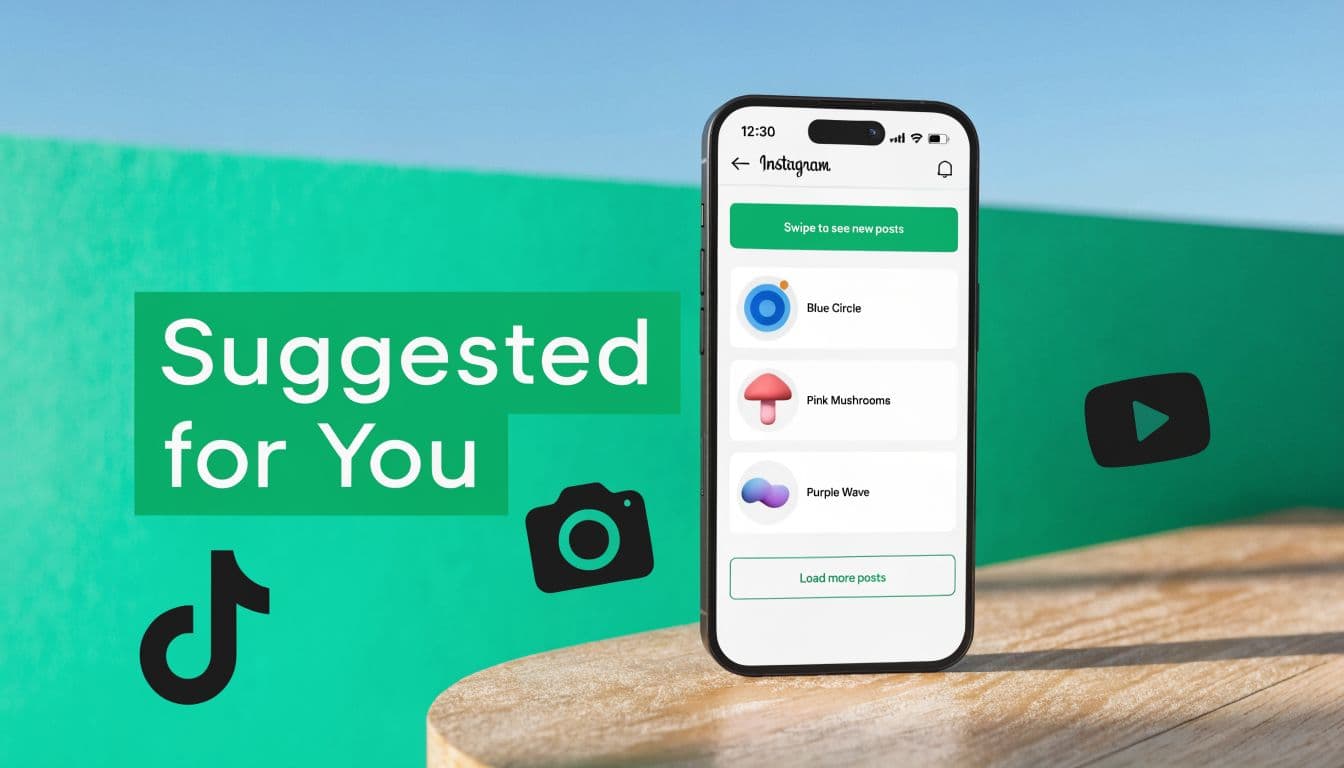
You follow an account in your niche, and Instagram immediately puts three more in front of you. One is a direct competitor. One is a creator with a similar audience. One is a business in the same local market. That placement is Instagram's "Suggested for You" feature.
It is one of the platform's recommendation surfaces for accounts, built to help users discover who to follow next. The key detail is that it sits close to moments of intent. A user has just followed someone, browsed related profiles, or shown enough interest signals that Instagram is ready to recommend another account.
For growth, that matters because suggested placement reaches people who are already primed to follow. These are not passive impressions. They sit much closer to conversion than broad awareness tactics like hashtags alone.
I tell clients to treat "Suggested for You" as earned distribution. Instagram does not hand out those placements because an account is active or technically eligible. It gives them accounts that look like a strong next follow for a specific user.
That distinction trips people up. An account can pass recommendation guidelines in Account Status and still get little to no suggested exposure. Eligibility only means Instagram can recommend you. It does not mean the system wants to. Recommendation surfaces favor accounts with clearer audience fit, stronger topical consistency, and better signs that new viewers will take action once they see the profile.
That is why this feature matters more than it first appears. It is not just about being visible inside the app. It is about being inserted into Instagram's follow pathway, where the platform is actively shaping who discovers whom.
If you want a broader view of how recommendation surfaces connect to ranking behavior, this breakdown of how Instagram's algorithm works gives useful context.
The practical takeaway is simple. "Suggested for You" is not a switch in settings. It is a distribution opportunity driven by relevance, predicted follow likelihood, and how confidently Instagram can place your account in a specific interest cluster.
How the Instagram Suggestion Algorithm Really Works
Instagram's suggestion system works like a digital matchmaker. It tries to predict, account by account, who a user is most likely to care about next. It does that with machine learning models that update often and weigh a mix of behavioral and relationship signals.

The signals Instagram appears to care about
Meta says in its explanation of Instagram suggested accounts ranking that the system uses dynamic machine learning models and input signals such as mutual friends, location data, app behavior, and cross-platform Facebook interactions. That means Instagram is not only looking at what you post. It is also looking at relationship overlap and behavior patterns.
In practice, these signals usually fall into a few buckets:
Connection overlap
If your audience shares follows, contacts, communities, or close interest clusters with another account's audience, Instagram has stronger evidence to suggest your account is nearby.Interest similarity
Instagram watches what people like, save, comment on, search for, and spend time with. If your content consistently attracts the same type of behavior as accounts in a known niche, that makes your account easier to classify.Context clues
Location, event relevance, and local patterns can all help Instagram decide when your account is contextually useful to suggest.Cross-platform reinforcement
Meta's ecosystem matters. Signals tied to Facebook interactions can strengthen confidence in a recommendation.
That's why a random burst of views doesn't always lead to more suggestions. The system isn't only chasing broad attention. It's trying to make accurate matches.
The myth that won't die
One of the most persistent myths is that Instagram suggests accounts based on who searched your profile or viewed you. That's wrong.
Meta explicitly says Instagram does not notify users of profile searches or base suggestions on profile viewership, which means those “someone searched you” theories don't explain suggested account placement. If you've been building a strategy around that idea, stop. It sends people toward superstition instead of useful work.
Search privacy stays private. Suggestion visibility comes from signal patterns, not from secret profile visitor lists.
What this means for your content decisions
The algorithm is trying to answer one question: “If this user sees this account, how likely are they to care?” That changes the way you should approach growth.
A practical way to think about it is this:
Shared audience patterns – Instagram can infer that your account belongs to a recognizable interest cluster or niche based on who interacts with similar content. To strengthen this signal, make your niche obvious through your bio, captions, visuals, content themes, and posting consistency.
Relationship overlap – Instagram notices when people connected to your current audience are likely to enjoy your account too. You can reinforce this by collaborating with relevant creators, tagging niche-related accounts, and actively engaging within your community.
Behavior response – The platform tracks whether users find your content valuable enough to save, share, DM, comment on, or watch fully. To improve this signal, focus on publishing content that encourages meaningful interaction and longer watch time.
Context relevance – Instagram also evaluates whether your content is relevant to a specific place, moment, trend, or category. You can support this by using location tags, category cues, timely topics, and contextual references consistently when they naturally fit your content.
If you want a broader breakdown of Instagram ranking behavior beyond suggestions, this guide on how Instagram's algorithm works is a useful background.
The key takeaway is simple. Suggested for you instagram isn't driven by one metric. It's built from layered signals that help Instagram predict fit.
Why Getting Suggested Is a Goldmine for Organic Growth
A user follows a competitor, taps through a few similar profiles, and then sees your account in a recommendation slot. That visit is different from a random impression. The person already sits inside a relevant interest cluster, so your profile gets judged against the intent that already exists.
Practical value is qualified discovery.
When Instagram suggests your account to the right people, it shortens the gap between impression and action. Profile visits are more likely to turn into follows, saves, and repeat views because the platform has already done part of the matching work. That makes Suggested for You one of the cleaner organic growth channels on Instagram, especially for accounts that want steady audience fit instead of short bursts of attention.

Why smaller accounts often perform well here
Smaller creators and niche brands often have an advantage because their signal set is easier to classify. A clear topic, consistent audience response, and predictable content pattern give Instagram a simpler recommendation job than a broad account that posts for several unrelated audiences.
I see this with clients all the time. An account can be fully eligible in Account Status and still get weak recommendation traction because its content confuses the system. The posts are fine on paper, but the audience signals are mixed. One week it looks like fitness, the next week it looks like lifestyle, then it shifts into personal updates. Eligibility keeps you in the running. Strong recommendation signals get you distributed.
That is why a focused account usually outperforms a noisy one, even without a huge follower base.
A smarter growth target looks like this:
Clear audience fit over broad posting
Saves, shares, profile taps, and return visits over vanity metrics
Consistent topic association over occasional viral spikes
Suggested followers usually retain better
Suggested discovery matters because it brings in people who already resemble your best existing followers. They are not just seeing you. They are seeing you in a context that supports a decision.
That context improves downstream performance. Follows from suggestion surfaces often lead to better watch time, stronger story retention, and more meaningful engagement over time because the audience match was stronger at entry. If you are working on ways to increase Instagram reach without sacrificing audience quality, this is one of the highest-value channels to get right.
It also changes how to evaluate growth. A spike in reach from a loosely related Reel can look good in reporting and still do very little for follower quality. Suggested placement is different. It tends to compound when your profile positioning, content patterns, and audience response all point in the same direction. That is also why many effective strategies to master the Instagram algorithm focus on relevance and retention, not just top-of-funnel visibility.
For brands, consultants, creators, and local businesses, that compounding effect is the opportunity. Instagram starts introducing your account to people who are more likely to care, stay, and convert. That is where organic growth gets efficient.
Actionable Tactics to Get Your Account Suggested
A client posts four times a week, keeps Account Status clean, and still gets no recommendation momentum. In nearly every audit, the problem is not effort. It is signal confusion.
Instagram has to decide who your account is for before it can place you in front of similar users. If your profile says one thing, your content says another, and your engagement behavior points somewhere else, the system stays cautious. Accounts get suggested when their signals line up clearly enough to beat other eligible options in the same niche.

Tighten your profile signals
Your profile helps Instagram classify your account, and classification drives recommendation fit.
Start with the bio and name field. They should answer three questions fast. What do you do, who is it for, and what kind of content should someone expect? "Helping SaaS founders make better short-form content" gives Instagram and users something concrete to work with. Vague branding does not.
A profile that gets suggested more often usually has:
A clear niche label
State the category and audience directly.A consistent visual identity
Profile photo, highlights, and cover designs should look like they belong to one account type.A relevant account category
Use the category that matches your real role if it supports discovery.Keyword alignment
Put niche terms in the name field and bio naturally, without stuffing.
This matters more than many guides admit. An account can be fully eligible for recommendations and still lose ranking preference if Instagram cannot place it confidently against comparable accounts.
Publish content that produces strong preference signals
Suggested placement is not driven by reach alone. Instagram looks for signs that people found the content worth staying with, sharing, saving, replying to, or using as a reason to visit the profile.
That changes how content should be built.
Carousels often help when the topic needs structure, detail, or a payoff worth saving. Reels often help when you need a fast hook, clearer watch behavior, and a wider top-of-funnel entry point. Stories do a different job. They train your current audience to interact, which can sharpen your understanding of what gets a response from the right people.
A practical mix looks like this:
Carousels for depth
Checklists, step-by-step tutorials, before-and-after examples, myth corrections, and breakdowns.Reels for discovery
Short lessons, demonstrations, reactions, quick transformations, and simple narrative arcs.Stories for feedback loops
Polls, question boxes, reply prompts, and low-friction audience research.
For a broader outside perspective, PostOnce has a useful resource with strategies to master the Instagram algorithm, especially if you're reworking format choices around discovery.
Use engagement to train the association
Instagram pays attention to who interacts with you and where you spend your attention. That does not mean random commenting will get your account recommended. It means focused interaction can strengthen topical association.
Comment where your target audience already gathers. Reply to Stories from adjacent creators. Join conversations on peer accounts that sit close to your niche. The goal is not volume. The goal is repeated relevance.
Use this filter:
Choose adjacent accounts carefully
Prioritize peers, local operators, and respected category voices over giant entertainment pages.Leave comments with substance
Add a point, example, or perspective that shows real topical fit.Reply to inbound engagement quickly
Ongoing threads create stronger relationship signals than isolated likes.Keep the pattern consistent
Recommendation systems respond better to repeated behavior than one active burst.
I usually tell clients to audit their last two weeks of comments. If a fitness coach is spending half that time engaging with generic meme pages, the account is feeding Instagram mixed context.
Reduce topic drift
This is the tactic that gets missed.
A lot of accounts fail to get suggested because they post too broadly for the stage they are in. A creator might cover marketing, entrepreneurship, productivity, mindset, lifestyle, and personal updates on the same grid, then wonder why Instagram does not know which audience to connect them with.
Breadth has a trade-off. It can keep current followers mildly interested, but it often weakens recommendation confidence. Narrower content themes usually perform better for suggested placement because the audience match is easier to predict.
That does not mean every post must be identical. It means your recent content should cluster around a small number of repeatable themes. If you want more distribution without losing relevance, this guide on how to increase Instagram reach with a stronger audience fit pairs well with recommendation-focused optimization.
Build repeatable series, not isolated hits
Instagram can recommend a one-off post. It is more likely to keep recommending an account that shows stable patterns.
The series helps with that. Weekly breakdowns, recurring myths, case study reviews, neighborhood spotlights, client transformations, or "3 mistakes" formats all make your content easier to classify. They also make user response easier to predict, and predictability matters in recommendation systems.
One viral outlier can spike visibility. A recognizable content pattern gives Instagram more confidence to keep testing your account on similar users.
Optimize for profile conversion
Suggested placement only creates value if the profile visitors understand why they should follow.
Check the handoff. Do your last nine posts support the same promise as your bio? Are your pinned posts introducing the right topic, proof, and outcome? Does a new visitor immediately see who the account helps?
If not, fix that before chasing more discovery. Getting suggested is only half the job. Converting that attention into the right followers is what makes the channel compound.
Troubleshooting Why You Are Not Being Suggested
Most frustration starts here.
You check the Account Status. Instagram says your content is eligible to be recommended. You avoid obvious policy issues. You post regularly. Yet your account still isn't showing signs of recommendation momentum.
That doesn't mean the system is broken. It usually means you're confusing eligibility with favorability.

Eligible is not the same as competitive
TechCrunch's coverage of Instagram's transparency tools notes that Meta's AI uses input signals that “change frequently” and that recommendation eligibility shown in Account Status is binary, while ranking favorability is a more fluid spectrum, which helps explain why content can be technically eligible and still receive minimal reach in recommendation surfaces, as reported in its article on Instagram's recommendation transparency tools.
That distinction matters more than most creators realize.
Eligibility means your content can enter the pool. Favorability determines whether Instagram wants to place it ahead of alternatives. In crowded niches, that second layer is the primary battle.
Common reasons eligible content still loses
I see the same patterns repeatedly when an account looks “fine” but doesn't get suggested.
Your niche signal is muddy
You post too many unrelated topics, or your branding doesn't match your audience target.Your early engagement is weak
Not necessarily in volume, but in quality. If users scroll past, don't save, and don't share, Instagram gets limited evidence that the content deserves broader placement.Your posting rhythm is erratic
Frequent changes in cadence can make your account harder to read. The issue isn't whether there's a magic schedule. It's whether your publishing pattern helps the system build confidence.Your content is compliant but not compelling
Safe content often survives moderation and still performs poorly. Recommendation systems don't reward boring just because it's allowed.You're in a saturated category without a distinctive angle
If ten accounts teach the same advice with the same format and tone, Instagram needs a reason to choose yours.
A simple diagnosis table
Posts reach followers but stall beyond that – This usually points to weak recommendation signals. A better move is to improve your hooks, share value, and save-worthy content so Instagram has stronger reasons to distribute your posts further.
Profile visits happen, but the conversion is low – This often indicates poor profile clarity. Improve this by rewriting your bio, sharpening your value proposition, and making your content promise more obvious to new visitors.
Reels get views but little downstream engagement – This suggests attention without audience fit. The better approach is to tighten your topic consistency, messaging, and audience targeting so viewers are more likely to connect and take action.
Some posts perform well while most disappear – This usually reflects an inconsistent signal pattern. A stronger move is to audit your formats, content topics, posting rhythm, and overall consistency together rather than evaluating posts individually.
“Eligible” only means you're allowed in the race. It does not mean Instagram wants to place you near the front.
What to do next
When suggested for you instagram isn't happening, don't just post more. Audit more sharply.
Review your last several posts and ask:
Did they all target the same audience
Would a new visitor immediately understand my niche
Did the post give people a reason to save, share, or reply
Was the hook strong enough to earn attention from non-followers
Am I relying on technical compliance instead of content preference
That's the engagement paradox. Good creators often lose recommendation opportunities because they optimize for staying eligible, not for becoming the obvious best option in their category.
Tailored Strategies for Influencers, Businesses, and Agencies
The same recommendation system behaves differently depending on what kind of account you run. The mechanics overlap. The priorities don't.
For influencers
Lean hard into collaboration and audience adjacency. Creator collabs, guest appearances, joint Lives, and niche conversations all strengthen mutual-connection signals. Keep your positioning narrow enough that Instagram can classify you quickly, but flexible enough that related creators can overlap with your audience.
If brand work matters, don't let sponsored content dilute your niche identity. Your account should still look coherent to a first-time visitor.
For businesses
Use local relevance wherever it naturally fits. Location cues, community references, customer proof, and neighborhood-specific content can help Instagram understand where your account belongs. A local business usually wins more from clear contextual relevance than from trying to look national too early.
Keep your profile commercial but useful. Teach, show, answer, demonstrate.
For agencies
Agencies need systems, not hacks. Build client strategies around three audits: profile clarity, content signal consistency, and niche engagement behavior. Don't promise recommendation outcomes from “eligibility fixes” alone. The harder work is improving favorability.
If your clients work with creators, this roundup of influencer marketing strategies is a useful companion for planning collaborations that support discoverability.
Across all three categories, the rule stays the same. Instagram suggests accounts that look easy to classify, relevant to a known audience, and worth engaging with right away.
If you want help turning those signals into a real growth system, Gainsty helps creators, brands, and businesses grow on Instagram with an organic approach built around authentic engagement, AI-assisted targeting, and human strategy instead of bots or fake followers.

.png&w=1920&q=75&dpl=dpl_34ZXCf12K5qjjdZjPn9snwDRADrB)






.png&w=750&q=75&dpl=dpl_34ZXCf12K5qjjdZjPn9snwDRADrB)