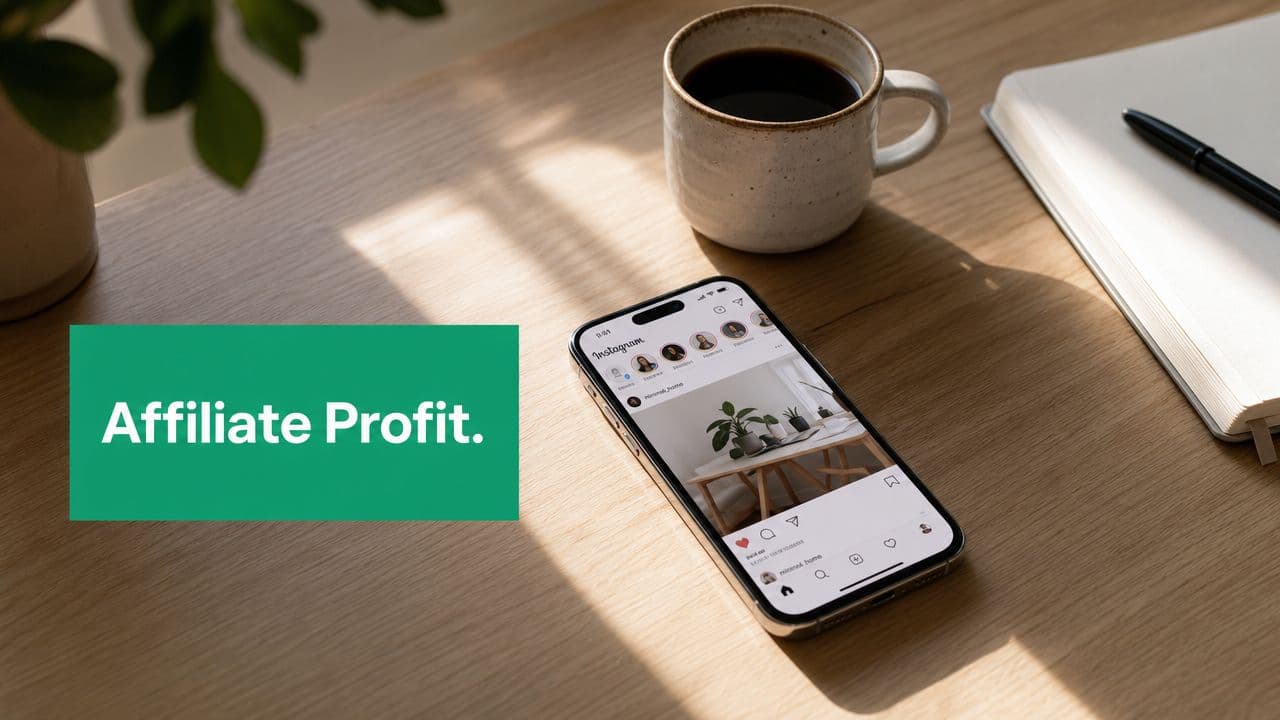
The Real Opportunity in Instagram Affiliate Marketing
Instagram affiliate marketing works because it brings together attention, recommendation, and buying intent. People open Instagram to be entertained, get quick ideas, or check in with creators they trust. That is exactly why affiliate content can work so well when it feels useful instead of forced.
Instagram is also not some fringe affiliate channel. Serious marketers already use it heavily. Mature platforms usually come with better tools, more affiliate-friendly brands, and clearer buyer behavior than trend-chasing channels.
Why Instagram still matters
Instagram rewards creators who can make a product useful in context. A skincare creator can show texture, application, and results. A fitness creator can compare two tools in a short Reel. A home office creator can walk through desk accessories in a carousel. The sale does not start with the link. It starts with context.
Instagram also gives you multiple surfaces for the same offer:
Reels bring in new people.
Stories handle objections and urgency.
Carousels explain details.
DMs help close buyers who want reassurance.
Instagram affiliate marketing gets more profitable when each format has one clear job.
What long-term creators do differently
The creators who stay profitable think like operators, not just promoters. They know which product categories fit their audience, which angles earn saves and replies, and which offers are worth repeating.
They also understand something simple. Sustainable affiliate revenue comes from repeatable trust, not viral luck. If your audience sees honest demos, real trade-offs, and consistent recommendations, they start treating your links like curated shortcuts.
Laying the Foundation for Affiliate Success
Most affiliate accounts struggle before the first link even goes live. Usually the problem is not content quality. It is setup. If the niche is too broad, the offer is weak, or the profile feels vague, even solid posts will have a hard time converting.

Pick a niche with buyer intent
“Pick your passion” is incomplete advice. Passion helps with consistency, but affiliate revenue comes from problems people are already willing to pay to solve.
A good niche on Instagram usually has three traits:
Visible products: Products that can be shown, demonstrated, compared, or reviewed visually fit Instagram best. Think skincare, fashion, desk setups, kitchen gear, creator tools, or fitness accessories.
Recurring questions: Strong niches create repeated buyer questions. Which one should I buy? Is it worth it? What is the difference? How do you use it? Every question becomes content fuel.
Natural product rotation: You want room to recommend related products without looking random. A travel account can cover luggage, organizers, chargers, and layers. A creator-tools account can cover microphones, lights, tripods, editing apps, and templates.
If you are still early and trying to reach 1000 followers on Instagram, tighter positioning will help more than posting more often. Smaller accounts usually grow faster when the profile clearly signals who it serves and what kind of recommendations people can expect.
Vet affiliate programs like an operator
Not all programs deserve your audience. Some look good until you notice weak landing pages, poor mobile checkout, low-quality products, or delayed reporting. Before joining, check the basics.
Use this shortlist:
Brand reputation: Search the brand's comments, reviews, and customer sentiment. If buyers complain about shipping, quality, or support, your content will inherit that frustration.
Commission structure: Do not chase the highest commission by default. A lower commission on a product your audience already wants can outperform a higher commission on something they do not trust.
Cookie duration: Longer attribution windows help when people research before buying. Short windows can still work for impulse products shown well in Stories or Reels.
Creative support: Good programs provide product data, promo assets, and clear dashboards. That saves time and speeds up testing.
Product-market fit: The product should solve a problem your audience already talks about. If you have to force the recommendation, the fit is wrong.
Optimize your profile for high-intent traffic
Your Instagram profile should answer one question quickly: Why should this person trust your recommendations?
A profile that converts usually includes:
A clear identity line that states the niche
A benefit-driven bio that tells people what they will get
A recognizable profile photo that feels credible
A link hub organized around current offers, best resources, or product categories -
Story Highlights that work like mini sales pages, such as Reviews, Favorites, Setup, Skincare Routine, or Amazon Finds
Here is a simple profile formula:
Bio line: Your bio should immediately tell visitors what your account is about, who it’s for, and the value they can expect. A clear niche and promise help the right audience decide whether to follow you.
Name field: Use your name field to include searchable keywords related to your niche or expertise, making it easier for people to discover your profile through Instagram search.
Link hub: Your link should direct visitors to the most relevant offer, product, service, or content category. Keep the path simple so people can quickly find what they’re looking for.
Highlights: Organize your Highlights to showcase customer proof, reviews, tutorials, frequently asked questions, and other evergreen content. This helps new visitors learn about your brand and build trust without scrolling through your entire profile.
Practical rule: If a new visitor cannot tell what you recommend within a few seconds, your profile is not ready for affiliate traffic.
Your Content-to-Conversion Playbook
Affiliate content works best when each format has a clear role. Reels bring in cold traffic. Stories warm people up and move them to action. Feed posts and carousels add depth. Lives and DMs answer final objections.
A proven methodology highlighted by OptinMonster's affiliate marketing statistics centers on short unboxing or UGC Reels with clear CTAs, native affiliate tagging or link-in-bio tools, and weekly engagement-loop posts, and ties that approach to the broader 15:1 ROI benchmark reported for affiliate marketing.
Start with the visual map, then build your cadence around it.

Use Reels for discovery
Reels are your top-of-funnel engine. Do not waste them on vague lifestyle clips with a product floating in the background. Make the product part of a clear problem and outcome.
Formats that usually work well:
Unboxings that show what is inside and who it is for
Mini reviews with one clear verdict
Before-and-after use cases
Problem-solution clips where the product removes friction
Comparison Reels between two popular options
A simple Reel structure looks like this:
Hook the problem in the first seconds
Show the product in action
Explain one benefit and one trade-off
End with a direct CTA
Example caption: “Tested this for a week because I needed a cleaner setup with fewer cables. Best part is how fast it cuts desk clutter. The downside is that it is better for lighter users than heavy multi-device setups. Link in bio if you want the exact one.”
That usually converts better than polished ad copy because it sounds like a real recommendation.
Use Stories to handle urgency and objections
Stories sell because they feel close, fast, and personal. They also let you stack context across multiple frames without forcing everything into one post.
A strong affiliate Story sequence often looks like this:
Frame one introduces the problem
Frame two shows the product in use
Frame three gives a quick opinion
Frame four answers a likely objection
Frame five pushes the click with a link sticker
Good Story CTAs:
“I linked the exact one here”
“Tap if you want my full setup”
“This is the version I would buy again”
“Use this if you want the simplest option”
Add interaction before the pitch when possible. Polls, sliders, and question boxes improve response quality and show you what buyers still need to know.
If followers keep asking the same question in DMs, turn that answer into the next Story sequence. That is usually where your conversion friction is hiding.
Use carousels and feed posts for depth
Carousels do the heavier lifting when a buyer needs more explanation. They work well for products that need side-by-side context, step-by-step use, or “best for” recommendations.
Three carousel ideas that fit affiliate offers well:
Best picks by use case Example: best ring light for beginners, travel, and desk filming.
Mistakes to avoid Example: common skincare layering mistakes, with one recommended product solving each issue.
Full workflow breakdowns Example: “My home office setup,” where each slide explains one tool and why it earned a place.
A practical carousel CTA does not need to sound salesy. It can be as simple as: “I saved the full list in my bio” or “DM me ‘setup’ if you want the exact links.”
Build weekly engagement loops
Engagement-loop posts are not just for vanity metrics. They keep your audience active, train them to respond, and improve the odds that later promotional content gets seen.
Examples:
Ask which option followers would choose
Run a Q&A box on a product category
Post a “this or that” comparison in Stories
Use comment triggers like “comment ‘guide’ and I will send the list”
That last tactic works especially well when your offer needs a short trust bridge before the click.
A simple weekly content rhythm
You do not need a giant calendar. You need a rhythm you can actually sustain.
Reels: The primary job of Reels is to reach new audiences and increase discoverability. They work well for content such as product unboxings, reviews, comparisons, or quick demonstrations that capture attention and encourage people to explore your profile.
Stories: Stories are designed to nurture and convert people who already know your brand. Use them for product demonstrations, answering common objections, sharing customer feedback, or directing viewers with a link sticker to a product or offer.
Carousel: Carousels help educate your audience and qualify potential buyers by providing more detailed information. They’re ideal for step-by-step tutorials, buyer’s guides, product comparisons, or common mistakes to avoid, encouraging users to save and revisit the content.
Live or DM follow-up: Live sessions and direct messages are most effective for helping hesitant buyers make a decision. Use them to host Q&A sessions, provide personalized recommendations, answer specific questions, or address concerns that move prospects closer to a purchase.
The biggest mistake beginners make is trying to sell in every post. A better approach is to give value broadly, then attach offers where they fit naturally. Instagram affiliate marketing gets easier when the product feels like the next step, not the whole point.
Mastering Links and Driving Clicks
A lot of affiliate revenue gets lost between “I want that” and “where do I tap?” On Instagram, link strategy matters because the path is short, mobile, and easy to break. A cluttered landing page, vague CTA, or messy bio can kill intent fast.
According to Refgrow's affiliate marketing statistics, 65% of affiliate-driven traffic comes from mobile devices, and 62% to 65% of Instagram affiliate sales occur on smartphones. That is why every link decision should assume the user is tapping quickly on a phone, not browsing carefully on desktop.
Choose the right linking method
Different content needs different destinations. Do not send all traffic to one generic hub if the post is about one specific product.
Use this framework:
Single bio link: This works best when you have one primary campaign, flagship product, or key offer that you want everyone to see. The main drawback is that it becomes restrictive if you need to promote multiple products, services, or content at the same time.
Link-in-bio page: A link-in-bio page is ideal when you want to direct visitors to multiple offers, product categories, reviews, lead magnets, or social channels from a single link. However, presenting too many options can overwhelm visitors and reduce the likelihood that they click on any one destination.
Native affiliate tag: Instagram’s native affiliate tools are designed for product-specific content, allowing eligible creators to tag products directly within the platform. The main limitation is that availability and setup vary depending on your account, region, and participating brands.
Story link sticker: Link stickers are effective for encouraging quick action from warm audiences, such as visiting a product page, registering for an event, or reading new content. Their biggest limitation is that Stories disappear after 24 hours unless they’re saved to your Highlights.
If you need a plain-English breakdown of how link hubs work, own page explains link in bio well and helps clarify when a simple destination is better than a crowded menu.
Match the CTA to the tap
Weak CTAs sound like placeholders. “Check link in bio” works, but it is rarely your strongest option. Tell the user what they will get when they click.
Better examples:
“Tap my bio for the exact shade and routine”
“I linked the under-desk cable tray I use daily”
“Open the Story link for the full comparison”
“Grab the version I recommend for beginners”
The more specific the CTA, the better the click quality.
Remove friction from Story traffic
Stories are often your cleanest conversion surface because the user can go from seeing the recommendation to tapping the link in one move. Keep the frame simple. One product. One angle. One CTA.
For creators who want a tutorial on setup options, this guide on how to add links on Instagram Stories covers the mechanics well. The strategy side is simple: do not waste Story links on broad directions when you can send people straight to the most relevant destination.
A good mobile link path feels obvious. A bad one makes the buyer think too much.
Bio link pages should feel curated
A high-converting link page should not look like a junk drawer. It should feel edited. Group links by buyer intent, not by the order you found affiliate programs.
Good categories:
Shop my skincare routine
Creator setup
Travel essentials
Best beginner picks
Current favorites
Bad categories:
Misc links
Products I like
Discounts
Random finds
Clicks go up when visitors can sort themselves quickly.
Tracking Compliance and Analytics
If you do not track the path from post to sale, you will not know whether the issue is the content, the offer, the CTA, or the destination page. Instagram affiliate marketing gets much easier once you stop judging posts by likes and start judging them by buying behavior.
What to watch in your dashboards
Your affiliate platform dashboard and Instagram Insights work best together. One shows what happened after the click. The other shows what kind of content created the click.
In the affiliate dashboard, focus on:
Clicks
Conversions
Earnings per click
Top-performing offers
Time lag between click and purchase
In Instagram Insights, focus on:
Profile visits after content goes live
Story taps and exits
Link sticker taps
Shares and saves on educational posts
Replies and DMs on product-focused Stories
A useful review habit is to compare one content angle across formats. If a Reel about a desk light gets reach but few clicks, while a Story follow-up gets strong taps, the takeaway is not “the product failed.” It is that the product may need a warmer conversion path.
Diagnose content with simple attribution logic
A lot of creators misread results because Instagram is a multi-touch platform. Someone might see a Reel, visit your profile later, watch Stories, then buy from the bio link. That is why basic attribution discipline matters.
If you want to understand the technical side better, master affiliate attribution from Trackingplan is a useful reference for how tracking logic can break or blur performance analysis.
Keep your own process simple:
Use distinct campaign names where your affiliate platform allows it
Rotate one CTA variable at a time
Do not change the offer, creative angle, and destination page all at once
Save top-performing Story sequences into Highlights so they keep working
For the Instagram side, this guide to Instagram analytics for business growth is a practical place to sharpen how you read content-level signals.
Get disclosures right every time
Compliance is part of conversion. If followers feel tricked, trust drops. If regulators decide your disclosures are hidden or vague, you create unnecessary risk.
Make disclosures obvious and early:
In Reels, put the disclosure on-screen and repeat it in the caption
In Stories, place the disclosure where it is easy to see on the same frame as the link or recommendation
In feed captions, say it clearly before the fold when possible
Good plain-language examples:
“Affiliate link”
“I may earn a commission if you buy through this link”
“Paid link”
“Sponsored” when that is the actual arrangement
Do not bury the disclosure in a pile of hashtags. Do not hide it after a long caption. Do not assume a branded label alone does all the work.
Clear disclosure does not reduce trust. It shows your recommendation can stand in the open.
Scaling Your Reach and Revenue
Scaling changes the game. Early on, you can brute-force some results with hustle. You answer every DM, post when you can, and test offers on instinct. That works for a while, then it stops scaling. If you want Instagram affiliate marketing to become meaningful income, growth has to become more systematic.

Expand audience quality before offer volume
A common mistake is adding more affiliate products before building stronger audience fit. More offers do not automatically mean more revenue. Better alignment does.
Start by widening the top of funnel in ways that preserve trust:
Collaborate with adjacent creators
Repurpose winning topics into new hooks
Turn recurring FAQs into discoverable Reels
Cross-promote your best educational posts
Build Story Highlights that convert profile visitors who arrive from older content
The goal is not random growth. It is attracting followers who already care about the category you recommend.
Build community, not just traffic
Traffic gets you clicks once. Community gets you repeated purchases. The creators who scale best often have followers asking for recommendations before anything is even posted.
That only happens when you stay in conversation:
Answer DMs with real recommendations
Poll your audience before choosing what to review next
Share product disappointments, not just wins
Revisit earlier recommendations and update your opinion
When people see that you will say “this one was not worth it,” your paid recommendations become more believable.
Diversify monetization around the affiliate core
Affiliate links should stay central, but they should not be your only layer of monetization. Once you have trust, you can expand intelligently.
Common expansion paths include:
Negotiating higher rates with brands that already convert well for you -
Pairing affiliate offers with flat-fee sponsored placements -
Building an email list for longer-form recommendations -
Packaging buying guides or niche resource lists - Creating a repeat-buyer ecosystem through Highlights, broadcasts, or lead magnets
At this point, the business stops depending so heavily on single-post performance.
Improve conversion before chasing more reach
Many creators need better conversion systems more than more views. If people click but do not buy, improve the middle and bottom of funnel before chasing more discovery.
Audit these points:
Is the CTA specific?
Does the landing destination match the content promise?
Does the Story sequence answer obvious objections?
Is the product the right fit for the audience segment seeing it?
Have you shown real usage or just aesthetics?
Small fixes often beat more volume.
Use automation carefully
Automation should protect your time, not fake your relationships. Batch scripting, saved reply frameworks, content templates, and organized affiliate tracking all help. Generic auto-comments and robotic engagement usually do more harm than good.
A mature Instagram affiliate business eventually needs a split between creator work and operator work. Spend part of your week making content. Spend another part reviewing performance, updating link flows, refreshing Highlights, and negotiating with partners.
That is the shift from creator mode to business mode. The first gets attention. The second keeps revenue steadier.
Common Pitfalls and How to Avoid Them
People usually do not fail at Instagram affiliate marketing because the model is broken. They fail because they underestimate the time horizon, overestimate what random content can do, and skip the trust-building that makes links convert.

Newtarget Media's affiliate marketing statistics roundup notes that only 10% to 20% of affiliates earn enough for affiliate marketing to be a primary income, largely because many underestimate the 6 to 12 month ramp-up period. The same source also states that neglecting UGC-style content can reduce conversion rates by up to 28% compared with campaigns built around authentic reviews and unboxing videos.
Pitfall one: expecting fast income
This business punishes impatience. You can do the right things for weeks and still be in the signal-gathering stage. That does not mean nothing is working. It means the system is still compounding.
The creators who last treat the early stretch as data collection:
Which hooks attract the right people
Which products get replies
Which Stories trigger taps
Which objections keep coming up
If you expect instant income, you will change direction too often to build momentum.
Pitfall two: posting polished content that does not feel real
Instagram users are good at spotting “this was made to sell me something” energy. Overproduced product shots and copy-paste talking points often lose to a simple demo filmed in normal lighting with a direct opinion.
What works better:
Unboxings
Side-by-side comparisons
“What I liked and what I did not” Real routine footage
Follow-up reviews after actual use
The fastest way to weaken an affiliate recommendation is to make it sound like brand copy instead of lived experience.
Pitfall three: relying on Instagram alone
An Instagram-only business is exposed to platform swings, link friction, and attention cycles. Strong affiliates eventually build at least one off-platform asset, usually email or search-driven content.
That does not mean becoming a full-time blogger. It means creating a backup system where your best recommendations, tutorials, and buying guides can live beyond a feed cycle. Instagram can spark demand. Another channel can catch and keep it.
Pitfall four: promoting poor-fit products
The easiest commissions to lose are the ones tied to products your audience never asked for. If you run a minimalist workspace account and suddenly push beauty gadgets, followers do not need a detailed explanation. They just lose confidence in your curation.
A safer test for product fit:
Does this solve a problem my audience already talks about?
Can I explain who it is for and who it is not for?
Would I still mention it if there were no commission?
If the answer to the last question is no, skip it.
Pitfall five: inconsistent publishing
You do not need to post constantly, but you do need rhythm. Inconsistent accounts make followers forget why they followed, and that hurts every future recommendation.
A realistic cadence beats an ambitious one you will not sustain. Pick a repeatable mix of Reels, Stories, and educational posts, then stay with it long enough to learn from it.
The creators who win usually are not doing magic. They are doing the fundamentals long enough for trust and data to stack.
If you want help growing the audience side of the equation without relying on bots or fake followers, Gainsty is built for organic Instagram growth. It helps creators and brands attract targeted followers so you can spend less time forcing reach and more time building the kind of content system that converts.
.png&w=1920&q=75&dpl=dpl_34ZXCf12K5qjjdZjPn9snwDRADrB)



.png&w=750&q=75&dpl=dpl_34ZXCf12K5qjjdZjPn9snwDRADrB)