Why Fake Followers Are a Bigger Problem Than You Think
A bot wave can make an account look successful while weakening the signals you use to judge content. A creator might publish a strong Reel, see a large follower total, and then wonder why genuine reactions remain limited. The headline number creates confidence, but the audience behind it may contain accounts that never watch, respond, save, or buy.
That makes fake followers an authenticity and engagement-quality problem, not merely a vanity-metric problem. A 2024 peer-reviewed study estimated that approximately 10% of Instagram's 2.4 billion accounts were fake, equivalent to roughly 240 million accounts, although the estimate depends on how “fake” is defined and measured. The study tested 1,890 accounts, including 548 classified as fake or malicious and 1,342 classified as real, while its machine-learning approach achieved about 91% accuracy. Those results show both the scale of the issue and the limits of treating automated detection as perfect. The peer-reviewed study on fake Instagram account detection provides the underlying methodology and caveats.
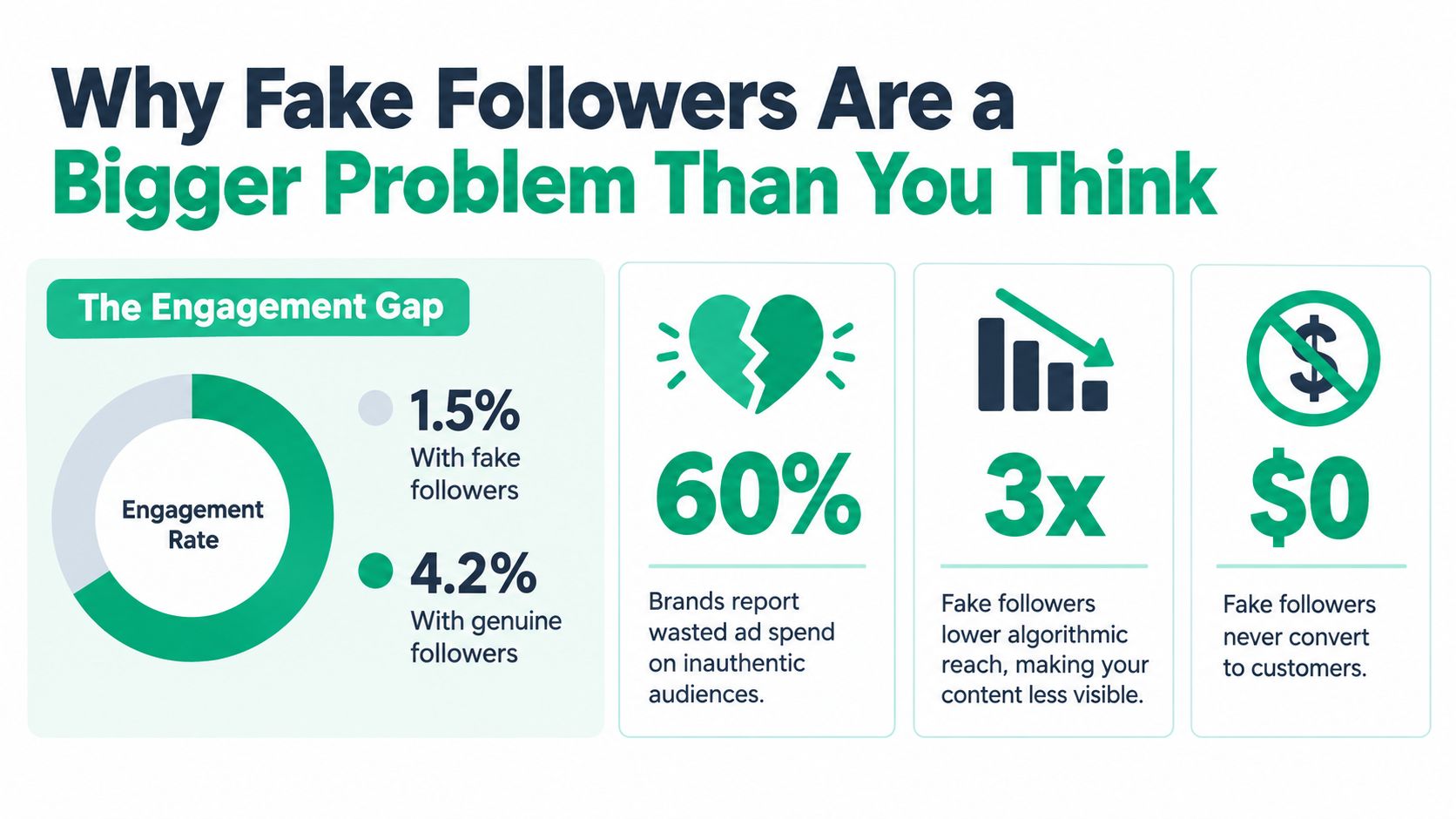
The real cost of a dirty audience
Fake accounts distort more than the engagement rate shown in a dashboard. They can make a post appear less relevant because the follower base doesn't respond, complicate influencer or brand evaluations, and make it harder to identify which content resonates with actual people. They can also bury useful audience insights under misleading location, language, and interest signals.
Removing them can improve the quality of your analysis, but it won't transform weak content into compelling content. A cleanup removes noise. It doesn't replace a content strategy, community management, or a clear offer.
Practical rule: A smaller audience of relevant people is more useful than a larger audience you can't interpret.
The most stressful cases are unsolicited spikes. Giveaway abuse, bot networks, impersonation attempts, or malicious targeting can add suspicious accounts even when the owner never purchased followers. That distinction matters. You're not admitting to misconduct by documenting and removing an unwanted wave, but you should handle it as an account-integrity issue rather than rushing into mass deletion.
How to Spot Fake or Suspicious Accounts on Instagram
No single profile detail proves that an account is fake. A missing photo can describe a legitimate private user. A new account can belong to a real customer. An international follower can be valuable even if they're unlikely to buy locally. Strong reviews combine profile evidence, behavior, relevance, and group patterns.
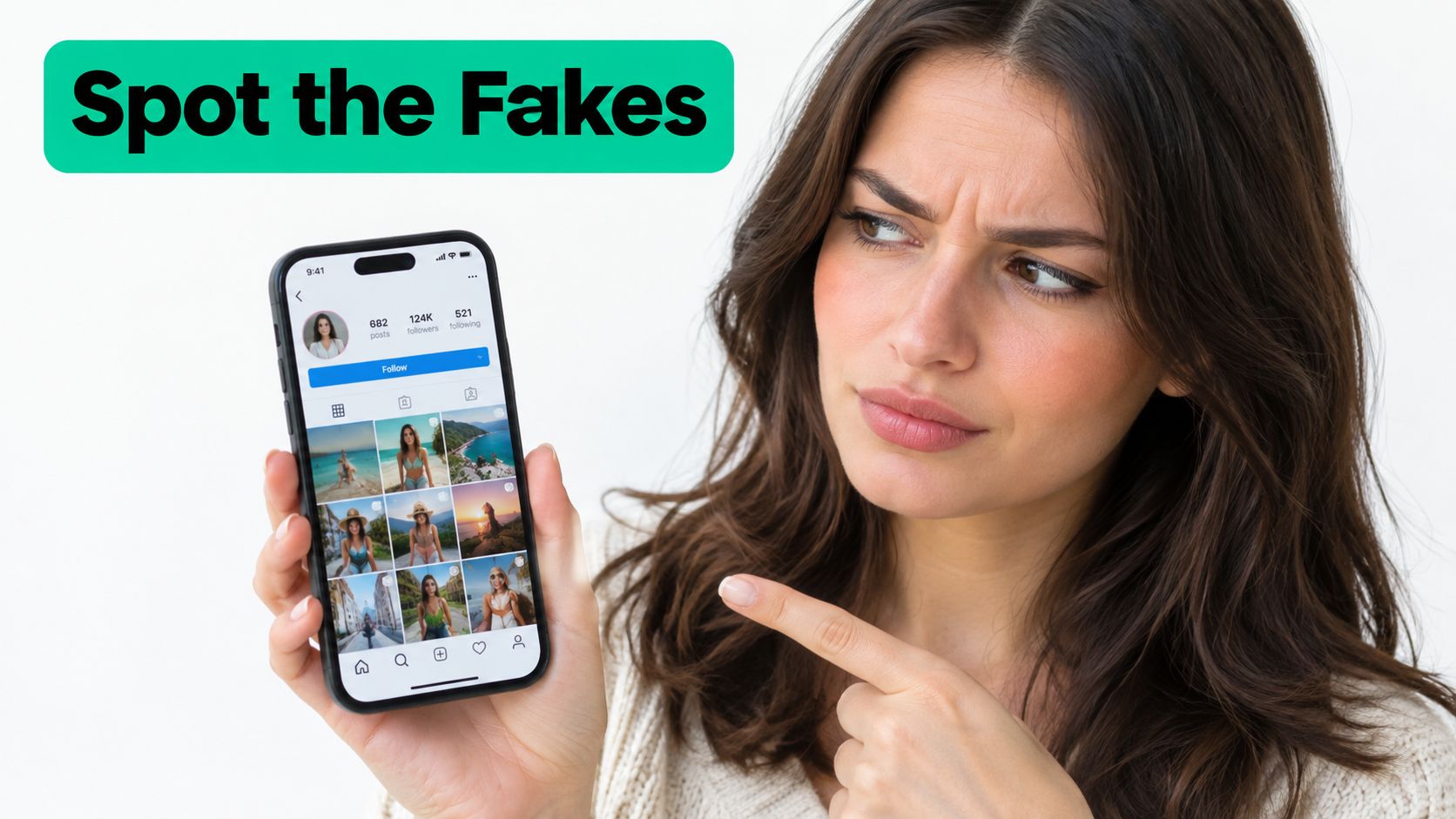
Start with several independent signals
Review the profile itself, then look at how the account interacts with your content. Useful warning signs include:
Thin profile information: An empty bio, no meaningful profile context, little original content, or a copied description deserves attention, but none is conclusive alone.
Implausible following behavior: An unusually high following count, rapid activity, or a profile that seems built primarily to follow others can indicate low-quality activity.
Generic interaction: Comments such as broad praise, repeated promotions, or identical wording across unrelated posts are more concerning than simple inactivity.
Abrupt timing: A cluster of accounts arriving together, engaging in a short burst, or appearing immediately after a viral post may indicate coordinated activity.
Weak relevance: Accounts whose language, interests, or location have no apparent connection to your community can be suspicious, although global brands and multilingual creators should be especially cautious here.
Copied identity patterns: Similar usernames, bios, photos, or comment phrasing across multiple profiles point to a network rather than one isolated quiet follower.
Research on coordinated inauthentic activity reinforces the need to examine groups. An arXiv study analyzed 248,388 collected Instagram profiles and detected 55,719 suspected crowdturfing profiles, approximately 22% of the dataset. It also examined a labeled sample of 2,600 users, and when the researchers tested the approach against 20 mega-influencer accounts with more than 1 million followers, they found that over 20% of engagement was artificial. The arXiv research on coordinated Instagram activity explains why a profile-by-profile checklist can miss coordinated behavior.
Separate quiet people from coordinated spam
A genuine but quiet follower may have a private profile, limited posting history, or no visible comments. Don't delete that person solely because they don't interact publicly. Instead, compare their account with neighboring profiles and check whether they have shared connections, relevant interests, a plausible history, or any meaningful interaction with your content.
For a more detailed checklist of profile checks for fake accounts, focus on combining signals rather than assigning guilt based on one visual feature. You can also use Instagram follower analysis guidance to structure an audit around audience quality and engagement patterns.
Step-by-Step Guide to Removing Fake Followers Manually
A safe cleanup starts before you tap Remove. Create a record of what you're seeing so you can distinguish a healthier audience from a temporary drop in follower count.
1. Record the baseline
Export or manually record follower usernames and visible signals such as profile photo, bio, post count, follower-to-following ratio, comment quality, and account age where Instagram shows it. Save current reach, impressions, profile visits, saves, comments, follower count, and engagement rate. These figures give you a comparison point after each cleanup batch.
You don't need to build a complicated data warehouse. A spreadsheet with the username, observed red flags, review decision, and removal date is enough for a small or medium account. Keep borderline accounts in a separate tab instead of forcing an immediate decision.
2. Score evidence, not inactivity
Use a simple review score. One weak signal should usually mean “observe.” Several independent red flags should mean “manual review.” An empty profile combined with repetitive promotional comments and copied usernames is materially different from an empty profile with a relevant username and shared connections.
Instagram's guidance supports an account-level approach. Signals such as an empty profile, repetitive promotional comments, implausibly high following activity, copied usernames, or no meaningful interaction should prompt review rather than automatic deletion. Instagram's follower-management guidance also explains the platform's native controls and review options.
3. Use Instagram's own removal controls
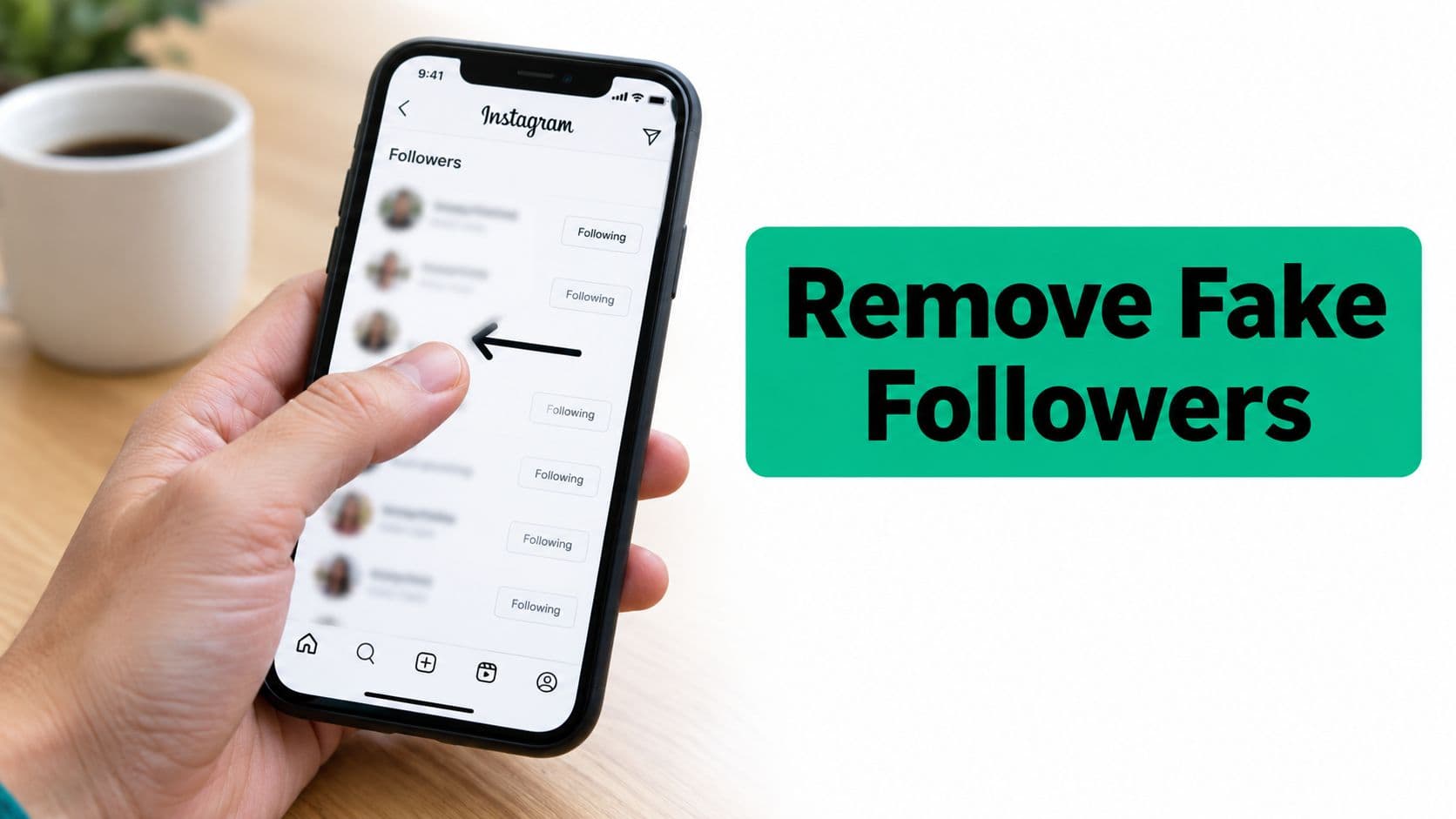
Open your profile, enter Followers, search for the account, and use the native Remove option where available. For confirmed spam, reporting the profile through Instagram's controls can help the platform review behavior beyond your own follower list.
Accounts with 1,000 or more followers can access tools for managing and removing bot or spam followers, according to the platform guidance above. If Instagram presents suspected spam in a separate review area, inspect the list carefully and approve accounts you recognize or believe are genuine before deleting others.
4. Remove in small batches
Don't turn cleanup into a sudden purge. Remove obvious cases individually or in small groups, then review the effect on reach, impressions, profile visits, saves, comments, and follower changes over 7–14 days. That observation period helps you avoid mistaking ordinary fluctuation for a cleanup result.
If a follower is clearly abusive, impersonating someone, or distributing scams, report it rather than relying only on removal. For uncertain accounts, leave them in the borderline list and revisit them after you've seen whether their behavior changes.
A useful decision test: If you'd feel uncomfortable deleting the account based on one screenshot, you probably need another independent signal.
For an account without the native removal option, blocking can stop the account from following you, but use the least aggressive control that solves the problem. The purpose is to improve audience quality without catching real people in the process. More guidance on the mechanics is available in this explanation of how to block followers on Instagram.
What to Do If Fake Followers Appeared Without Your Permission
An unexplained follower spike changes the response. You may be dealing with a bot wave rather than an audience-quality problem caused by your own growth tactics. Preserve the evidence before cleanup by recording the date, visible usernames, screenshots of unusual activity, and any changes in reach or account notifications.
Secure access immediately. Change the password from Instagram's official settings, enable two-factor authentication, inspect connected apps, and revoke access you don't recognize. Don't click links in messages claiming to be from Instagram or Meta, especially when they ask for a password, government identifier, payment information, or urgent confirmation.
Meta says it uses automated and manual systems to detect and remove fake accounts, and that persistent or serious violations can lead to restrictions or disabling. The company also reported removing more than 10.9 million Facebook and Instagram accounts linked to scam centers during 2025. Meta's anti-scam enforcement update describes the scale of that work and the precautions users should take.
Separate cleanup from incident response
Removing suspicious followers improves the visible audience list, but it doesn't prove that your account is secure. If an outside service had access, deletion won't undo that access. If the accounts arrived through coordinated targeting, they may return after the first cleanup.
Use a two-track record:
Audience track: usernames, profile signals, comments, arrival pattern, removal status, and post-cleanup metrics.
Security track: password change, two-factor authentication, connected-app review, suspicious messages, reports, and support requests.
Contact Instagram support through official account tools if you see unauthorized changes, repeated waves, suspicious login alerts, or a significant distribution problem after the event. Keep your explanation factual and include the evidence you recorded. Don't buy a second service that promises to “repair” reach or remove a penalty, especially if it requests credentials.
Preventing Fake Followers and Maintaining a Healthy Account
After the obvious accounts are gone, protect the quality of the audience you keep. Build growth around relevant content, genuine conversations, and partnerships where people have a clear reason to follow. Avoid purchased followers, follow-for-follow schemes, and engagement arrangements that attract accounts unrelated to your community.
Run regular, light-touch audits instead of waiting for another crisis. Review follower history, comment patterns, and sudden clusters, then record uncertain profiles rather than deleting them on sight. Keep separate baselines for reach, impressions, saves, comments, profile visits, and follower changes so you can recognize a bot wave without confusing it with a normal content cycle.
For broader planning, Silver Spoon Agency's Instagram strategy offers a useful reference for connecting content, audience development, and account goals. If you're tightening access controls, follow a dedicated guide on how to secure your Instagram account. Gainsty is one option for teams seeking organic Instagram growth support and audience audits without relying on fake followers, but any growth service should be judged by its methods, access requirements, and transparency.
Start today by recording your current metrics, reviewing the newest suspicious cluster, and removing only accounts supported by multiple signals. Then secure your login and schedule a follow-up review after the cleanup window.
Gainsty can help you organize audience audits and pursue organic Instagram growth without adding bots or fake followers to the account. Visit Gainsty to review an approach that fits your niche, then use your baseline and cleanup records to judge whether the audience you gain is genuinely relevant.